CBDC | Crypto
"CBDC" in Crypto feed
-
Cointelegraph.com - 12:09 Aug 25, 2026
 India plans to test tokenized corporate bonds in a September pilot, with state-controlled REC issuing the debt and select investors using wholesale CBDC payments. India reportedly plans to launch its first tokenized corporate bonds in September as part of a pilot involving blockchain-based transactions settled using a central bank digital currency (CBDC). REC Limited, a state-controlled Indian power infrastructure finance company, plans to issue less than 5 billion Indian rupees ($57 million) in tokenized bonds, Reuters reported on Monday, citing three sources with direct knowledge of the plans. The pilot will initially be open only to a select group of investors and could be unveiled at an annual financial technology event in Mumbai in September. “India’s central bank digital currency will be used to buy the tokenized bonds,” Reuters reported, citing one of the sources. Investors will need two digital accounts to participate: a wholesale CBDC wallet provided by a bank and a new electronic securities wallet. ...
 -
Cointelegraph.com - 07:18 Jul 20, 2026
 The Bank of Korea’s CBDC pilot will add two regional banks, new payment features and tests of government subsidy payments using tokenized bank deposits The Bank of Korea may launch the second phase of Project Hangang, its wholesale central bank digital currency (CBDC) pilot, as early as September, according to Yonhap News. The next stage expands participation to nine banks from seven, introduces new payment features and tests government subsidy disbursements through tokenized bank deposits. Regional lenders Kyongnam Bank and iM Bank will join the existing group of participants. Project Hangang uses a blockchain-based wholesale CBDC issued by the central bank as the settlement asset for deposit tokens issued by commercial banks. Consumers can then use the bank-issued tokens for everyday payments. Read more
 -
Cointelegraph.com - 08:44 Jul 14, 2026
 South Korea will test tokenized government bonds linked to the Bank of Korea’s wholesale CBDC system in 2027 as token securities rules take effect. South Korea plans to conduct a 2027 pilot linking tokenized government bonds to its institutional central bank digital currency (CBDC) infrastructure, moving sovereign debt tokenization from a proposal to an official government timeline. On Tuesday, the government unveiled its 2026 Economic Growth Strategy for the Second Half, which includes the plan. In addition to assigning a date for the pilot, the strategy said authorities would study how to make the Bank of Korea's (BOK) CBDC infrastructure interoperable with other blockchains, enabling a potential connection between external distributed ledgers and the bank’s permissioned system. The project would test whether South Korea’s wholesale CBDC, designed for use by financial institutions, can support capital markets infrastructure, rather than serving only as a digital payment instrument. Read more
 -
Cointelegraph.com - 19:33 Jul 10, 2026
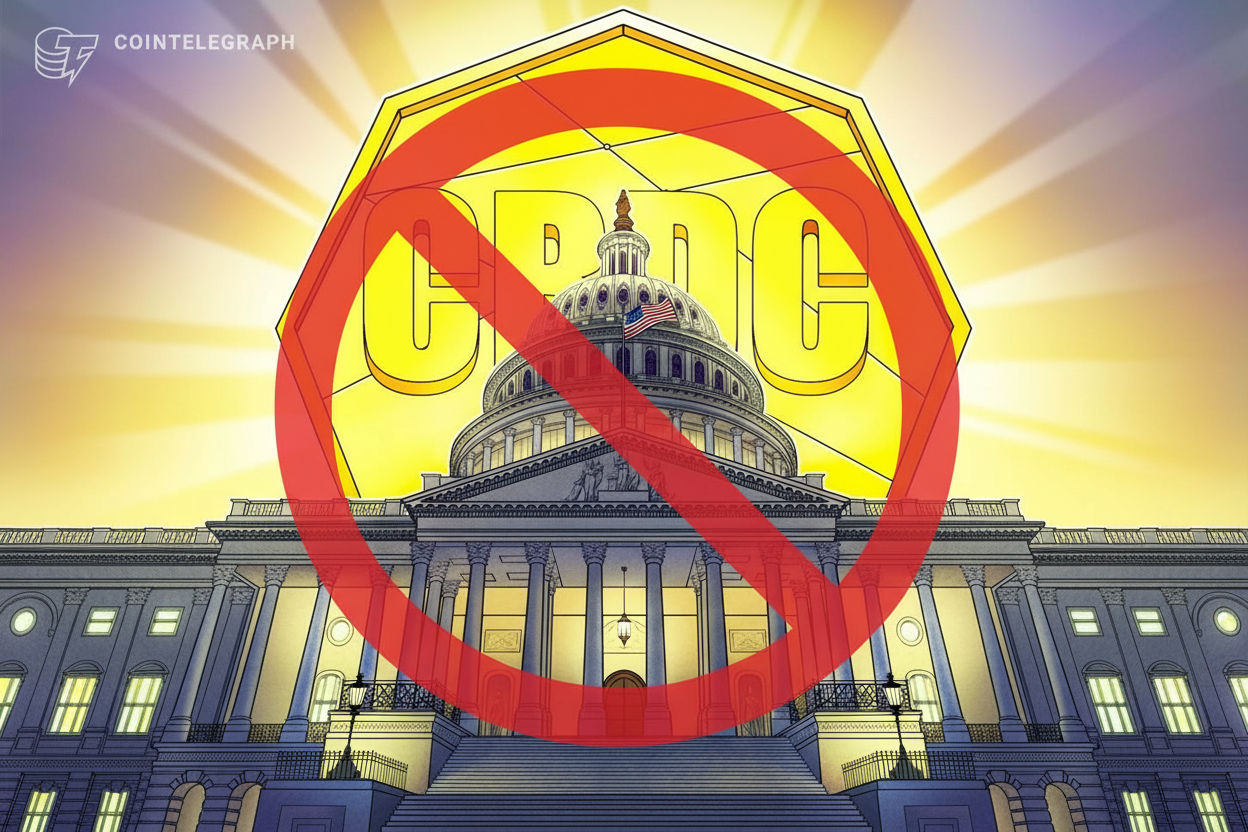 Donald Trump confirmed on social media that he would not sign the 21st Century ROAD to Housing Act, which includes a ban on a US CBDC until the end of 2030, setting the stage for the bill to become law on Saturday. A bipartisan housing bill containing a ban on a central bank digital currency (CBDC) in the United States is set to become law as the deadline approaches for President Donald Trump to sign it. Just after midnight on Friday, the 21st Century ROAD to Housing Act will have been in Trump’s hands for 10 days, excluding Sundays, the maximum amount of time a bill can be on the president’s desk without a veto or a signature. Under the US Constitution, the legislation will automatically become law without action from Trump, who canceled the signing ceremony for the bill on Jun 24. In a Friday social media post, Trump confirmed that he would not sign the housing bill, calling Republicans in Congress who voted on the legislation “dumb” and urging the Senate to instead prioritize a controversial voting bill, t...
 -
CoinDesk - 16:02 Jul 10, 2026
Despite President Donald Trump's refusal to sign Congress' bipartisan housing bill, it's set to go into effect at midnight, and its temporary CBDC ban along with it. -
Cointelegraph.com - 17:11 Jul 08, 2026
 Andrew Bailey reportedly said Bank of England policy remained independent after a meeting with Nigel Farage that included discussions on cryptocurrency. Bank of England Governor Andrew Bailey has reportedly denied that lobbying efforts by Nigel Farage influenced the central bank’s approach to a potential central bank digital currency (CBDC), saying policy decisions were made independently. According to a Wednesday report by The Guardian, which obtained a letter written by Bailey, the governor said the BoE is “able to spot” attempts to influence its policymaking. The letter followed a meeting with Farage, during which the two discussed several issues, including cryptocurrencies. “Following our meeting, Mr. Farage spoke with the press outlining that we had discussed a range of topics, including cryptocurrencies,” Bailey reportedly wrote in the letter. “I am happy to confirm that no policy changes have taken place as a result of interventions by Mr. Farage.” Read more
 -
Cointelegraph.com - 21:34 Jun 29, 2026
 House Speaker Mike Johnson transmitted a housing bill with a provision barring the US Federal Reserve issuing or creating a CBDC until 2030 to Donald Trump on Monday. US President Donald Trump has about 10 days to decide whether or not to sign bipartisan housing legislation containing a ban on a central bank digital currency (CBDC) into law after saying he planned to prioritize a controversial voting bill. According to reports, House Speaker Mike Johnson sent the 21st Century ROAD to Housing Act to Trump’s desk on Monday, kicking off a 10-day timeline for the president to decide whether to ignore, sign or veto the bill under the US Constitution, excluding Sundays. The bill, passed by the House of Representatives last week, included language barring the Federal Reserve from issuing or creating a CBDC “or any digital asset that is substantially similar” until the end of 2030. Donald Trump signing executive orders on Monday. Source: The White House Read more
 -
CryptoSlate - 10:40 Jun 28, 2026
Congress just blocked the Federal Reserve from issuing a CBDC, and the companies benefiting most are private stablecoin issuers like Circle and Tether. The 21st Century ROAD to Housing Act passed the Senate 85-5 on June 22 and cleared the House 358-32 the next day, and folded inside that housing package is a four-year ban […] The post Congress blocks introduction of any CBDC in the next 4 years – but the fight over digital money is just starting appeared first on CryptoSlate. -
Cointelegraph.com - 15:18 Jun 24, 2026
The 21st Century ROAD to Housing Act included a provision that the US Federal Reserve was barred from issuing or creating a CBDC until 2030, but exempted certain stablecoins. US President Donald Trump cancelled the signing ceremony for a housing bill containing a ban on a central bank digital currency (CBDC) as he looked for Republicans in Congress to prioritize a controversial voting bill. In a Wednesday morning Truth Social post, Trump said that the signing for the 21st Century ROAD to Housing Act, passed by the US Senate and House of Representatives, would be cancelled “until such time as we pass the desperately needed SAVE America Act.” Source: Donald Trump Read more -
Cointelegraph.com - 05:58 Jun 23, 2026
The Senate voted 85-5 to pass a major housing affordability bill that includes a ban on the Federal Reserve making a central bank digital currency until 2030. The US Senate has passed housing legislation that includes a ban on the Federal Reserve creating or working on a central bank digital currency (CBDC) until 2030, which is expected to be quickly taken up and passed by the House. The Senate on Monday voted 85-5 to pass the 21st Century Road to Housing Act, which aims to increase the housing supply after a bipartisan group of House and Senate leaders reached a deal last week to move forward with the legislation. The bill has included a CBDC ban since the Senate first passed a version of the bill in March, which outlines that the Fed may not, directly or indirectly, “issue or create a central bank digital currency or any digital asset that is substantially similar to a central bank digital currency.” Read more -
Cointelegraph.com - 06:11 Jun 17, 2026
The US could soon temporarily ban a central bank digital currency, as House and Senate leaders came to a deal on the 21st Century Road to Housing Act. The US House and Senate have reached a deal to move forward with a housing bill that includes a ban on the Federal Reserve creating a central bank digital currency (CBDC) until 2030. A bipartisan group of House and Senate leaders released an updated version of the 21st Century Road to Housing Act on Tuesday, which aims to address housing affordability and bans institutional investors from buying existing single-family homes to rent out. The bill has included a CBDC ban since the Senate passed it in March. The House also passed its version of the bill with strong support in May, but the House and Senate disagreed on some aspects. The Senate has now added further amendments that will be put before the House for a final vote. Read more -
Cointelegraph.com - 11:21 May 20, 2026
 Senate Bill 163 bans CBDC payments by state agencies and shields Bitcoin miners from discriminatory zoning and licensing rules. South Carolina Governor Henry McMaster signed Senate Bill 163 into law on Tuesday, advancing one of the most crypto-friendly state-level frameworks in the country. The bill, which previously passed the Senate 38-1 and the House 110-1, bans state agencies from accepting central bank digital currencies (CBDCs), protects the rights of crypto users and miners, and clears regulatory hurdles for businesses operating in the space. On CBDCs, the law bars any state agency or political subdivision from accepting, requiring payment in, or participating in Federal Reserve-led digital currency trials, including any pilot programs run by federal agencies. Read more
 -
Cointelegraph.com - 07:08 May 19, 2026
 Tom Emmer, the House majority whip, is also advocating for his Anti-CBDC Surveillance State Act, which has passed the House but has yet to pass the Senate. A pair of Republican lawmakers is calling for a permanent ban on a US central bank digital currency (CBDC) to be enshrined in the 21st Century ROAD to Housing Act, as the measure is expected to come up for a vote in the US House this week. The bill released by the US Senate Committee on Banking, Housing and Urban Affairs in March mainly concerns revisions to federal housing programs but also includes a section banning the Federal Reserve System or any Federal Reserve bank from issuing a CBDC or similar instrument until Dec. 31, 2030. The US House has created its own amended bill, which Congressman Mike Flood said reverses the “backdoor green light for a CBDC” and aims to make the ban permanent. Read more
 -
Cointelegraph.com - 18:41 Apr 27, 2026
 The European Commission made its move in response to Russia's increasing reliance on crypto transactions to circumvent sanctions amid the country's war on Ukraine. The European Commission announced a package of crypto-related sanctions against Russia in response to the country’s military actions against Ukraine. In a Thursday notice, the commission said the sanctions targeted Russia’s energy and financial sectors, including a “total sectorial ban on carrying out exchanges with any Russian crypto asset service provider as well as any decentralised platforms enabling crypto trading” that could be used to circumvent the measures. The EC, composed of 27 member states in the European Union, also prohibited the use of stablecoins pegged to the Russian ruble and the central bank digital currency (CBDC) under development by the Central Bank of Russia. Read more
 -
Cointelegraph.com - 20:23 Mar 12, 2026
 The provision banning the Federal Reserve from issuing a central bank digital currency was included in housing affordability legislation. The United States Senate voted on Thursday to include an amendment in the 21st Century Road to Housing Act that would prohibit the Federal Reserve from issuing a central bank digital currency (CBDC). The CBDC prohibition will remain in effect until Dec. 31, 2030, according to the amendment in the bill. The legislation, which passed 89-10, stated: However, the bill does not prohibit any dollar-denominated digital currency that is “open, permissionless, and private,” such as stablecoins. Read more
 -
Cointelegraph.com - 15:15 Mar 10, 2026
 Republicans in the US House of Representatives have threatened the future of an affordable housing bill if it doesn’t include an outright ban on CBDCs. Republicans in the US Congress want to ban any possibility of a central bank digital currency (CBDC). To do so, they’re threatening progress on a bipartisan housing bill. A group of Republican members of the US House of Representatives wrote a letter dated March 6, expressing the “dire need to prohibit a Central Bank Digital Currency from ever happening in the United States.” The letter cited familiar arguments claiming a CBDC would threaten financial privacy and grant the US Federal Reserve unprecedented financial surveillance powers. Read more
 -
Cointelegraph.com - 07:08 Mar 08, 2026
 US lawmakers said any ban on issuing a US CBDC must “be permanent,” warning that creating one would be “inherently anti-American.” A group of US lawmakers is uniting to prevent the US central bank from ever issuing a Central Bank Digital Currency (CBDC), warning that proposed legislation only delays it until 2031. “We write to you to express the dire need to prohibit a Central Bank Digital Currency from ever happening in the United States,” US Congressman Michael Cloud wrote in a letter on Friday addressed to House Speaker Mike Johnson and US Senate majority leader John Thune, joined by 28 other members of Congress in support. It follows a proposed amendment to the Federal Reserve Act that would bar the US central bank from issuing a CBDC until 2031. The amendment is part of the 300-page “21st Century ROAD to Housing Act” (HR 6644), which was released on Monday by the Senate Committee on Banking, Housing, and Urban Affairs. Read more
 -
CoinDesk - 00:04 Mar 03, 2026
The Senate Banking Committee's bipartisan "ROAD to Housing Act" includes a provision banning the Fed from issuing a CBDC before 2031. -
Cointelegraph.com - 21:56 Feb 16, 2026
 Joachim Nagel said euro-pegged stablecoins would offer the bloc more independence from US dollar-pegged coins soon to be allowed under the GENIUS Act. Joachim Nagel, president of Germany’s central bank, the Deutsche Bundesbank, supported the introduction of a euro-pegged central bank digital currency (CBDC) and euro-denominated stablecoins for payments. In remarks prepared for a speech at the New Year’s Reception of the American Chamber of Commerce in Frankfurt on Monday, Nagel said EU officials were “working hard” toward the introduction of a retail CBDC. Euro-denominated stablecoins, according to the central bank president, could also contribute to “making Europe more independent in terms of payment systems and solutions.” “Notably, a wholesale CBDC would allow financial institutions to make programmable payments in central bank money,” said Nagel. “I also see merit in euro-denominated stablecoins, as they can be used for cross-border payments by individuals and firms at low cost.” Read more
 -
Cryptonews.com - 17:56 Jan 28, 2026
The ECB has finished technical prep for a digital euro, Lagarde has said, as Cipollone has warned cash use fell to 24% of daily transactions by value in 2024. With EU legislation pending, pilots could start mid-2027 and issuance in 2029 if approved this year. He has cited reliance on US card rails, too. The post ECB Warns Europe Can’t Wait for Private Solution as Cash Use Plunges – Is CBDC the Answer? appeared first on Cryptonews.