Euro | Crypto
"Euro" in Crypto feed
-
Cointelegraph.com - 14:12 Oct 02, 2026
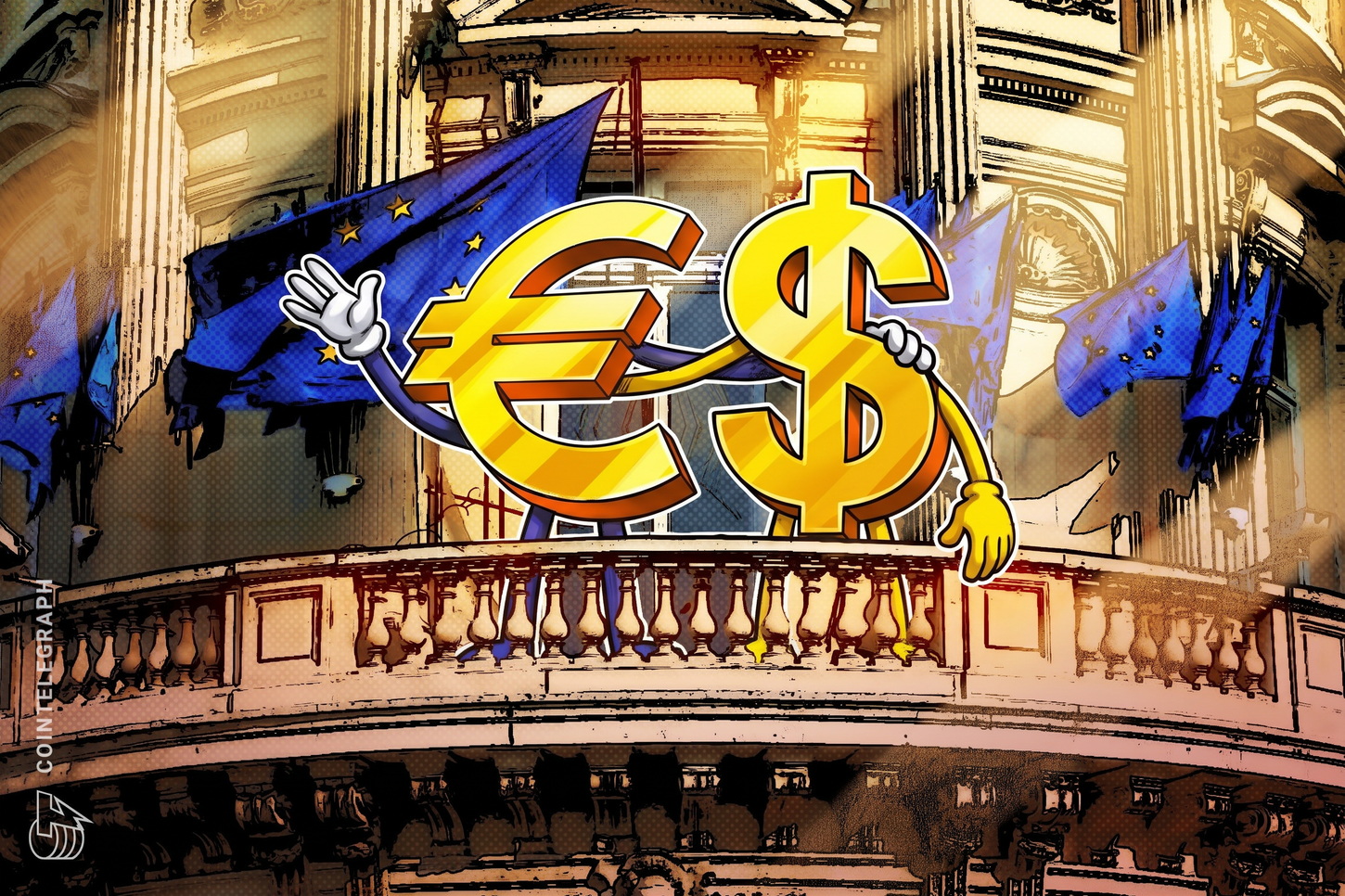 European issuers say Europe cannot ignore demand for dollar stablecoins as businesses seek USD liquidity for global payments and settlement. European stablecoin issuers are making the case for regulated US dollar tokens, arguing that Europe’s push to strengthen the euro does not eliminate businesses’ need for dollar liquidity. AllUnity, a German stablecoin issuer, launched its US dollar-pegged stablecoin USDAU on Wednesday, expanding its MiCA-regulated lineup beyond European currencies. “In global trade and FX markets, the US dollar is the glue,” AllUnity CEO Alexander Höptner told Cointelegraph, adding: “For European corporates to make cross-border payments globally, offering only a euro stablecoin isn’t enough.” Read more
 -
Cointelegraph.com - 10:06 May 20, 2026
 Qivalis expands to 37 banks after adding 25 new members across 15 countries, boosting euro stablecoin plans ahead of a second-half 2026 launch. Qivalis, a European banking consortium developing a regulated euro stablecoin, expanded to 37 member institutions on Wednesday after adding 25 new banks across 15 countries. The new members include ABN AMRO, Rabobank, Nordea and Intesa Sanpaolo. The Amsterdam-based consortium is targeting a second-half 2026 launch, according to a statement shared with Cointelegraph. “We are not merely building payment rails; we are ensuring that European principles around data protection, financial stability and regulatory rigour are embedded into the next generation of digital money,” said Howard Davies, chairman of Qivalis’ supervisory board. Read more
 -
Cointelegraph.com - 14:44 Mar 26, 2026
 Euro stablecoins now make up more than 80% of non-dollar supply, with EURC leading volumes as MiCA and payment-rail integrations support adoption. Euro-denominated stablecoins make up more than 80% of the non-US dollar stablecoin market, which Dune says has grown to about $1.2 billion in total supply, according to a report commissioned by Visa. Dune said euro stablecoins accounted for 85% of transfer volume in the non-US dollar stablecoin market, with Circle’s EURC (EURC) emerging as the dominant euro token in the segment. The report pointed to growing euro stablecoin use across payment infrastructure, while Visa and Mastercard have separately expanded settlement support for EURC in parts of their networks. Read more
 -
CryptoSlate - 05:00 Sep 07, 2025
The following is a guest post and opinion of Eneko Knörr, CEO and Co-Founder of Stabolut. Months ago, in an op-ed for CryptoSlate, I warned that the EU’s flagship crypto regulation, MiCA, would achieve the opposite of its goals. I argued it would strangle euro innovation while cementing the US dollar’s dominance for a new […] The post Euro stablecoins are 0.15% of the market. Here’s how Europe catches up appeared first on CryptoSlate. -
Cointelegraph.com - 20:01 Jul 02, 2025
 The dEURO is overcollateralized by other digital assets such as Bitcoin, Ether and Monero. Cake Wallet added the decentralized stablecoin dEURO to its offerings on Tuesday, expanding its stable of euro-denominated digital assets for users. The decentralized stablecoin is overcollateralized by other digital assets, including Bitcoin (BTC), Ether (ETH) and Monero (XMR), meaning that to mint the dEURO stablecoin, users must first deposit other cryptocurrencies as collateral. Overcollateralizing, or depositing cryptocurrency worth more than the value of the asset being borrowed, acts as a shield against de-pegging events, the dEURO team told Cointelegraph. The dEURO offering also features automatic liquidations, which occur when loan-to-value ratios drop below a certain threshold. Read more