Salvador | Crypto
"Salvador" in Crypto feed
-
Cointelegraph.com - 09:39 Oct 04, 2026
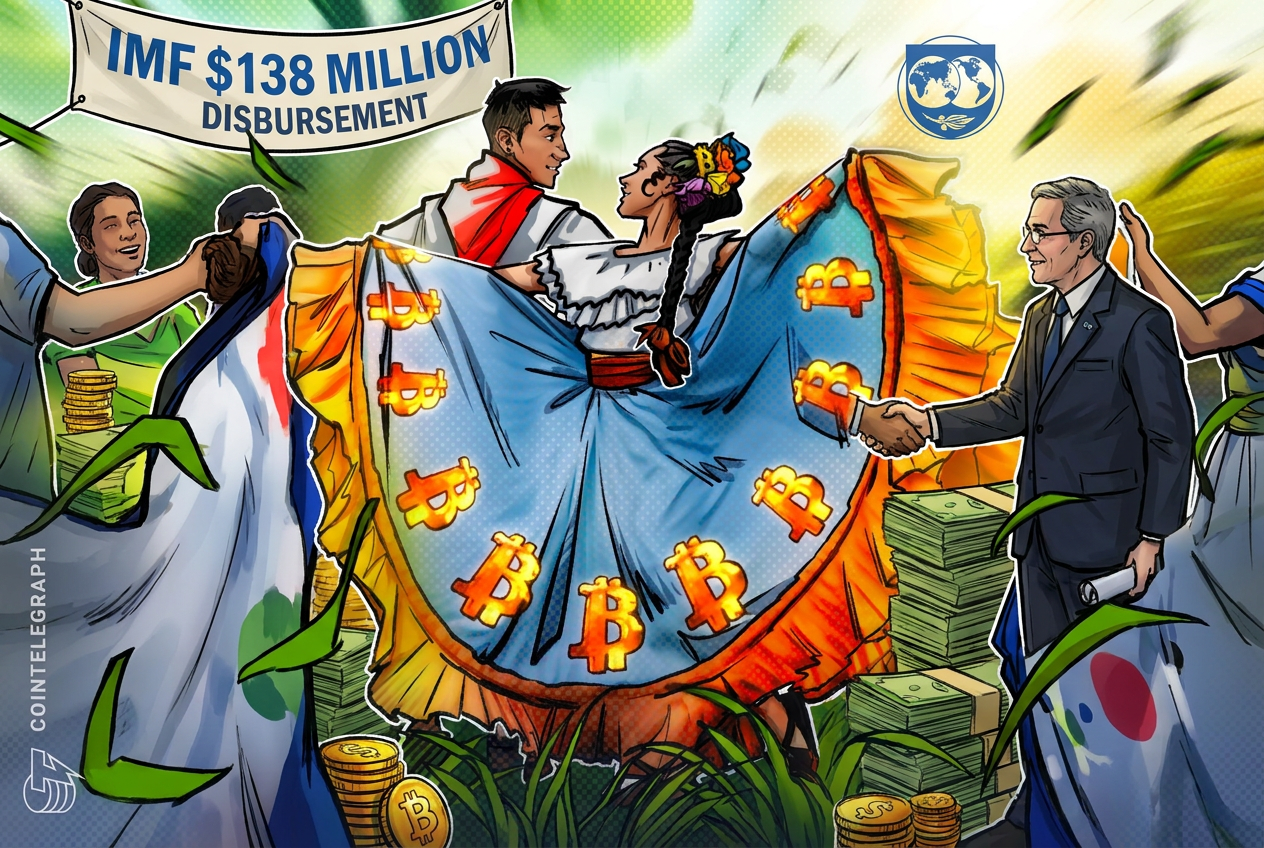 Efforts will continue to reduce the state’s involvement in Bitcoin-related activities and to strengthen crypto‑asset regulation and governance, the IMF said. The International Monetary Fund approved the immediate disbursement of about $138 million to El Salvador under the country’s $1.4 billion financing program, despite some performance criteria being missed. The IMF’s Executive Board completed the second and third reviews under El Salvador’s 40-month Extended Fund Facility (EFF) arrangement on Thursday, it said in a press release. While certain performance criteria were not met, including on the Bitcoin accumulation front, the IMF granted waivers “based on strong corrective measures and renewed commitments.” Read more
 -
CryptoSlate - 18:40 Sep 29, 2026
El Salvador is turning to stablecoins for remittances, further separating everyday payments from the country's pioneering Bitcoin experiment. Sivar, a new national community and payments app developed by Modveon, will use Coinbase infrastructure to settle transfers in stablecoins on Base, according to a Sept. 29 announcement. Users in the US can fund transfers with debit […] The post El Salvador targets $9 billion in transfers, but chooses stablecoins appeared first on CryptoSlate. -
CryptoSlate - 23:15 Sep 04, 2026
A new IMF disclosure says no public resources funded the accumulation since its first review, exposing a gap in the country's one-Bitcoin-a-day message. The post El Salvador added 1,540 Bitcoin, but the IMF says Bukele’s government didn’t pay for them appeared first on CryptoSlate. -
Cointelegraph.com - 06:16 Sep 04, 2026
The IMF attributed Bitcoin added since June 2025 to private donations, addressing questions raised after El Salvador reported a $100 million acquisition. El Salvador used no public resources to accumulate Bitcoin after the first review of its International Monetary Fund (IMF) financing program in June 2025, according to the lender. In a Thursday statement, the IMF said documents supplied by Salvadoran authorities verified that the accumulation came from private donations. According to the lender, the increase in El Salvador’s holdings therefore did not reflect additional Bitcoin purchases financed with government resources. The IMF also said majority ownership and operational control of the Chivo wallet had been transferred to a private operator, while the government retained a minority stake and custodial responsibilities. It said no further accumulation beyond documented donations is expected. Read more
-
Cointelegraph.com - 13:30 Aug 12, 2026
 Five years after El Salvador made Bitcoin legal tender, the experiment has fallen short of its original promises for locals, but it’s been great for Bitcoin’s global profile. It’s been five years since El Salvador became the first country to adopt Bitcoin as legal tender. President Nayib Bukele announced the plan at the Bitcoin conference in Miami on June 5, 2021, to the jubilant cries and applause of the Bitcoin community, who hailed the tiny Central American nation as living proof that BTC could be sovereign money. Bukele sold the experiment as a way to bank the unbanked, slash remittance costs, and attract investment to the impoverished nation. Read more
 -
Cryptonews.com - 07:36 Feb 08, 2026
El Salvador President Nayib Bukele commands overwhelming public support, even as the Bitcoin policy shows limited traction. The post El Salvador’s Bukele Approval Hits Record 91.9% Despite Tepid Bitcoin Adoption appeared first on Cryptonews. -
Cointelegraph.com - 13:00 Dec 24, 2025
 Four years ago, El Salvador started its ambitious Bitcoin adoption strategy. But in 2025, that plan came to a head with the International Monetary Fund. El Salvador, the first country in the world to recognize Bitcoin as legal tender, was seen by many in the industry as a pioneer. In 2025, the small country’s Bitcoin ambitions met reality. The Central American country made waves in 2021 when the Legislative Assembly approved a bill that required all merchants, stores and places of business to accept Bitcoin (BTC) as a form of payment. Proponents believed it would set off a chain of Bitcoin adoption and be a boon for the country’s economy. Ambitious adoption plans, including the issuance of bonds to fund a “Bitcoin City,” met lukewarm adoption from Salvadorans. Adoption was further muddied by concerns from the International Monetary Fund (IMF). Read more
 -
Cointelegraph.com - 17:45 Dec 23, 2025
 The IMF says negotiations for the sale of El Salvador's wallet are ”well advanced,” but President Nayib Bukele claimed that his government wouldn't stop buying Bitcoin. Update (Dec. 23, 10:09 pm UTC): This article has been updated to include a statement from the IMF and clarify details on the Chivo sale. The International Monetary Fund’s mission chief for El Salvador issued a statement confirming that government authorities were proceeding with negotiations for the sale of the country’s Chivo Bitcoin wallet. In a Monday statement, the IMF said El Salvador’s government was continuing to discuss its Bitcoin (BTC) project with the fund’s officials, and “negotiations for the sale of the government e-wallet Chivo are well advanced.” A spokesperson said there were separate discussions regarding Bitcoin purchases. Read more
 -
CryptoSlate - 09:57 Nov 20, 2025
El Salvador executed its largest single-day Bitcoin (BTC) purchase since adopting the cryptocurrency in 2021, acquiring roughly 1,090 BTC worth approximately $100 million as prices slid below $90,000 on Nov. 18. President Nayib Bukele disclosed the transaction on X with a screenshot from the government’s Bitcoin dashboard showing total holdings had climbed to 7,474 BTC, […] The post El Salvador buys the dip defying IMF demands: Over $100M in BTC added as price wobbles appeared first on CryptoSlate. -
Cointelegraph.com - 12:39 Nov 18, 2025
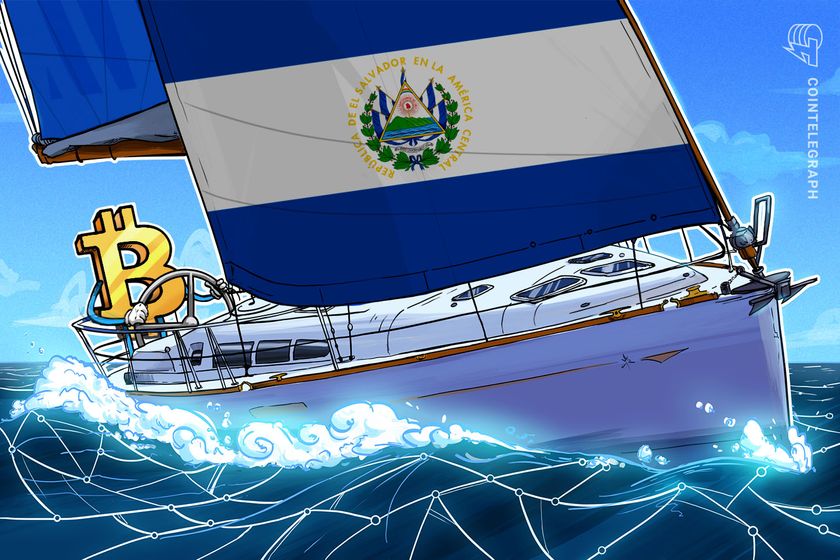 El Salvador says it has bought 1,090 BTC worth over $100 million, raising questions about an IMF loan pledge to limit Bitcoin exposure and fiscal risks. El Salvador, the first country to adopt Bitcoin as legal tender, says it has bought more than $100 million in BTC despite pledging to the International Monetary Fund (IMF) to limit public exposure to the asset as part of a loan agreement. According to data from El Salvador’s Bitcoin Office, the government acquired 1,090 Bitcoin (BTC) worth more than $100 million on Tuesday. The purchase comes after the IMF said in a July report that the Central American nation had not bought any new Bitcoin since the organization approved a $1.4 billion loan program at the end of 2024. According to El Salvador’s Bitcoin reserve data, the country’s Bitcoin holdings went from 5,968 BTC on Dec. 18, 2024 — when the government inked a deal with the IMF — to over 7,474 BTC following its latest purchase announcement. Read more
 -
Cryptonews.com - 09:42 Nov 16, 2025
Steak ‘n Shake is expanding into El Salvador after becoming one of the most prominent US fast-food chains to adopt Bitcoin payments. The post Crypto-Friendly American Fast Food Chain Steak ‘n Shake Expands Into El Salvador appeared first on Cryptonews. -
Cointelegraph.com - 22:04 Nov 15, 2025
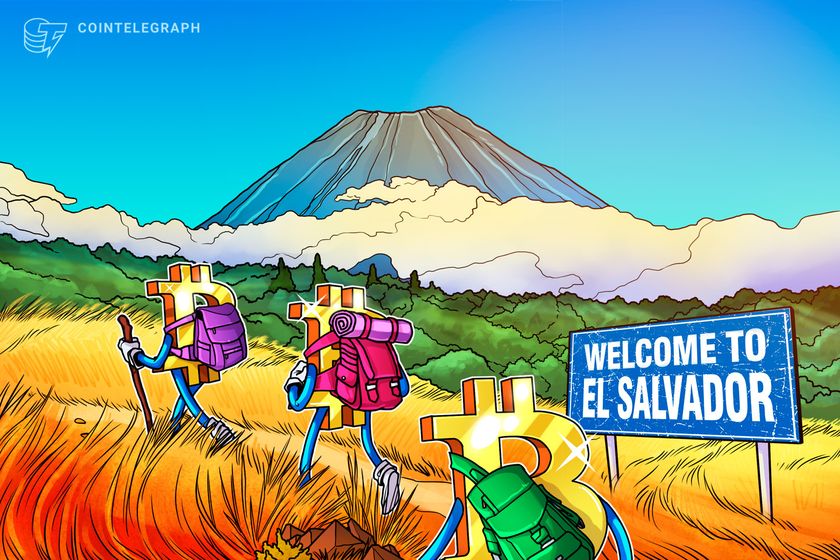 Steak 'n Shake, an American fast food restaurant company, first began accepting BTC in May and is now expanding its stores to El Salvador. Steak ‘n Shake, a fast food restaurant company in the United States that accepts Bitcoin (BTC), announced on Saturday that it is expanding into El Salvador. “We were honored to be in Bitcoin Country,” the company said in an X post following Steak ‘n Shake's participation in the country’s Bitcoin Histórico event on Wednesday and Thursday. Steak ‘n Shake started accepting BTC for payment at its stores in May, and the company’s chief operations officer, Dan Edwards, told Cointelegraph that the goal is to have BTC accepted at all of the company’s locations worldwide. Read more
 -
Cointelegraph.com - 20:31 Nov 07, 2025
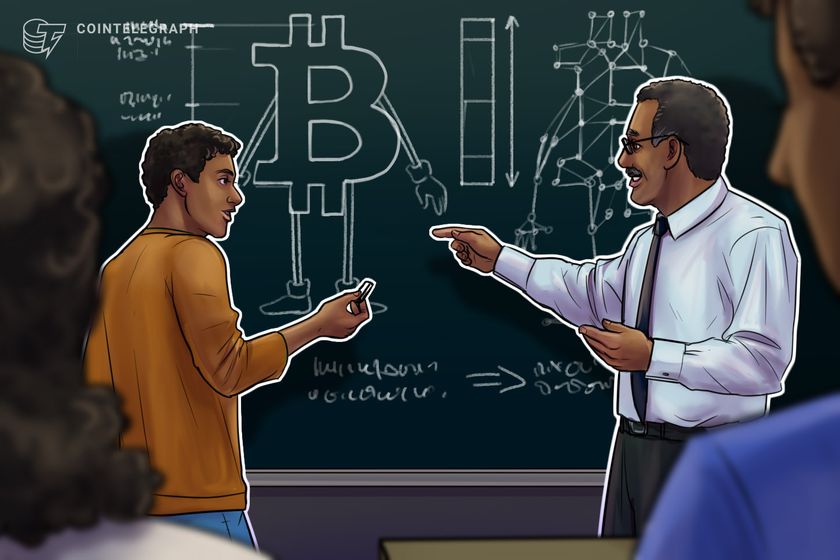 The Bitcoin education initiative is closing its local operations and rebranding for a global mission, shifting from teaching students in El Salvador to training educators worldwide. Update (Nov. 7 at 09:07 pm UTC): This article has been updated to incorporate commentary from My First Bitcoin. My First Bitcoin, a Bitcoin education program founded in El Salvador, has ended its collaboration with the country’s Ministry of Education and will transition from running local classes to supporting global Bitcoin education initiatives. The organization has educated more than 27,000 students in person about Bitcoin (BTC) — primarily in El Salvador — and now plans to support educators and community projects worldwide through open-source materials and training tools. Read more
 -
Cointelegraph.com - 20:31 Nov 07, 2025
The Bitcoin education initiative is closing its local operations and rebranding for a global mission, shifting from teaching students in El Salvador to training educators worldwide. Update (Nov. 7 at 09:07 pm UTC): This article has been updated to incorporate commentary from My First Bitcoin. My First Bitcoin, a Bitcoin education program founded in El Salvador, has ended its collaboration with the country’s Ministry of Education and will transition from running local classes to supporting global Bitcoin education initiatives. The organization has educated more than 27,000 students in person about Bitcoin (BTC) — primarily in El Salvador — and now plans to support educators and community projects worldwide through open-source materials and training tools. Read more -
Cointelegraph.com - 11:40 Sep 19, 2025
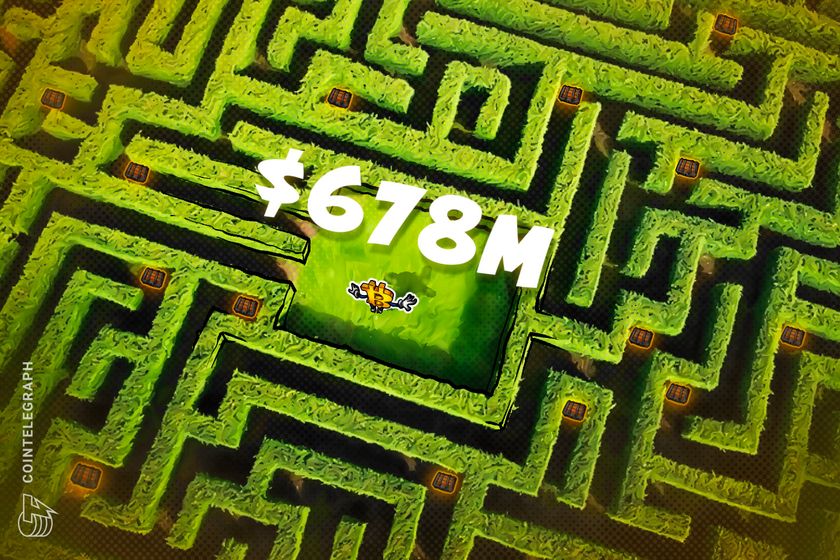 To guard against a distant quantum risk, El Salvador moved 6,000 BTC into 14 wallets, a move hailed as prudent custody by some and theatrics by others. The government redistributed roughly 6,274 BTC (around $678 million at publication time) from one address into 14 fresh addresses, each capped at 500 BTC, as a precautionary security measure. Until late August 2025, El Salvador’s national Bitcoin reserve sat in a single address. That’s a straightforward setup but a risky one: If a vulnerability is ever discovered, the entire stash could be exposed. Read more
 -
Cointelegraph.com - 21:07 Sep 07, 2025
El Salvador was the first country to make Bitcoin legal tender, but it has since scaled back its Bitcoin laws and public sector involvement. El Salvador’s Bitcoin Office is celebrating “Bitcoin Day,” the anniversary of the Bitcoin (BTC) legal tender law taking effect in September 2021. The Bitcoin Office highlighted the country’s Bitcoin strategic reserve, which now holds 6,313 BTC, valued at over $702 million, and the new banking law, which allows BTC investment banks to serve sophisticated investors, in a Sunday X post. The government BTC agency also said 80,000 public servants have received a Bitcoin certification as of 2025, and added that El Salvador now hosts several public Bitcoin and artificial intelligence education programs. Read more -
Cointelegraph.com - 04:34 Aug 30, 2025
El Salvador has transferred its 6,274 Bitcoin into 14 new wallet addresses as part of a security measure to protect against the threat of quantum attacks. El Salvador has redistributed its Bitcoin reserve holdings into 14 new wallet addresses as a precaution against potential quantum computing threats. “By splitting funds into smaller amounts, the impact of a potential quantum attack is minimized,” El Salvador’s Bitcoin Office said in an X post Friday, adding that each Bitcoin (BTC) address holds up to 500 BTC. The Bitcoin Office explained that once funds are spent from a Bitcoin address, its public keys are revealed and vulnerable — making it a target for quantum computers to crack — should the technology evolve into a significant threat in the future. Read more -
Cointelegraph.com - 10:48 Aug 28, 2025
 El Salvador President Nayib Bukele drew attention to lively betting activity on El Salvador’s Bitcoin holdings hitting $1 billion by late 2025. El Salvador President Nayib Bukele called attention to prediction markets amid increasing bets that the country’s Bitcoin holdings will hit $1 billion by year-end. Bukele took to X on Wednesday to tweet about Kalshi’s prediction market, which shows increasing betting activity on El Salvador’s Bitcoin (BTC) holdings hitting $1 billion by late 2025. “I could do the funniest thing right now,” Bukele said, as the odds of El Salvador hitting a $1 billion Bitcoin milestone before November jumped from 20% to 38% on Kalshi. Read more
 -
CryptoSlate - 13:35 Aug 14, 2025
Strategy (formerly MicroStrategy) and El Salvador showcased huge paper gains from their Bitcoin holdings after the flagship crypto surged to a new all-time high above $124,000. Strategy’s Bitcoin holdings reach ATH On Aug. 13, Strategy Chairman Michael Saylor announced that the company’s Bitcoin portfolio had reached a record high of $77.2 billion. This nearly doubles […] The post Strategy and El Salvador saw massive gains as Bitcoin hit new peak appeared first on CryptoSlate. -
Cryptonews.com - 12:13 Aug 10, 2025
Bitcoin Price Prediction: El Salvador’s New Law Fuels Institutional Demand – What’s the BTC Outlook?
El Salvador’s new investment banking law could boost Bitcoin demand from institutions. BTC eyes $130K after bullish flag breakout and trendline support. The post Bitcoin Price Prediction: El Salvador’s New Law Fuels Institutional Demand – What’s the BTC Outlook? appeared first on Cryptonews.