Solana | Crypto
"Solana" in Crypto feed
-
Decrypt - 20:46 Aug 11, 2026
Solana is holding its 50-day average after a pullback from August's $90 spike, but the death cross above it keeps pressure pointed down. -
Cointelegraph.com - 19:53 Aug 11, 2026
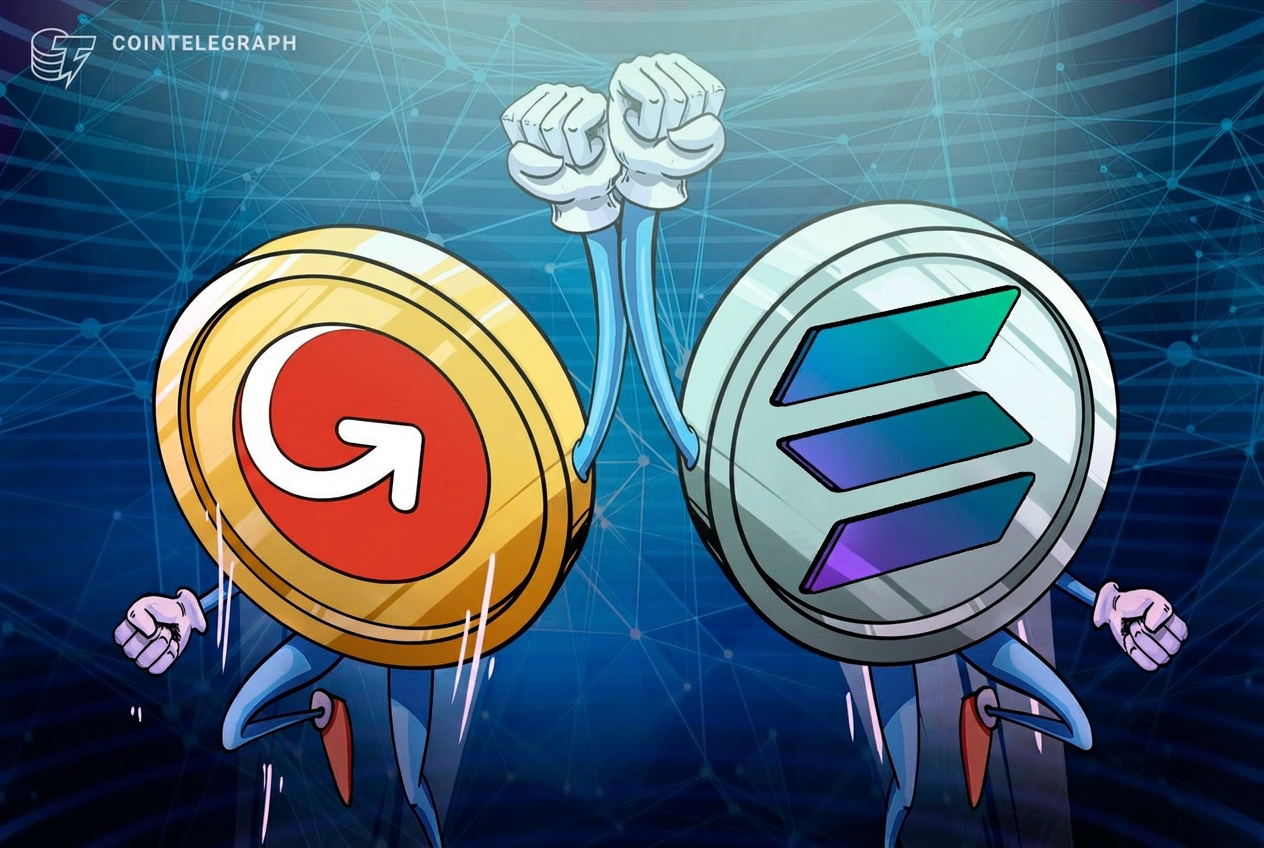 MoneyGram’s Ramps service now connects Solana wallets and applications to its global cash network, with Rift becoming the first wallet to integrate the service. Global remittance company MoneyGram has expanded its Ramps service to Solana, allowing wallets, exchanges and developers on the network to offer cash-to-crypto and crypto-to-cash conversions through its payments network. Ramps previously operated on Stellar, making Solana its second supported blockchain. Rift is the first Solana (SOL) wallet to integrate the service, allowing users to move between crypto and local currencies through MoneyGram. In an X post announcing the launch, Solana said MoneyGram serves more than 60 million customers through nearly 500,000 retail locations across more than 170 countries, with the network now accessible to Solana developers through a single API. Read more
 -
CoinDesk - 12:02 Aug 11, 2026
Wallets and apps on Solana can now tap MoneyGram's global network to move between digital assets and local currencies. -
CryptoPotato - 23:58 Aug 10, 2026
Jupiter has launched Lend v2 on Solana, allowing both supplied and borrowed assets to earn DEX trading fees while being used in lending positions. -
CryptoSlate - 16:45 Aug 10, 2026
Its Aug. 7 filing keeps more token sales, equity or traditional financing on the table until operations can support themselves. The post This corporate Solana treasury dumped $12.5M of SOL at a 54% loss – and its balance sheet still shrank appeared first on CryptoSlate. -
CryptoSlate - 18:00 Aug 09, 2026
$262.9 million of unrealized SOL depreciation drove most of a $316 million operational loss. The post Investors poured $267 million into Bitwise’s Solana ETF, but market losses erased every cent appeared first on CryptoSlate. -
CryptoSlate - 12:00 Aug 09, 2026
Aggregated funding on SOL perpetual futures has climbed to its highest level since September 2025, according to Velo data. Solana's futures open interest sits near $1.8 billion, equal to roughly 23.1 million SOL in notional exposure at current prices. Most major venues, including Binance, Bybit, Hyperliquid and OKX, show positive funding near 0.01% every eight […] The post A $1.8 billion leverage trap is building on Solana as traders pay 11-month high rates to defend $78 appeared first on CryptoSlate. -
CryptoSlate - 16:10 Aug 08, 2026
Crypto’s favorite buy-the-dip strategy failed to make money for Ethereum and Cardano investors who stuck with it since the start of 2022. An investor who placed $100 into Ethereum every month from January 2022 through August 2026 would have contributed $5,600 but ended up with about $4,898, a 12.5% loss, CryptoRank data showed. The same […] The post Bitcoin, XRP, Solana and Tron beat Ethereum and Cardano every month since 2022 on investor buying appeared first on CryptoSlate. -
CryptoSlate - 00:15 Aug 07, 2026
Both records are marked threshold-met, but Aug. 22 ends only discussion before later voting and any implementation. The post Solana whales just triggered a countdown that could skyrocket SOL’s daily burn rate by over 1,200% appeared first on CryptoSlate. -
Decrypt - 19:17 Aug 03, 2026
BlackRock launched a tokenized money market fund for stablecoin reserves that uses Solana alongside Ethereum. -
CryptoSlate - 15:25 Aug 03, 2026
The 100M-CU ceiling expands parallel headroom, but transactions targeting the same writable state get no extra room. The post Solana just boosted block capacity by a massive 66%, but the one bottleneck infuriating traders hasn’t budged appeared first on CryptoSlate. -
CryptoSlate - 22:50 Aug 02, 2026
The 62.3% versus 21.01% split covers one 12-address MEV-like group and shows association, not causation. The post A tiny cluster of Solana bots unlocked a 3x trading advantage by routing through one proprietary protocol appeared first on CryptoSlate. -
CryptoSlate - 23:55 Jul 30, 2026
Borrowings reached £847,000 at period end, while an uncompleted lender switch is management’s preferred alternative to more asset sales. The post Down to its last $4,000 in cash, a crypto firm holding millions in Solana is seeking a loan to survive $1.5M debt appeared first on CryptoSlate. -
Cointelegraph.com - 13:00 Jul 28, 2026
 Blockaid found Ethereum remained the hardest-hit blockchain in H1 2026, while Solana replaced Arbitrum as the network with the second-highest losses, driven largely by key compromises. Crypto losses topped $1 billion in the first half of 2026 as the industry recorded its highest number of hacks in a six-month period, according to onchain security platform Blockaid. Ethereum and Solana recorded the largest losses from incidents affecting their networks, with roughly $332 million and $326 million in stolen funds, respectively, Blockaid said in its H1 2026 security report published Tuesday. Blockaid tracked 212 security incidents during the period, with the largest single exploit coming from KelpDAO at $292 million, while the platform verified 3.4 times as many high-threshold exploits in H1 2026 as across all of 2025. Read more
 -
CryptoSlate - 17:00 Jul 19, 2026
Proposed trust changes would require no-less-than-quarterly cash distributions, creating a common cadence without fixing payout amounts or yield. The post Grayscale is setting up a quarterly cash showdown between Ethereum and Solana staking appeared first on CryptoSlate. -
Cointelegraph.com - 11:34 Jul 14, 2026
 Superteam UK lead Stephen “Cap” Newnham is taking on Nigel Farage in the Clacton by-election with pledges on pension reform and onchain transparency. Stephen “Cap” Newnham, who leads the Solana community group Superteam UK, said he will run as an independent candidate in the Aug. 13 parliamentary by-election in Clacton against Reform UK leader Nigel Farage. On Tuesday, Newnham outlined five campaign pledges, including support for local entrepreneurs, digital and artificial intelligence education, financial literacy in schools and onchain political transparency. He announced his intention to stand as an independent candidate on July 9. Newnham’s fourth pledge, “You should own your pension,” argues that existing structures like self-invested personal pensions and small self-administered schemes allow savers to choose where their assets are held. He also pledged full transparency, with donations and meetings published in plain English and onchain. Read more
 -
CryptoPotato - 19:34 Jul 09, 2026
Trading volume for Solana has fallen to 2026 lows as record negative sentiment raises the possibility of a surprise market reversal. -
CryptoSlate - 21:10 Jul 07, 2026
RWA.xyz data shows Solana's RWA transfer volume more than doubled over 30 days, shifting the adoption signal from tokenized value to usage quality. The post Solana’s $8.7B RWA surge shows tokenized assets are finally starting to move appeared first on CryptoSlate. -
CryptoSlate - 16:30 Jul 07, 2026
The Black Bull (ANSEM) is up roughly 299% over seven days, trading with $64.9 million in 24-hour volume and a market cap near $173 million, per CoinGecko. That size puts ANSEM in a category that traders treat as a read on Solana's broader risk appetite. Traders are calling the move a sign the trenches are […] The post ANSEM soars 299% and brings Solana’s memecoin trenches back to life – but do we need it now? appeared first on CryptoSlate. -
Cointelegraph.com - 21:36 Jul 03, 2026
 Rising interest in Solana-network memecoins and prediction markets was followed by a rally in SOL price. Will the momentum continue? Key takeaways: Solana’s SOL token jumped to its highest mark in over 30 days on Friday at $83, marking a decoupling from the altcoin market. SOL’s rally gained steam from a surge in tokenized trading volume on Solana, inflows of stablecoin liquidity, and an unexpected comeback in memecoin activity. Can SOL reclaim the $90 level? Read more