Crypto
-
Decrypt - 19:19 Aug 14, 2025
While XRP tanks on hot inflation data, Cardano rockets on ETF buzz. Is $1 for ADA really in sight? Here's what the charts say. -
Decrypt - 19:11 Aug 14, 2025
Lauded tech investor Cathie Wood got in on the latest blockbuster crypto IPO, with Ark Invest buying up millions of shares in Bullish. -
Decrypt - 19:00 Aug 14, 2025
U.S. Treasury Scott Bessent advocated for a 50-basis-point rate cut earlier this week. -
CoinDesk - 18:38 Aug 14, 2025
The token’s rejection at $0.26 came amid a broad crypto pullback, with the CoinDesk 20 Index sliding 4% and rate-cut hopes fading. -
Cointelegraph.com - 18:30 Aug 14, 2025
 Bitpanda enters the UK with 600+ crypto assets, an Arsenal FC partnership and B2B white-label services, but faces stiff competition in a market stalled by slow regulation. Austria-based crypto platform Bitpanda has entered the United Kingdom, aiming to make the country one of its top three markets within the next two years. The expansion includes its retail investment app along with its corporate arm, Bitpanda Technology Solutions, which allows banks and fintech companies to offer crypto trading through white-label services. The company says its app provides access to more than 600 crypto assets for British investors. Bitpanda Co-CEO Lukas Enzersdorfer-Konrad told Cointelegraph the company plans to “rapidly grow our direct retail presence” while working with UK financial institutions to launch crypto offerings using its infrastructure. In pursuing that goal, Bitpanda will face established rivals including Binance UK, Coinbase, Kraken, Crypto.com and Gemini, which already hold strong market share among UK reta...
 -
Cryptonews.com - 18:29 Aug 14, 2025
Hong Kong’s financial regulators have addressed recent stablecoin-related market volatility, stressing that licence approvals hinge on meeting stringent requirements. They urged investors to avoid relying on speculation or early-stage announcements when assessing market prospects. The post Stablecoin Speculation Triggers Swings, Hong Kong SFC and HKMA Caution Investors appeared first on Cryptonews. -
Cryptonews.com - 18:23 Aug 14, 2025
ETH has neared an all-time high after touching $4,781.24. US spot ETFs have drawn $1B in one day, led by BlackRock ETHA $640M and Fidelity FETH $277M. Spot volume has exceeded Bitcoin's, while higher exchange inflows have pointed to profit-taking. The ETH/BTC ratio has crossed its 365-day average. The post ETH Roars Toward Record as BlackRock Drives $640M Inflow: CryptoQuant Urges Caution appeared first on Cryptonews. -
CryptoPotato - 18:18 Aug 14, 2025
The President's family has begun accumulating asset through a second company, which will expand their already extensive reach into the crypto world. -
CryptoSlate - 18:15 Aug 14, 2025
The U.S. Treasury’s Office of Foreign Assets Control sanctioned multiple companies and individuals accused of using stablecoins to help Russia skirt international sanctions tied to its war in Ukraine on Aug. 14. The designations target both Russian-linked businesses and foreign intermediaries alleged to have facilitated large-scale cross-border transactions for sanctioned entities. The move highlights OFAC’s […] The post OFAC targets Kyrgyzstan-based firms, stablecoins over Russian sanctions violations appeared first on CryptoSlate. -
Decrypt - 18:15 Aug 14, 2025
Some experts believe the token's price will keep pumping through year-end. Others are worried about macro conditions. -
Cointelegraph.com - 18:12 Aug 14, 2025
 Bitcoin dropped sharply after a higher-than-expected US PPI print shocked traders. Key takeaways: Bitcoin drops below $118,000 after a hot US PPI print fueled inflation concerns. Federal Reserve interest rate cut odds dropped to 90.5% from 99.8%. Read more
 -
Cryptonews.com - 18:07 Aug 14, 2025
BtcTurk, a major crypto exchange in Turkey, has reported a suspected $48M multi-chain breach targeting hot wallets. Cryptocurrency deposits and withdrawals are suspended, but fiat transactions remain unaffected as security teams investigate in coordination with blockchain analysts. The post BtcTurk Turkey’s Second-Largest Crypto Exchange Loses $48M in Major Hack – What’s Happening? appeared first on Cryptonews. -
Decrypt - 17:46 Aug 14, 2025
Will the bull run continue? Top Myriad markets this week involve the next price movements for Ethereum, XRP, and Solana. -
Cryptonews.com - 17:40 Aug 14, 2025
The crypto bull run has been halted after $1.05B in liquidations followed hotter-than-expected US inflation data. Bitcoin, Ethereum, and other major cryptocurrencies have posted steep losses, with only Cardano remaining in positive territory amid a shift in market sentiment. The post $1.05B Liquidation Tsunami Wrecks Crypto Bulls Following Hot US Inflation Data – Bull Run Over? appeared first on Cryptonews. -
Cointelegraph.com - 17:38 Aug 14, 2025
 The Bitcoin miner’s pivot into AI infrastructure hosting includes a decade-long colocation agreement with Fluidstack, backed by Alphabet’s Google. TeraWulf has become the latest cryptocurrency miner to pivot into AI infrastructure hosting, reaching a long-term agreement with Fluidstack that’s backstopped by Alphabet’s Google — in a move expected to significantly increase the company’s revenue run rate. During its shareholder call on Thursday, the company disclosed that it has signed 10-year colocation lease agreements with Fluidstack, an AI infrastructure provider, worth $3.7 billion in contract revenue. That figure could more than double if five-year extensions are exercised. Google’s involvement comes through supporting Fluidstack’s $1.8 billion lease obligations with TeraWulf and providing debt financing. In return, Google received warrants for roughly 41 million WULF shares, representing about 8% of the company. Read more
 -
CryptoSlate - 17:36 Aug 14, 2025
TeraWulf, a prominent Bitcoin miner, has secured a strategic partnership with Google as part of its high-performance computing (HPC) co-location agreements with Fluidstack. According to an Aug. 14 statement, the search engine giant will backstop $1.8 billion of Fluidstack’s lease obligations, providing critical support for project-related debt financing. The arrangement grants Google a warrant to […] The post Google backs Bitcoin miner TeraWulf’s $1.8B AI project appeared first on CryptoSlate. -
Decrypt - 17:34 Aug 14, 2025
OpenAI promised a one-model-fits-all future for ChatGPT. Instead, it backtracked—and the model choices are more confusing than ever. -
Cointelegraph.com - 17:22 Aug 14, 2025
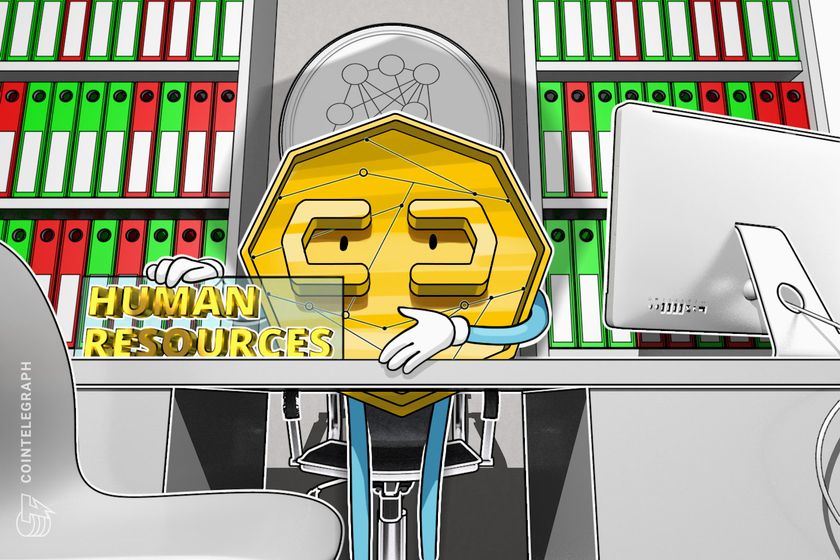 Major Wall Street players are adding talent to support their growing cryptocurrency operations. Charles Schwab, Fidelity and other traditional companies based in the United States are hiring for senior crypto positions to seemingly make a push into the industry. The open positions come as regulatory clarity has increased, paving the way for TradFi to enter the space. The open positions indicate a solid push into the crypto space. Schwab, for instance, is hiring for a senior product manager in crypto trading and a senior product manager in crypto onchain experiences. As Cointelegraph has reported, the $10 trillion asset manager plans to launch Bitcoin (BTC) and Ether (ETH) spot trading, with BTC trading services available by April 2026. Fidelity, which has $6.4 trillion in assets, is hiring for a crypto technology risk analyst. Technology company Booz Allen Hamilton is seeking a cryptocurrency subject matter expert, and Standard and Poor’s Global is hiring a senior analyst for global research and development i...
 -
CryptoPotato - 17:02 Aug 14, 2025
PENGU nears breakout as ETF filing gains attention, Robinhood lists token, and volume holds above $600M amid strong technical setup. -
Cryptonews.com - 16:57 Aug 14, 2025
ETH Inflows have reached a record, with U.S. spot Ethereum ETFs drawing $1B in a single session. BlackRock’s ETHA has led with $640M and Fidelity’s FETH has added $277M. Liquidity and participation have expanded across DeFi, L2s, and connected markets. The post ETH ETFs Just Hit a $1 Billion Net Inflow Day – Could That Spur Altcoin Rotation This Weekend? appeared first on Cryptonews.