Crypto
-
Decrypt - 10:24 Jul 23, 2026
The exploit hit a custody bridge AFX operates rather than the Arbitrum network itself, with the stolen funds quickly moved to Ethereum. -
Cryptonews.com - 10:11 Jul 23, 2026
Ethereum faces fresh security-risk headlines after the jaredfromsubway.eth MEV bot was drained for $7.5M. Here's what the hack means for ETH price and key levels to watch. The post Ethereum Price Prediction: Another Protocol Hacked for $7.5 Million appeared first on Cryptonews. -
CryptoPotato - 09:54 Jul 23, 2026
STABLE follows suit in terms of daily gains. However, there's a 360% price pump from one strange altcoin on CoinGecko. -
Cryptonews.com - 09:50 Jul 23, 2026
XRP breaks $1.45 resistance on 140% volume surge and tests $1.50, but ETF inflows decelerating to $12M signal weakening institutional conviction. Key levels, scenarios, and what to watch next. The post XRP Price Breaks Resistance, But ETF Flows Warn Bulls appeared first on Cryptonews. -
CryptoSlate - 09:47 Jul 23, 2026
Bitcoin trades near $65,978, below the $69,000 level Glassnode treats as the average cost basis for short-term holders, and the Federal Reserve's July 28-29 meeting will decide if this disconnect can be closed. June payrolls rose by only 57,000, unemployment stayed at 4.2%, and revisions cut April and May payrolls by a combined 74,000. Core […] The post Bitcoin’s $69,000 test could expose its whale-led rebound as a fragile Fed gamble appeared first on CryptoSlate. -
Cointelegraph.com - 09:42 Jul 23, 2026
 Coinbase plans to expand its Singapore office from 150 to about 200 employees by the end of 2026 as it expands its presence in the Lion City. Cryptocurrency exchange Coinbase reportedly plans to expand its presence in Singapore and grow its headcount from 150 to about 200 staff members by the end of 2026. The cryptocurrency exchange is mainly looking to hire more engineers, customer service, relationship management staff and institutional sales representatives for its Singapore office, which opened at One Raffles Quay on Wednesday, Hassan Ahmed, Coinbase’s country director for Singapore, told the Business Times in an interview. Ahmed said that Singapore is increasingly becoming a strategic hub for cryptocurrency innovation. Coinbase received a major payment institution license from the Monetary Authority of Singapore (MAS), the city-state’s central bank, in October 2023, enabling it to expand its services to Singaporean individuals and institutions. Read more
 -
CoinDesk - 09:03 Jul 23, 2026
In stock news, Alphabet beat on revenue but raised its AI spending forecast again, sending its stock lower after hours. -
Cointelegraph.com - 09:03 Jul 23, 2026
 Grayscale’s head of research said that Bitcoin may have bottomed, arguing that macro factors, such as interest rate decisions as increasingly driving the price action of this maturing asset class. Crypto-focused asset manager Grayscale said that Bitcoin’s price may have bottomed earlier than the traditional four-year cycle, which would imply a cycle low in September or October. Grayscale’s head of research, Zach Pandl, argued that Bitcoin (BTC) has “grown up” as an asset and is increasingly driven by macroeconomic factors. “If the Fed forgoes rate hikes and economic growth holds up well, Bitcoin’s price may already have bottomed,” Pandl wrote in a Wednesday report. Read more
 -
Decrypt - 08:46 Jul 23, 2026
The crypto derivatives pioneer told users to close positions and withdraw funds before it goes dark on September 23. -
CoinDesk - 08:42 Jul 23, 2026
BitMEX, co-founded by Arthur Hayes in 2014, redefined the global crypto market by introducing the 100x leverage perpetual swap. -
CoinDesk - 08:42 Jul 23, 2026
The bank will begin testing tokenized Treasuries on a private blockchain by year-end and expand its settlement network to cover more international trading hours. -
CryptoPotato - 08:38 Jul 23, 2026
[PRESS RELEASE – Dublin, Ireland, July 23rd, 2026] The European-founded, MiCA-licensed fintech Ramp Network expands its full wallet product to its home market, giving EU users a self-custodial, everyday crypto account with a built-in rewards program. Ramp Network, a global crypto infrastructure company founded in Europe and licensed under MiCA by the Central Bank of […] -
CryptoPotato - 08:30 Jul 23, 2026
The closure will mark the end of a major era in crypto derivatives trading. -
Cointelegraph.com - 08:29 Jul 23, 2026
 Crypto home invasions rose to 20 in H1 2026 from one a year earlier, while France accounted for 33 of 52 verified wrench attacks, according to CertiK. Home invasions became the most common form of crypto wrench attacks during the first half of 2026, rising to 20 publicly reported incidents from just one a year earlier, according to blockchain security firm CertiK. On Thursday, CertiK said it verified 52 wrench attacks worldwide in the first half of 2026, up 33.3% from 39 incidents during the same period in 2025. Kidnappings rose to 16 from 12, while robberies declined from five incidents to one. CertiK said the recorded financial exposure linked to the attacks reached about $124.1 million, up from $10.5 million a year earlier. The figure is not limited to confirmed thefts and may include ransom demands, victim transfers, frozen or recovered assets and failed ransom demands. Read more
 -
Cointelegraph.com - 08:14 Jul 23, 2026
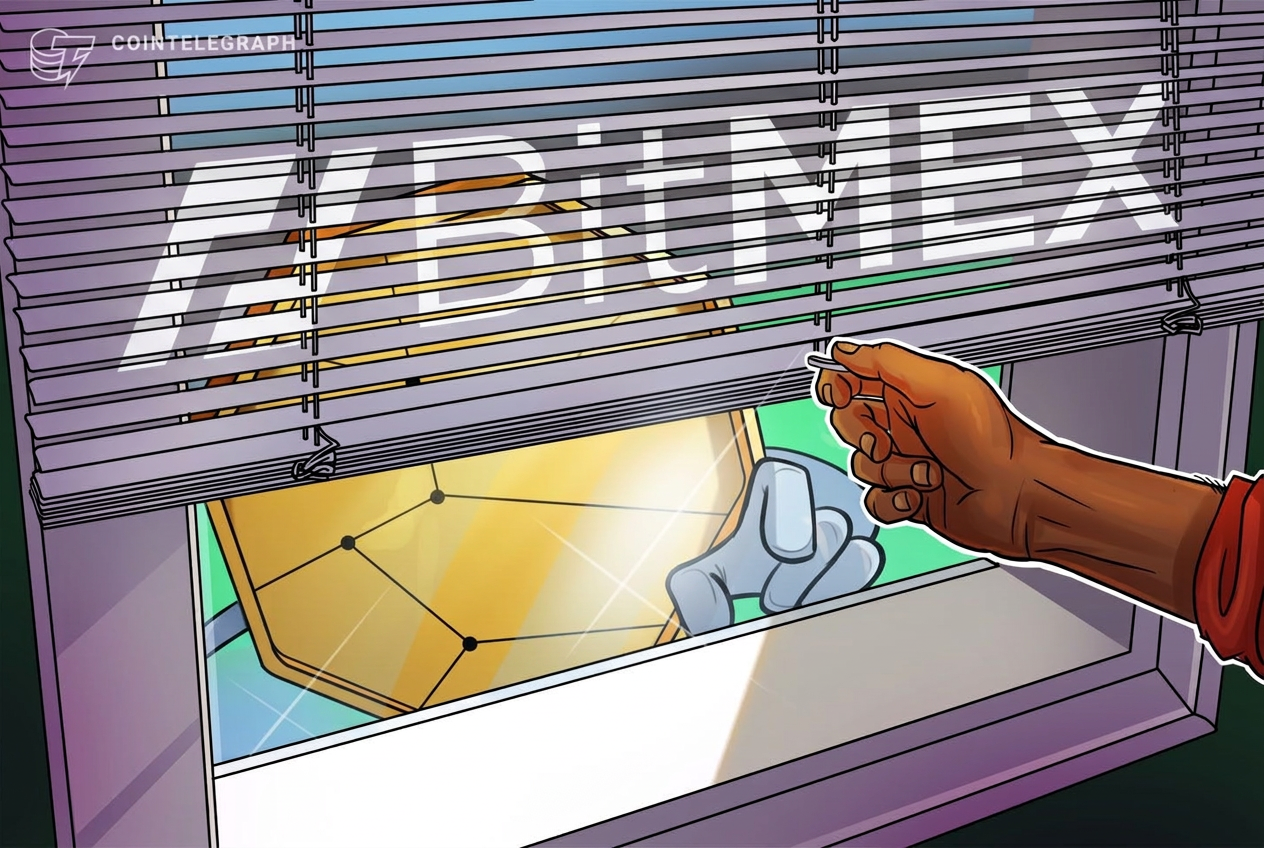 BitMEX announced it will shut down operations on Sept. 23, 2026, after owner HDR Global Trading Limited decided to close the crypto exchange. BitMEX, one of the pioneers of cryptocurrency derivatives trading, announced it will shut down operations after owner and operator HDR Global Trading Limited decided to close the company following a strategic review. BitMEX announced Thursday that it will stop exchange services on Sept. 23, 2026, at 04:00 UTC and urged users to close positions and withdraw funds before the deadline. “We want to reassure you that your assets remain fully safe and under your control during this transition period,” BitMEX said in a statement to users. Read more
 -
Cointelegraph.com - 07:53 Jul 23, 2026
 Mirae Asset Consulting has become Korbit’s largest shareholder after completing its acquisition, with the exchange saying trading and customer asset protections are unchanged. Mirae Asset Consulting, an affiliate of one of South Korea’s largest financial groups, has completed its acquisition of a controlling stake in South Korean crypto exchange Korbit, becoming the exchange’s largest shareholder after completing regulatory procedures. Korbit said in a Thursday announcement published on its website that its operating entity remains unchanged and that trading, deposits and withdrawals will continue without interruption. The exchange added that customer assets remain segregated under South Korea’s Virtual Asset User Protection Act. Read more
 -
CryptoPotato - 07:35 Jul 23, 2026
Verus has now suffered two bridge exploits in roughly two months, with investigators pointing to striking technical similarities. -
CryptoPotato - 07:32 Jul 23, 2026
[PRESS RELEASE – Willemstad, Curaçao, July 23rd, 2026] Leading crypto entertainment platform 1win announces the launch of its new X.com Ambassador Program, inviting content creators to join the brand’s growing global ambassador network and help shape conversations across the crypto and online entertainment communities. As social platforms continue to advance in crypto adoption, the initiative […] -
Cointelegraph.com - 07:08 Jul 23, 2026
 US spot Bitcoin ETFs recorded $69 million in inflows on Wednesday, extending their inflow streak to seven sessions and bringing total inflows during the period to nearly $1 billion US-listed spot Bitcoin exchange-traded funds (ETFs) have totaled about $1 billion in net inflows over seven straight trading sessions. Spot Bitcoin ETFs recorded $68.99 million in net inflows on Wednesday, bringing cumulative inflows since July 14 to $999.38 million, according to data from SoSoValue. The current streak remains below April’s nine-session run, when spot Bitcoin ETFs attracted $2.1 billion in net inflows. Read more
 -
CoinDesk - 07:05 Jul 23, 2026
Korbit, South Korea's first cryptocurrency exchange, has joined the Mirae Asset Group family, marking the first time a traditional Korean financial group's affiliate has taken a controlling stake in a domestic crypto exchange.