Crypto
-
CoinDesk - 05:34 Jul 21, 2026
Asian semiconductor shares rebounded hard, a five-day ETF inflow streak passed $600 million, and oil pulled back on Middle East diplomacy. -
CryptoPotato - 05:31 Jul 21, 2026
Bitcoin prices are at a five-week high, and the asset has moved out of its capitulation zone, according to analysts. -
CryptoPotato - 04:21 Jul 21, 2026
Analysts warn that elevated yields may reduce investor appetite for speculative assets by making safer returns more attractive. -
Cointelegraph.com - 03:56 Jul 21, 2026
 The filing expands Grayscale’s growing lineup of crypto-related exchange-traded products outside of Bitcoin and Ether. Crypto asset manager Grayscale on Monday filed an S-1 registration statement for the first US Worldcoin ETF, which would give investors a way to gain exposure to the WLD token through an exchange-traded product. According to the preliminary prospectus, the Grayscale Worldcoin ETF is intended to list on the Nasdaq under the symbol GWLD. BitGo Bank & Trust would custody the Worldcoin (WLD), while BNY Mellon would serve as administrator and transfer agent. CSC Delaware Trust Company would serve as a trustee. Read more
 -
Cointelegraph.com - 03:21 Jul 21, 2026
 The settlements add to former Celsius CEO Alex Mashinsky’s $10 million FTC settlement in April. Celsius co-founders Shlomi Daniel Leon and Hanoch “Nuke” Goldstein have been ordered to pay over $6 million to settle Federal Trade Commission charges alleging they misrepresented the safety of the Celsius platform before the company collapsed. Goldstein, Celsius’ former chief technology officer, was ordered to pay $2.014 million under an order signed Monday by US District Judge Denise Cote. Leon, the firm’s former chief strategy officer, was ordered to pay $4.1 million under a separate order entered on June 29. The settlements extend the fallout from the 2022 collapse of Celsius beyond its former CEO Alex Mashinsky. The crypto lending platform, which held $25 billion in assets at its peak, owed its users $4.7 billion when it filed for bankruptcy in July 2022. Read more
 -
Cointelegraph.com - 02:42 Jul 21, 2026
 Retail users in Vietnam who trade on offshore crypto exchanges like Binance or OKX face heavy penalties. Network School controversy in Malaysia over Israeli citizen ban. Vietnam will fine retail crypto users up to $1900 if they trade on unlicensed overseas platforms such as Binance, OKX and Bybit, instead of on licensed local exchanges. There’s just one problem: Vietnam’s Finance Ministry has yet to issue any exchange licenses for its regulated digital asset market which is due to start on September 1. Five exchanges have been approved in principle however. Domestic investors who trade crypto that’s been designated exclusively for foreign investors can be fined up to $3800. Crypto companies providing or advertising services without a license, those who fail to properly ID customers, or unlawfully deal with crypto account data, can be fined up to $7600. Balaji Srinivasan’s utopian Network School in Forest City, Malaysia is under fire over allegations it has been hosting Israeli citizens using second passports....
 -
Cointelegraph.com - 01:16 Jul 21, 2026
 The move comes as traditional exchanges face growing competition from crypto markets and tokenized equity platforms that offer around-the-clock trading. The London Stock Exchange is planning to launch a night-time trading venue in the first half of 2027, joining a growing number of global exchanges offering or planning near-24-hour trading. According to a report from the Financial Times, the LSE’s new venue will operate separately from its main market and run from 5:00 pm to 7:50 am London time. It will initially offer access to exchange-traded products such as those tracking the UK or US stock market. Related: Backpack joins race for 24/7 stock markets with tokenized equities Read more
 -
Cointelegraph.com - 00:02 Jul 21, 2026
 The decision keeps the administration’s chief crypto policy negotiator in place during what could be a decisive few weeks for the CLARITY Act. The White House’s top crypto adviser Patrick Witt said he will no longer take a leave of absence at the end of the month for military training, allowing him to remain at the White House to help advance the CLARITY Act in the Senate. “Last week, it was reported that I was set to leave for mandatory training as part of my service in the Georgia Army National Guard, right before Clarity hits the Senate floor,” Witt said in an X post on Monday. “While I remain committed to fulfilling my service obligation, I am grateful to report that my training has been deferred, and that I will be able to see this effort through to the end,” he added. Read more
 -
CryptoPotato - 22:02 Jul 20, 2026
Vet argues that reserve requirements serve as an important defense against spam attacks and excessive network resource usage. -
Cointelegraph.com - 21:41 Jul 20, 2026
 Coinbase vice chair Ryan VanGrack said that Democratic lawmakers had added provisions on customer protection to a digital asset market structure bill under consideration in the US Senate. As lawmakers in the US Senate are likely to vote soon on the Digital Asset Market Clarity (CLARITY) Act, representatives from advocacy organizations and companies are providing details of closed-door negotiations over the bill, which is expected to be the most comprehensive piece of legislation affecting the crypto industry. In a Monday CNBC interview, Coinbase vice chair Ryan VanGrack said while the final negotiations over text of the CLARITY Act were taking place in the Senate, Democratic lawmakers had added additional protections for customers to give what he called “more teeth” to the legislation. He did not explicitly mention any progress on adding ethics provisions to the bill, which many Democrats said will be necessary for their votes. “[A]t the end of the day, this is about customer protections,” said VanGrack. “Th...
 -
Cointelegraph.com - 21:21 Jul 20, 2026
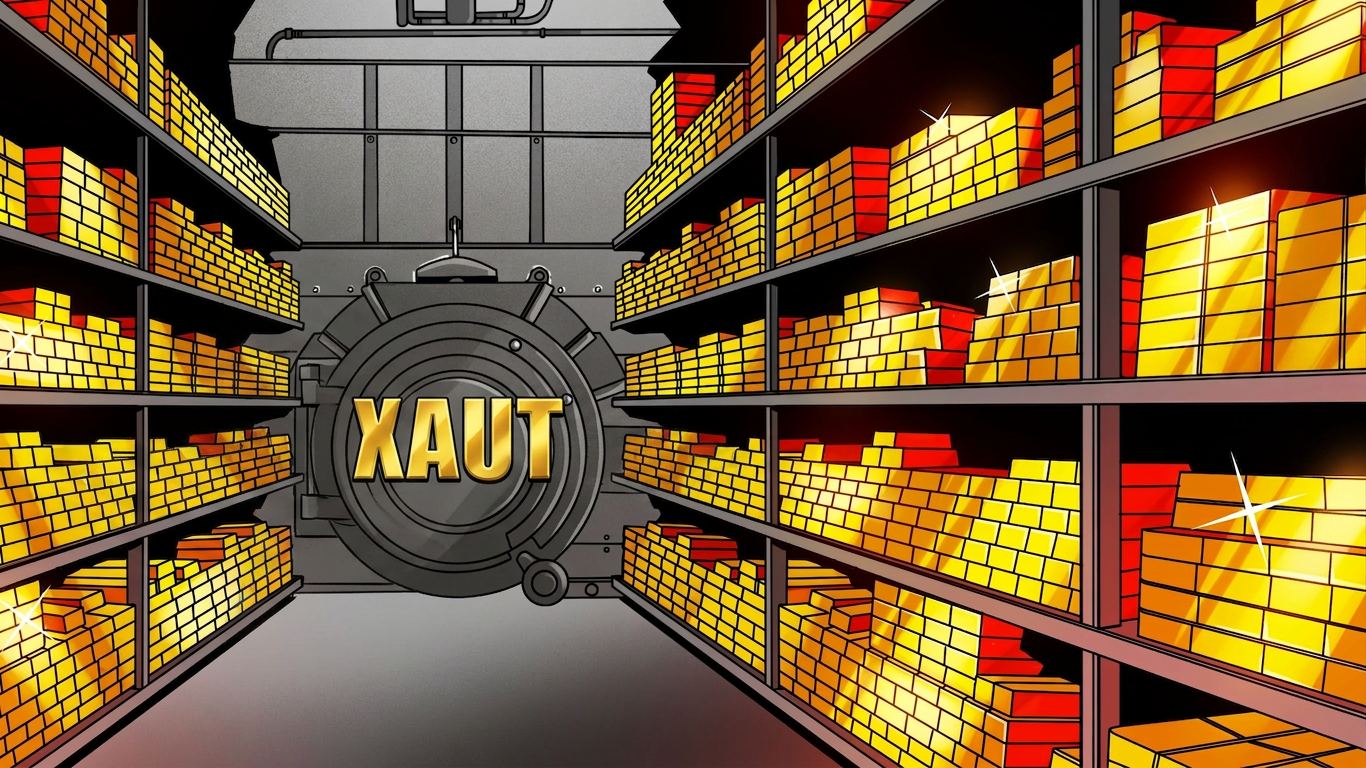 The recognition allows regulated firms in Abu Dhabi Global Market to offer services involving Tether Gold as tokenized commodities gain broader adoption. Tether Gold (XAUT) has been recognized as an Accepted Spot Commodity in Abu Dhabi Global Market (ADGM), allowing firms in the international financial center to offer services involving the tokenized gold asset if they hold the required regulatory permissions. The recognition follows ADGM’s earlier acceptance of Tether’s USDt (USDT) as an Accepted Fiat Referenced Token, extending the company’s regulated product lineup in one of the Middle East’s largest international financial centers. Tether CEO Paolo Ardoino said the designation gives regulated firms a clearer path to offer XAUT, while ADGM said it would support business growth by expanding the products and services available to companies operating in the financial center. Read more
 -
Cointelegraph.com - 21:20 Jul 20, 2026
 Despite muted derivatives sentiment, Bitcoin’s decoupling and Strategy’s cash raise set the stage for a potential rally to $70,000. Key takeaways: Bitcoin (BTC) showed relative strength over the past week, despite failing to break above $65,500. More importantly, the cryptocurrency has decoupled from traditional markets as investors took profits in memory-chip makers amid fears of excessive valuations in the artificial intelligence sector. Still, judging by Bitcoin’s derivative metrics, top traders are not particularly confident about a rally toward $70,000. Read more
 -
Decrypt - 21:12 Jul 20, 2026
Phase 1 of Project Hangang opened 81,000 wallets with 42% of them using the CBDC. Phase 2 is bigger, and this time it moves real government money. -
CryptoSlate - 21:00 Jul 20, 2026
Only creditors who cleared the June 16 requirements and can onboard with BitGo, Kraken or Payoneer are on the July 31 clock. The post FTX begins $900M payout as creditors in 45 countries could lose their claims within 6 months appeared first on CryptoSlate. -
Cointelegraph.com - 20:27 Jul 20, 2026
 The SEC alleges Mining Automatic and its founder raised $22 million from investors by promising guaranteed crypto mining returns while spending only a fraction of the funds on mining operations. The US Securities and Exchange Commission (SEC) has sued crypto mining investment business Mining Automatic and its founder, Zan Shaikh, alleging they raised $22 million from investors while spending only about 13% of the funds on mining operations. Mining Automatic was operated by Massachusetts-based Bright Vision Distribution LLC, which the SEC said raised the money from more than 380 investors between June 2023 and May 2025. The company allegedly promised guaranteed monthly returns from crypto asset mining despite operating a business that could not generate the advertised payouts. The SEC said investor money was instead used for marketing, personal expenses and unrelated ventures. Read more
 -
CryptoPotato - 20:16 Jul 20, 2026
"A clean breakout above $0.0020 could trigger the next bullish leg," one analyst assumed. -
Decrypt - 20:02 Jul 20, 2026
The bill licenses exchanges, caps retail investors at about $3,800 a year, and creates a legal pathway for Russian companies to pay foreign partners in crypto—bypassing Western sanctions. -
Cointelegraph.com - 19:29 Jul 20, 2026
 The wallet company said it expected the layoffs to generate between $10 million and $13 million in savings as part of its strategy to build a full-stack card issuance and payments platform. Cryptocurrency wallet company Exodus will cut a quarter of its workforce in a restructuring move toward stablecoin payments infrastructure. In a Friday notice, Exodus said it would cut 25% of its staff to “better align its cost structure and organizational priorities with its strategy to build a full-stack card issuance and payments platform.” The announcement followed the wallet company’s acquisition of Monavate and Baanx, which it said at the time would lessen its dependence on third-party providers for services including stablecoin payments. “Exodus expects to recognize approximately $2.5 million to $3.5 million of pre-tax charges in connection with the action, consisting primarily of severance and related personnel costs,” said the notice. “The Company expects the action to generate approximately $10 million to $13 mil...
 -
CryptoSlate - 19:00 Jul 20, 2026
The first five repurchases generated 24% more gross Bitcoin-per-share accretion per pound than a matched BTC purchase. The post Bitcoin treasury company discovers buying own stock adds 24% more BTC per share than buying Bitcoin appeared first on CryptoSlate. -
Decrypt - 18:50 Jul 20, 2026
For the first time in Cardano's history, no company flipped the switch on a major protocol update.