Crypto
-
Cointelegraph.com - 20:40 Sep 07, 2026
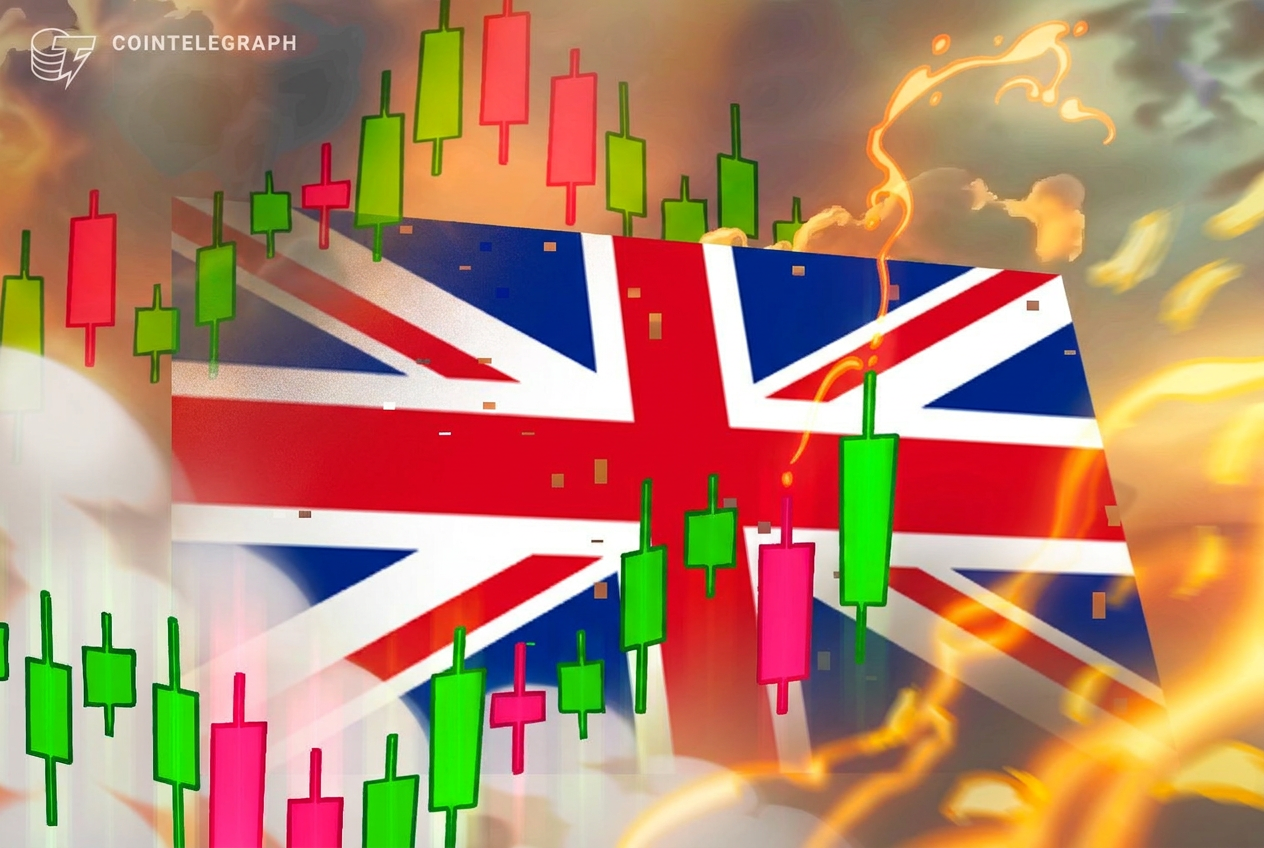 Companies offering binary options for retail investors have been barred from selling, marketing and distributing products in the UK since 2019 following a directive from the FCA. The UK’s Financial Conduct Authority (FCA) reportedly has reached out to prediction market companies as part of discussions over whether the regulator would loosen a ban for retail investors, in place since 2019. According to a Friday report from The Times, the FCA is weighing lifting a ban on prediction market platforms like Polymarket and Kalshi for UK-based retail investors. Because prediction markets offer binary options on event contracts, such as for sports, politics and the weather, they fall under an April 2019 ban imposed by the FCA, in which companies were “prohibited from selling, marketing or distributing binary options to retail consumers.” “Binary options are gambling products dressed up as financial instruments,” said the FCA’s executive director of strategy and competition, Christopher Woolard, at the time of the ban....
 -
Decrypt - 20:31 Sep 07, 2026
Itaú, Nubank, and Banco do Brasil now sell more than a dozen tokens each to retail clients, even as none of them touch crypto with their own balance sheet. -
Cointelegraph.com - 20:21 Sep 07, 2026
 Ethereum’s Hegotá upgrade will center on FOCIL and Frame Transactions as developers weigh dozens of other proposed changes for inclusion. The Ethereum Foundation has identified two “must ship” proposals for the Hegotá upgrade, prioritizing censorship resistance and more flexible account authentication as it narrows the fork’s scope. The ranking evaluated 62 proposed Ethereum Improvement Proposals (EIPs), drawing on input from roughly 60 researchers and engineers across the Foundation’s Protocol cluster. It marks the first time the Foundation’s Protocol cluster has published a unified view of proposed EIPs rather than separate opinions from individual teams. The two must-ship proposals are EIP-7805, known as FOCIL, and EIP-8141, or Frame Transactions, which the Foundation designated as the consensus and execution-layer headliners for Hegotá. Read more
 -
CryptoSlate - 20:05 Sep 07, 2026
Anthias projects lower monthly debt accrual under unchanged market conditions, while reserve transfers and supplier cash access remain unverified. The post DeFi lender proposes bad-debt fix, but user USDC funds remain locked appeared first on CryptoSlate. -
CryptoPotato - 19:55 Sep 07, 2026
Three tokenized stocks generated $7.1 billion in DEX volume, accounting for nearly 45% of the category's total activity. -
Decrypt - 19:47 Sep 07, 2026
Biden's LAPTOP meme coin drops this week. Most crypto traders out there so far don't seem too enthused. -
Cryptonews.com - 19:17 Sep 07, 2026
XRP trades near $1.41 as analyst Ali Martinez eyes a $60 target on a decade-long triangle breakout above $3.66. Full price analysis inside. The post XRP Price Prediction: Analyst Calls $60 Ripple If it Breaks The Heavy Resistance appeared first on Cryptonews. -
Decrypt - 19:13 Sep 07, 2026
Nearly 600 BTC remains outstanding after Blockstream told the actors in an on-chain message that Liquid’s bridge nodes had been patched. -
CryptoSlate - 19:00 Sep 07, 2026
A live reading is already 18, showing why institutions need more than one decentralization metric. The post Solana beats Bitcoin on one key metric, but a single software bug could still take down the network appeared first on CryptoSlate. -
Cointelegraph.com - 18:53 Sep 07, 2026
 Hunter Biden will reportedly distribute 200 million of the LAPTOP token to his substack subscribers, members of a mailing list and investors in President Donald Trump’s memecoin. Hunter Biden, son of former US President Joe Biden, announced that he plans to launch a memecoin based on the reports of his infamous laptop, which has been subject to intense media scrutiny. In a Monday announcement on X, Hunter Biden posted the memecoin’s ticker symbol, $LAPTOP, signaling a Wednesday launch. The Wall Street Journal reported that Biden would send 20% of the one-billion token supply to substack subscribers, members of a mailing list and investors in President Donald Trump’s memecoin, Official Trump (TRUMP), whose value has dropped by about 97% since reaching an all-time high price in January 2025. Source: Hunter Biden Read more
 -
Decrypt - 18:16 Sep 07, 2026
The Iran conflict has increased demand for digital assets to preserve and transfer wealth, while Gulf crypto businesses have kept operating through disruption, the Bitcoin Policy Institute says. -
CryptoPotato - 18:15 Sep 07, 2026
Across all attack waves, 82% of stolen coins remain in attacker-controlled addresses, while 18% have been moved for laundering. -
CryptoSlate - 18:05 Sep 07, 2026
The annual tally spans remittance and virtual asset providers, while AUSTRAC says GetCoins was allegedly exploited by investment scams. The post Australia cancels registration of crypto provider GetCoins following customer scam complaints appeared first on CryptoSlate. -
Cointelegraph.com - 17:58 Sep 07, 2026
 Polish prosecutors charged Romana Ż. with organized crime and misappropriation offenses involving $2.1 million in Zondacrypto user funds. Polish prosecutors investigating cryptocurrency exchange Zondacrypto, have formally charged an individual, identified as Romana Ż., with participating in an organized criminal group and allegedly misappropriating 7.8 million zlotys ($2.1 million) in user funds. Read more
 -
Decrypt - 17:41 Sep 07, 2026
A plea agreement hearing in Lam's case is set for Tuesday in Washington, nearly two years after his arrest in Miami. -
CryptoSlate - 17:30 Sep 07, 2026
Ethereum co-founder Vitalik Buterin has pushed back against predictions that artificial intelligence could trigger a 50% Bitcoin crash within two years. The debate began after Silicon Valley investor and AI-risk commentator Liron Shapiro said he sees a 50% probability that Bitcoin will fall more than 50% over the next two years because AI undermines what […] The post Vitalik Buterin now confident AI won’t break crypto, betting 90% of his net worth appeared first on CryptoSlate. -
Cointelegraph.com - 17:29 Sep 07, 2026
 Bitcoin’s struggle to break $80,000 comes as markets price in a growing chance of a September rate hike, putting monetary conditions back in focus. Crypto fund flows are becoming increasingly sensitive to changes in the US interest-rate outlook, with CoinShares arguing that Federal Reserve policy remains a key barrier to Bitcoin (BTC) breaking above $80,000 despite continued investor demand for crypto. In his latest market update, CoinShares head of research James Butterfil argued that “Bitcoin is trading like gold again, but the Fed still sets the ceiling” at around $80,000. That sensitivity was evident after Fed Chair Kevin Warsh’s speech at Jackson Hole. Warsh said progress on inflation had been modest and that price pressures were not easing quickly enough to give the central bank’s policy makers the confidence inflation was returning to its 2% target. Roughly $100 million exited digital asset investment products immediately after the speech, as markets sharply increased the probability of a September rat...
 -
Cointelegraph.com - 16:42 Sep 07, 2026
 Capital B’s latest Bitcoin purchase was its largest in nearly a year, pushing the French company ahead of H100 Group among publicly traded BTC holders. French Bitcoin treasury company Capital B has acquired 376 Bitcoin (BTC) for 25.3 million euros ($29.5 million), bringing its total holdings to 3,521 BTC. The purchase was funded after Capital B completed roughly 30.1 million euros ($35 million) in capital raises, including a private placement backed by investors Adam Back and TOBAM, according to a Monday announcement. The company bought the Bitcoin at an average price of 67,182 euros apiece, with Swissquote Bank Europe executing the purchase and Taurus providing custody. Read more
 -
CryptoPotato - 16:32 Sep 07, 2026
Buterin says Bitcoin can handle network-layer attacks without needing the kind of broad social consensus required for deeper protocol changes. -
Decrypt - 16:26 Sep 07, 2026
Hunter Biden is launching a meme coin called LAPTOP on Sept. 9 on Base, and airdropping traders who lost money on TRUMP.