Crypto
-
Cryptonews.com - 13:32 Mar 24, 2026
Arbitrum Sepolia Testnet Halts Block Production The post Arbitrum Sepolia Testnet Halts Block Production in Partial Outage appeared first on Cryptonews. -
CoinDesk - 13:27 Mar 24, 2026
Ripple (XRP), down 1.3% since Monday, was also among the underperformers. -
CoinDesk - 13:24 Mar 24, 2026
The audit aims to address long-standing questions over USDT reserves and push new disclosure standards. -
CoinDesk - 13:18 Mar 24, 2026
Implied volatility indicators DVOL and BVIV suggest peak fear has passed, with crypto leading traditional markets in pricing risk. -
Cointelegraph.com - 13:12 Mar 24, 2026
 Securitize will become NYSE’s first digital transfer agent to mint blockchain-based shares of stocks and develop standards for compliant tokenized stock issuance. The New York Stock Exchange (NYSE) has signed a memorandum of understanding (MoU) with tokenization platform Securitize, as part of a broader effort to develop blockchain-based stock trading infrastructure for Wall Street. Securitize will become the first digital transfer agent, enabling it to mint blockchain-based shares for stocks and exchange-traded funds (ETFs) on the upcoming tokenized securities platform, the Digital Trading Platform, according to a Tuesday announcement from Intercontinental Exchange (ICE), parent company of the NYSE. Under the MoU, the companies plan to develop a digital transfer agent program and standards for digital transfer agents and tokenization agents, with a focus on regulatory, operational and technology requirements for tokenized securities infrastructure. Read more
 -
Cointelegraph.com - 13:00 Mar 24, 2026
 Solana is aiming to attract enterprises and financial institutions to its ecosystem through a new unified developer platform, which is focused on tokenization and stablecoins. The Solana Foundation has revealed it has secured Mastercard, Worldpay, and Western Union as early users of its newly launched developer platform, as part of ongoing efforts to attract enterprises to build on its blockchain. The Solana Developer Platform (SDP) was announced on Tuesday to enable enterprise developers to build on the blockchain using a unified interface. Much of the focus is on real-world asset tokenization, including stablecoins, which is currently a $328 billion market, according to rwa.xyz. More than half of the total value is held on Ethereum; however, with Solana holding 6.3% share of the tokenized real-world asset market. Read more
 -
CoinDesk - 13:00 Mar 24, 2026
The platform is a toolkit that lets enterprises create and scale financial applications on Solana without deep crypto infrastructure expertise. -
Cointelegraph.com - 12:49 Mar 24, 2026
 Mastercard’s planned BVNK acquisition highlights a shift toward infrastructure over token issuance, reflecting how major payment firms are approaching stablecoins. Mastercard’s deal to acquire BVNK for up to $1.8 billion goes beyond simply entering the crypto space. It reflects a well-thought-out strategic redirection. Rather than introducing its own stablecoin, Mastercard has opted to gain control of the underlying infrastructure that links conventional finance to blockchain-enabled payments. This approach prompts an important question: Why would a major player in payments decide against creating its own digital currency and instead invest in the systems that facilitate its movement? Read more
 -
CryptoPotato - 12:45 Mar 24, 2026
Bubblemaps said the likely insider had a near-perfect accuracy using 7 accounts. -
CoinDesk - 12:43 Mar 24, 2026
Coinbase’s head of institutional, Brett Tejpaul, says institutional priorities in crypto are evolving, and investors are increasingly hunting for yield. -
CoinDesk - 12:43 Mar 24, 2026
The broker sees bitcoin rebounding from its recent lows, supported by ETF flows and expanding corporate treasury demand. -
Decrypt - 12:40 Mar 24, 2026
AI altcoins notched double-digit gains amid conflict-related volatility, buoyed by last week's Nvidia GTC conference. -
Cointelegraph.com - 12:39 Mar 24, 2026
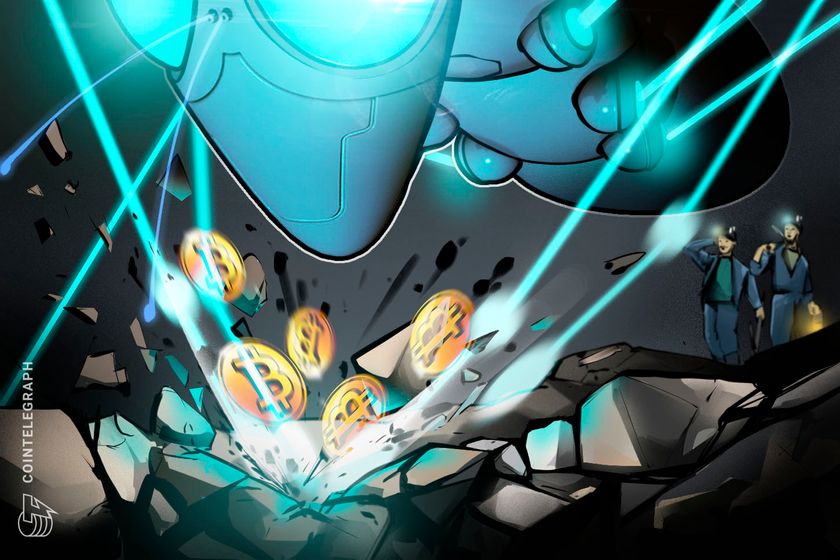 Omnes and Apex plan to issue a tokenized Bitcoin mining debt note on Base, giving eligible non-US investors exposure to hashrate-linked returns. Financial technology company Omnes and financial services provider Apex Group said on Tuesday that they plan to issue a tokenized secured debt note backed by Bitcoin hashrate on Base. The two companies announced that they would tokenize the Omnes Mining Note (OMN), an institutional-grade structured note backed by the Bitcoin (BTC) hashrate. The companies said it will be issued and managed on the Base blockchain, Coinbase’s Ethereum layer-2 network. Apex said the note is designed to give institutional investors “direct economic exposure to new Bitcoin production measured in hashrate” without the operational burden of managing mining hardware, energy procurement and facilities. Read more
 -
CoinDesk - 12:36 Mar 24, 2026
The firm now manages about $2 billion, having already raised an additional $325 million for existing crypto investment strategies since last year. -
CoinDesk - 12:31 Mar 24, 2026
The move comes as the race to bring equities to always-on blockchain markets is heating up after Nasdaq obtained regulatory approval for its tokenization plan. -
Cointelegraph.com - 12:30 Mar 24, 2026
 Wall Street won’t tame DeFi. Regulation creates compliant tiers atop permissionless liquidity, forcing TradFi to adopt DeFi’s superior speed and composability. Opinion by: Mitchell Amador, founder and CEO of Immunefi There’s an argument that regulation will split decentralized finance (DeFi) into two separate silos: one regulated and compliant and the other completely open and accessible by anyone, including anonymous participants. This argument is outdated. Read more
 -
Cointelegraph.com - 12:29 Mar 24, 2026
 Data shows AI tokens and stablecoins held up better than other crypto sectors in 2026, with growth tied to usage, liquidity and infrastructure demand. AI and stablecoin segments have outperformed the broader crypto market in 2026, with data pointing to continued usage growth despite declining prices elsewhere. Key takeaways: AI sector posts smallest loss in Q1/2026, down just 14%. Read more
 -
Decrypt - 12:21 Mar 24, 2026
Strategy just unveiled a $44 billion war chest to keep buying Bitcoin, while Congress is moving to ban sports bets on prediction markets. -
CryptoPotato - 12:20 Mar 24, 2026
ETH reserves on exchanges have fallen to around 16.2M, their lowest level since 2016, reducing the amount of the asset available for sale.