Crypto
-
Decrypt - 19:19 Feb 06, 2026
Coinbase customers faced losses in fresh ways through the exchange’s crypto-backed lending product as Bitcoin and Ethereum tumbled this week. -
Cointelegraph.com - 19:00 Feb 06, 2026
 Bitcoin dipped toward $60,000 after liquidations across crypto derivatives markets reached $2.56 billion, the 10th-largest daily total on record. Cryptocurrency markets experienced a brutal sell-off this week as investor concerns grew over stagnating US liquidity following US President Donald Trump's nomination of Kevin Warsh to lead the Federal Reserve. Bitcoin exchange-traded funds (ETFs) recorded three consecutive days of outflows, with $431 million exiting on Thursday, according to data from Farside Investors. Bitcoin’s (BTC) price briefly dipped to $60,074 on Friday before recovering above $64,930 as of 7:49 a.m. UTC. Warsh — who previously served as a Fed governor from 2006 to 2011 — is expected to continue the interest rate cut trajectory. His nomination may also signal that broader market liquidity is expected to “stabilize rather than meaningfully expand,” Thomas Perfumo, economist at crypto exchange Kraken, told Cointelegraph. Read more
 -
Cointelegraph.com - 18:47 Feb 06, 2026
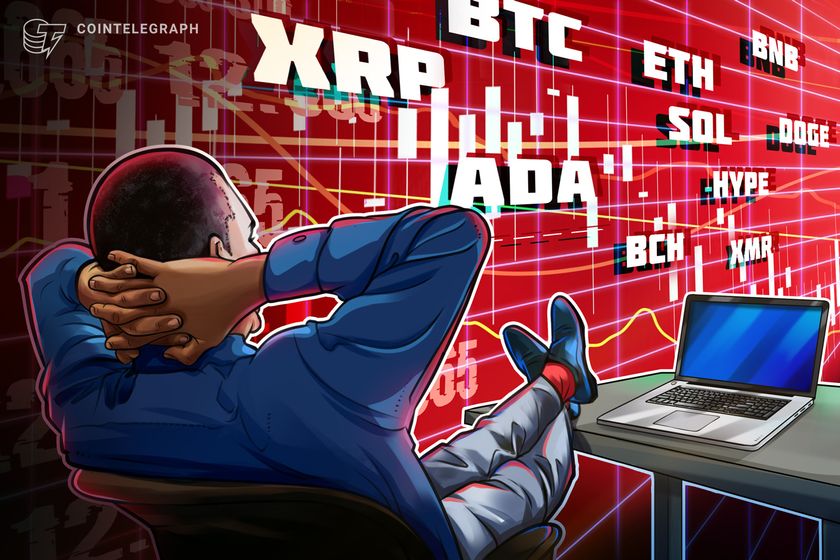 Bitcoin and altcoins saw strong double-digit price rebounds after this week’s brutal sell-off, but do technical charts forecast a longer-term recovery, or is today’s rally just a dead cat bounce? Key points: Bitcoin has turned up sharply from the $60,000 level, opening the door for a retest of the breakdown level at $74,508. Several major altcoins have started a relief rally, which is expected to face selling at the moving averages. Read more
 -
CoinDesk - 18:44 Feb 06, 2026
"401ks exist to help people save for a secure retirement, not gamble on speculative assets," said an industry observer. -
Decrypt - 18:32 Feb 06, 2026
Strategy (MSTR), BitMine (BMNR), and Coinbase (COIN) helped lead the crypto stock rebound as Bitcoin bounced back from a dip near $60K. -
Cointelegraph.com - 17:56 Feb 06, 2026
 In a video interview, Samson Mow shares his views on Bitcoin's latest bloodbath, quantum fears and the catalysts that could drive Bitcoin’s next recovery. In an exclusive Cointelegraph interview, Bitcoin OG Samson Mow shares his perspective on Bitcoin’s latest massive crash, what’s driving the sell-offs and why a rebound could be closer than most expect. We discuss gold and silver’s rally, forced liquidations, the “quantum threat” to crypto, and examine the long-term Bitcoin thesis: Is Bitcoin truly designed to rise in price due to fiat devaluation, or is that a flawed narrative? After months of relentless selling pressure, sharp liquidations and growing bearish sentiment, many investors are asking the same question: Why does Bitcoin keep falling despite strong fundamentals, and when could it finally recover? Read more
 -
CryptoPotato - 17:55 Feb 06, 2026
Ripple's token has also surpassed BNB in terms of market cap after its sublime surge. -
CoinDesk - 17:54 Feb 06, 2026
Ondo showcases rapid growth in tokenized assets and unveils plans to turn that momentum into a full-stack on-chain financial services ecosystem at its summit. -
Decrypt - 17:46 Feb 06, 2026
The error was quickly corrected, but not before Bithumb users sold off billions in Bitcoin, temporarily crashing its listed price. -
CryptoPotato - 17:43 Feb 06, 2026
Bitcoin's price jumped past $71,000 minutes ago, while XRP and other altcoins have produced massive double-digit daily gains. -
CoinDesk - 17:29 Feb 06, 2026
Russia’s biggest bank said it plans to offer loans secured by cryptocurrency following a pilot deal with a mining firm, with legislation expected by mid-2026. -
CoinDesk - 17:24 Feb 06, 2026
The move came as bitcoin briefly rose over $70,000 in U.S. morning hours, reversing Thursday's sharp declines ahead of the weekend. -
Cointelegraph.com - 17:20 Feb 06, 2026
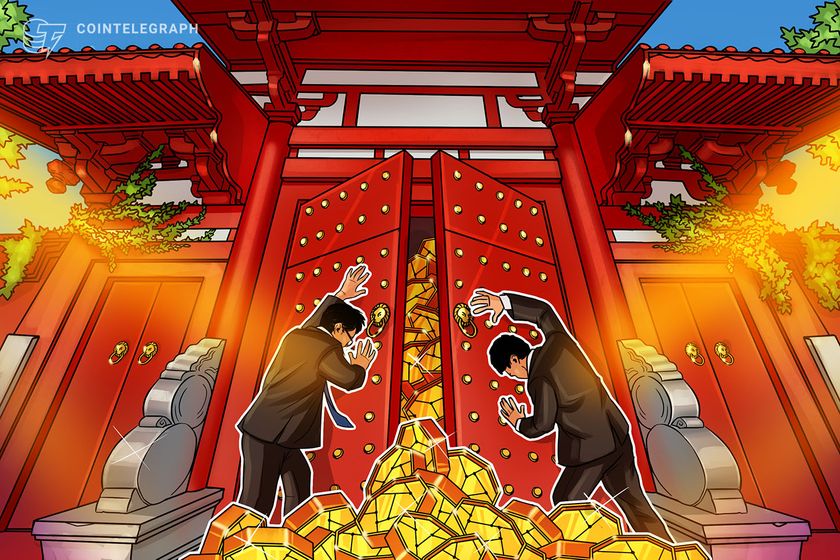 The latest announcement from the People's Bank of China follows months of flip-flopping on privately issued yuan-pegged stablecoins. The People’s Bank of China (PBOC), the country’s central bank, and seven Chinese regulatory agencies published a joint statement on Friday banning the unapproved issuance of Renminbi-pegged stablecoins and tokenized real-world assets (RWAs). The ban applies to both domestic and foreign stablecoin and tokenized RWA issuers, according to the statement, which was also signed by the Ministry of Industry and Information Technology and China’s Securities Regulatory Commission. A translation of the announcement said: Winston Ma, an adjunct professor at New York University (NYU) Law School and former Managing Director of CIC, China's sovereign wealth fund, told Cointelegraph that the ban extends to the onshore and offshore versions of China’s Renminbi, also called the yuan. “The Beijing crypto ban rule applies across all RMB-related markets, whether CNH or CNY,” he said. CNH is the of...
 -
CryptoSlate - 17:15 Feb 06, 2026
Big Tech companies' planned $500 billion war chest to dominate artificial intelligence could offer a lifeline to a Bitcoin mining industry teetering on the edge of capitulation. The headline numbers are eye-watering. Alphabet, Google’s parent, alone plans to spend as much as $185 billion this year. However, the capital surge will involve more than buying […] The post Bitcoin miners have the one thing AI still needs and Big Tech has $500 billion to buy it appeared first on CryptoSlate. -
Decrypt - 17:09 Feb 06, 2026
Bitwise’s Head of Europe argues that gold offers a cushion when markets fall, while Bitcoin boosts portfolios during rebounds. -
CoinDesk - 17:03 Feb 06, 2026
Crypto’s “wild west” era for companies is ending as DATs enter a new phase of normalcy, says AVAX One's Jolie Kahn. -
Cointelegraph.com - 17:02 Feb 06, 2026
 The 12-month buyback authorization comes as Galaxy’s shares and other crypto-linked stocks have declined alongside Bitcoin. Galaxy Digital Inc. (Nasdaq: GLXY) has authorized a share repurchase program of up to $200 million, allowing the company to buy back its Class A common stock over the next 12 months. According to a company announcement, the repurchases may be conducted on the open market or through privately negotiated transactions, including under Rule 10b5-1 trading plans, and remain subject to applicable securities laws and exchange rules. The program does not obligate Galaxy to repurchase any shares and may be suspended or discontinued at any time. The buyback program has a term of 12 months and, if conducted on the Toronto Stock Exchange, remains subject to regulatory approval under a normal course issuer bid. Purchases made on Nasdaq would be capped at 5% of Galaxy’s outstanding shares at the start of the program, according to the announcement. Read more
 -
CoinDesk - 17:00 Feb 06, 2026
The numbers weren't pretty, but the fourth-quarter loss does not signal a cash crunch or the necessity of bitcoin sales, say analysts. -
CryptoPotato - 16:56 Feb 06, 2026
Amid the market uncertainty, Bitcoin shed over 20% in the past week alone. -
Decrypt - 16:36 Feb 06, 2026
Chinese regulators have locked in a sweeping crypto clampdown, banning unapproved yuan-linked stablecoins and curbing tokenized assets.