Crypto
-
CoinDesk - 16:44 Nov 12, 2025
U.S. federal agencies are establishing a Scam Center Strike Force to counter the industrial-scale efforts to swindle money via crypto transactions. -
Decrypt - 16:44 Nov 12, 2025
Crypto majors are rebounding after Tuesday’s selloff, with Bitcoin (BTC) up 1% at $105,000, while Ethereum (ETH) remains even at $3,550, Binance Coin (BNB) steady at $978, and Solana (SOL) down 2% at $159. Among top movers, CC (+30%), SKY (+15%), DCR (+13%), and ASTER (+10%) led the gains. Meteora’s MET token surged 35% following news of the Uniswap fee switch. Meanwhile, Ethereum whales have accumulated over $350 million during the latest dip, with indications that institutional players are behind the buying. Circle confirmed it is evaluating an $ARC token for its stablecoin chain, while Coinbase reportedly abandoned its planned $2 billion acquisition of stablecoin firm BVNK, according to Fortune. In other developments, SoFi introduced crypto trading for its customers, offering BTC, ETH, SOL, and more. JPMorgan also launched its deposit token, JPM Coin (JPMD), on Base—marking a major expansion of its blockchain products aimed at institutional clients. -
Cointelegraph.com - 16:40 Nov 12, 2025
 Franklin Templeton has linked its Benji tokenization platform to the Canton Network, expanding institutional access to regulated onchain assets. Franklin Templeton has expanded its tokenization and investor platform, Benji, to the Canton Network, marking another step in the growth of institutional blockchain infrastructure for tokenized investment products. The integration, announced Wednesday, connects Franklin Templeton’s proprietary Benji Technology Platform to Canton, a blockchain network designed for regulated financial institutions. The move enables Benji’s tokenized assets, including its onchain US government money market fund, to be used as collateral and liquidity within Canton’s Global Collateral Network. Each Benji token represents a share of Franklin Templeton’s tokenized money market fund, with yields calculated intraday and ownership recorded onchain. Read more
 -
CoinDesk - 16:39 Nov 12, 2025
Also: Monad Tokenomics Unveiled, Anchorage Dabbles in BTC DeFi and Injective’s Native EVM. -
Decrypt - 16:36 Nov 12, 2025
A fire affected two buildings belonging to publicly traded Bitcoin miner Bitdeer in Massillon, Ohio on Tuesday. -
CryptoSlate - 16:25 Nov 12, 2025
The first US spot XRP ETF moved within sight of launch after Canary XRP ETF filed Form 8-A12(b) on Nov. 10. This is a key exchange-listing step that formally registers the fund’s shares under Section 12(b) of the Securities Exchange Act. The document, signed by Steven McClurg, confirms that Nasdaq has approved the listing application. […] The post New XRP ETF Filing Could Be the Canary in the Crypto Mine This Week appeared first on CryptoSlate. -
CoinDesk - 16:18 Nov 12, 2025
The move follows fellow Solana treasury firm Forward Industries making its stock available onchain. -
CryptoPotato - 16:08 Nov 12, 2025
[PRESS RELEASE – Tortola, BVI, November 12th, 2025] Funtico has opened the token presale for Earth Version 2 (EV2), the studio’s forthcoming multiplayer sci-fi MMO. The sale offers early access to $EV2 – the token that drives the game’s economy – with 40% of the fixed 2.88 billion supply allocated to presale buyers. $EV2 will […] -
CryptoPotato - 16:08 Nov 12, 2025
Analysts say the withdrawals are a sign of long-term confidence a they reduce Ethereum’s available exchange supply. -
Cryptonews.com - 16:06 Nov 12, 2025
Seven years of death cross data indicates Bitcoin could bottom around $95K in the coming days before targeting $145K, as onchain metrics mirror conditions that preceded April's 69% rally. The post 7-Year Death Cross Pattern Shows Bitcoin Likely to Bottom at $95K Then Shoot to $145K appeared first on Cryptonews. -
Cryptonews.com - 15:59 Nov 12, 2025
Coinbase has announced it will leave Delaware and reincorporate in Texas, framing the shift as a move toward regulatory efficiency. The decision has reflected wider competition among states and has aligned with Texas’ appeal to technology and digital finance firms. The post Coinbase Leaves Delaware, Reincorporates in Texas as State Rivalry Heats Up appeared first on Cryptonews. -
CoinDesk - 15:57 Nov 12, 2025
Trump’s CFTC pick will face senators just as crypto legislation starts moving through Congress again. -
CryptoPotato - 15:52 Nov 12, 2025
Throughout the past seven days, Solana (SOL) continues to decline. The charts are currently indicating additional downward pressure. The cryptocurrency is trading at about $158, which is 38% lower than its peak in September. Even with consistent ETF inflows, traders remain cautious as market sentiment deteriorates and liquidity changes. Solana’s decline follows months of strong […] -
Cointelegraph.com - 15:51 Nov 12, 2025
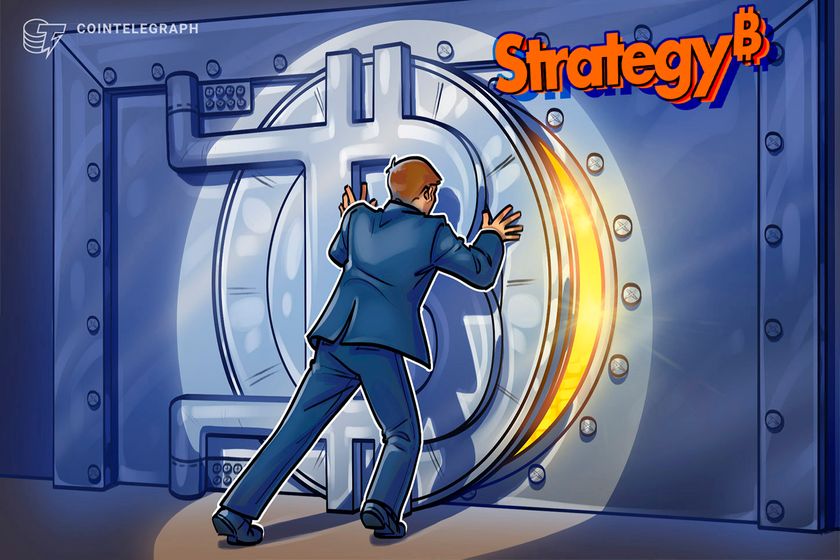 Michael Saylor’s company remains a top Bitcoin holder, but its dominance has fallen amid slower accumulation and rising competition. Michael Saylor’s Strategy has seen its dominance among corporate Bitcoin holders decline in October amid slower purchases and a growing number of companies adding crypto to their treasuries. The company still leads as the largest Bitcoin (BTC) treasury holder with 640,808 BTC as of Oct. 31, though its share of total corporate holdings has slipped to 60% from 75%, according to a report by BitcoinTreasuries.NET. The decline in Strategy’s dominance comes as corporate accumulation continues, albeit at a slower pace. Public and private companies added 14,447 BTC to their treasuries in October, the smallest monthly increase of 2025. Read more
 -
Cryptonews.com - 15:45 Nov 12, 2025
Franklin Templeton has expanded its Benji Technology Platform to the Canton Network, providing institutional access to tokenized investments under a regulated framework, with interoperability, transparency, and liquidity features including Intraday Yield. The post Franklin Templeton Expands Benji to Canton Network, Bridging TradFi and Tokenized Assets appeared first on Cryptonews. -
CryptoSlate - 15:45 Nov 12, 2025
Block has switched on Bitcoin payments across its Square merchant network, giving roughly 4 million sellers the ability to accept Lightning Network payments at the point of sale. The merchant selects Bitcoin at checkout, Square generates a Lightning invoice QR code, the customer pays with Cash App or any Lightning-enabled wallet, and settlement happens in […] The post From Swipe to Zap: Why Square’s 4M Shops Just Got A 0% Bitcoin Button appeared first on CryptoSlate. -
Decrypt - 15:45 Nov 12, 2025
In a speech Wednesday, Atkins gave his most explicit reasoning yet as to why most of the crypto industry should not be regulated by the SEC. -
CoinDesk - 15:45 Nov 12, 2025
In the realm of the so-called Howey Test to define investment contracts under SEC jurisdiction, Atkins says there should be a clearer path for crypto involvement. -
Cointelegraph.com - 15:24 Nov 12, 2025
 The end of Trump's last US government shutdown back in 2019 saw a boom in crypto markets, but things are a bit different this time around. Crypto market observers are preparing for price movements as the historical US government shutdown seems within sight. The US government is still technically shut down as of publishing time, but a continuing resolution that would fund critical government services through January has made its way from the Senate to the House of Representatives. The shutdown affects a number of vital federal functions, including the ability for securities and commodities regulators to approve crypto listings. Lawmaking has also ground to a halt, with the possibility of the crypto framework bill passing by year’s end becoming ever smaller. Read more