Cointelegraph.com
Source:
https://cointelegraph.com
Found 11869 news
-
Cointelegraph.com - 17:39 Aug 18, 2026
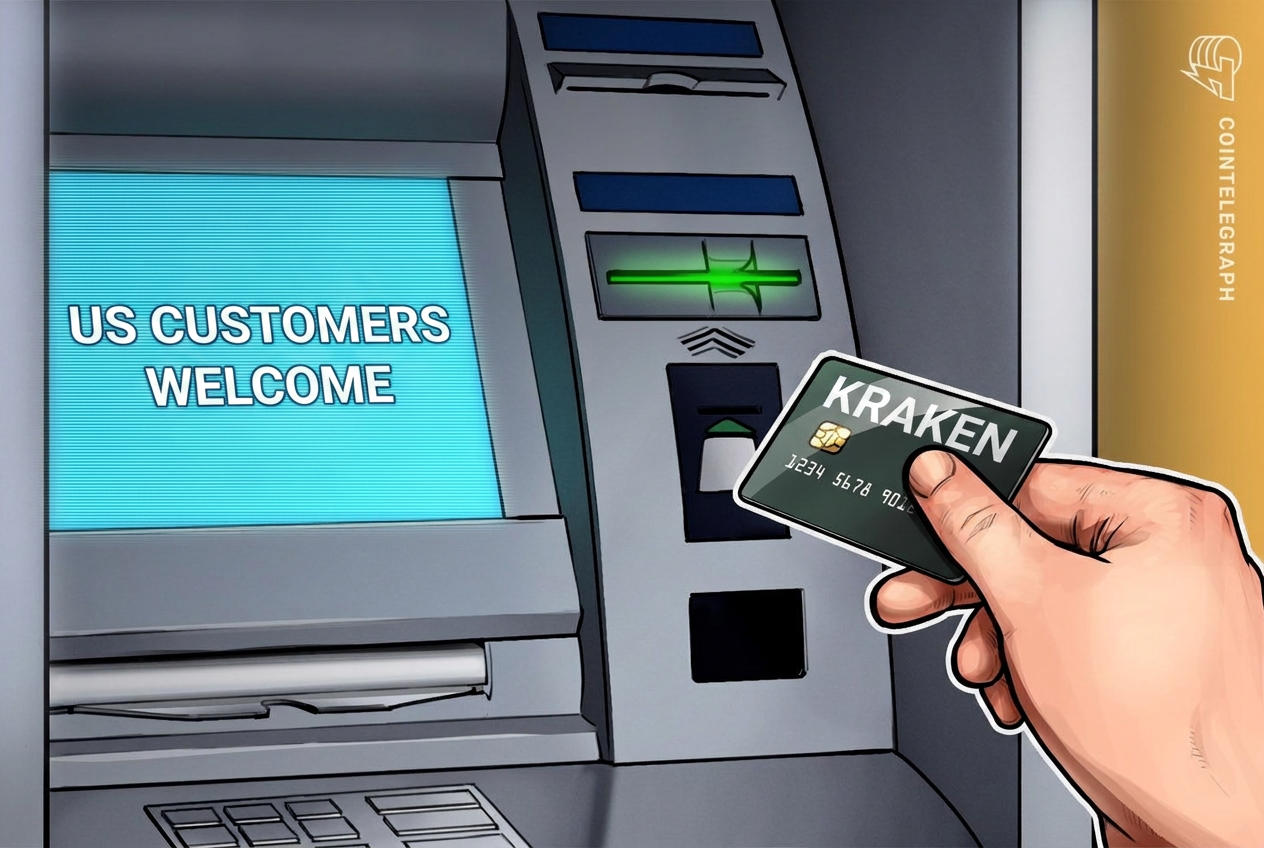 The multi-asset card lets US customers spend crypto and fiat and earn cashback as Kraken’s parent company expands across financial services. Kraken’s payment app, Krak, has launched a multi-asset debit card in the US, allowing customers to spend crypto and fiat while earning up to 2% cashback in dollars or Bitcoin (BTC). The card supports more than 600 currencies and assets, with holdings converted into US dollars at point of sale. A single purchase can draw from multiple balances, with users setting the order in which assets are spent, according to an announcement Tuesday. The card is issued by Lead Bank on Visa’s network and powered by Stripe Issuing, with physical and virtual versions available to eligible US customers. The company said cashback rates depend on average assets held across Krak, Kraken and Kraken Pro. Read more
 -
Cointelegraph.com - 16:49 Aug 18, 2026
 Despite already serving a 12-year sentence in federal prison, Alex Mashinsky continues to explore legal avenues to vacate his conviction related to activities at Celsius. An effort by Alex Mashinsky, the former CEO of now-defunct cryptocurrency lending platform Celsius, to convince a federal court to vacate his 12-year sentence for fraud and market manipulation faces pushback from US prosecutors in the Southern District of New York (SDNY). In a Friday filing, SDNY Attorney James McDonald and Assistant US Attorney Allison Nichols said that the court should deny Mashinsky’s petition to vacate his conviction and sentence, saying that many of his legal arguments were “without merit” and pushing back against claims of ineffective assistance of counsel. The former Celsius CEO informed the court in May that he would be proceeding pro se — that is, representing himself in the case — and filed a motion to vacate, including claims about cryptocurrency exchange FTX and his former colleague, the company’s chief revenue ...
 -
Cointelegraph.com - 16:21 Aug 18, 2026
 The proposed deal with Nasdaq-listed Super League Enterprise would give the Tokyo-based company a foothold in US capital markets while using existing Bitcoin rather than additional purchases. Metaplanet, the Tokyo-listed company that has adopted Bitcoin as its primary treasury reserve asset, plans to take a controlling stake in Nasdaq-listed Super League Enterprise, expanding its Bitcoin treasury strategy into the United States and potentially opening up new sources of capital. On Tuesday, Metaplanet CEO Simon Gerovich said the company plans to contribute 2,100 Bitcoin (BTC) and $2.5 million in cash to Super League, which will be renamed Superplanet and become the company’s US Bitcoin treasury platform. The 2,100 BTC contribution represents just under 5% of Metaplanet’s 43,000 BTC holdings and is worth roughly $135 million at current Bitcoin prices. Because the Bitcoin will come from Metaplanet’s existing treasury, the transaction does not represent a new BTC purchase. Read more
 -
Cointelegraph.com - 15:59 Aug 18, 2026
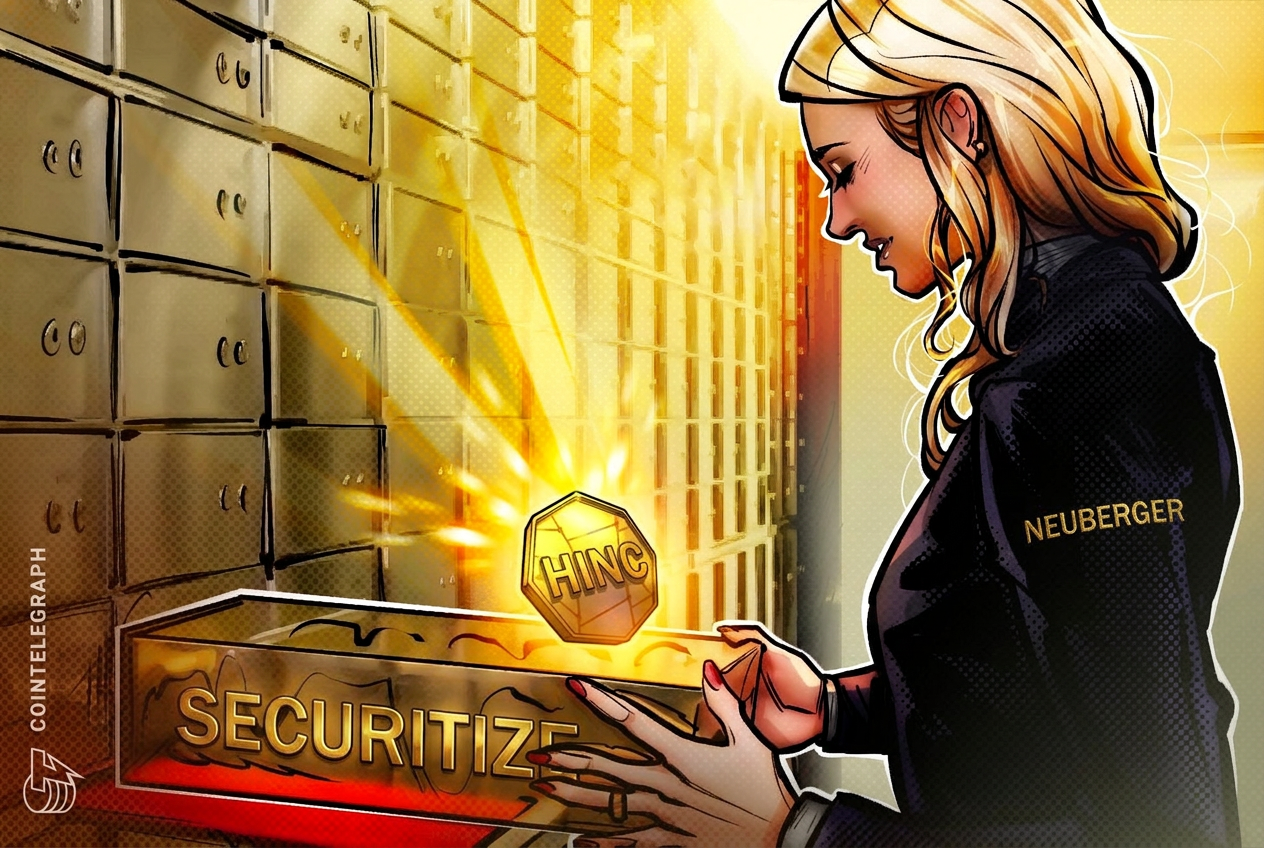 The $613 billion asset manager will subadvise a high-yield fund tokenized across Ethereum, Solana, Avalanche and Sui. Asset manager Neuberger has launched its first tokenized fixed-income fund through Securitize, offering an actively managed high-yield strategy across four blockchains, Ethereum (ETH), Solana (SOL), Avalanche (AVAX) and Sui (SUI). The Neuberger Securitize High Income Tokenized Fund (HINC) will invest primarily in high-yield bonds, with additional exposure to collateralized loan obligations and leveraged loans, according to an announcement Tuesday. The launch comes as investors are demanding higher yields amid heated competition for corporate and government funding. Read more
 -
Cointelegraph.com - 15:27 Aug 18, 2026
 Bitcoin returned to $65,000 for the first time in a week as fresh BTC price volatility accompanied US claims that the Strait of Hormuz was “open and operating.” Bitcoin (BTC) hit $65,000 after Tuesday’s Wall Street open as US stocks rebounded in spite of geopolitical pressure. Key points: Read more
 -
Cointelegraph.com - 13:41 Aug 18, 2026
 Retail investors can apply to buy the 1 billion yen bond without a securities account and receive perks through Toyota’s payment app. Toyota’s finance arm is launching a tokenized bond that retail investors can buy directly through the Japanese carmaker’s mobile payment app, Toyota Wallet. Toyota Finance said Tuesday that applications have opened for the one-year bond, with investments starting at 100,000 Japanese yen ($676). The new bond will be distributed directly by Toyota Finance, allowing investors to buy it without opening a securities account. The 1 billion yen bond carries a 1.72% annual interest rate and will be managed on blockchain infrastructure provided by Japanese security-token firm BOOSTRY. Read more
 -
Cointelegraph.com - 13:00 Aug 18, 2026
 Eligible US users can fund MoonPay crypto purchases with Cash App balances as the payments firm expands beyond its core onramp business. MoonPay has integrated Cash App Pay as a payment option for cryptocurrency purchases, allowing eligible US customers to fund transactions using their Cash App balances. The crypto payments company said in an announcement shared with Cointelegraph Tuesday that Cash App Pay is now available through MoonPay’s own checkout and with select partners, including Trust Wallet, Bitcoin.com, MetaMask, Moonshot, Ledger, BitPay, Uniswap, Tangem, LOBSTR and Edge. The integration lets customers use their Cash App balance to buy crypto directly through MoonPay without switching between apps or completing a separate login. Read more
 -
Cointelegraph.com - 10:53 Aug 18, 2026
 Eligible EEA users can trade conventional US shares alongside more than 700 tokenized xStocks through Kraken’s European entity. Kraken has launched trading in more than 7,000 US-listed stocks for customers in the European Economic Area (EEA), expanding its traditional finance offering alongside cryptocurrencies and tokenized equities. The crypto exchange said Tuesday that eligible EEA customers can trade US stocks through Kraken Pro and its mobile app under the company’s Markets in Financial Instruments Directive II authorization. The shares are available alongside more than 600 crypto assets and over 700 xStocks, which are tokenized versions of publicly listed equities. Read more
 -
Cointelegraph.com - 09:31 Aug 18, 2026
 Bitcoin derivatives markets created a short squeeze that took BTC price action 3% higher on Monday. Bitcoin (BTC) short liquidations hit their highest in almost one month as it hit $64,500 on Monday, new data reveals. Key points: Read more
 -
Cointelegraph.com - 08:48 Aug 18, 2026
 The newly authorized lenders will begin offering e-CNY services after completing operational and technical preparations. China’s central bank has added eight banks to its digital yuan network, bringing the number of e-CNY operating institutions to 30. The People’s Bank of China (PBOC) added Ping An Bank, Hengfeng Bank, China Bohai Bank, Bank of Shanghai, Bank of Hangzhou, Huishang Bank, Bank of Changsha and Guangxi Beibu Gulf Bank, according to a Xinhua report published Monday on the government’s website. The banks will be connected to the PBOC’s digital yuan system and begin offering services after completing operational and technical preparations. Read more
 -
Cointelegraph.com - 08:39 Aug 18, 2026
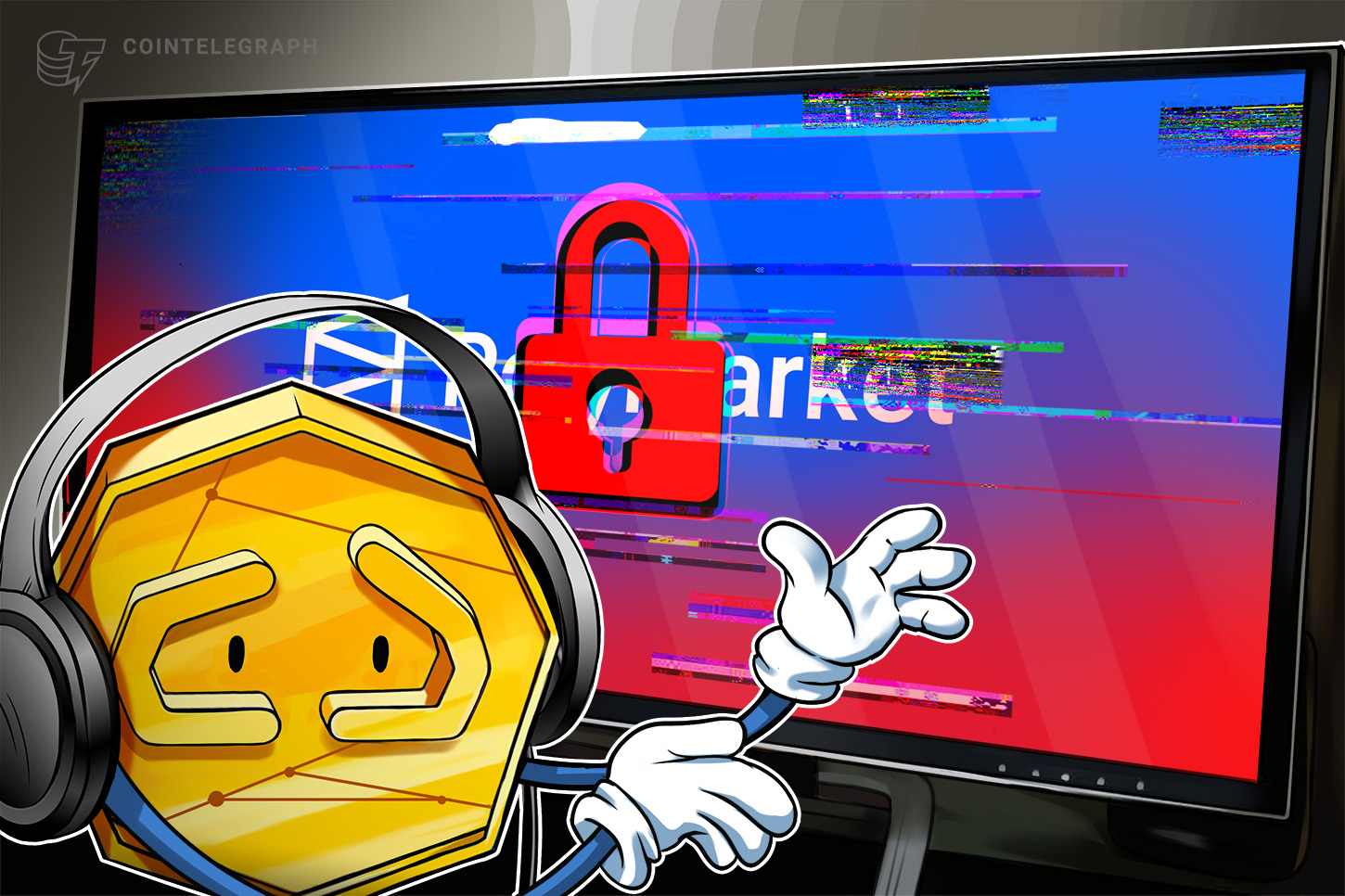 The Korea Media and Communications Commission said Polymarket’s structure and operations amount to illegal gambling despite its noncustodial design and smart contracts. South Korean authorities have ordered access to Polymarket to be blocked after determining that the crypto prediction market provides an illegal gambling environment to users in the country. The country’s media and communications review commission said Tuesday that Polymarket falls under information that facilitates gambling or the opening of a gambling venue under the Criminal Act, as well as prohibited analogous betting activity under the National Sports Promotion Act. The regulator said Polymarket’s winner-takes-all structure, where users can gain or lose money based on outcomes including politics, sports and weather, encourages speculative gambling behavior. It also cited Polymarket’s role in operating markets, setting trading rules, providing crypto deposit, withdrawal and settlement systems and collecting transaction fees. Read more
 -
Cointelegraph.com - 08:07 Aug 18, 2026
 BitBox recommended all users update to firmware version 9.26.5 and said it had received no reports of exploitation or fund losses. Hardware wallet maker BitBox has released a firmware update that fixes two vulnerabilities it described as “severe” that could have enabled the installation of malicious firmware or put user funds at risk. In a security disclosure on Monday, BitBox said one involved memory corruption affecting Multi editions of BitBox02 and BitBox02 Nova that had not been configured with a wallet. A malicious host could exploit it to execute arbitrary code and potentially install malicious firmware, which could lead to lost funds. The second affected BitBox’s Silent Payments implementation and could have allowed a malicious host to lock Bitcoin to an unintended address. Direct theft was not possible, but an attacker could potentially demand a ransom to cooperate in recovering the coins, according to BitBox. The company said it had received no reports of either vulnerability being exploited or ca...
 -
Cointelegraph.com - 05:12 Aug 18, 2026
 Developers have been urged to test on Plataberget before Glamsterdam’s new gas model reaches Ethereum’s other testnets and mainnet. The Ethereum Foundation (EF) has warned that some wallets, indexers and gas estimators may break because of gas-model changes in the upcoming Glamsterdam upgrade. On Monday, the EF’s Protocol DevOps team said any tool relying on a hardcoded maximum gas limit “will break” and must be updated. It urged developers to test their systems on Plataberget, a public testnet intended to operate for several months. According to upgrade tracker Forkcast, Plataberget launched on Aug. 13. Meanwhile, the Glamsterdam fork is scheduled to activate on the network on Thursday, before its deployment on the Sepolia and Hoodi testnets. Read more
 -
Cointelegraph.com - 04:11 Aug 18, 2026
 Ripple is bringing its cross-border payments platform to Jeonbuk Bank, but key details including its launch status and settlement asset remain undisclosed. South Korea’s Jeonbuk Bank has partnered with blockchain payments company Ripple to deploy its cross-border payment system for business customers. On Tuesday, Ripple said its Ripple Payments platform would let the bank’s customers settle overseas transfers in seconds to minutes, with operations around the clock. The service targets businesses including import-export companies, technology startups and online content creators. Ripple said its system would provide the bank with faster, less expensive remittance capabilities than conventional transfers routed through intermediary banks via the SWIFT messaging network, which can take several days. Read more
 -
Cointelegraph.com - 03:21 Aug 18, 2026
 Prosecutors allege Edward Zimbardi collected crypto from thousands of investors, lost over $34 million on currency trades and spent at least $10 million personally. Edward Zimbardi, the alleged mastermind of a $165 million crypto Ponzi scheme, was returned to the United States after being deported from Fiji to face federal fraud and money laundering charges. On Monday, the US Attorney’s Office for the Northern District of Georgia said that Fijian authorities deported Zimbardi on Friday in coordination with the FBI and State Department. He was scheduled to appear before a federal magistrate judge in Los Angeles, with prosecutors seeking his detention pending proceedings in Georgia. Prosecutors allege Zimbardi promoted a scheme called “The Crypto Program” from June 2022 to August 2023 as an advertising-package investment promising guaranteed returns of 25% monthly. Thousands of investors allegedly sent over $165 million in crypto to wallets he secretly controlled. Read more
 -
Cointelegraph.com - 01:28 Aug 18, 2026
 Binance’s bStocks are the second largest tokenized stock issuer just two months after launch, and BitMart’s internal feud erupts into the spotlight ahead of its closure BitMart’s official Chinese-language X account has publicly demanded that founder Sheldon Xia explain the whereabouts of user funds and produce a repayment plan. It said some users were unable to withdraw funds and some employees have not received their final salary or compensation and threatened Xia that if he does not provide a verifiable asset disclosure and repayment plan by the deadline, it would continue to submit evidence to regulators, law enforcement, lawyers and the media. Xia called the claims in the post “fabricated rumors” and promised a counter-attack. Read more
 -
Cointelegraph.com - 21:17 Aug 17, 2026
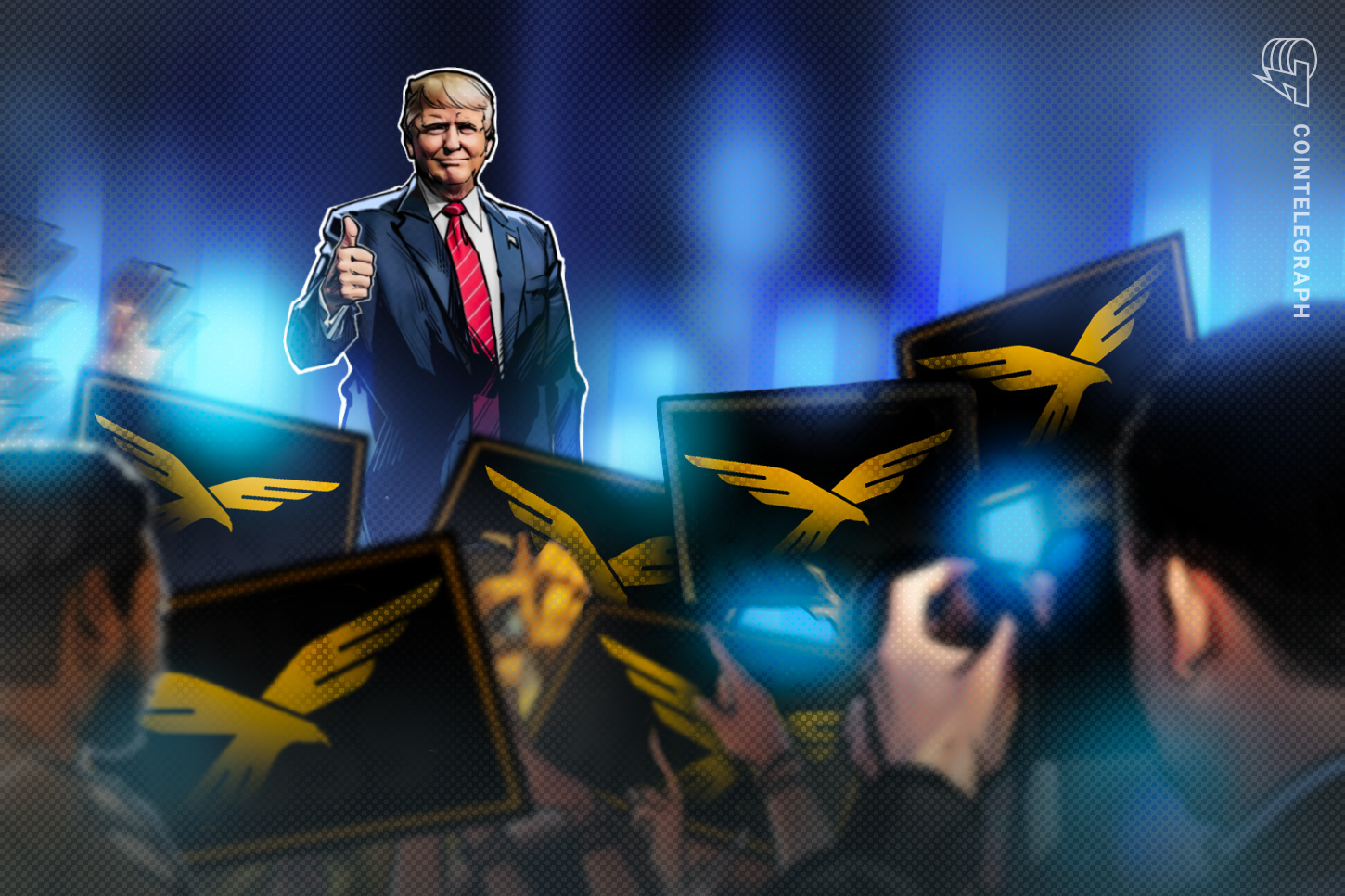 The US financial regulator gave conditional approval for World Liberty Financial’s charter bid as ten Democrats signed onto a bill to “prevent corruption in banking applications.“ Amid scrutiny and accusations of conflicts of interest from many lawmakers, the US Office of the Comptroller of the Currency (OCC) gave conditional approval for World Liberty Financial’s application for a national trust bank. In a Friday notice, the OCC said the conditional approval for World Liberty’s charter application, subject to certain regulatory and policy requirements, would allow the company to operate under the title World Liberty Trust Company, National Association. According to its application, the World Liberty bank proposed issuing US dollar-backed stablecoins and custodying digital assets related to the company’s USD1 token. The OCC approval came amid concerns about potential conflicts of interest between World Liberty and US President Donald Trump’s family. The president and his three sons are affiliated with the com...
 -
Cointelegraph.com - 18:45 Aug 17, 2026
 Binance’s UK arm has been barred from offering regulated activities in the country since June 2021, but the company will reportedly move to secure licensing under new crypto rules. Cryptocurrency exchange Binance is reportedly planning to apply for a license with the UK’s Financial Conduct Authority (FCA) in a move expected to relaunch certain services for residents in 2027. According to a Saturday report from The Telegraph, Binance will apply for the UK license as new digital asset laws are set to take effect in the country. The FCA said in June 2021 that Binance’s UK arm, Binance Markets Limited, was “not permitted to undertake any regulated activity in the UK,” and the exchange announced in 2023 that it would halt onboarding of new users in response to the UK watchdog’s rules on financial promotions. A Binance spokesperson told Cointelegraph that the exchange “does not comment on speculation surrounding potential licence applications.” The company did not respond to questions on its existing operations in...
 -
Cointelegraph.com - 17:11 Aug 17, 2026
 The regulatory review could shape an emerging market that lets companies and investors trade and hedge the cost of increasingly scarce AI computing power. The US Commodity Futures Trading Commission (CFTC) is preparing to solicit public comment on futures contracts tied to computing capacity, a critical resource for artificial intelligence development, as major exchanges move to launch products tied to the emerging asset class. Bloomberg reported Monday that the regulator sent a request for comment to the White House Office of Management and Budget for review. The move could complicate the timeline for planned compute futures from CME Group and Intercontinental Exchange, whose products remain subject to regulatory approval. Once the White House review is complete, the CFTC is expected to open a public comment period, typically lasting 30 or 60 days, according to Bloomberg. The review signals that regulators are still weighing questions around a market that would allow participants to trade and hedge the cost ...
 -
Cointelegraph.com - 16:29 Aug 17, 2026
 The stablecoin bill signed into law last year is scheduled to go into effect in January 2027, potentially without finalized regulations from US government agencies. The US Department of the Treasury issued a notice of proposed rulemaking related to the implementation of the Guiding and Establishing National Innovation for US Stablecoins (GENIUS) Act, a bill to establish a framework for payment stablecoins signed into law last year. In a Monday notice, the Treasury Department said that it was opening a proposed rule up to public comment ahead of the January 2027 implementation of the GENIUS Act. Under the terms of the bill, the stablecoin law had been scheduled to go into effect 120 days after agencies finalize rules, or 18 months after it was passed in July 2025, making its effective date Jan. 18, 2027. Treasury Secretary Scott Bessent said that the department “welcomes input from stakeholders as [it works] to provide the regulatory certainty businesses need to innovate and grow in America.” Read more
11869 items