Cointelegraph.com
Source:
https://cointelegraph.com
Found 11353 news
-
Cointelegraph.com - 09:13 Oct 11, 2025
 Bitcoin stayed near three-week lows after a giant $20 billion liquidation cascade, but crypto market predictions warned that the bottom was not yet in. Key points: Bitcoin and altcoins reel from the biggest liquidation event in crypto history. BTC price action fails to stage a rebound from multi-week lows, with $100,000 getting closer. Read more
 -
Cointelegraph.com - 07:32 Oct 11, 2025
 US spot Bitcoin ETFs logged $2.71 billion in weekly inflows, even as Trump’s China tariff comments triggered a brief market outflow. US spot Bitcoin exchange-traded funds (ETFs) continued their strong “Uptober” performance with $2.71 billion in weekly inflows, marking another strong week for institutional demand. According to data from SoSoValue, total assets under management for Bitcoin (BTC) ETFs climbed to $158.96 billion as of Friday, representing nearly 7% of Bitcoin’s total market capitalization. “Capital keeps flowing into BTC as allocators double down on the digital gold conviction trade. Liquidity is building now as the market momentum takes shape,” Vincent Liu, chief investment officer at quantitative trading firm Kronos Research, told Cointelegraph. Read more
 -
Cointelegraph.com - 05:25 Oct 11, 2025
 The last time the Crypto Fear & Greed Index dropped to this level of fear, Bitcoin’s price was trading around $80,000. Crypto market sentiment has dropped to its lowest level in almost six months after US President Donald Trump announced a 100% tariff on China. The Crypto Fear & Greed Index, which gauges overall market sentiment, fell to a “Fear” level of 27 in its Saturday’s update, representing a decline of 37 points from Friday’s “Greed” reading of 64. The decline came as Bitcoin (BTC) briefly dipped to $102,000 on the Binance perpetual futures pair following Trump’s announcement of sweeping tariffs on Friday. Read more
 -
Cointelegraph.com - 01:39 Oct 11, 2025
 An economist said Bitcoin declining more than 5% in October is “exceedingly rare,” and historically, the asset has usually rebounded within the following week. Bitcoin’s price may recover up to 21% over the coming seven days if October’s historical trends hold, an economist suggests. “Drops of more than 5% in October are exceedingly rare. This has happened only 4 times in the past 10 years,” economist Timothy Peterson said in an X post on Friday.’ He said those instances occurred in October 2017, 2018, 2019, and 2021. In the week following each drop, Bitcoin (BTC) rebounded by 16% in 2017, 4% in 2018, and 21% in 2019. The only exception was 2021, when the crypto asset fell a further 3%. Read more
 -
Cointelegraph.com - 23:31 Oct 10, 2025
 Swan Bitcoin CEO Cory Klippsten said Bitcoin's price plunge on Friday was "classic macro whiplash," and Bitcoiners should expect turbulence in the short term. Swan Bitcoin CEO Cory Klippsten said Bitcoin’s price volatility may not be over after the cryptocurrency briefly fell to $102,000 on Friday, following US President Donald Trump’s announcement of a 100% tariff on Chinese imports. “If the broader risk-off mood holds, Bitcoin can get dragged around a bit before it finds support and starts to decouple again,” Klippsten told Cointelegraph on Friday. Klippsten said that Bitcoiners should expect some turbulence over the coming days. “Macro-driven dips like this usually wash out leveraged traders and weak hands, then reset positioning for the next leg up,” Klippsten said. Read more
 -
Cointelegraph.com - 21:36 Oct 10, 2025
 Bitcoin plunged to $102,000 in the Binance perpetual futures pair after Trump announced sweeping tariffs on China on Friday, reigniting fears of a broader trade and market sell-off. US President Donald Trump announced a 100% tariff on China on Friday, sending the price of Bitcoin (BTC) reeling below $110,000 at the time of writing. Trump said the tariffs were in response to China attempting to place export restrictions on rare earth minerals, which are crucial for creating computer chips. Trump wrote on Truth Social: Trump’s first tariff announcements in April sent shockwaves through crypto markets and sparked fears of a recession. Read more
 -
Cointelegraph.com - 21:27 Oct 10, 2025
 A global survey finds investors are deepening exposure to blockchain and AI, though many remain skeptical that decentralized finance will take over traditional markets. Institutional investors are deepening their involvement in digital assets and emerging technologies such as blockchain and AI, according to a new State Street report — though many remain split on whether decentralized finance can ever fully blend with traditional markets. The study found that digital assets currently make up about 7% of institutional portfolios, a figure expected to climb to 16% by 2028. Most holdings are concentrated in digital cash (stablecoins) and tokenized versions of listed equities or fixed income, with respondents allocating about 1% of their portfolios to each and asset managers maintaining greater exposure. Read more
 -
Cointelegraph.com - 21:00 Oct 10, 2025
 Bitcoin struggled to regain momentum as traders stayed cautious, gold hit record highs, and US-China trade tensions fueled a broader market sell-off. Key takeaways: Derivatives data show limited confidence among Bitcoin traders despite strong ETF inflows, keeping downside risks on the table. Gold’s surge and falling Treasury yields highlight growing investor fear as fiscal stress and trade disputes weigh on traders’ sentiment. Read more
 -
Cointelegraph.com - 20:37 Oct 10, 2025
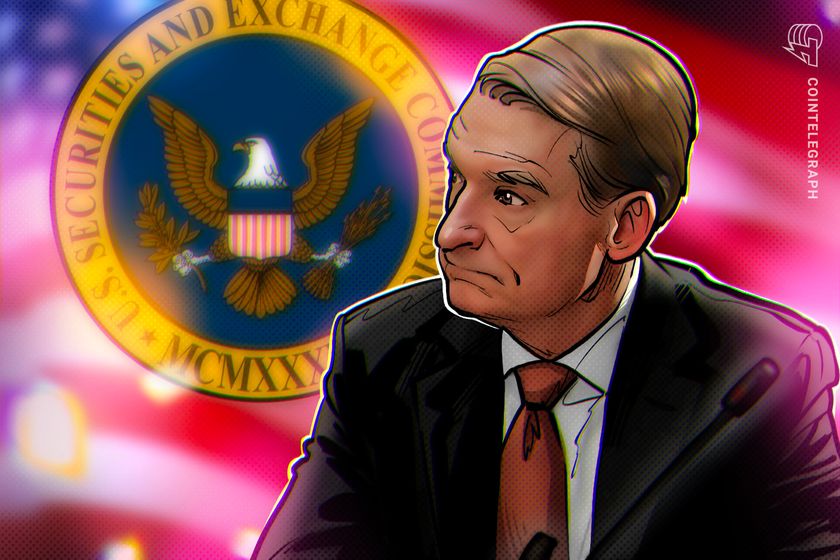 Could a future US presidential administration undo all of Paul Atkins’ work in a matter of days? Cointelegraph spoke to legal and regulatory experts to find out. Paul Atkins wants to cement his vision for the crypto markets before political tides shift again in Washington. As the new chair of the US Securities and Exchange Commission, he’s moving quickly to “future-proof” SEC policies, a push that could define how much freedom the crypto industry enjoys after President Donald Trump leaves office. In a conference hosted by the Managed Funds Association in New York on Tuesday, Atkins said the SEC would work quickly to adopt rules that could “future-proof” his agenda. He specifically referred to removing or weakening regulations on public and private markets, both of which could impact the cryptocurrency industry after Trump or Atkins leaves. “We have, I think, an amazing opportunity to get together and, in a can-do spirit, kind of create something that’s lasting,” said Atkins on US regulators collaborating. “M...
 -
Cointelegraph.com - 20:00 Oct 10, 2025
 Bitcoin tops $126,000 as Strategy’s BTC hoard swells; ICE backs Polymarket; Rezolve AI buys Smartpay; Plume gains SEC transfer-agent status. Big Tech companies that once dismissed Bitcoin (BTC) as a balance sheet asset are now watching Strategy, led by Executive Chairman Michael Saylor, amass a digital asset treasury approaching the size of their own cash piles. The surge comes as Bitcoin hit a new all-time high above $126,000 this week, driven by investor demand for hard assets seen as hedges against US dollar debasement — a narrative increasingly likened to gold. However, Bitcoin isn’t the only corner of crypto attracting major institutional money. The Intercontinental Exchange (ICE) has invested $2 billion in Polymarket, a decentralized prediction platform, valuing the firm at roughly $9 billion. The move signals growing convergence between traditional finance and decentralized blockchain infrastructure, as institutions explore tokenized markets and real-world event forecasting. Meanwhile, Tether is back i...
 -
Cointelegraph.com - 19:50 Oct 10, 2025
 The cryptocurrency with the second-largest market cap was on its way to meeting requirements under Texas' crypto reserve law until a price drop on Friday. This year, Texas’ legislature passed a law to establish a strategic Bitcoin reserve in the state, opening the door for other cryptocurrencies in the future. According to the original sponsor of the bill, Ether could be the next reserve asset. Speaking to Cointelegraph on Thursday, Texas state Senator Charles Schwertner discussed the implementation of the Bitcoin (BTC) reserve bill signed into law by Governor Greg Abbott in June. Though the text of the bill allows Texas to hold other cryptocurrencies in a “special fund outside the state treasury,” Bitcoin was the only one to meet the requirements at the time of passage. “I’m really interested to see the speed at which they establish the reserve and how it acts from a returns standpoint,” said Schwertner. ”If Ethereum maintains its market cap over 24 months, I think it’s reasonable and prudent to give directi...
 -
Cointelegraph.com - 19:44 Oct 10, 2025
 Bitcoin has fallen below $116,000, but select analysts remain unfazed as they anticipate solid buying to emerge at lower levels. Key points: Bitcoin has pulled below $116,000, but select analysts expect buyers to step in at lower levels and arrest the decline. Select altcoins have reached critical support levels where the buyers are expected to mount a strong defense. Read more
 -
Cointelegraph.com - 19:27 Oct 10, 2025
 The reported potential merger could make Securitize one of the first major tokenization companies to go public, signaling rising Wall Street demand for onchain finance. Securitize, the tokenization platform behind several major blockchain-based investment products, including BlackRock’s tokenized US Treasury fund, is reportedly in talks with Cantor Fitzgerald to go public via a Special Purpose Acquisition Company (SPAC). Bloomberg reported Friday, citing anonymous sources, that Securitize is in discussions to merge with Cantor Equity Partners II Inc., a blank-check firm backed by Cantor Fitzgerald. The deal could value Securitize at more than $1 billion, the report said. Securitize did not immediately respond to Cointelegraph’s request for comment. Read more
 -
Cointelegraph.com - 19:02 Oct 10, 2025
 Morgan Stanley's wealth management division will initially cap crypto allocations and begin with Bitcoin funds from BlackRock and Fidelity, potentially adding choices later. Morgan Stanley, one of the world’s largest wealth managers, has reportedly informed its financial advisers that all clients will be able to invest in cryptocurrency funds starting Oct. 15, CNBC reported. Advisers will be able to offer crypto funds to clients with individual retirement accounts (IRAs) and 401(k)s, a significant shift from the previous policy that restricted access to high-net-worth investors with over $1.5 million in assets and an aggressive risk profile. The move could unlock millions of dollars currently tied up in other assets, paving the way for a portion of that capital to flow into cryptocurrencies. As of June 30, US retirement assets totaled about $45.8 trillion, with IRAs holding about $18 trillion and 401(k) plans about $9.3 trillion, according to the Investment Company Institute’s latest quarterly update. Read m...
 -
Cointelegraph.com - 18:00 Oct 10, 2025
 An $11 billion Bitcoin whale returned to crypto markets this week, likely seeking trading opportunities tied to October’s historic crypto rallies and uncertainty in the US. Cryptocurrency markets showed signs of consolidation in the second week of October, even as investors continued to bet on another “Uptober” rally to new highs. Also in the news this week was the $11 billion Bitcoin (BTC) whale who returned after a two-month hiatus to transfer another $360 million in BTC, signaling a potential rotation into the world’s second-largest cryptocurrency, with an additional $5 billion left in their wallet. In another potential Uptober catalyst, the US Securities and Exchange Commission (SEC) received 31 crypto exchange-traded fund (ETF) applications, with 21 of them filed during the first eight days of October. Read more
 -
Cointelegraph.com - 17:58 Oct 10, 2025
 The Venezuelan opposition leader has championed Bitcoin as a lifeline for individuals trying to protect their wealth or attempting to flee the country. María Corina Machado, a human rights activist and political opposition leader in Venezuela who has called Bitcoin a “lifeline” for Venezuelans, received the 2025 Nobel Peace Prize for promoting democracy in the South American country. Machado praised Bitcoin (BTC) as a pro-freedom technology in a 2024 interview with Alex Gladstein, chief strategy officer at the nonprofit Human Rights Foundation. She said: The only way to help Venezuela’s poorest is by ensuring property rights, low inflation, equal access to opportunity, and government,” she said. Read more
 -
Cointelegraph.com - 17:30 Oct 10, 2025
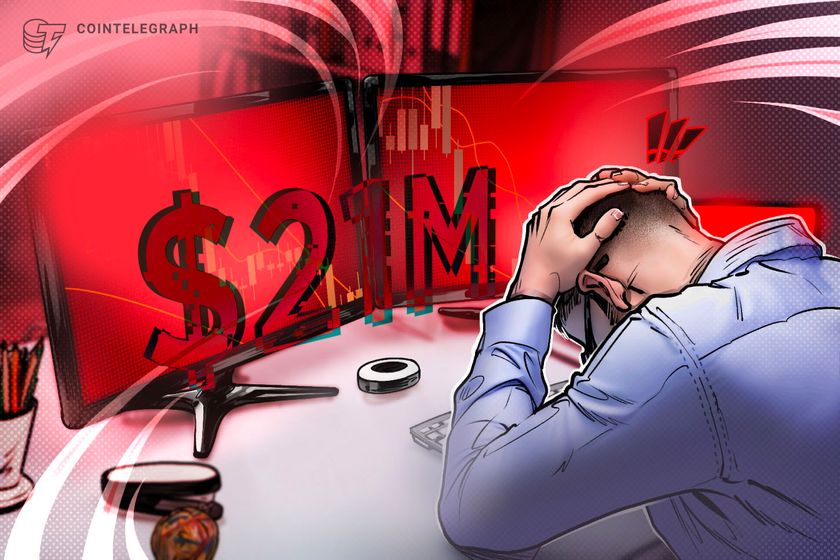 A Hyperliquid trader lost $21 million in a private key exploit, raising new concerns about DeFi security and user vigilance amid growing DEX activity. On Thursday, a single user on the decentralized trading platform Hyperliquid lost about $21 million after a private key leak led to an exploit involving the platform’s Hyperdrive lending protocol. According to blockchain security company PeckShield, the attacker targeted 17.75 million DAI (DAI) and 3.11 million SyrupUSDC, a synthetic version of the USDC stablecoin used within Hyperdrive, and subsequently bridged the stolen funds to Ethereum. PeckShield has not confirmed how the private key was compromised. Read more
 -
Cointelegraph.com - 16:43 Oct 10, 2025
 The group of banks said the stablecoin initiative would explore the “benefits of digital assets” in bringing new products to the market. A group of banks is in the process of exploring the launch of stablecoins focused on some of the world’s biggest fiat currencies, including the US dollar, euro and Japanese yen. According to a Friday statement from BNP Paribas, banks including Bank of America, Goldman Sachs, Deutsche Bank and Citi said that they had launched a project to explore the “issuance of a 1:1 reserve-backed form of digital money that provides a stable payment asset available on public blockchains” linked to currencies from the Group of Seven (G7) countries: the United States, Canada, the United Kingdom, France, Germany, Italy and Japan. “The objective of the initiative is to explore whether a new industry-wide offering could bring the benefits of digital assets and enhance competition across the market, while ensuring full compliance with regulatory requirements and best practice risk management,” ...
 -
Cointelegraph.com - 15:00 Oct 10, 2025
 Discover seven simple, proven habits — strong 2FA, safe signing, hot/cold wallet separation and recovery plans — to block phishing, toxic approvals, fake support and more. Over $2.4 billion was stolen in the first half of 2025, already surpassing 2024’s total. Everyday traps such as phishing, toxic approvals and fake “support” cause more damage than exotic exploits. Strong 2FA, careful signing, hot/cold wallet separation and clean devices dramatically reduce risk. Read more
 -
Cointelegraph.com - 14:37 Oct 10, 2025
 Circular AI investments among Nvidia, OpenAI and AMD have shown similarities to the dot-com bubble, which could spill over to harm the crypto market. Key takeaways: Bitcoin’s correlation with Nvidia has surged to 0.75, its highest in a year. Analysts fear such a correlation may result in BTC price dropping by up to 80%. Read more
11353 items