Tether | Crypto
"Tether" in Crypto feed
-
CryptoSlate - 11:00 Oct 24, 2026
Tether faces US Senate scrutiny over multimillion-dollar payments to a consulting firm co-owned by a former White House crypto adviser. On Oct. 22, Senator Richard Blumenthal, the ranking Democrat on the Senate Permanent Subcommittee on Investigations, demanded records on the stablecoin issuer's reported payments to Nxum, a consulting firm co-founded by Bo Hines, who helped… Read the full story on CryptoSlate Understand the crypto stories that matter and what to watch next. Get The Catalyst in your inbox -
Cointelegraph.com - 17:42 Oct 23, 2026
 The Democratic ranking member of the Senate Permanent Subcommittee on Investigations asked Paolo Ardoino for records related to a reported deal between Tether and Nxum. Senator Richard Blumenthal has requested information from Tether CEO Paolo Ardoino after a Wall Street Journal report said that the stablecoin issuer had inked a $6.3 million deal with a marketing company co-founded by former White House crypto adviser Bo Hines. In a Thursday letter to Ardoino, the Connecticut lawmaker said that the Senate Permanent Subcommittee on Investigations demanded “records and information related to contracts, payments, communications, and lobbying” between Tether and Nxum, Hines’ company. The probe into Nxum, Tether and Hines, according to Blumental, was part of what the senator called the Trump administration’s “self-enrichment and self-dealings with cryptocurrency firms.” “While Hines failed to divest his one-third stake in Nxum [...] he worked closely over encrypted messaging applications with Nxum to coordinate lo...
 -
Cointelegraph.com - 20:26 Oct 21, 2026
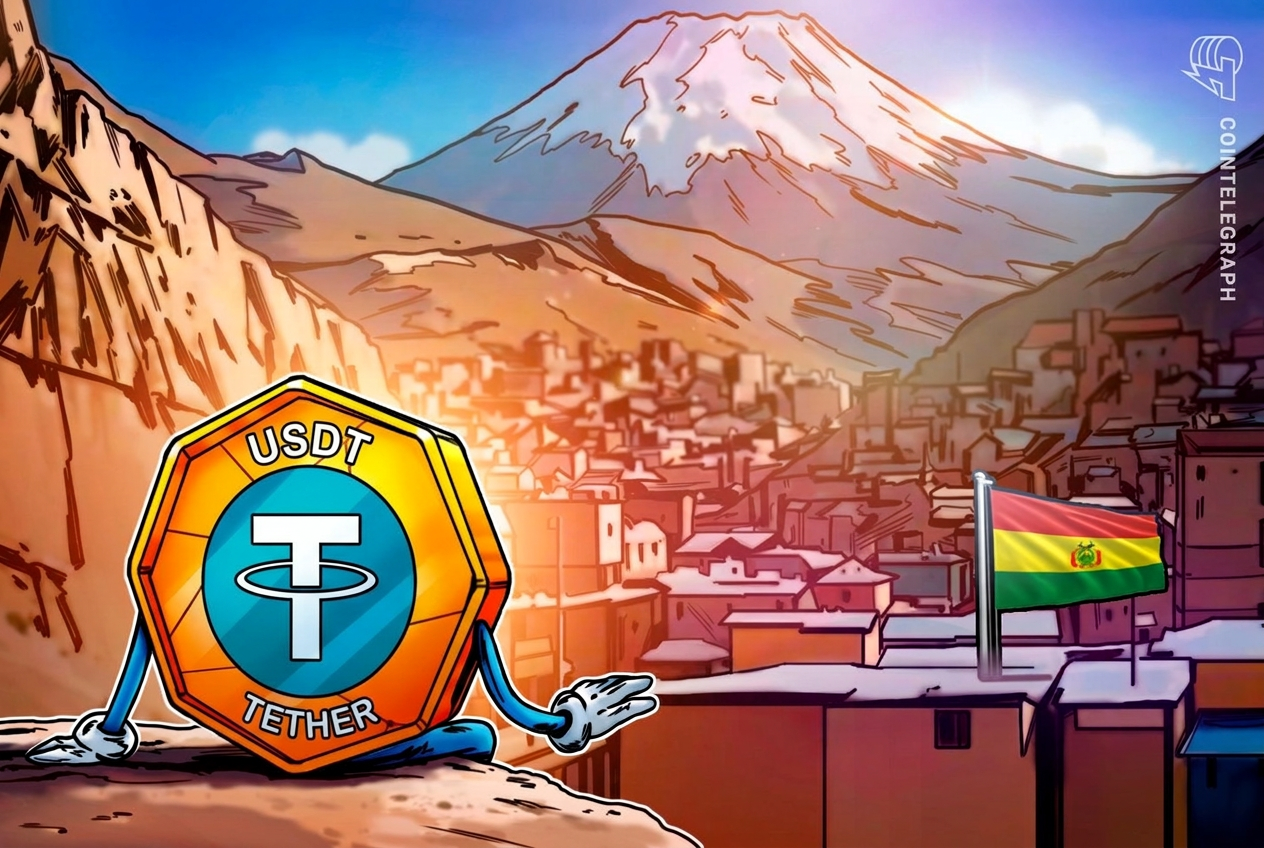 The investment will support Peso’s expansion across four Latin American markets, where it connects stablecoin payments to merchant services and local banking networks. Tether has led a pre-seed funding round in Bolivian fintech Peso, which offers USDT payments through food delivery apps and local banking networks, to support the company’s expansion across Latin America. In a Wednesday announcement, Tether said the investment will help Peso expand its stablecoin payment infrastructure across Bolivia, Brazil, Colombia and Argentina, including services that connect USDT with local currencies through banking and merchant payment systems. Peso has integrated USDT payments into Yango’s food delivery service in Bolivia, allowing customers to pay for orders using the stablecoin. The fintech offers QR payments, point-of-sale services for merchants and virtual accounts linked to Bolivia’s banking system through ACH transfers. Tether did not disclose the size of its investment. Read more
 -
Cointelegraph.com - 06:26 Oct 18, 2026
 The round brings AIsa’s total funding to more than $9 million. AIsa said it had completed its seed extension round, with Tether and HIVEN joining as strategic investors. The round brings AIsa’s total funding to more than $9 million. The two new investors joined Alibaba, Tribe Capital, Sumitomo Corporation, Draper Associates, Saison Capital and other backers. “Enterprise AI agents need trusted information, useful tools and a governed way to transact,” said Jordan Liu, founder and CEO of San Francisco-based AIsa, in a Friday statement. “Our vision is to build the infrastructure that enables agents to discover, access and pay for resources globally, while giving enterprises full control over permissions, spending and transactions. We are excited to welcome Tether and HIVEN as strategic investors as we accelerate the transition from AI assistants to autonomous, production-ready agents.” Read more
 -
CryptoSlate - 23:30 Oct 09, 2026
A researcher reported resumed TRON swaps after four vaults were blacklisted, exposing issuer control over USDT inside decentralized infrastructure. The post Tether freezes $1.4M in TRON vaults and THORChain stalls appeared first on CryptoSlate. -
CryptoSlate - 21:10 Oct 09, 2026
Suspected Ledger wallet thefts are approaching $90 million as Tether freezes USDT stablecoin linked to the incident, according to blockchain investigators. In an Oct. 9 statement, the crypto hardware wallet maker said it was investigating reports that customers lost funds after buying devices from CryptoBilis, an authorized reseller operating in Southeast Asia. As a precaution, […] The post Ledger hack scare nears $90 million as Tether moves to freeze stolen USDT appeared first on CryptoSlate. -
Cointelegraph.com - 19:04 Oct 09, 2026
 Chad Barraford, technical co-founder of the network, said that the funds were frozen and then unfrozen without explanation. THORChain technical co-founder Chad Barraford accused stablecoin issuer Tether of blacklisting the network’s USDt (USDT) vaults without explanation, then unfreezing them hours later. In a Friday X post, Barraford said that Tether had blacklisted THORChain vault addresses, freezing about a combined 1.45 million USDT in the network’s funds across four wallets. He reported about two hours later than trading would resume after the company unfroze all the addresses. “We don’t know why this choice was made and have had no comms with USDT before this action and are actively reaching out to have a conversation,” said Barraford before the addresses were unfrozen. “We hope that this was made in error / misunderstanding.” Read more
 -
Cointelegraph.com - 00:46 Oct 09, 2026
 The letter follows a report by the Democratic investigators last month alleging Tether’s USDT has become a key tool for Iran’s shadow banking network. US investment bank Cantor Fitzgerald is facing scrutiny from a Senate Democrat over its ties to Tether, with Senator Richard Blumenthal demanding records on the firm’s partnership with the stablecoin issuer and how much Commerce Secretary Howard Lutnick’s family has made from the arrangement. In a letter on Thursday, Blumenthal, the ranking Democrat on the Senate’s Permanent Subcommittee on Investigations, asked Cantor chairman Brandon Lutnick to explain how it monitors Tether’s compliance with banking and sanctions laws, along with all communications involving Howard Lutnick about Tether, including after he left Cantor. “Disturbingly, Cantor Fitzgerald’s lucrative business arrangements with Tether come at the expense of America’s national security,” Blumenthal wrote. Read more
 -
Cointelegraph.com - 16:25 Oct 07, 2026
 The agreement will explore a tenge-backed stablecoin pilot and a framework for tokenizing real-world assets as Kazakhstan expands its digital asset industry. Tether has signed an agreement with Kazakhstan’s central bank and the Alatau City Authority to explore a tenge-pegged stablecoin and the tokenization of real-world assets. Under the memorandum of understanding, the parties will study international stablecoin issuance models, identify potential use cases and develop a proposal for a tenge-backed stablecoin pilot, according to Tether. The agreement also calls for the development of an asset tokenization framework, including identifying assets for potential tokenization and launching a pilot project in Alatau that could use Tether’s Hadron platform. Read more
 -
CoinDesk - 14:27 Oct 07, 2026
The National Bank of Kazakhstan said it will study a local currency-linked stablecoin and tokenized real-world assets with Tether. -
Cointelegraph.com - 21:00 Oct 06, 2026
 The lawsuit alleged that Tether froze USDt funds in a Conduit wallet tied to an investigation launched by Brazilian authorities in 2024. Cross-border payments platform Conduit Technology alleged that stablecoin issuer Tether froze $2.76 million in USDt (USDT) without explanation in September 2025. In a complaint filed in the US District Court for the Southern District of New York on Monday, Conduit said that Tether froze funds belonging to the company to which it had “no legal entitlement” and “no claim.” The company said it began holding USDt as part of its digital treasury wallet in May 2025, alleging that Tether froze all $2.76 million of the stablecoin in September with “no justification” — an action Conduit claimed “materially impacted its business.” “The funds are unequivocally Conduit’s, but Tether has taken them and is denying Conduit access to them,” alleged Conduit in the complaint, adding: “Tether is not allowed to take money from businesses just because they chose to store that money in Tether’s c...
 -
CryptoSlate - 09:10 Oct 05, 2026
Its longer-term proposal would require Commission equivalence and EBA issuer recognition before distribution through a locally licensed institution. The post Circle and Tether find common ground against MiCA’s bank reserve rules appeared first on CryptoSlate. -
CryptoSlate - 17:30 Sep 29, 2026
Tether says it helped freeze nearly $550 million in Iran-linked USDT during 2026, while Democratic investigators on a Senate subcommittee allege that delays in blacklisting some identified wallets let tens of millions of dollars keep moving. A preliminary report released Sept. 28 by Democratic minority staff of the Senate Permanent Subcommittee on Investigations analyzed 846 […] The post Tether claims $550 million in Iran freezes, but $35 million slipped past Senate appeared first on CryptoSlate. -
Cointelegraph.com - 05:29 Sep 29, 2026
The disclosure came as Senate Democratic investigators alleged USDT had become a key part of Iran’s shadow banking network. Stablecoin issuer Tether said it helped authorities freeze nearly $550 million in Iran-linked USDT during 2026, as a Senate Democrat called for an investigation into the stablecoin issuer on Monday. In a statement on Monday, the company said it has been working closely with international law enforcement for years. This year alone, it froze more than $130 million in USDT across four wallets, and in April, it froze more than $344 million linked to the Central Bank of Iran. “Tether has consistently demonstrated that USDT is not a haven for sanctioned actors, terrorist organizations or criminal networks,” said Tether CEO Paolo Ardoino. Read more -
CryptoSlate - 21:15 Sep 27, 2026
Court records identify Capstone-held accounts, while Tether has not disclosed whether its bank balance belongs to USDT reserves. The post An $84 million US asset seizure just sparked a massive question for Tether appeared first on CryptoSlate. -
CryptoSlate - 16:45 Sep 26, 2026
Not that long ago, Washington fined Tether for misleading people about the dollars behind its tokens. Today, the company's insatiable appetite for American debt is the main argument for sending those tokens further around the world. The distance between those two positions tells us a great deal about where crypto ended up. Tether built a […] The post Washington has $114 billion reasons to want Tether around appeared first on CryptoSlate. -
CoinDesk - 13:00 Sep 26, 2026
The five-year deal could strengthen USDC’s reach in emerging markets, though Tether’s liquidity advantage remains hard to dislodge, analysts told CoinDesk. -
Cointelegraph.com - 18:56 Sep 25, 2026
 US prosecutors alleged that a payments business illegally transferred hundreds of millions of dollars at the direction of EQIBank, where Tether holds some assets. Stablecoin issuer Tether said that it had limited exposure through assets held at a bank that reportedly directed a payments company to allegedly move hundreds of millions of dollars on its behalf. In response to reports linking Tether and Bitfinex to a Montana-based payments business named in a civil forfeiture complaint filed by the Department of Justice, a company spokesperson told Cointelegraph that it had “no knowledge” of any of the alleged conduct. Tether confirmed it was a customer of EQIBank, the bank the Justice Department alleged directed the payments company, Capstone, to send and receive money, but the amount held at the bank represented 0.034% of the group’s total assets. US prosecutors reportedly froze about $84 million in Capstone’s accounts as part of the complaint. Justice Department officials alleged that the business was unlicens...
 -
CryptoSlate - 23:00 Sep 15, 2026
The September 14 complaint targets ten Tron addresses frozen in 2025 and outlines a planned transfer into FBI custody. The post Tether, Binance and a $1.5 billion Iran oil network converge in new US forfeiture case appeared first on CryptoSlate. -
CryptoSlate - 09:45 Sep 10, 2026
USDT spreads dollar claims and Treasury funding demand while Tether keeps reserve ownership, portfolio control and gains above face value. The post Paolo Ardoino says 650 million people decentralized US debt, but Tether still controls the T-bills appeared first on CryptoSlate.