Korea | Crypto
"Korea" in Crypto feed
-
Cointelegraph.com - 15:27 Oct 13, 2026
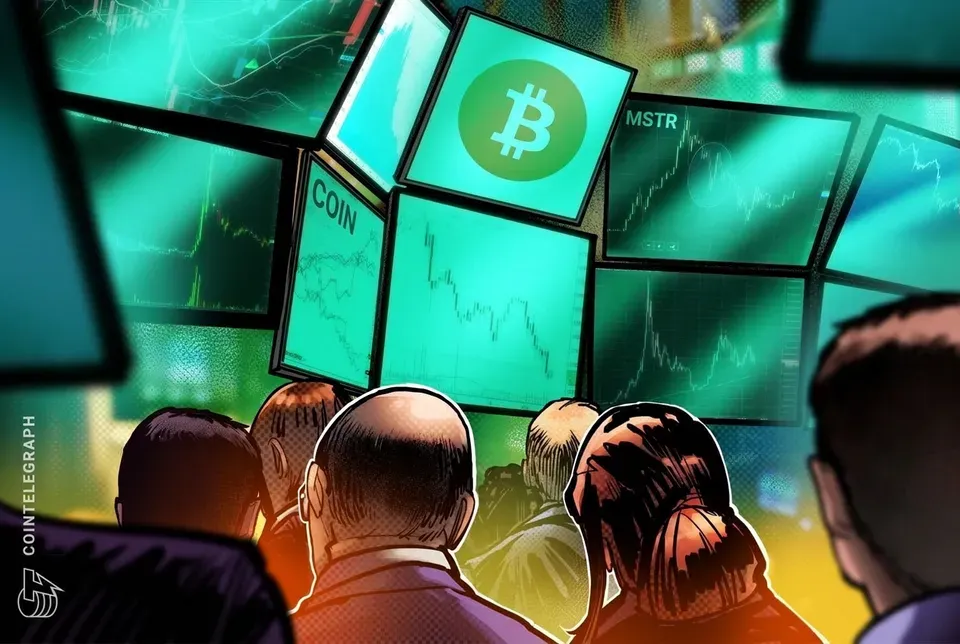 Bitcoin price action preserved overnight gains as US stocks quickly rebounded after opening lower on the back of Korea’s tech-stock rout. Bitcoin (BTC) continued to target $84,000 at Tuesday’s Wall Street open as US stocks attempted to shake off South Korea’s latest tech rout. Key points: Data from TradingView showed BTC/USD returning to near $83,800 at the start of the US trading session, preserving much of its overnight upside. Read more
 -
Cointelegraph.com - 22:35 Oct 08, 2026
 Despite ongoing bans, China has seen a big surge in peer-to-peer stablecoin use. New figures show South Korea’s $450B crypto economy is the largest in East Asia. The number of unique wallets sending peer-to-peer (P2P) stablecoin transactions in China grew 43-fold between the first quarter of 2024 and the second quarter of 2026, according to Chainalysis. The blockchain analytics company recorded $104.1 billion across 18.1 million transfers involving China’s self-custodied stablecoin holdings during the 2026 reporting period, which ran from July 2025 to June 2026. Stablecoin holdings turned over 33.2 times per year, more than three times the global average of 9.3, a pattern Chainalysis said was consistent with users treating stablecoins as working capital. Read more
 -
Cointelegraph.com - 06:41 Sep 21, 2026
 The Bank of Korea’s new network will let foreign investors settle won transactions during business hours in their home countries. The Bank of Korea (BOK) launched a pilot of its first 24-hour won settlement network, aimed at allowing foreign investors to settle won transactions outside South Korea’s normal banking hours. On Monday, the central bank said its international wire network started trial operations with four domestic lenders: KB Kookmin Bank, Woori Bank, Hana Bank and Shinhan Bank. Full operations are scheduled for January 2027, when participation is expected to expand to other institutions and foreign banks. The network will operate 24 hours a day, excluding weekends and public holidays. Foreign investors will be able to settle won transactions during business hours in their home countries through accounts with Registered Foreign Institutions for KRW Business, or RFI-Ks, without opening accounts directly with South Korean financial institutions. Read more
 -
Cryptonews.com - 11:28 Sep 07, 2026
XRP holds near $1.40 as Ripple's ecosystem expands into Korea and Evernorth eyes a Nasdaq listing. Key levels, scenarios, and an early-stage alternative inside. The post Ripple Returns to Korea as Major XRP Company Awaits Nasdaq Listing appeared first on Cryptonews. -
Cryptonews.com - 18:44 Aug 26, 2026
XRP trades near $1.42 after a 43.7% rally fueled by Korean turnover and Binance positioning. Can it clear $1.52 resistance or is a pullback next? The post XRP Price Prediction: Korea and Binance Power the Rally, But Can XRP Keep Going? appeared first on Cryptonews. -
Cointelegraph.com - 09:19 Jul 09, 2026
 The Bank of Korea reiterated its call for bank-led won stablecoin issuance while advancing deposit token pilots, as issuer rules remain a sticking point in South Korea’s digital asset bill. The Bank of Korea (BOK) has doubled down on its stance that won-denominated stablecoins should first be issued through bank-led consortiums. According to local reports from Digital Asset and EDaily, the central bank made the comments in materials submitted on Thursday to the National Assembly's finance committee. Local outlets reported that the BOK called for safeguards, including priority issuance by bank-led consortiums and a statutory policy body involving relevant agencies. The latest comments reinforce the BOK's months-long push to keep won stablecoin issuance under bank-led structures. The central bank's stance has divided policymakers and industry groups and contributed to delays in South Korea's digital asset bill. Read more
 -
Cointelegraph.com - 13:36 Jul 01, 2026
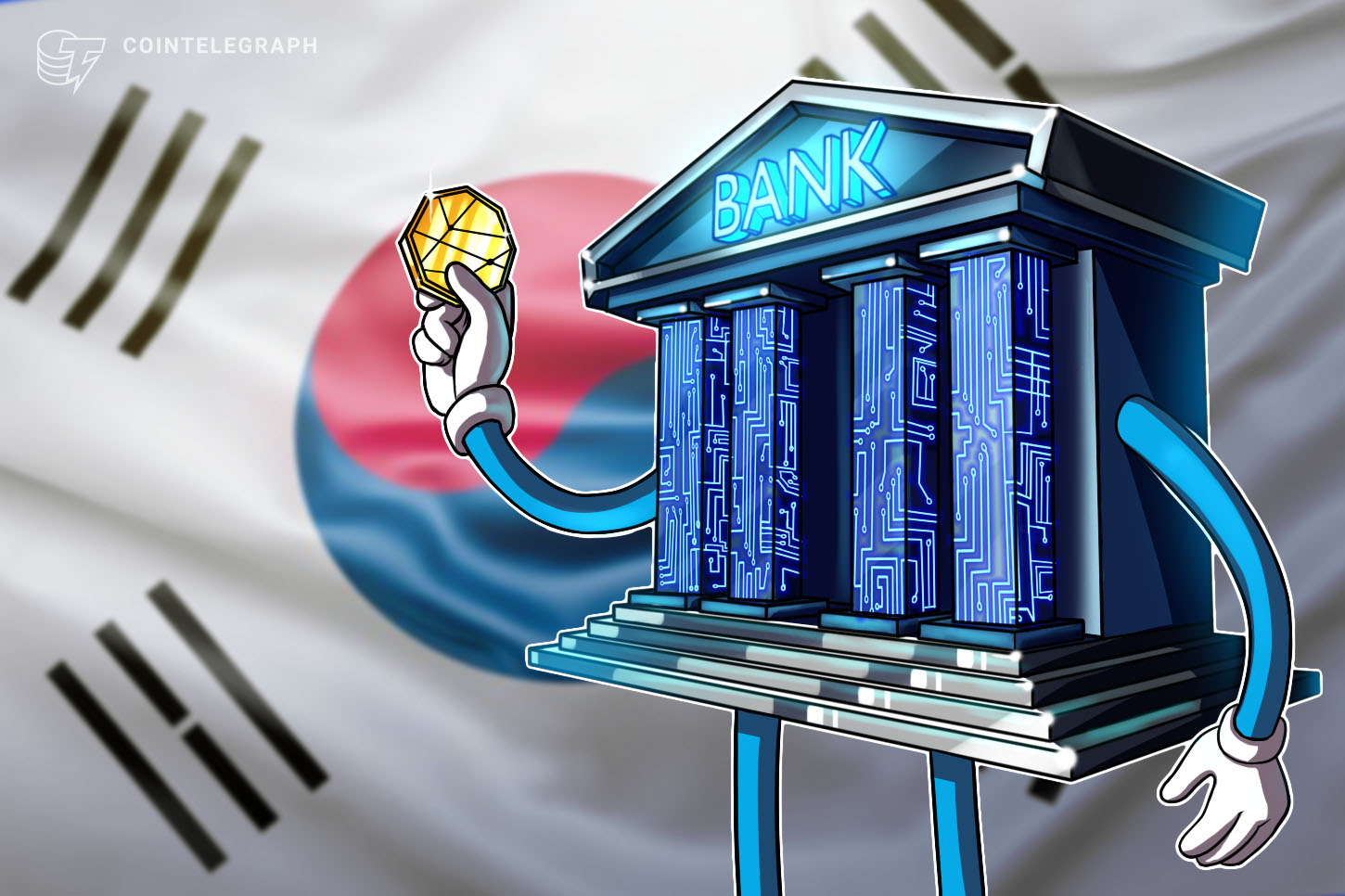 The Bank of Korea’s governor praised tokenized government bonds for easing the issuance and management of government debt during a panel discussion at the ECB Forum. Hyun Song Shin, the governor of the Bank of Korea, praised tokenization for its ability to simplify the issuance and management of government bonds. Shin said during a Wednesday panel discussion at the European Central Bank (ECB) Forum on Central Banking in Sintra, Portugal, that tokenized bonds would make it easier to verify collateral, credit the asset provider's account and reverse transactions at the appropriate time. “The big prize is tokenizing government bonds,” Shin said, adding that it is “much easier, much less prone to mistakes if you have everything tokenized.” Read more
 -
Cointelegraph.com - 08:52 Apr 21, 2026
 New Bank of Korea Governor Hyun-Song Shin supported CBDCs and deposit tokens in his first address, while stablecoins were notably absent from his remarks. The newly appointed governor of the Bank of Korea, Hyun-Song Shin, has voiced support for central bank digital currencies (CBDCs) and tokenized deposits in his first public address. Shin, who began his four-year term after an inauguration ceremony in Seoul on Tuesday, said the central bank will advance the second phase of “Project Hangang,” a Bank of Korea-led pilot project to test a blockchain-based, wholesale CBDC system. He also pointed to international cooperation efforts, including the Agora Project, an international collaborative initiative launched in April 2024 by the Bank for International Settlements (BIS) and seven central banks to explore the tokenization of cross-border payments. Shin said these initiatives “will elevate the status of the Korean won in the digital payment environment.” Read more
 -
Cointelegraph.com - 06:21 Apr 13, 2026
 Bithumb accidentally sent customers 620,000 Bitcoin instead of 620,000 Korean won in February. The Bank of Korea wants lawmakers to make it so it doesn't happen again. South Korea’s central bank says crypto exchanges should have their own “circuit breakers” that halt trading to prevent a repeat of the market fallout after Bithumb mistakenly sent more than $40 billion in Bitcoin to its customers in February. The Bank of Korea said in a payments report on Monday that lawmakers should consider introducing mechanisms similar to the Korea Exchange’s trading curbs to suspend trading if crypto prices suddenly fluctuate. “Currently, the virtual asset industry lacks internal control mechanisms and faces lower regulatory intensity compared to established financial institutions,” the bank said. Read more
 -
Cryptonews.com - 10:37 Jan 25, 2026
South Korean crypto exchanges recorded a 62% spike in stablecoin volumes as the won's nine-day losing streak against the dollar triggered intensified marketing campaigns and rare presidential intervention pledging currency stabilization. The post Stablecoin Trading Surges 62% in Korea as Dollar Strengthens Against Won appeared first on Cryptonews. -
CryptoSlate - 13:15 Jan 17, 2026
XRP has become the default trading chip of South Korea, bypassing Bitcoin and Ethereum to dominate the country’s high-velocity retail market. While institutional capital worldwide typically gravitates toward Bitcoin as a store of value, South Korean trading patterns tell a different story. Data from the country's largest exchanges reveals that when the market heats up, […] The post XRP volume is exploding in Korea because it exploits a specific gap in the country’s spot-only exchange laws appeared first on CryptoSlate. -
Cryptonews.com - 10:23 Dec 07, 2025
South Korea is moving to treat major crypto exchanges like traditional banks following November's $30.1 million Upbit hack, with planned regulations requiring platforms to compensate users for security breaches and system failures regardless of fault. The post Korea to Treat Crypto Exchanges Like Banks After Upbit Hack appeared first on Cryptonews. -
Cryptonews.com - 23:30 Sep 02, 2025
South Korean lawmakers have criticized Lee Eok-won, the nominee for the post of chairman at the Financial Services Commission, for buying shares in the Bitcoin (BTC)-keen US firm Strategy. The post S Korea’s New Top Regulator Faces Scrutiny Over Strategy Shares, Crypto Comments appeared first on Cryptonews. -
Cointelegraph.com - 14:55 Aug 26, 2025
 Binance and Tether are eyeing Korea’s stablecoin rules that may boost coins pegged to the South Korean won or strengthen USD dominance. South Korea has become a key focus in the global stablecoin conversation as it draws close attention from major players like Binance and Tether. Both companies are among the largest stablecoin issuers worldwide, and they both could face major challenges depending on how new regulations unfold in the East Asian nation. Read more
 -
Cryptonews.com - 23:30 Aug 25, 2025
Crypto advocates, IT experts, and media outlets are concerned that lawmakers’ deliberations on South Korea’s stablecoin legislation have “slowed to a standstill.” The post Frustration Grows as S Korea’s Stablecoin Legislation ‘Slows to Standstill’ appeared first on Cryptonews.