KRAKEN | Crypto
"KRAKEN" in Crypto feed
-
CryptoPotato - 04:07 Oct 15, 2026
Evernorth has named Ripple, Kraken, Coinbase, and BitGo as partners to help deploy its 473 million XRP treasury starting in Q4 2026. -
Cointelegraph.com - 12:26 Oct 14, 2026
 Payward expects to close the acquisition in 2027, enabling it to expand its traditional banking services into four EU operating markets already served by Saldo Bank. Cryptocurrency exchange Kraken’s parent company, Payward, will buy Lithuania-based Saldo Bank as part of its expansion into traditional financial services, calling it “a deliberate next step in an infrastructure strategy we’ve been building for years.” Payward signed a definitive agreement to acquire Saldo Finance Oy, a Finnish holding company whose subsidiary, Saldo Bank UAB, is a digital bank licensed in Lithuania, according to a Wednesday announcement. Payward said Saldo Bank’s EU banking license and footprint will enable it to expand into four operating markets, including Lithuania, Finland, Sweden and Germany, where the bank already offers retail term deposits. The bank’s authorization is also passported into the Netherlands. Read more
 -
Cointelegraph.com - 09:41 Oct 12, 2026
 Payward received full market approval from Dubai’s VARA to expand its digital asset services in the UAE, building on the preliminary approval received in May. Payward, the parent company of cryptocurrency exchange Kraken, has received approval from the Virtual Assets Regulatory Authority (VARA) for its local entity, Payward FZCO, to provide crypto services. At launch, Kraken’s clients in the United Arab Emirates (UAE) will be able to access spot and margin trading in UAE dirham (AED)-denominated pairs and make direct deposit withdrawals, Payward announced on Monday. The company is targeting launch in the coming weeks. VARA’s public register shows that the regulator issued Payward FZCO a virtual asset service provider (VASP) license on Oct. 6, enabling it to offer management and investment services, as well as broker-dealer services. Read more
 -
CryptoSlate - 00:30 Oct 06, 2026
Payward's SGB Net link supports round-the-clock US-dollar funding in eligible jurisdictions, while SGB customer-trade pricing is planned for coming months. The post Kraken parent joins Singapore Gulf Bank, opening 24/7 institutional dollar rails appeared first on CryptoSlate. -
Cointelegraph.com - 08:56 Oct 05, 2026
 The partnership will enable select institutions in Asia and the Gulf region to instantly settle US dollar transactions through the bank’s SGB Net Kraken parent company Payward has partnered with Singapore Gulf Bank (SGB) to enable 24/7 US dollar settlement for select institutional clients in Asia and the Gulf region. Payward has integrated SGB Net, the Bahrain-regulated bank’s real-time clearing network, allowing those clients to settle transactions instantly. The companies plan to expand the service to more clients and currencies, according to a Monday press release. The bank will also access digital asset liquidity through Payward’s prime brokerage service, Kraken Prime, and use Payward’s markets to price customer trades in the coming months. Read more
 -
CoinDesk - 14:00 Sep 26, 2026
Kraken parent Payward is unifying trading, payments, asset management and institutional services on common rails, co-CEO Arjun Sethi said. -
CryptoSlate - 10:50 Sep 25, 2026
Mainnet blocks resumed Sept. 24, while Kraken's latest EGLD notice kept trading cancel-only and deposits and withdrawals paused. The post MultiversX restarts after exploit halt, but Kraken still bars new EGLD trades appeared first on CryptoSlate. -
Cointelegraph.com - 20:54 Sep 14, 2026
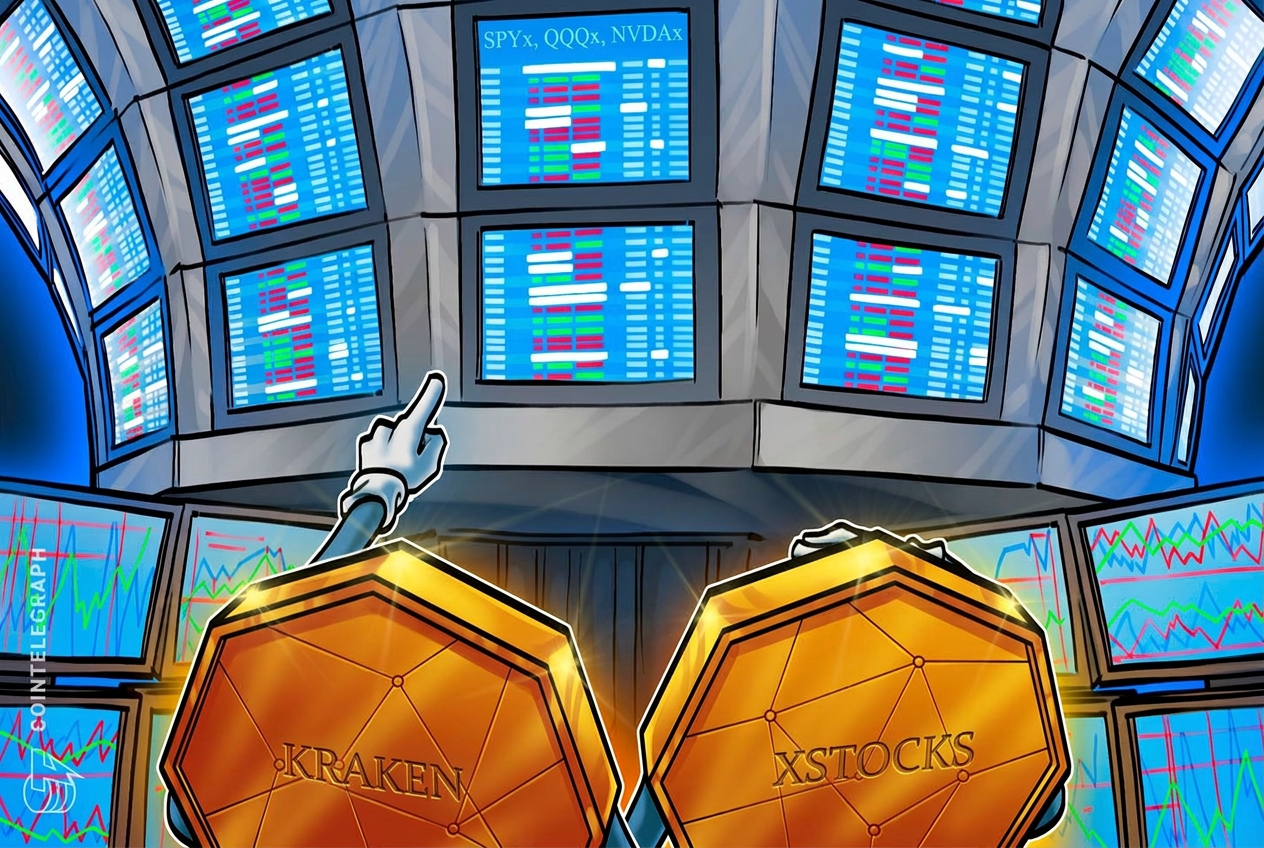 Kraken’s new xStocks vaults let investors earn yield on tokenized versions of Nvidia and major US stock market ETFs by lending the assets in DeFi markets. Crypto exchange Kraken has launched onchain yield vaults for select tokenized stocks and ETFs, allowing clients to earn returns by lending the assets through decentralized finance protocols, according to a Monday announcement. The new xStocks vaults support tokenized versions of the SPDR S&P 500 ETF (SPYx), Invesco QQQ ETF (QQQx) and Nvidia (NVDAx), with yield generated by lending the assets through onchain markets. Yield is paid in the deposited xStocks, while withdrawal requests are processed within three days. The vaults use the same infrastructure as Kraken DeFi Earn, which launched in January and has since attracted more than $800 million in deposits, according to the company. Read more
 -
CryptoSlate - 10:10 Sep 14, 2026
Withdrawals close Sept. 14 at 14:00 UTC, ahead of Sept. 15–25 liquidation with no guaranteed proceeds currency. The post Seven assets enter Kraken liquidation window after withdrawals close Monday appeared first on CryptoSlate. -
CryptoSlate - 17:00 Sep 11, 2026
The expanded Payward relationship adds surveillance across five market categories while NETs remain a Q2 2027 target. The post Nasdaq deepens Kraken ties with proposed $100 million Payward investment appeared first on CryptoSlate. -
Cointelegraph.com - 11:39 Sep 10, 2026
 Nasdaq invested $100 million in Payward as part of its push toward tokenized stock products with round-the-clock trading. Nasdaq has invested $100 million in Payward, the parent company of cryptocurrency exchange Kraken, as part of the New York electronic bourse’s expansion into tokenized assets. Nasdaq’s venture arm made a $100 million investment in Payward, the exchange operator revealed in a Thursday announcement. As part of the deal, Kraken will offer tokenized versions of Nasdaq-listed stocks on its own platform. The investment builds on Nasdaq’s partnership with Payward announced in March. The investment valued Kraken’s parent company at $21 billion, people familiar with the matter told Bloomberg on Thursday. Cointelegraph approached Nasdaq for comment on the matter but did not receive a reply before publishing time. Read more
 -
Cointelegraph.com - 16:04 Sep 03, 2026
 The deal will bring SoFiUSD to Kraken, connect Payward to SoFi’s 24/7 dollar settlement network and give SoFi access to digital asset liquidity through Kraken Prime. Kraken parent Payward has partnered with SoFi in a deal that will bring SoFiUSD to Kraken and connect the crypto platform to SoFi’s 24/7 dollar settlement network. Under the partnership, SoFi will use Kraken Prime as an additional source of digital asset liquidity, while Payward will join the SoFi Exchange Network (SEN) and gain access to SoFi’s business banking services. The companies said qualified custody services could be added as the partnership expands, while Kraken’s institutional and business clients will gain access to SEN for round-the-clock US dollar settlement. Read more
 -
Decrypt - 15:40 Sep 03, 2026
Kraken will list SoFiUSD and gain access to SoFi’s round-the-clock dollar settlement network, while Kraken Prime will execute trades for SoFi’s crypto customers. -
CoinDesk - 12:00 Sep 03, 2026
Kraken is joining SoFi's settlement network and list SoFiUSD as the companies link traditional banking with crypto markets. -
Cointelegraph.com - 10:56 Sep 01, 2026
 The London bourse operator is seeking to offer 24/5 exposure to UK-based tokenized equities, as more TradFi institutions explore tokenized equities offerings. The London Stock Exchange (LSE) and cryptocurrency exchange Kraken are reportedly launching tokenized stock trading on the stock market operator’s new night-time trading venue. The LSE has partnered with Kraken’s parent company, Payward, to launch access to tokenized stocks tracking the value of leading UK equity products starting in 2027, Payward’s chief commercial officer, Mark Greenberg, told the Financial Times according to a Tuesday report. The tokenized stocks will be listed on LSE’s new night-time trading venue, LSE 24, that will offer 24/5 trading, operating from Mondays to Fridays, the company announced on July 21. Read more
 -
CryptoSlate - 03:30 Aug 29, 2026
Abstentions created the smaller public margin, while on-chain finalization remained pending at the latest check. The post Kraken and Galaxy flipped late as Solana approved a major supply cut appeared first on CryptoSlate. -
Cointelegraph.com - 17:39 Aug 18, 2026
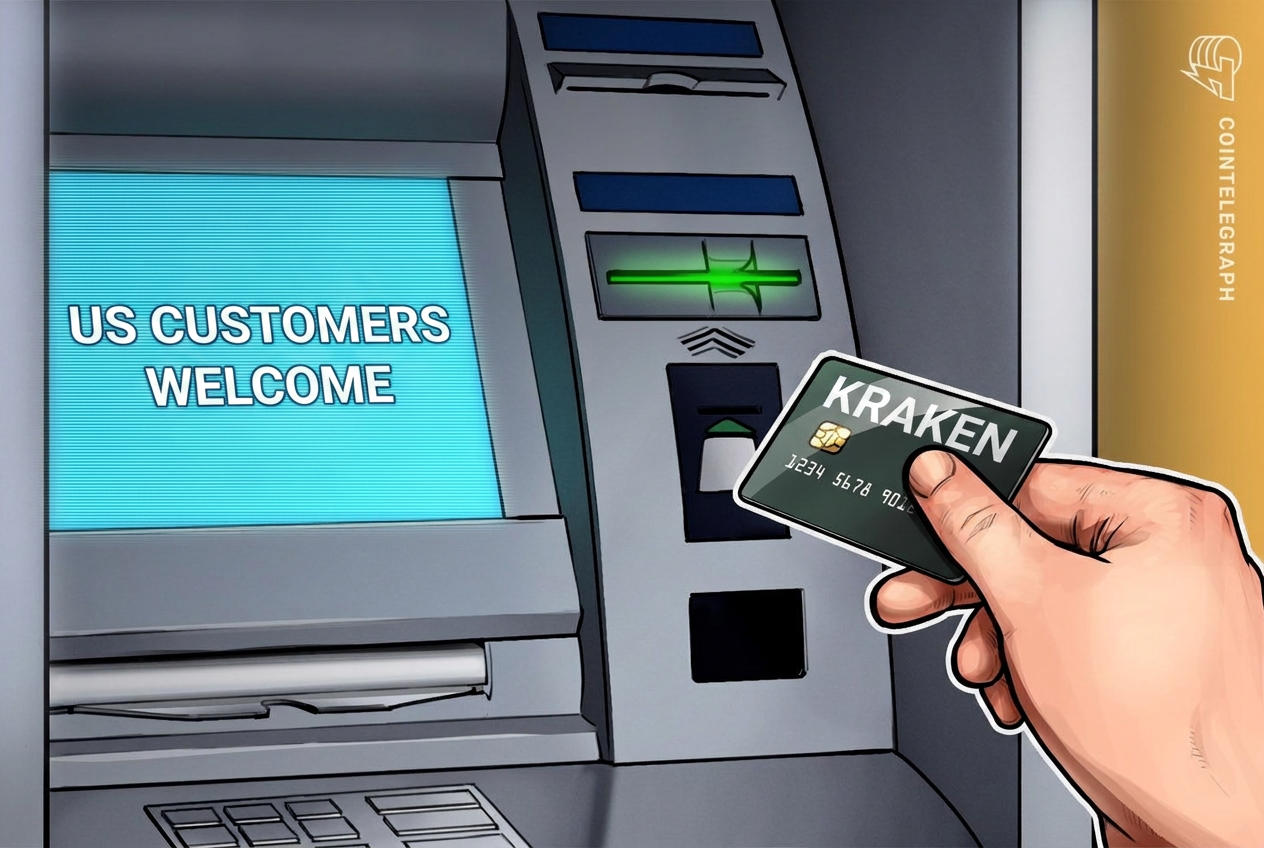 The multi-asset card lets US customers spend crypto and fiat and earn cashback as Kraken’s parent company expands across financial services. Kraken’s payment app, Krak, has launched a multi-asset debit card in the US, allowing customers to spend crypto and fiat while earning up to 2% cashback in dollars or Bitcoin (BTC). The card supports more than 600 currencies and assets, with holdings converted into US dollars at point of sale. A single purchase can draw from multiple balances, with users setting the order in which assets are spent, according to an announcement Tuesday. The card is issued by Lead Bank on Visa’s network and powered by Stripe Issuing, with physical and virtual versions available to eligible US customers. The company said cashback rates depend on average assets held across Krak, Kraken and Kraken Pro. Read more
 -
Cointelegraph.com - 10:53 Aug 18, 2026
 Eligible EEA users can trade conventional US shares alongside more than 700 tokenized xStocks through Kraken’s European entity. Kraken has launched trading in more than 7,000 US-listed stocks for customers in the European Economic Area (EEA), expanding its traditional finance offering alongside cryptocurrencies and tokenized equities. The crypto exchange said Tuesday that eligible EEA customers can trade US stocks through Kraken Pro and its mobile app under the company’s Markets in Financial Instruments Directive II authorization. The shares are available alongside more than 600 crypto assets and over 700 xStocks, which are tokenized versions of publicly listed equities. Read more
 -
Cointelegraph.com - 18:44 Aug 14, 2026
 Payward grew revenue despite weaker crypto spot activity, as funded accounts jumped 42% and a growing share of revenue came from outside transaction-based activity. Kraken parent Payward reported $508 million in adjusted revenue for the second quarter, up 17% year over year despite a decline in crypto spot trading and overall transaction volume. According to Friday’s earnings report, total transaction volume fell 13% year over year to $310 billion, while funded accounts increased 42% to 6.6 million. Payward remained adjusted EBITDA positive at $23 million. Asset-based and other revenue accounted for 60% of total revenue, up from 55% a year earlier, as the company generated a growing share of its revenue outside transaction-based activity. Read more
 -
Cointelegraph.com - 18:55 Aug 12, 2026
 Kraken’s funded trading program adds round-the-clock exposure to the US equity benchmark as it builds out its multi-asset offering. US-based crypto exchange Kraken has added an S&P 500 perpetual product to its proprietary trading program, giving funded traders round-the-clock exposure to the US equity benchmark. According to a company blog post on Wednesday, the product is structured as a perpetual priced off an index oracle tracking the S&P 500, rather than a standardized futures contract, meaning it has no expiration date or rollover requirement. The S&P 500 joins the Nasdaq 100 as the second traditional market available through Kraken Prop, with the company planning to add commodities as part of a broader multi-asset rollout. Traders can access the S&P 500 market across Kraken Prop’s evaluation and funded accounts with up to 5x leverage and a maximum notional exposure of $1 million, according to the company. Read more