Philippines | Crypto
"Philippines" in Crypto feed
-
Cointelegraph.com - 09:51 Sep 07, 2026
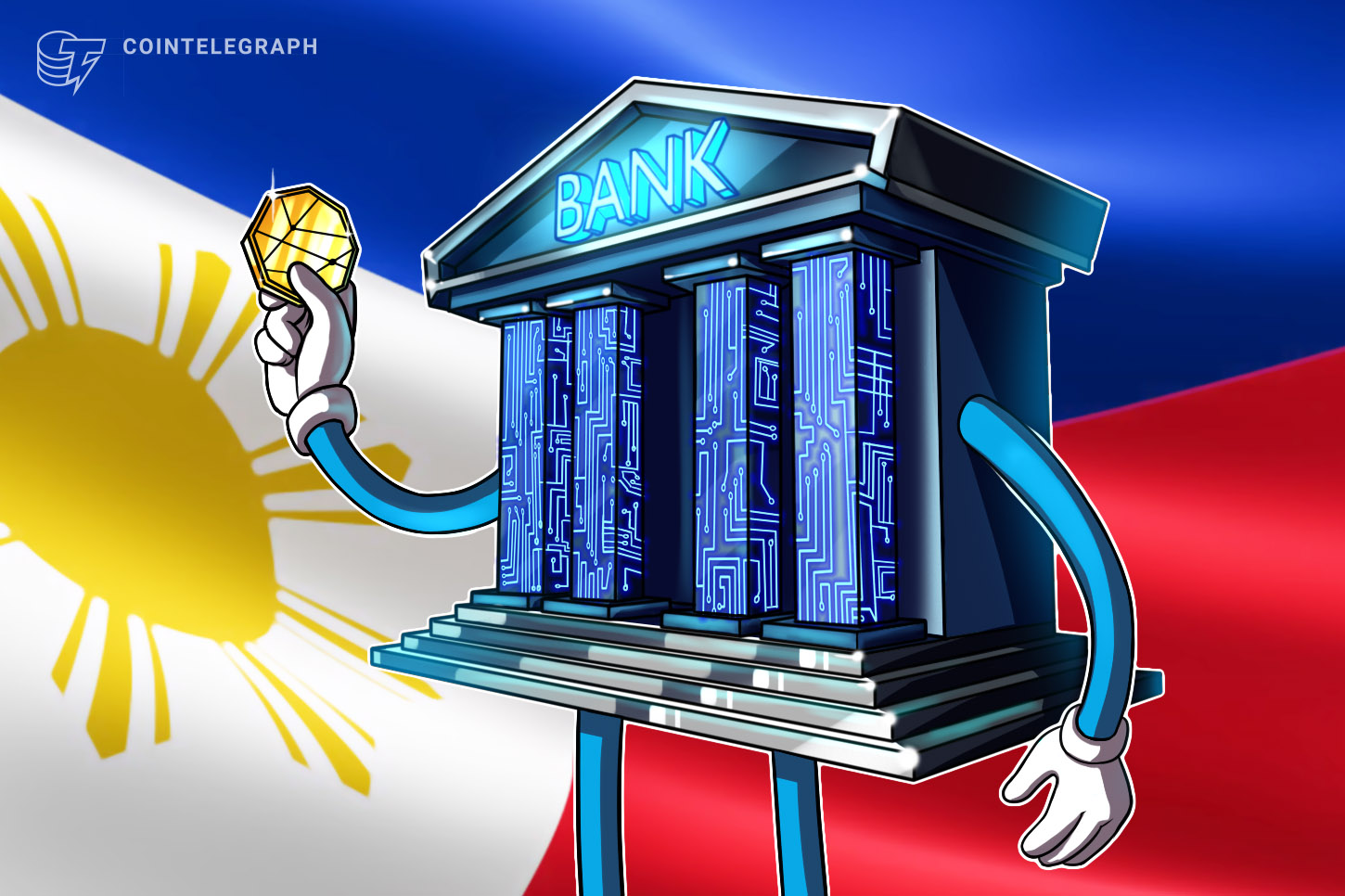 A central bank proposal would pause new payment operator registrations while requiring enhanced monitoring and transaction limits for arrangements involving virtual asset firms. The Philippines’ central bank has proposed freezing new payment-system operator registrations for 12 months while imposing tighter controls on payment arrangements involving virtual asset service providers (VASPs). Under a draft circular, the Bangko Sentral ng Pilipinas (BSP) said it would suspend acceptance and processing of applications for operators of payment systems (OPS) to conduct a “holistic review” of its taxonomy and licensing framework. Applications submitted before the suspension could continue to be evaluated, but the BSP would not approve or deny any until the pause ends. Entities would be barred from starting activities that require OPS registration unless the regulator authorizes them otherwise. Read more
 -
Cointelegraph.com - 12:25 Jun 21, 2026
Dash is assessing the Philippines for a crypto payments push as regulators promote easier business registration, though industry participants say compliant market entry can still take years. Dash is exploring the Philippines as a potential market for crypto payments, citing demand for lower-cost transactions and the country's openness to digital finance tools. In an interview with Cointelegraph at the Philippine Blockchain Week 2026, Daria Chernozub, global adoption lead at Dash Blockchain, said the project focuses on emerging markets where users face high fees and need simpler payment options. “We believe that Dash brings the technology and the payment solutions for people who are suffering from high commissions [and] who need something easy to use,” Chernozub said, adding that the Philippines fits that profile because consumers are open to learning about new technologies. Read more -
Cointelegraph.com - 12:15 Jun 19, 2026
BlockShoals’ head of legal said Binance can provide trading access under the Philippine SEC’s crypto framework, while peso transfers and other central bank-regulated services require a licensed VASP. Binance is allowed to provide crypto trading access to users in the Philippines through its arrangement with BlockShoals Technologies, but neither company is authorized to handle peso transfers or perform other activities regulated by the country's central bank, according to legal adviser Marie Antonette Quiogue. Quiogue, head of legal at BlockShoals, told Cointelegraph in an interview on Friday at Philippine Blockchain Week 2026 that Binance’s local operations fall under the Securities and Exchange Commission’s (SEC) crypto asset service provider (CASP) framework. She said BlockShoals serves as a crypto asset intermediary, introducing Philippine users to Binance’s global trading platform. The arrangement forms part of Binance's effort to reestablish a presence in the Philippines after regulators moved to restric... -
Cointelegraph.com - 12:07 May 26, 2026
 Binance remains blocked in the Philippines after a 2024 NTC directive tied to SEC concerns over licensing and registration. Crypto exchange Binance is partnering with fintech company BlockShoals Technologies in what the platform described as its first formal market-entry approach in the Philippines, through local partnerships and regulatory engagement. On Tuesday, Binance announced the partnership, highlighting that BlockShoals is an approved participant under the Philippine Securities and Exchange Commission’s (SEC) Strategic Sandbox, or StratBox, framework. Binance said BlockShoals will serve as the approved local intermediary, while the exchange will provide technology, security, operational and compliance support. A Binance spokesperson told Cointelegraph that the company is pursuing a compliance-oriented market approach in collaboration with local stakeholders. “This represents Binance’s first formal market entry approach in the Philippines through local partnerships and regulatory engagement,” the spok...
 -
Cointelegraph.com - 07:05 Apr 30, 2026
 The latest stablecoin move comes years after Meta first dipped its toes into stablecoins through Libra in 2019, before scrapping the plans in 2022 due to regulatory pushback. US tech giant Meta has launched USDC payouts for creators on its platforms in the Philippines and Colombia, with plans to expand to additional markets. Creators who opt into the service will receive payments directly into crypto wallets on the Solana and Polygon blockchains. However, Meta does not offer a built-in conversion option, so an external exchange is required to convert USDC into fiat currency, according to the announcement on Wednesday. The service is currently available only to select creators in Colombia and the Philippines, but Polygon said Wednesday that the stablecoin rollout is expected to expand to more jurisdictions soon. Read more
 -
Cointelegraph.com - 09:22 Apr 21, 2026
 Promoters of flagged platforms may face fines of up to 5 million Philippine pesos ($89,000) or up to 21 years in prison under Philippine securities law. The Philippine Securities and Exchange Commission (SEC) has issued a public investor alert warning Filipinos not to invest in dYdX and six other crypto trading platforms, saying they are not registered or authorized to solicit investments in the country. In a Facebook post on Tuesday, the SEC named dYdX, Aevo, gTrade, Pacifica, Orderly, Deriv and Ostium, stating that based on its findings, the platforms appear to be offering investments to the public in exchange for promised returns, profits or interest. The regulator said none of the listed entities are registered with the Commission or hold the required authorization under its crypto-asset service provider (CASP) framework, which requires firms offering crypto-related services in the Philippines to obtain licenses and meet capital and operational requirements. Read more
 -
Cointelegraph.com - 23:50 Mar 02, 2026
Telegram has narrowly escaped a full scale ban in the Philippines, and the yen carry trade now comes in token form. Asia Express s -
Cointelegraph.com - 23:50 Mar 02, 2026
Telegram has narrowly escaped a full scale ban in the Philippines, and the yen carry trade now comes in token form. Asia Express s -
Cointelegraph.com - 10:04 Dec 24, 2025
 Philippine regulators are tightening control over crypto access, signaling that global exchanges must secure local licenses to operate. Internet service providers (ISPs) in the Philippines began blocking major crypto trading platforms as regulators moved to enforce local licensing rules on crypto service providers. Users reported that as of Tuesday, access to global cryptocurrency exchanges Coinbase and Gemini was unavailable in the Philippines. Cointelegraph independently confirmed that both platforms were inaccessible across multiple local ISPs. A report by the Manila Bulletin said the ISP blocks followed an order from the National Telecommunications Commission, which directed providers to restrict access to 50 online trading platforms flagged by the Bangko Sentral ng Pilipinas (BSP), the central bank, as operating without authorization. Read more
 -
Cointelegraph.com - 21:27 Nov 06, 2025
 Crypto influencers charged for shilling “Hong Kong’s FTX.” Philippines senate considers putting government budget on blockchain. Asia Express. Hong Kong authorities on Wednesday formally charged influencers linked to the defunct crypto exchange JPEX. Among those charged are Joseph Lam Chok, a lawyer-turned-influencer, and Chan Yee, a prominent key opinion leader (KOI) in the cryptocurrency community. Prosecutors say they promoted JPEX while either knowing or ignoring that the platform had no approval to operate in Hong Kong. Under Hong Kongs Anti-Money Laundering Ordinance, it is an offense to fraudulently or recklessly induce others to invest in crypto. Six core members of the alleged JPEX group and seven operators of over-the-counter crypto shops were also charged, along with three individuals accused of serving as front account holders. Read more
 -
Cointelegraph.com - 21:27 Nov 06, 2025
Crypto influencers charged for shilling “Hong Kong’s FTX.” Philippines senate considers putting government budget on blockchain. Asia Express. Hong Kong authorities on Wednesday formally charged influencers linked to the defunct crypto exchange JPEX. Among those charged are Joseph Lam Chok, a lawyer-turned-influencer, and Chan Yee, a prominent key opinion leader (KOI) in the cryptocurrency community. Prosecutors say they promoted JPEX while either knowing or ignoring that the platform had no approval to operate in Hong Kong. Under Hong Kongs Anti-Money Laundering Ordinance, it is an offense to fraudulently or recklessly induce others to invest in crypto. Six core members of the alleged JPEX group and seven operators of over-the-counter crypto shops were also charged, along with three individuals accused of serving as front account holders. Read more -
Cointelegraph.com - 21:27 Nov 06, 2025
Crypto influencers charged for shilling “Hong Kong’s FTX.” Philippines senate considers putting government budget on blockchain. Asia Express. Hong Kong authorities on Wednesday formally charged influencers linked to the defunct crypto exchange JPEX. Among those charged are Joseph Lam Chok, a lawyer-turned-influencer, and Chan Yee, a prominent key opinion leader (KOI) in the cryptocurrency community. Prosecutors say they promoted JPEX while either knowing or ignoring that the platform had no approval to operate in Hong Kong. Under Hong Kongs Anti-Money Laundering Ordinance, it is an offense to fraudulently or recklessly induce others to invest in crypto. Six core members of the alleged JPEX group and seven operators of over-the-counter crypto shops were also charged, along with three individuals accused of serving as front account holders. Read more -
Cointelegraph.com - 21:27 Nov 06, 2025
Crypto influencers charged for shilling “Hong Kong’s FTX.” Philippines senate considers putting government budget on blockchain. Asia Express. Hong Kong authorities on Wednesday formally charged influencers linked to the defunct crypto exchange JPEX. Among those charged are Joseph Lam Chok, a lawyer-turned-influencer, and Chan Yee, a prominent key opinion leader (KOI) in the cryptocurrency community. Prosecutors say they promoted JPEX while either knowing or ignoring that the platform had no approval to operate in Hong Kong. Under Hong Kongs Anti-Money Laundering Ordinance, it is an offense to fraudulently or recklessly induce others to invest in crypto. Six core members of the alleged JPEX group and seven operators of over-the-counter crypto shops were also charged, along with three individuals accused of serving as front account holders. Read more -
Cointelegraph.com - 21:27 Nov 06, 2025
Crypto influencers charged for shilling “Hong Kong’s FTX.” Philippines senate considers putting government budget on blockchain. Asia Express. Hong Kong authorities on Wednesday formally charged influencers linked to the defunct crypto exchange JPEX. Among those charged are Joseph Lam Chok, a lawyer-turned-influencer, and Chan Yee, a prominent key opinion leader (KOI) in the cryptocurrency community. Prosecutors say they promoted JPEX while either knowing or ignoring that the platform had no approval to operate in Hong Kong. Under Hong Kongs Anti-Money Laundering Ordinance, it is an offense to fraudulently or recklessly induce others to invest in crypto. Six core members of the alleged JPEX group and seven operators of over-the-counter crypto shops were also charged, along with three individuals accused of serving as front account holders. Read more -
Cointelegraph.com - 21:27 Nov 06, 2025
Crypto influencers charged for shilling “Hong Kong’s FTX.” Philippines senate considers putting government budget on blockchain. Asia Express. Hong Kong authorities on Wednesday formally charged influencers linked to the defunct crypto exchange JPEX. Among those charged are Joseph Lam Chok, a lawyer-turned-influencer, and Chan Yee, a prominent key opinion leader (KOI) in the cryptocurrency community. Prosecutors say they promoted JPEX while either knowing or ignoring that the platform had no approval to operate in Hong Kong. Under Hong Kongs Anti-Money Laundering Ordinance, it is an offense to fraudulently or recklessly induce others to invest in crypto. Six core members of the alleged JPEX group and seven operators of over-the-counter crypto shops were also charged, along with three individuals accused of serving as front account holders. Read more -
Cointelegraph.com - 13:30 Sep 24, 2025
 While crypto focuses on US and EU markets, real adoption is happening in Argentina, Nigeria and the Philippines, where digital assets solve survival needs. Opinion by: Maksym Sakharov, group CEO at WeFi The crypto industry has been focused on the same markets: the United States and the European Union. The conversation has mainly concerned regulatory clarity, speculative gains and institutional access, whether Silicon Valley’s venture capital firms or Wall Street’s exchange-traded fund issuers. Unfortunately, this fixation is blinding much of the industry to a more pressing reality, where the future of crypto adoption isn’t in New York, London or Brussels, but rather in Lagos, Buenos Aires and Manila. Read more
 -
Cryptonews.com - 09:29 Aug 23, 2025
Bitcoin holds $116K as Powell’s rate cut signal, Philippines’ 10K BTC reserve plan, and Taiwan’s crackdown fuel optimism for a breakout toward $130K. The post Bitcoin Price Prediction: Powell’s Cut Signal, Philippines’ 10K BTC Plan, Taiwan Crackdown Drive Path to $130K appeared first on Cryptonews. -
CryptoSlate - 20:15 Aug 22, 2025
A Philippine lawmaker has introduced a measure that would require the central bank to build a strategic Bitcoin reserve, marking one of the most ambitious crypto policy proposals in Southeast Asia. Representative Migz Villafuerte filed the “Strategic Bitcoin Reserve Act” in June, calling for the country’s central bank, Bangko Sentral ng Pilipinas (BSP), to purchase […] The post Philippines lawmaker introduces legislation to acquire 10,000 Bitcoin for national security reserve appeared first on CryptoSlate. -
Cointelegraph.com - 23:53 Aug 07, 2025
 ISPs in the Philippines have blocked access to exchanges including OKX, Bybit and Bitget; Singapore exchange sued by investors: Asia Express. Members of the crypto community in the Philippines say local internet service providers have begun blocking access to several unlicensed cryptocurrency exchanges. The move follows a warning issued Monday by the Securities and Exchange Commission (SEC), which flagged 10 exchanges, including OKX, Bybit, and Bitget, for operating without a license. Several users report they can no longer access these exchanges’ websites, though mobile apps remain functional for now. However, previous enforcement history suggests that app access may also be restricted soon. Read more
 -
CryptoSlate - 22:45 Jul 31, 2025
The Philippine government has officially launched a blockchain-based system to verify government documents on the Polygon network as part of a broader initiative to modernize public services and improve trust in state-issued records, local media reported on July 31. The new platform, introduced on July 30 by the Department of Budget and Management (DBM), allows […] The post Philippines turns to Polygon to secure government records on blockchain appeared first on CryptoSlate.