Crypto
-
Cointelegraph.com - 07:09 Jan 04, 2026
 A $400,000 Polymarket wager tied to Maduro’s capture has prompted Ritchie Torres to propose legislation restricting insider trading on political prediction markets. US Representative Ritchie Torres is preparing to introduce legislation aimed at curbing insider trading on prediction markets, following scrutiny around a highly profitable wager tied to the reported sudden capture of Venezuelan President Nicolás Maduro. In a Sunday post on X, Punchbowl News founder Jake Sherman said Torres plans to introduce the Public Integrity in Financial Prediction Markets Act of 2026. The bill would prohibit federal elected officials, political appointees and executive branch employees from trading prediction market contracts linked to government policy or political outcomes when they have nonpublic information through their official duties. “The restriction applies to buying, selling, or exchanging prediction market contracts tied to government policy, government action, or political outcomes on platforms engaged in interst...
 -
CoinDesk - 05:18 Jan 04, 2026
Technical indicators suggest Dogecoin's rally is supported by strong volume, but it must maintain key support levels to continue upward momentum. -
CoinDesk - 05:02 Jan 04, 2026
Political changes in Venezuela, including U.S. plans for involvement, influenced market volatility and trading dynamics. -
Cointelegraph.com - 04:56 Jan 04, 2026
 Crypto exec Kain Warwick lost a $50,000 Ether price prediction bet, Coinbase reveals “everything exchange”: Hodler’s Digest An attacker has drained hundreds of crypto wallets on Ethereum Virtual Machine (EVM) chains, siphoning small sums from each victim in what onchain investigator ZachXBT described as a broad but low-value exploit. The losses appear limited on a per-wallet basis, with each victim losing less than $2,000, according to ZachXBT. The activity has affected wallets on several EVM-compatible networks, indicating a widespread incident rather than it being isolated to a single blockchain. A fraudulent email disguised as legitimate communication from Web3 wallet MetaMask could have been the vehicle for the attack, said cybersecurity researcher Vladimir S., who cited a clue left by another pseudonymous X user. Read more
 -
Cointelegraph.com - 03:59 Jan 04, 2026
 On the first trading day of 2026, US-based spot Bitcoin exchange-traded funds recorded their largest net inflow day in 35 trading days. US-based spot Bitcoin and Ether ETFs began 2026 on a strong note, posting a combined net inflow of around $646 million on the first trading day, despite mixed sentiment across the broader crypto market. On Friday, spot Bitcoin (BTC) ETFs saw net inflows of $471.3 million, while spot Ether (ETH) ETFs added $174.5 million, bringing total inflows across the two ETF types to $645.8 million, according to Farside data. US spot Bitcoin ETFs posted their largest net inflow in 35 trading days since Nov. 11, when the eleven US-based ETFs collectively saw $524 million in a single day. Read more
 -
CryptoSlate - 22:55 Jan 03, 2026
On-chain security researcher ZachXBT flagged hundreds of wallets across multiple EVM chains getting drained for small amounts, typically under $2,000 per victim, funneling into a single suspicious address. The theft total climbed past $107,000 and kept rising. The root cause is still unknown, but users reported receiving a phishing email disguised as a mandatory MetaMask […] The post Hundreds of MetaMask wallets drained: What to check before you ‘update’ appeared first on CryptoSlate. -
Cointelegraph.com - 22:06 Jan 03, 2026
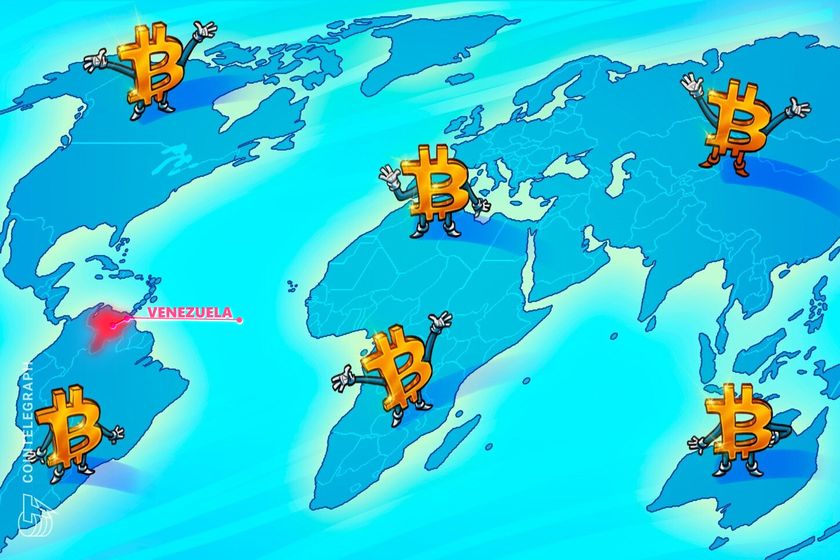 Risk-on asset markets tend to react negatively to geopolitical shocks, macroeconomic turmoil, and other negative news events. The price of Bitcoin (BTC) remained firm at about $90,000, despite geopolitical tensions between the United States and Venezuela reaching a boiling point in the early hours of Saturday morning. Bitcoin briefly fell below $90,000 on Saturday before climbing back up above the $90,000 level, where it is trading at the time of this writing. “The US bombed a country and captured its leader, on a weekend no less, and yet Bitcoin has barely moved,” Nic Puckrin, market analyst and founder of the crypto media company Coin Bureau, said in an X post. Read more
 -
CryptoSlate - 21:55 Jan 03, 2026
Bitcoin has a talent for looking calm right up until it isn’t. In the first trading days of 2026, the tape has had that familiar, coiled feel: enough headline noise to keep traders alert, not enough conviction to force a real move. When crypto behaves like that, the next decisive push often doesn’t come from […] The post Bitcoin faces a violent repricing Monday if this specific supply-chain metric proves the bond market right appeared first on CryptoSlate. -
CryptoPotato - 20:49 Jan 03, 2026
December’s losses were spread across 26 incidents, showing fewer large-scale breaches rather than a total absence of attacks. -
Cointelegraph.com - 20:37 Jan 03, 2026
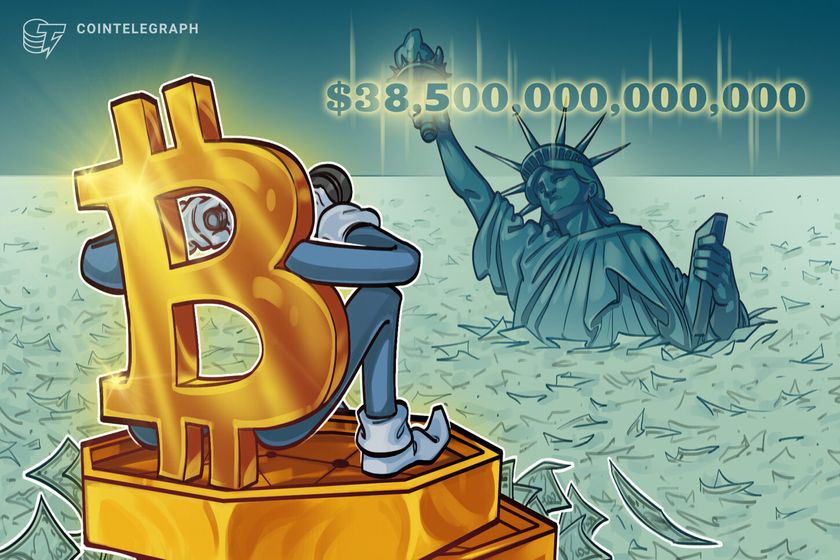 The first block was mined and added to the Bitcoin ledger on January 3, 2009, by pseudonymous cryptographer Satoshi Nakamoto. The United States National Debt surged past $38.5 trillion on Saturday, as Bitcoiners celebrated “Genesis Day,” the day the first block was mined on the Bitcoin network by pseudonymous Bitcoin (BTC) creator Satoshi Nakamoto. US government debt at the time of this writing is about $38,561,900,451,378, according to the US National Debt Clock. “Lie, cheat, steal, and print relentlessly. It’s the playbook of fiat currency, and it weakens the money until confidence in that currency ultimately fails,” market analyst James Lavish said in response to the rising debt. Read more
 -
CryptoSlate - 19:14 Jan 03, 2026
If 2024 was the year crypto reentered the mainstream through TV tickers and glossy ETF commercials, then 2025 was the year the market learned to live with that attention. It absorbed it, metabolized it, and let it shape how liquidity moved day to day. Some stories were loud and obvious. Spot Bitcoin ETFs pulled in […] The post Bitcoin price charts lied to you last year, while these eight on-chain signals quietly predicted every single move in 2025 appeared first on CryptoSlate. -
Cointelegraph.com - 17:05 Jan 03, 2026
 The company continued to diversify into the AI and high-performance computing sectors in 2025, with major deals and credit expansions. The Hut 8 Bitcoin (BTC) mining company expanded its credit facility with crypto exchange company Coinbase to $200 million, building on momentum from 2025 and strong stock performance, setting it apart among players in the struggling mining industry. Hut 8 will use the funds for “general corporate purposes,” according to an amended filing with the United States Securities and Exchange Commission (SEC). The credit expansion follows Hut 8’s $7 billion agreement with AI cloud platform Fluidstack in December to deliver 245 megawatts (MW) of energy for an AI data center over a 15-year term. Read more
 -
Decrypt - 17:01 Jan 03, 2026
Attacks against Bitcoin and crypto holders became increasingly physical in 2025. Here's a look back at some of the horrific assaults. -
CryptoSlate - 16:22 Jan 03, 2026
Bitcoin ended 2025 with a realized daily volatility of 2.24%, the lowest annual reading in the asset's recorded history. K33 Research's volatility chart stretches back to 2012, when Bitcoin saw daily moves of 7.58%, and shows steady compression through each cycle: 3.34% in 2022, 2.80% in 2024, and now 2.24% in 2025. Yet, the narrative […] The post Bitcoin is now less volatile than Nvidia, a statistical anomaly that completely changes your risk calculation appeared first on CryptoSlate. -
CoinDesk - 15:00 Jan 03, 2026
Ethereum saw a surge in institutional adoption and progress on scaling in 2025, while Solana was stress-testing the network and hardening its infrastructure. -
CryptoPotato - 14:49 Jan 03, 2026
Ripple’s XRP has shown signs of strength entering 2026, bouncing off key support levels after a prolonged downtrend. While the price action remains below major moving averages, the recent bullish push is giving traders a reason to watch closely. Momentum is shifting, but major resistance levels still need to be cleared to confirm a reversal. […]