Crypto
-
Cryptonews.com - 19:07 Aug 27, 2026
XRP trades near $1.43 as Mastercard joins the XRP Ledger Hackathon and ETF inflows rebound. Full price analysis, key levels, and presale alternative inside. The post Ripple Gets Mastercard Boost as XRP ETF Makes Major Changes appeared first on Cryptonews. -
CryptoPotato - 19:02 Aug 27, 2026
"Looking good as long as that $98 level is being held," one popular X user claimed. -
Cointelegraph.com - 19:00 Aug 27, 2026
 The South Korean financial group plans to build a $109 billion digital asset business spanning crypto, stablecoins and tokenized assets, according to The Korea Times. South Korean financial group Mirae Asset plans to build a 150 trillion won ($109 billion) digital asset business around Digital X, the crypto exchange formerly known as Korbit, according to The Korea Times. The report said Digital X will focus on crypto, stablecoins, real-world assets and security token offerings, with plans to tokenize physical assets including gold, silver and electricity. The expansion plans follow Mirae Asset Consulting’s acquisition of a 97.15% stake in Korbit in July for a cumulative 141.4 billion won. The exchange was subsequently rebranded as Digital X, marking the first time an affiliate of a South Korean financial group acquired control of a domestic crypto exchange. Read more
 -
CryptoSlate - 18:55 Aug 27, 2026
GLD and IBIT supplied about 70% of the five-session record as yields and the dollar eased, leaving the hedge thesis untested under pressure. The post Investors just moved $7 billion into Bitcoin and gold in five days to escape an accelerating dollar crisis appeared first on CryptoSlate. -
Cointelegraph.com - 18:51 Aug 27, 2026
 ZEC has climbed roughly 19-fold in a year, yet Grayscale says its sub-1% share of Bitcoin’s market cap leaves room for further upside. Zcash could emerge as a meaningful challenger to Bitcoin’s dominance among digital assets as the rapid adoption of artificial intelligence puts a premium on financial privacy and fuels concerns over AI-powered surveillance, according to Grayscale. In a new research report, Grayscale head of research Zach Pandl said Zcash (ZEC) has “second mover advantages” that could help it challenge Bitcoin’s (BTC) entrenched network effects, something previous alternatives such as Litecoin (LTC) have failed to achieve. Central to Pandl’s argument is financial privacy. Zcash can shield transaction information, which Grayscale argues could become increasingly valuable as AI systems become better at analyzing financial activity at scale. Read more
 -
CoinDesk - 18:28 Aug 27, 2026
The courtroom combat across state and federal courts is so far producing roughly split outcomes, suggesting a big job may be coming for the Supreme Court. -
Decrypt - 18:16 Aug 27, 2026
OneKey demonstrated how an outdated Ethereum app could sign a transaction different from the one shown on a Ledger device, but the wallet maker says the vulnerability had already been fixed. -
CryptoSlate - 17:50 Aug 27, 2026
Farside's six tracked products drew $3.6 million on Aug. 26 as only BSOL and VSOL reported positive net flow. The post Morgan Stanley leads Solana ETF $9 million inflows as SOL jumps rises above $100 appeared first on CryptoSlate. -
Decrypt - 17:36 Aug 27, 2026
BTC is holding above $80,000 into a Fed symposium that, for the first time in 40 years, is built around crypto's own turf—payments and financial infrastructure. -
CryptoPotato - 17:35 Aug 27, 2026
AI agents would pay for computing power using the token, therefore directly linking its demand to network usage. -
CoinDesk - 17:32 Aug 27, 2026
The changes aim to cut investor selling pressure and channel protocol revenue to ENA as Ethena looks to revive USDe growth. -
Cointelegraph.com - 17:15 Aug 27, 2026
 Bitcoin and crypto joined US stock markets in fresh gains after Nvidia Q2 earnings beat expectations by around $4 billion. Bitcoin (BTC) rebounded toward $81,000 around Thursday’s Wall Street open as Nvidia earnings boosted US stocks. Key points: Read more
 -
Decrypt - 17:09 Aug 27, 2026
The chipmaker's reported acquisition would concentrate the open-source AI pipeline inside one company, from silicon to distribution — with consequences for builders and users alike. -
CryptoSlate - 16:45 Aug 27, 2026
VanEck recorded eight active signals on Aug. 12, while comparable clusters trailed Bitcoin’s baseline at 90 and 180 days. The post Bitcoin’s bottom signal is flashing, but six months of data shows a trap waiting for early buyers appeared first on CryptoSlate. -
CoinDesk - 16:32 Aug 27, 2026
The token hit a $25 million market cap on the back of nine days of unreleased Grand Theft Auto VI footage. Its creator has now sold his stack — hours before Rockstar's first official gameplay reveal. -
Decrypt - 16:17 Aug 27, 2026
Gold is worth around ten times more than BTC, Changpeng Zhao said, noting that countries face a years-long process to "shift into Bitcoin." -
Cointelegraph.com - 16:13 Aug 27, 2026
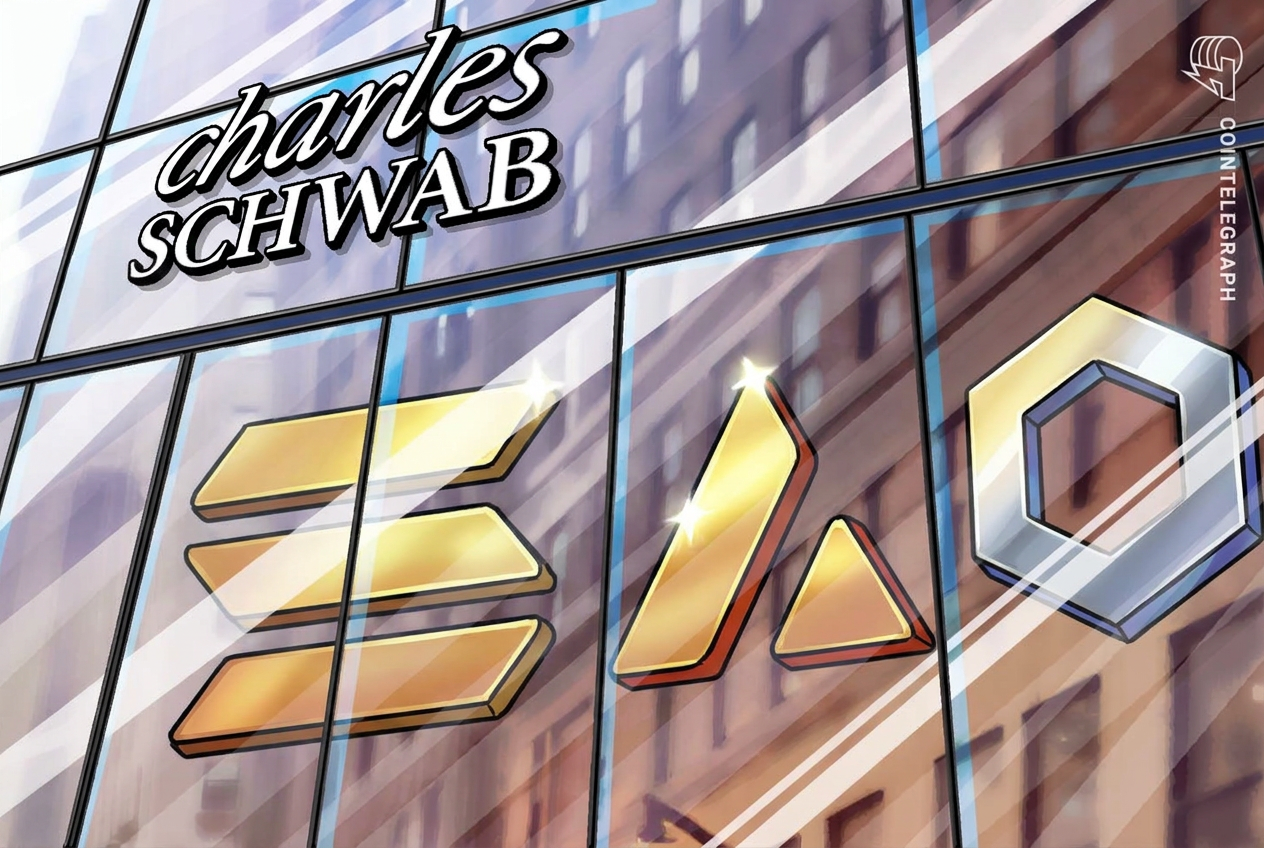 The financial services giant plans to expand Schwab Crypto beyond Bitcoin and Ether just months after rolling out direct crypto trading to retail clients. US financial services giant Charles Schwab plans to add Solana (SOL), Avalanche (AVAX) and Chainlink (LINK) to its crypto trading platform in the coming months, expanding its direct cryptocurrency offering beyond Bitcoin (BTC) and Ether (ETH). Schwab Crypto began rolling out to retail clients in May, initially offering direct Bitcoin and Ether trading alongside traditional investments through Schwab’s website, mobile app and thinkorswim platform. The brokerage said it planned to add more cryptocurrencies and digital assets over time, though it did not specify which assets it is considering or provide a timeline beyond the three newly announced tokens. Read more
 -
CoinDesk - 16:12 Aug 27, 2026
Prosecutors are probing allegations that Zondacrypto's CEO gave Radosław Piesiewicz a 40,000 euro watch for help with regulatory hurdles. -
Cointelegraph.com - 16:04 Aug 27, 2026
 Canaan, American Bitcoin and Cango jumped as much as 67% as renewed crypto demand showed BTC exposure can still drive mining equities despite the industry’s AI push. Bitcoin’s August rally has revived some of the mining sector’s most beaten-down stocks, reversing a trend that has favored miners pivoting toward artificial intelligence and high-performance computing and suggesting investors may once again be rewarding direct exposure to Bitcoin. In its latest Miner Weekly newsletter, BlocksBridge Consulting reported that Bitcoin’s (BTC) roughly 23% rally over the past week outpaced most AI-linked infrastructure stocks. Three beaten-down Bitcoin mining companies — Canaan, American Bitcoin and Cango — gained between 41% and 67%. By comparison, CoreWeave rose about 21%, Nebius gained 17% and IREN advanced 15%, while some miners with heavier exposure to AI and HPC were flat or declined. Read more