Crypto
-
Cointelegraph.com - 09:27 Aug 28, 2026
 The Ethena Foundation proposed buying the token supply held by major early investors and revealed a fee switch to turn 95% of net protocol revenue into ENA buybacks. The native token of the synthetic dollar protocol Ethena (ENA) registered double-digit gains after the Ethena Foundation unveiled four ecosystem changes, including a proposal for revenue-funded token buybacks and a completed buyout of locked tokens held by some early investors. The Ethena Foundation opened a vote on a fee-switch proposal under which 95% of the net revenue paid to it from Ethena’s core business lines would be used to purchase ENA once the circulating supply of USDe reaches the first proposed milestone of $7.5 billion, the foundation said in a Thursday blog post. Tokenholders have until Sept. 2 to cast their votes. At press time, 65 votes representing about 14.4 million ENA in voting power had been cast, all in favor of the fee-switch proposal, according to Snapshot. Read more
 -
Cointelegraph.com - 09:21 Aug 28, 2026
 BitGo completed its acquisition of NYDIG’s institutional trading business, adding about 30 employees and expanding its derivatives and financing capabilities. BitGo has acquired the institutional trading business of Bitcoin infrastructure company NYDIG, adding derivatives and financing capabilities as it expands services for institutional crypto clients. BitGo said it completed the acquisition of NYDIG’s institutional trading business under a definitive agreement, the company announced Thursday. The transaction includes NYDIG’s institutional client trading relationships and about 30 employees who joined BitGo. The companies did not disclose financial terms. The acquired business provides derivatives, structured products, financing and capital markets services to clients including asset managers, hedge funds and companies. BitGo CEO Mike Belshe said the acquisition will “meaningfully scale” the company’s trading and infrastructure capabilities and allow it to serve a broader range of institutional clients. Rea...
 -
CryptoPotato - 09:19 Aug 28, 2026
The latest features expanded Pi Desktop's capabilities with a local AI agent and a tool designed to connect AI assistants with Jira. -
Cryptonews.com - 09:11 Aug 28, 2026
Circle and Coinbase shares fell as JPMorgan and major banks advanced stablecoin and tokenized deposit plans, intensifying competition concerns. The post Bank Plans on CLARITY Act Send Circle and Coinbase Shares Lower appeared first on Cryptonews. -
CoinDesk - 09:10 Aug 28, 2026
The activity, appearing to spread sanctioned funds to trigger account restrictions, occurred between Aug. 17 and Aug. 24. -
CoinDesk - 09:09 Aug 28, 2026
Treasury yields rose across the U.S. and Europe as investors brace for a hawkish tone -
CoinDesk - 09:07 Aug 28, 2026
Weakening profitability overshadowed a major milestone in IREN’s transformation into an AI cloud provider. -
CryptoPotato - 09:03 Aug 28, 2026
This Friday, we examine Ethereum, Ripple, Cardano, Binance Coin, and Hyperliquid in greater detail. Ethereum (ETH) Ethereum closed another week in the green after pushing above $2,400, ending 6% higher. If buyers manage to hold this key support level, higher highs may continue. Bulls should do their best to consolidate their recent gains after the […] -
CryptoPotato - 08:55 Aug 28, 2026
A steady move above $80,000 could return significant Bitcoin capital to profit, but resistance near $84,569 remains a major hurdle. -
Cointelegraph.com - 08:21 Aug 28, 2026
 OneKey said it reproduced an exploit against an older version of the Ledger app in its lab environment, which Ledger fixed in its Ethereum app 1.22.2, with no user funds lost. The in-house security team at open-source wallet provider OneKey said it successfully reproduced an exploit targeting an outdated version of Ledger’s on-device Ethereum application in a test environment. OneKey founder and CEO Yishi Wang said they executed a “transaction replacement attack” against Ledger Ethereum app 1.22.1 by exploiting a previously patched vulnerability that lets attackers overwrite the transaction waiting to be signed while the user is still reviewing the legitimate transaction. Ledger said exploiting the vulnerability required control over communications between the device and its host, such as through malware, compromised wallet software or a hostile webpage. Ledger added app-level safeguards with Ethereum app 1.22.2 released on Aug. 13, before fixing the underlying issue in Secure SDK 26.6.1 on Aug. 21. Read more
 -
CryptoSlate - 08:10 Aug 28, 2026
The visible docket labels identify no major exchange, asset manager, large token issuer or established investor group. The post Crypto startups have 54 days left to shape the SEC’s proposed $75 million fundraising cap appeared first on CryptoSlate. -
Cryptonews.com - 08:08 Aug 28, 2026
World Liberty Financial won conditional OCC approval for a trust bank tied to USD1, with a Tahnoon-linked entity holding 49% of its venture. The post Trump Crypto Empire Faces Scrutiny Over 49% Saudi Linked Stake in New Bank appeared first on Cryptonews. -
Cointelegraph.com - 07:41 Aug 28, 2026
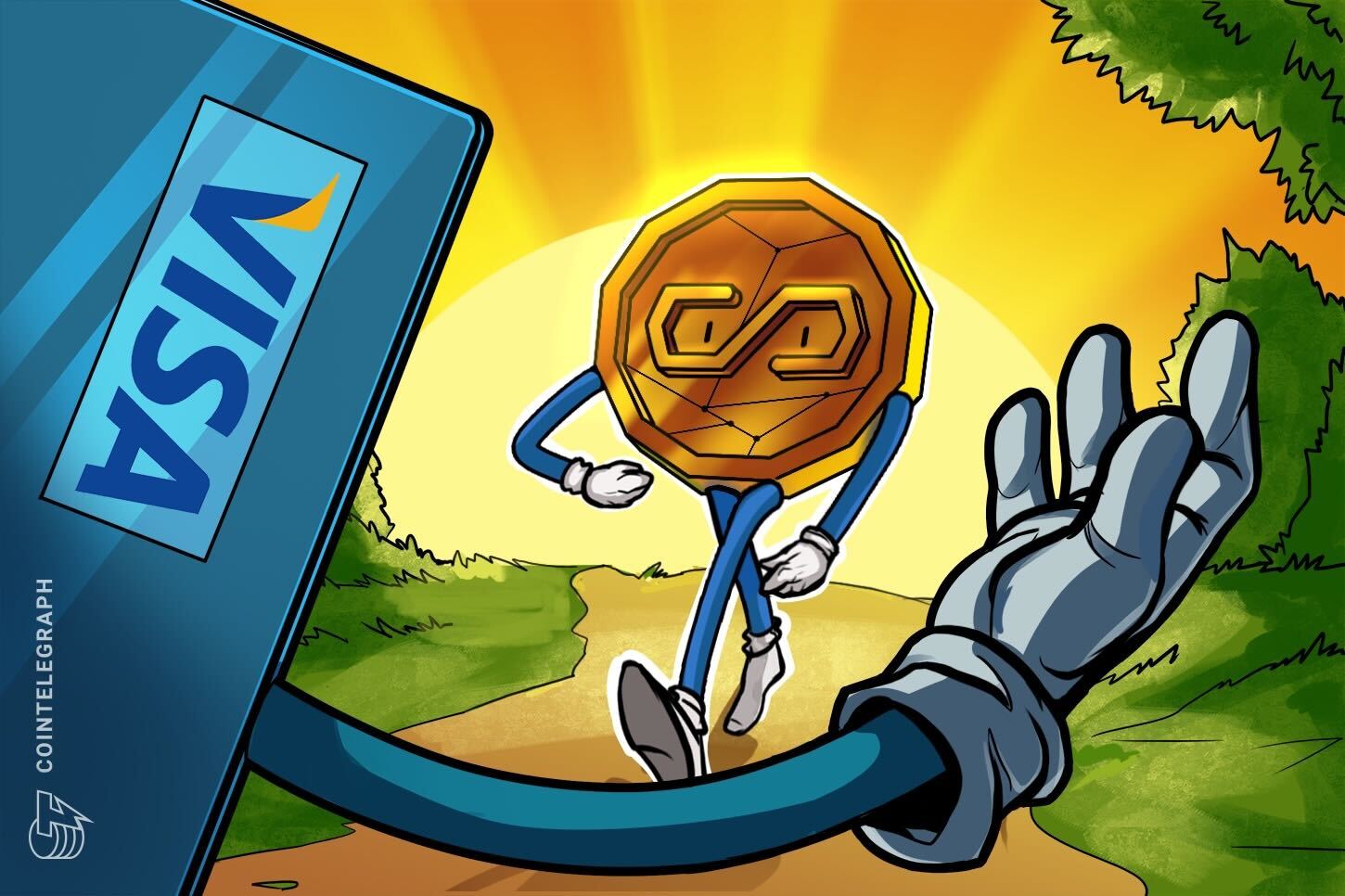 Visa and Dunamu will explore stablecoin payments and remittances, with Open Standard’s proposed OUSD among several projects under review. Visa and Dunamu, the parent company of South Korean cryptocurrency exchange Upbit, have formed a strategic partnership to explore stablecoin payments, cross-border remittances and artificial intelligence-powered commerce. The companies will combine Dunamu’s digital asset technology with Visa’s global payments network to explore payment, remittance and settlement services in major markets, according to a Friday announcement from Dunamu. “The spread of AI, stablecoins and tokenization is a key trend that will change how finance and commerce operate,” Dunamu CEO Oh Kyung-seok said, adding that the partnership aims to connect digital assets with traditional finance. Read more
 -
Cryptonews.com - 07:23 Aug 28, 2026
Bitcoin's $6.44B Deribit expiry meets Kevin Warsh's Jackson Hole speech, putting $75,000-$80,000 strikes and dealer hedging in focus. The post Bitcoin Faces a Dual Test From Dealer Hedging and the Fed appeared first on Cryptonews. -
CryptoPotato - 07:16 Aug 28, 2026
The company's public-market strategy centers on holding and actively managing XRP as a corporate treasury asset. -
CoinDesk - 06:30 Aug 28, 2026
Warsh’s Jackson Hole speech could shape expectations for Fed support of Treasury buybacks, with implications for bitcoin, gold and long-term yields. -
CoinDesk - 06:22 Aug 28, 2026
All three proposals have cleared quorum, but a plan to slow new SOL creation is only narrowly passing while a separate vote to sharply increase token burns remains below the two-thirds support needed. -
CryptoSlate - 06:20 Aug 28, 2026
Mainnet is running on v8.4.0, while wallet addresses, transaction hashes, amounts and the attack path remain undisclosed. The post MANTRA Chain is back online, but silent code changes spark developer concerns appeared first on CryptoSlate. -
Cointelegraph.com - 05:40 Aug 28, 2026
 Eligible holders on Base and BNB Chain will receive Ethereum-based SAND from the project’s treasury, with claims expected to open within two weeks. Blockchain gaming platform The Sandbox has pledged to repay eligible SAND holders 1:1 after an Aug. 21 bridge exploit drained 14.744 SAND, worth about $700,000, from an Ethereum vault. On Thursday, the company published a post-mortem, saying users who legitimately held bridged SAND on Base or BNB Smart Chain before the attack will receive an equal amount of Ethereum-based SAND. Compensation will come from The Sandbox treasury, with no new tokens minted. The claims process is expected to open within two weeks and remain open for another two weeks. Two centralized exchanges hold more than 72% of eligible balances and will distribute compensation directly to their affected customers, according to The Sandbox. Read more
 -
CoinDesk - 05:02 Aug 28, 2026
The indictor has flipped positive for the first time since May as BTC looks to establish a foothold above $80,000.