Crypto
-
CoinDesk - 10:17 Aug 12, 2026
The BOE-led Digital Pound Lab will test trade-finance interoperability, in which exporters receive stablecoins while importers settle in a potential digital pound. -
Cointelegraph.com - 10:06 Aug 12, 2026
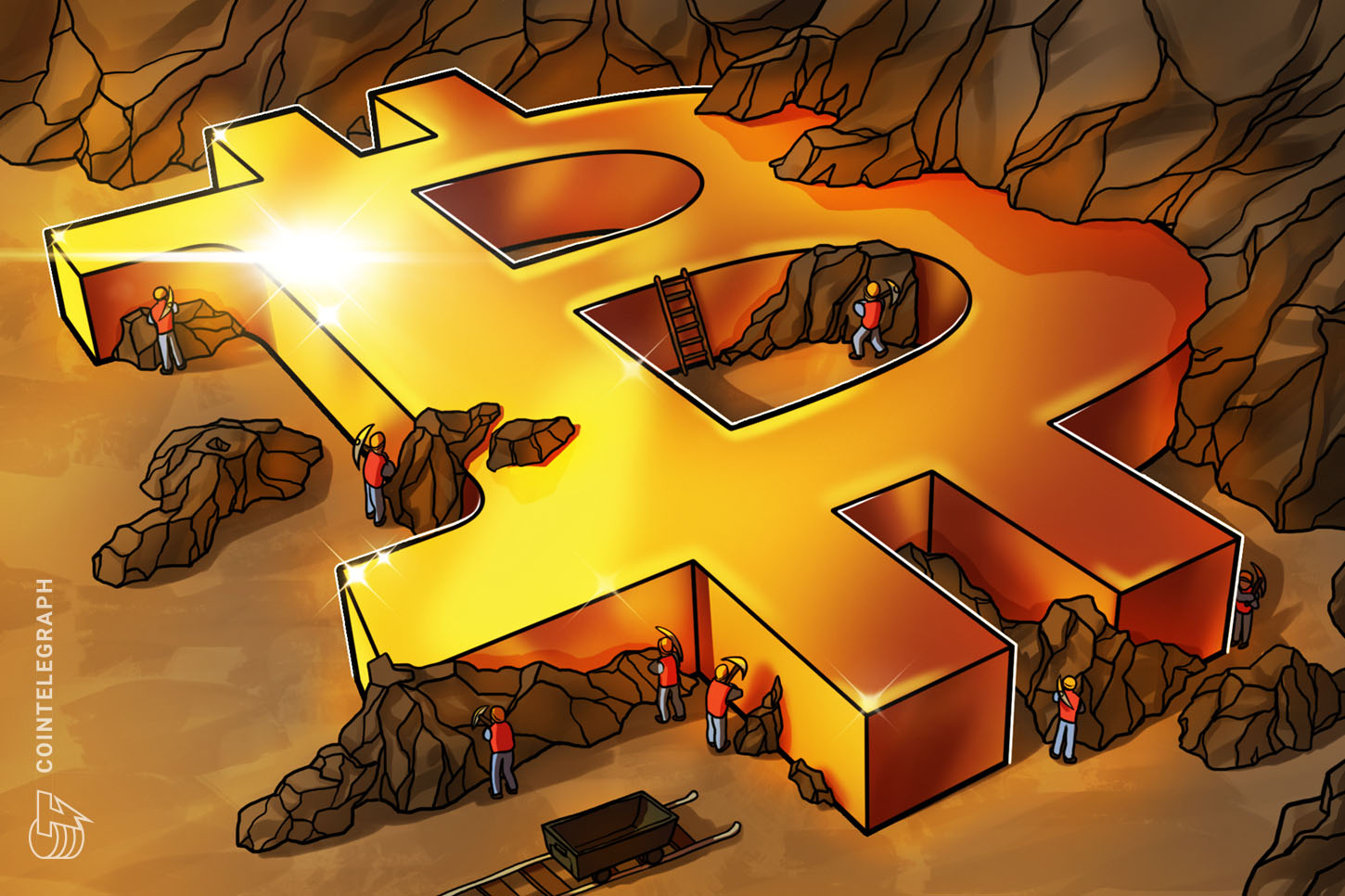 Bitcoin miners showed a “concerning” trend of pivoting to AI amid a profit squeeze as transaction-fee income barely bounced from 10-year lows of 0.52% of revenue. Bitcoin (BTC) transaction fees now account for just 0.69% of miner revenue as major players pivot to AI. Key points: Data from onchain analytics platform Glassnode shows that fees as a proportion of miner revenue remain near decade lows after falling to just 0.52% in April. Read more
 -
CryptoSlate - 09:55 Aug 12, 2026
$486.5 million of converts lock up 16,116 BTC while the new CEO pursues operating and credit businesses. The post Twenty One’s $2.8 billion Bitcoin pile is worth far more than its stock, but there’s a catch appeared first on CryptoSlate. -
CoinDesk - 09:41 Aug 12, 2026
Booming AI demand sends CRWV up 16% and lifts IREN and CIFR as investors favor computing infrastructure over crypto. -
CoinDesk - 09:30 Aug 12, 2026
The fund would keep 85% of gross staking rewards, with the remaining 15% going to service providers. -
CryptoPotato - 09:27 Aug 12, 2026
Uniswap's UNI has plummeted the most today, losing over 10% of value. -
Decrypt - 09:22 Aug 12, 2026
Kalshi triggered the order, notifying the agency of a market emergency after New York moved to bar its contracts nationwide. -
Cointelegraph.com - 09:03 Aug 12, 2026
 The Bitcoin Policy Institute and other industry participants urged AI companies to offer early access to their frontier models to aid Bitcoin and open-source developers in their cybersecurity efforts. A group of cryptocurrency companies has urged frontier artificial intelligence (AI) labs to give Bitcoin developers early access to their most capable models. The letter, published by the Bitcoin Policy Institute (BPI) on Monday, said many digital asset defenders, including Bitcoin Core developers, lack access to lab cyber programs and can be blocked by guardrails on publicly available frontier systems, leaving them to rely on less capable open-weight models. The signatories urged frontier AI labs to “establish or expand standing trusted-access programs for qualified defenders of open-source financial infrastructure.” Read more
 -
CoinDesk - 08:53 Aug 12, 2026
Public miners are an underappreciated source of supply hitting the market right at the margin. -
CryptoPotato - 08:32 Aug 12, 2026
The timing raised some concerns within the community as the number of treasury companies selling BTC has been gradually increasing lately. -
CryptoPotato - 07:57 Aug 12, 2026
Harmony has asked exchanges to freeze funds linked to four wallets as it investigates the unauthorized minting of ONE tokens. -
CryptoPotato - 07:53 Aug 12, 2026
The company has already made a few BTC sales this year. The question is: has it stopped buying for good? -
Cointelegraph.com - 07:34 Aug 12, 2026
 Suspected North Korean IT workers joined a fake crypto startup — without realizing their every move was being tracked to extract valuable intel. It isn’t often that a reporter gets asked to pose as a venture capitalist to fool suspected North Korean IT workers. But in June, I found myself joining a Zoom call as “Aelin Ashriver,” an investor from the fictitious Definitive Communications, to meet the development team of crypto startup Ballena Azul. The IT workers on the call believed they were pitching for VC backing for their startup. In reality they had spent weeks working inside a fake crypto company set up purely to study their methods and infrastructure by Mauro Eldritch, founder of cybersecurity firm BCA LTD, and Heiner García, a cyber threat intelligence analyst at Telefónica Tech and founder of NorthScan. Read more
 -
CoinDesk - 07:04 Aug 12, 2026
Blockchain data shows the Japanese treasury firm moved the bitcoin between wallets it controls, not to an exchange, so the transfer isn't a sale despite its $1.4 billion paper loss. -
CryptoSlate - 07:00 Aug 12, 2026
Fair-value gains supplied 99.1% of Q2 pre-tax profit as continuing operations used $10.6 million of cash in the first half. The post TON Strategy earned $15 million staking Gram while operations burned $10.6 million in cash appeared first on CryptoSlate. -
CryptoPotato - 06:22 Aug 12, 2026
The stolen XRP was converted to ETH, routed through THORChain and ultimately sent to Tornado Cash after the bridge was drained. -
Cointelegraph.com - 06:02 Aug 12, 2026
 Harmony is working with exchanges to freeze funds and is preparing a patch after claims that 2.8 billion unauthorized ONE hit trading platforms. Harmony is considering rolling back its blockchain after claims that an attacker exploited the network to mint nearly 4 billion ONE tokens, equivalent to about 26% of the token’s supply. On Tuesday, Harmony said it was working with exchanges to stop and freeze funds. The layer-1 blockchain said it was preparing a patch and evaluating rollback options. It did not confirm the cause, the number of tokens created or the amount sent to exchanges. Cointelegraph contacted Harmony for comment but had not received a response by publication. Read more
 -
CoinDesk - 06:00 Aug 12, 2026
The exchange is joining a tokenized stock market that has grown 600% in a year, though its products offer price exposure rather than share ownership. -
CoinDesk - 05:26 Aug 12, 2026
Bitcoin and ether are stuck in a tight range ahead of the CPI. Here’s how savvy traders are positioning for the pivotal release. -
CoinDesk - 05:18 Aug 12, 2026
Harmony said in Asian morning hours it is working with exchanges to freeze funds and preparing a software fix.