Crypto
-
CryptoSlate - 09:01 Jul 17, 2026
Bitcoin’s recent price rebound faltered as the advance gave long-term holders and recent buyers an opportunity to sell before the cryptocurrency reached its next major resistance zone. Data from CryptoSlate shows that the largest digital asset crossed $65,000 on Wednesday for the first time in about a month, then retreated under $63,000 as of press […] The post Bitcoin buyers and bagholders are both selling into the rebound below $70,000 appeared first on CryptoSlate. -
CoinDesk - 08:50 Jul 17, 2026
Brian Chesky regained control of his account and told any new crypto followers he would be a "disappointing follow". -
Cointelegraph.com - 08:48 Jul 17, 2026
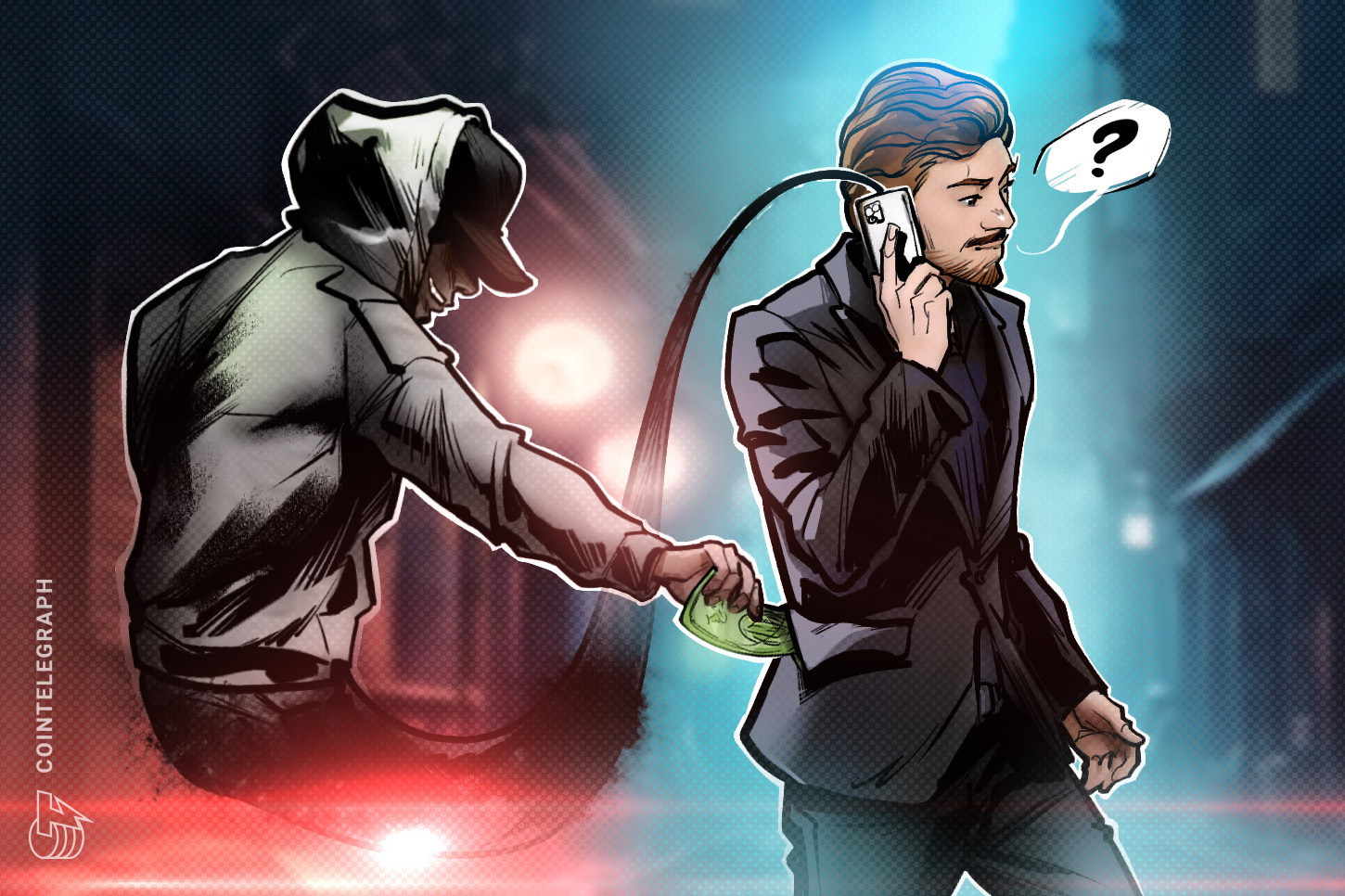 A macOS malware steals credentials to hijack Telegram sessions, decrypt cryptocurrency wallets or trick users into entering their wallet recovery phrases through fake applications. A macOS information-stealing malware can hijack Telegram Desktop sessions and compromise cryptocurrency wallets, according to blockchain security firm SlowMist. The malware harvests data from the macOS Keychain, Safari cookies, Apple Notes, Telegram Desktop and databases associated with more than a dozen cryptocurrency wallets. After collecting passwords and authenticated sessions, the malware copies users’ authenticated Telegram Desktop session data, wallet databases and browser wallet extension data. Read more
 -
Cryptonews.com - 08:44 Jul 17, 2026
XRP price is trading around $1.09 as Ripple continues to engage U.S. lawmakers amid stablecoin legislation moving through Congress. The post XRP Price Could Double as Ripple Pushes Senate for Clarity Act appeared first on Cryptonews. -
Cryptonews.com - 08:33 Jul 17, 2026
Ethereum News: Fundstrat's Tom Lee says BlackRock BUIDL, and Robinhood Chain signal institutional tokenization is reshaping Ethereum. The post Ethereum News: BlackRock, JPMorgan Builds Make ETH a Wall Street Asset, Tom Lee Argues appeared first on Cryptonews. -
CryptoPotato - 08:28 Jul 17, 2026
From ETF launches to major acquisitions - here's what happened in the past year in the Ripple ecosystem despite the token crash. -
CoinDesk - 07:29 Jul 17, 2026
Japan's Nikkei had its worst day since March. Ether is still the only major holding a gain on the week, barely. -
CoinDesk - 07:28 Jul 17, 2026
The mega trade aims to profit from a potential surge in ether price turbulence. -
CryptoPotato - 07:23 Jul 17, 2026
We will also review PI's price performance in this article, which has been quite wild as of late. -
Cointelegraph.com - 07:23 Jul 17, 2026
 US spot Bitcoin ETFs attracted $79.2 million on Thursday, lifting their three-day inflow total to about $368 million as Bitcoin attempted a price recovery. US-listed spot Bitcoin exchange-traded funds (ETFs) recorded $79.2 million in net inflows on Thursday, extending their inflow streak to three consecutive trading sessions. The latest inflows followed $108 million on Wednesday and $181 million on Tuesday, bringing the three-day total to about $368 million, according to SoSoValue data. Cumulative net inflows into US spot Bitcoin ETFs climbed to $51.2 billion, while total assets under management rose to $77.7 billion. Read more
 -
CryptoPotato - 06:34 Jul 17, 2026
[PRESS RELEASE – Willemstad, Curaçao, July 17th, 2026] Cryptocurrency has become one of the fastest-growing categories within prediction markets, as traders and investors increasingly look beyond price charts to speculate on major industry milestones. Reflecting this trend, international betting brand 1win has expanded its Markets product with a series of new cryptocurrency prediction markets covering […] -
Cointelegraph.com - 05:54 Jul 17, 2026
 “Over time the economic incentives will drive $DOG Mode’s adoption and force Bitcoin Core to stop gatekeeping and allow these completely valid transactions,” said Leonidas. Bitcoin Ordinals developer Leonidas has proposed developing a new open-source Bitcoin client, aimed at removing restrictions affecting Runes and Ordinals transactions. In a post to X on Friday, Leonidas called the proposed client “Bitcoin $DOG Mode,” which would lift the maximum individual transaction size to 3.9 million weight units (WU), compared to Bitcoin Core’s 400,000 WU, and lower the dust limit to 1 satoshi (sats) from 294-546 sats. The changes would make it easier to send Ordinals inscriptions and Runes, which have been described as Bitcoin’s take on fungible and non-fungible tokens. Both have been controversial within the Bitcoin community, with critics arguing they amount to “spam” on the Bitcoin network. Read more
 -
CoinDesk - 05:32 Jul 17, 2026
While BIP 110 wants to restrict data through a consensus change and has almost no miner support, a new DOG Mode client wants the opposite and requires no vote at all. -
CryptoPotato - 05:05 Jul 17, 2026
Another Friday is upon us, bringing another Bitcoin and Ethereum options expiry event as spot markets have made some progress. -
Cointelegraph.com - 04:16 Jul 17, 2026
 The launch gives Bybit a locally operated platform in one of Asia’s largest crypto markets, home to more than 21 million crypto exchange users. Crypto exchange Bybit announced Thursday it has launched a locally operated platform in Indonesia after acquiring a majority stake in digital asset firm PT Enkripsi Teknologi Handal, formerly known as NOBI. The deal saw NOBI rebranded as Bybit Indonesia. The crypto exchange said it plans to introduce its services in phases, starting with 500 cryptocurrency trading pairs. The exchange will be led by Lawrence Samantha, who will serve as CEO and Dionisius Evan, who serves as chief operating officer, both formerly senior executives at NOBI. Read more
 -
CoinDesk - 04:10 Jul 17, 2026
Geopolitical tensions and renewed fears of U.S.-China frictions are weighing on risk assets, including bitcoin. -
Cointelegraph.com - 02:23 Jul 17, 2026
 The paid Truth API is aimed at high-frequency trading firms seeking “the fastest” access to market-moving Truth Social posts, including those from US President Donald Trump. Trump Media, the company that operates the Truth Social network, said Thursday it was launching a new paid-for API that gives Wall Street firms “the fastest” access to posts from the most influential Truth Social accounts, including US President Donald Trump. The API is targeted to be available to institutional customers from Aug. 1, 2026, and is aimed at high-frequency and algorithmic trading firms that require a low-latency, machine-readable feed, said the company on Thursday. “Markets already move on Truth Social posts,” said Kevin McGurn, interim CEO of TMTG in a statement. “Truth API delivers a direct, licensed, real-time feed of the platform’s most market-moving Truths while advancing our strategy to monetize proprietary assets through a high-margin, recurring revenue stream.” Read more
 -
Cointelegraph.com - 01:54 Jul 17, 2026
 “If we are not welcome, there are many other countries that would welcome us,” said Network School founder Balaji Srinivasan in a message to the Malaysian prime minister. Network School founder Balaji Srinivasan is seeking a memorandum of understanding with Malaysia after authorities probed his Forest City tech community over allegations it was hosting Israeli citizens using second passports. Malaysia’s Home Affairs Ministry said Tuesday it was investigating Srinivasan’s start-up community in Johor following claims it included Israelis in violation of immigration laws. Initial checks found all 266 foreigners held valid documents. Srinivasan said the agreement would give Network School legal certainty to continue investing in Malaysia. Without it, he said, the community could take its capital to countries that are more welcoming. Read more
 -
Cointelegraph.com - 00:12 Jul 17, 2026
 Bitcoin futures traders are propping up the current market move, while liquidation heatmap data provides hints on where BTC price may go next. Increased activity across Bitcoin’s (BTC) futures markets is playing the dominant role in its short-term price action, which keeps tracing back to where leveraged positions are stacked. Prices tend to gravitate toward where liquidity is most concentrated, and as Bitcoin battles to hold above $64,000, reviewing current liquidation scenarios may provide insight into BTC’s next move. Liquidation heatmap data shows a cluster of short positions concentrated between $65,500 and $66,000, roughly 3% away from current market pricing. A push through $65,600 may put that shelf in play and could accelerate a larger rally toward $67,000. Below market pricing, support is layered in the $63,500 to $63,750 range, with the closest cluster 1% away, and larger liquidity pools are found at $63,000-$63,250 (about 1.5% down) and $62,500-$62,750 (about 2.3% down). Read more