Crypto
-
Cointelegraph.com - 23:47 Jul 16, 2026
 Crypto exchanges have increasingly positioned themselves as bridges between digital asset markets and traditional finance. Crypto exchange Crypto.com on Thursday announced it has secured a $400 million investment from global market maker Citadel Securities at a $20 billion valuation. The investment comes amid growing institutional demand for tokenized real-world assets, including stablecoins and tokenized stocks. Crypto exchanges have increasingly positioned themselves as bridges between digital asset markets and traditional finance. The funding is expected to support Crypto.com’s expansion across “all asset classes,” including tokenized securities and derivatives, the company said in a statement Thursday. Read more
 -
Cointelegraph.com - 22:05 Jul 16, 2026
 The round of layoffs was part of Polygon transitioning operations to payments following a $250 million deal to acquire Coinme and Sequence in January. Marc Boiron, CEO of Polygon Labs, announced additional layoffs as the company finalizes its acquisition of cryptocurrency exchange Coinme. In a Thursday X post, Boiron said that Polygon would say “goodbye to many of [its] colleagues” as the company began the “transformation from operating as a blockchain foundation into operating as a blockchain-enabled payments company.” The move was part of a $250 million deal announced in January for Polygon to acquire Coinme and wallet infrastructure platform Sequence. “These changes are about the company we’re building, not the quality of the people leaving,” said Boiron. “A blockchain foundation and a blockchain-enabled payments company do not operate the same way. This transition means changing how we’re organized and the talent we need, not just what we build.” Read more
 -
CryptoPotato - 21:49 Jul 16, 2026
Armstrong believes market incentives encourage AI companies to build safe products without the need for an additional regulatory framework. -
Decrypt - 21:01 Jul 16, 2026
Source code leaked reveals how substantial portions of Suno’s training library were assembled. -
Cointelegraph.com - 20:49 Jul 16, 2026
 According to ABC News, federal regulators are investigating whether the longtime White House staffer used nonpublic information to profit from event contracts tied to President Donald Trump’s speeches. US President Donald Trump’s longtime teleprompter operator is in talks with federal regulators to settle allegations that he used nonpublic information to profit from bets on Kalshi markets tied to the president’s speeches, ABC News reported Thursday, citing sources familiar with the matter. According to the report, Gabriel Perez, a technical assistant who has operated Trump’s teleprompter since 2016, allegedly placed bets on more than a dozen markets tied to Trump’s speeches, generating more than $100,000 in profits. Kalshi detected the activity through its surveillance systems and referred the trades to the Commodity Futures Trading Commission, the outlet said. The contracts were part of the platform’s “Mentions” markets, which allow users to bet on whether particular words, phrases or topics will appear in p...
 -
CryptoSlate - 20:30 Jul 16, 2026
The chain reports 16% July sales growth, but without BTC payment share its merchant model cannot be measured. The post Steak ‘n Shake credits Bitcoin for company growth – But is PR value now worth more than people actually using BTC? appeared first on CryptoSlate. -
Cointelegraph.com - 20:29 Jul 16, 2026
 Bitcoin buyers have returned to spot, futures and ETF markets but geopolitical headwinds could quickly unravel the progress of the past two weeks. Bitcoin (BTC) spent the week split across two scenarios. One highlighted improving onchain buying pressure and ETF inflows, while the other remained synced to sentiment gauges and news events that projected fear. The spot and futures cumulative volume delta, a running tally of buy and sell orders, confirmed a $925 million net buying day for Bitcoin on July 15. This orderbook activity absorbed the entire post-CPI pullback in open interest and price rather than collapsing into it. Meanwhile, the spot Bitcoin ETFs added $107.7 million in net inflows on July 15, marking the second consecutive positive day following $181 million on July 14. Read more
 -
Cointelegraph.com - 20:05 Jul 16, 2026
 Anton Bukov said that he no longer took an active role at 1inch and had been “fired” in 2025 after pushing for changes to the company’s management and operations. Anton Bukov, the co-founder of 1inch, said that he was completely exiting his role in the company’s operations after more than seven years. In a Thursday X article, Bukov said that he had departed 1inch to launch a new project called Second Tier. Although he said he will remain a co-founder with a 50% ownership in the company, 1inch and Bukov released contradictory statements online regarding his role since last year. According to Bukov, he was “fired” from 1inch in November 2025 after “push[ing] for change” in the company’s management and operations. 1inch followed by posting its own account to X, saying that the co-founder “had not been actively involved in any associated organizations” related to the project since December 2025. Read more
 -
Decrypt - 20:01 Jul 16, 2026
Eligible customers can now buy, sell, and hold Bitcoin, Ethereum, and Solana with Morgan Stanley via Zero Hash. -
CryptoPotato - 19:57 Jul 16, 2026
Lionel Messi will play in his second consecutive World Cup final, yet that wasn't good news for one trader. -
Cryptonews.com - 19:55 Jul 16, 2026
Meta AI predicts a Bitcoin price prediction bottom at $64,700 and targets $140,000 to $170,000 by December. Explore the insights. The post Mark Zuckerberg’s Meta AI Just Revealed This Shocking Bitcoin Price Prediction for the End Of 2026 appeared first on Cryptonews. -
Cointelegraph.com - 19:27 Jul 16, 2026
 The company said the filing would create a regulated pathway for maintaining ownership records for tokenized securities onchain. Injective said Thursday it has filed a transfer agent registration with the US Securities and Exchange Commission, seeking to bring one of the core record-keeping functions of securities markets onto blockchain infrastructure. Transfer agents are a core part of US market infrastructure, maintaining shareholder records and tracking changes in securities ownership. Injective, a layer-1 blockchain focused on decentralized finance and tokenized real-world assets, said bringing that function onchain would create a regulated pathway for issuing and managing tokenized assets. Source: Injective Read more
 -
CryptoSlate - 19:10 Jul 16, 2026
A 2028 start depends on FIEA enforcement landing in 2027, while eligible assets and product approvals face separate gates. The post Japan passes the crypto law traders wanted but its 20% tax could still wait until 2028 appeared first on CryptoSlate. -
Decrypt - 19:00 Jul 16, 2026
Project Eleven says a new post-quantum cryptographic proof could help Bitcoin users recover wallets after Q-Day by verifying ownership. -
Cointelegraph.com - 18:45 Jul 16, 2026
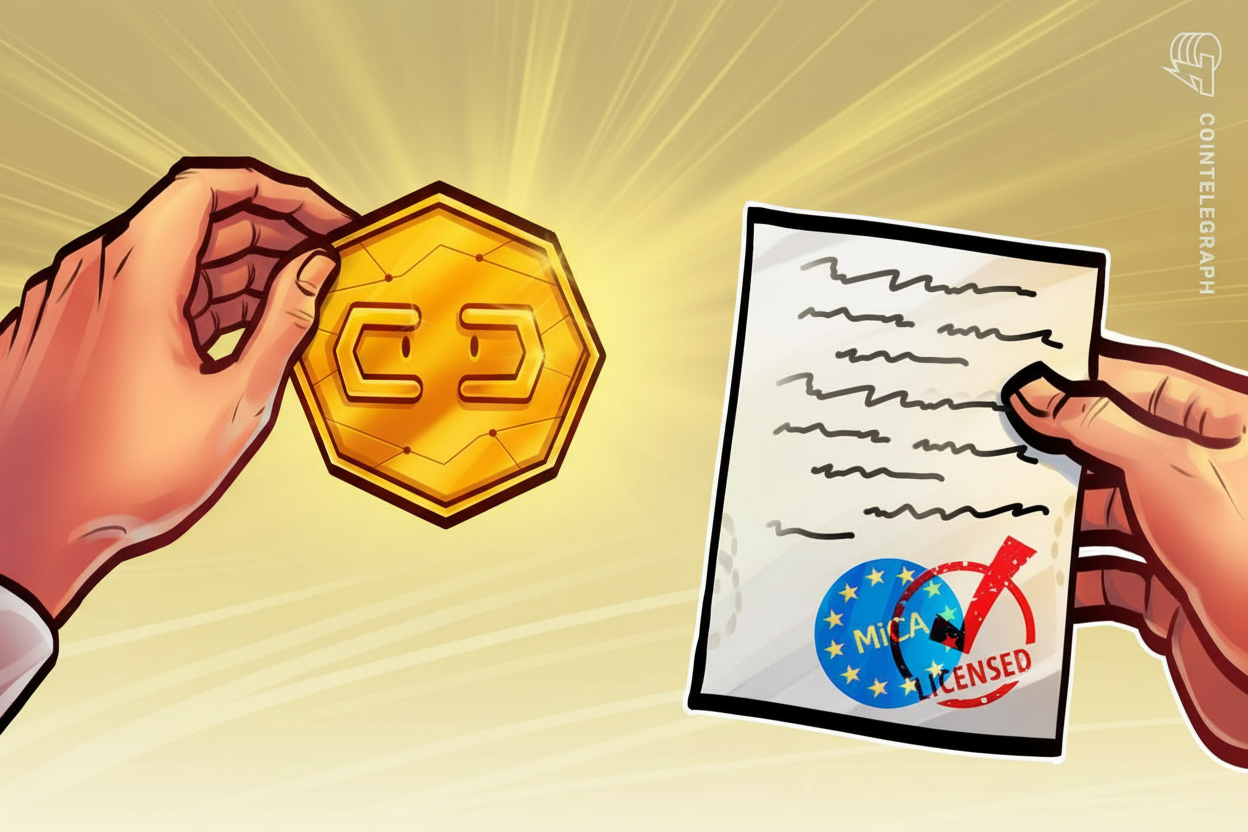 The Dutch Authority for the Financial Markets approved BitPay’s application as a crypto-asset service provider under the Markets in Crypto-Assets requirements. Crypto payments company BitPay announced that it had secured a license by the Dutch Authority for the Financial Markets, allowing the company to operate in European Union member states under the Markets in Crypto-Assets (MiCA) framework. On Thursday, BitPay said that the approval as a crypto-asset service provider (CASP) by Dutch financial authorities would allow the company to expand its services in the region, including crypto and stablecoin payments. The company was one of the latest to be licensed under MiCA following a July 1 requirement for all entities offering crypto-related services to be regulated. “Europe is one of the most important regions for the future of payments,” said BitPay’s European head, Jonathan Arler. Read more
 -
CoinDesk - 18:38 Jul 16, 2026
T. Rowe Price launched what it says is the industry's first actively managed multi-token spot crypto ETF, offering diversified exposure to digital assets. -
CryptoPotato - 18:33 Jul 16, 2026
This was the exchange's first-ever institutional funding round. As a result, CRO skyrocketed by 25% in minutes. -
CryptoPotato - 18:29 Jul 16, 2026
According to the analyst, waiting for universal confirmation of a market bottom could mean missing the strongest early opportunities. -
Decrypt - 18:27 Jul 16, 2026
Mira Murati's Inkling won't dethrone the best Chinese open-weights models, but it gives Western developers something they haven't yet had. -
CryptoSlate - 18:10 Jul 16, 2026
Future-dated reports allegedly cleared an authorized signer check, while Ostium has yet to publish final loss accounting or a postmortem. The post How prices from the future fooled a crypto oracle into paying out up to $24 million appeared first on CryptoSlate.