Crypto
-
Cointelegraph.com - 04:59 Feb 28, 2026
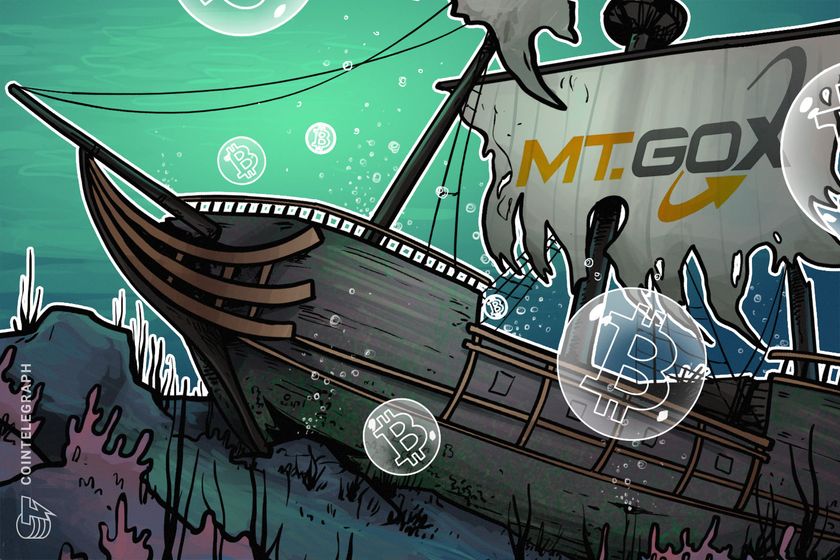 Mark Karpelès said it has been 12 years since the start of Mt. Gox’s bankruptcy proceedings and “this is probably the last sore point on this whole case.” Mark Karpelès, the former CEO of Mt. Gox, is calling on community support for a proposal to recover more than $5.2 billion stolen from his Bitcoin exchange more than a decade ago. On Friday, Karpelès submitted a proposal on GitHub to add a consensus rule that would allow the 79,956 Bitcoin hacked from Mt. Gox (currently sitting in a single wallet) to be moved to a recovery address without the original private key. “These coins have not moved in over 15 years. They are among the most well-known and publicly tracked UTXOs in Bitcoin's history,” he wrote. Read more
 -
CoinDesk - 04:24 Feb 28, 2026
The pullback erased most of Wednesday's push toward $70,000 as hot producer-price data and a post-earnings Nvidia decline dragged risk assets lower heading into the weekend. -
Cointelegraph.com - 02:05 Feb 28, 2026
 The Wall Street banking giant has been accelerating its foray into crypto, filing to launch Bitcoin, Ether and Solana ETFs in January. Morgan Stanley has applied for a de novo national trust bank charter, allowing the bank to hold digital assets on behalf of its clients — a move in rhythm with its recent crypto expansion. A public filing with the Office of the Comptroller of the Currency (OCC) shows the application for a bank trust charter was received on Feb. 18 under the name “Morgan Stanley Digital Trust, National Association.” More details of the business plan were released on Friday, according to reports from Bloomberg and Forbes, revealing that the Morgan Stanley subsidiary will custody certain digital assets and execute purchases, sales, swaps and transfers to support client investment activities, along with crypto staking. Read more
 -
Cointelegraph.com - 00:02 Feb 28, 2026
 Paradigm's Matt Huang previously said developments in AI were "too interesting to ignore" and that both AI and crypto will have plenty of overlap. Crypto investment firm Paradigm is seeking to raise $1.5 billion for a new fund that will invest in companies in AI, robotics and other frontier technologies, according to the Wall Street Journal. Paradigm will continue to invest in crypto companies, according to sources familiar with the situation, but it will use its existing technical investment team to look at deals in frontier tech companies, they said. San Francisco–based Paradigm has $12.7 billion in assets under management, according to the latest regulatory filings. Read more
 -
CryptoPotato - 23:45 Feb 27, 2026
Dorsey said AI-driven efficiency demands smaller teams, triggering one of the largest layoffs in Block's history. -
Cryptonews.com - 22:35 Feb 27, 2026
With the CLARITY Act nearing completion, investors are watching closely for signals from U.S. regulators that could trigger the next bull run.Clear regulations in the US are no small thing. They’ve been a core demand of the industry since its inception.So, when they finally arrive XRP, Solana and Dogecoin could be the biggest growers. Here’s […] The post Crypto Price Prediction Today 26 February – XRP, Solana, Dogecoin appeared first on Cryptonews. -
Cryptonews.com - 22:30 Feb 27, 2026
Bitcoin is back under fire after Wikipedia co-founder Jimmy Wales warned it could one day trade below $10,000 fueling bearish price prediction.Wales does not think Bitcoin goes to zero. But he questions whether it truly becomes global money or a reliable store of value. In his view, the network may survive technically for decades, yet […] The post Bitcoin Price Prediction: Wikipedia Founder Warns BTC Could Collapse Below $10K — Should Investors Panic? appeared first on Cryptonews. -
Cryptonews.com - 22:30 Feb 27, 2026
DeepSeek AI predicts great things this year for HODLers of XRP, Bitcoin and Ethereum.Despite months of persistent downside pressure across the crypto market, DeepSeek has a notably optimistic stance on the market leaders, projecting that all three could reach fresh all-time highs within the next ten months.So, just how credible are DeepSeek’s predictions?XRP ($XRP): DeepSeek […] The post China’s DeepSeek AI Predicts the Price of XRP, Bitcoin and Ethereum appeared first on Cryptonews. -
Cointelegraph.com - 22:30 Feb 27, 2026
 Investors’ risk appetite for Bitcoin and crypto fragmented as AI, tech stocks and gold took center stage. Will increasing global money supply put wind in BTC’s sails? Bitcoin (BTC) and gold are showing very different profiles in 2026. Gold has climbed 153% since the start of 2024, while Bitcoin is down roughly 30% over the same stretch. One analyst said that the gap lines up with steady growth in global money supply, cooling appetite for risky tech stocks, and falling crypto exchange balances. Together, these changes are shaping how both assets are trading in the market. In an X post, Fidelity director of global macro, Jurrien Timmer said that gold has behaved as expected in a bull market, with sharp pullbacks attracting short-term buyers. Timmer described gold as a pure “hard money” asset that has tracked global money supply growth closely. Read more
 -
Decrypt - 22:09 Feb 27, 2026
President Trump gave government agencies six months to phase out Anthropic's products after a clash over military safeguards. -
CoinDesk - 22:08 Feb 27, 2026
Nine lawmakers asked the federal agencies to investigate the global crypto exchange after reports of potential funding channeled to terrorist groups. -
Cryptonews.com - 22:00 Feb 27, 2026
A serious logic bug was just caught in the XRP Ledger before it could go live.Researchers found a flaw in the proposed “Batch” amendment (XLS-56) that, under certain conditions, could have allowed attackers to manipulate grouped transactions. The issue came from how transaction signers were validated inside batch loops. In a worst-case scenario, it might […] The post XRP Price Prediction: Critical Bug Almost Drained User Wallets — Are XRP Holders Safe Now? appeared first on Cryptonews. -
Cryptonews.com - 22:00 Feb 27, 2026
Bitcoin Price Prediction: Morgan Stanley Is Bringing Bitcoin Inside the Bank — Is Wall Street Going All In? The post Bitcoin Price Prediction: Morgan Stanley Is Bringing Bitcoin Inside the Bank — Is Wall Street Going All In? appeared first on Cryptonews. -
Decrypt - 21:54 Feb 27, 2026
Publicly traded banking giant Barclays is considering making a push into crypto payments and deposits, according to a report from Bloomberg. -
CoinDesk - 21:35 Feb 27, 2026
Ryan VanGrack says states are misrepresenting federal law as they move to block prediction markets. -
Cointelegraph.com - 21:30 Feb 27, 2026
 SOL is down 72% from its all-time high, but several data points paint a compelling investment scenario. Is SOL trading at a deep discount? Solana’s SOL (SOL) is down 72% from its all-time high of $295 and well below the $188 level seen during its spot exchange-traded funds (ETFs) launch in October 2025. Since early December 2025, spot SOL ETF inflows have slowed while the price retraced sharply over four months. At the same time, Solana’s onchain volumes and revenue metrics continue to rank higher against competitors, raising questions on whether SOL’s longer-term price prospects tilt toward a return to its all-time high. Spot SOL ETFs launched in late October 2025, drawing over $100 million in average net inflows during their first five weeks. Since December 2025, the weekly inflows have decreased, averaging $20 million to $25 million as SOL price slid to $86 in February 2026. Read more
 -
CryptoPotato - 21:15 Feb 27, 2026
Perpetual funding rates have turned negative across major exchanges, signaling that short sellers are paying to maintain bearish positions. -
Cointelegraph.com - 20:27 Feb 27, 2026
 A UBS report dinged US stocks for being “overvalued,” suggesting that better investment opportunities exist outside of US markets. Is this the next rally catalyst for Bitcoin? Key takeaways: Analysts downgraded US stocks due to high valuations, a weak dollar and policy risks despite AI-driven earnings growth. Limited S&P 500 upside may shift capital toward Bitcoin, especially if major sovereign funds announce BTC reserves. Read more
 -
Cointelegraph.com - 20:16 Feb 27, 2026
 Bitcoin treasury companies face investor backlash as stablecoin issuers post strong earnings and legacy payment giants navigate mounting pressure. After months of sliding digital asset prices, public companies that embraced Bitcoin (BTC) as a treasury strategy are facing renewed scrutiny. Activist investors are now challenging those balance-sheet bets, echoing broader concerns about the volatility and long-term viability of the corporate Bitcoin model. Stablecoins, meanwhile, continue to anchor the market. Circle posted a stronger-than-expected fourth quarter, even as early signs of a so-called “crypto winter” began to surface. However, not every payments player is sharing in that momentum. PayPal’s push into digital assets, including the launch of its PayPal USD stablecoin, has yet to reverse its stock decline, with reports suggesting the company is drawing takeover interest. Read more
 -
CryptoSlate - 20:15 Feb 27, 2026
Japan's SBI Holdings will issue a ¥10 billion retail bond on March 24, but the story is the XRP perk dangled in front of buyers, conditional on opening an account at SBI VC Trade and completing receipt procedures by noon on May 11. Pricing drops on March 10, subscription runs from March 11-23, and secondary […] The post SBI Holdings is dangling XRP to sell a plain three year bond, but the numbers show how small appeared first on CryptoSlate.