Cointelegraph.com
Source:
https://cointelegraph.com
Found 11887 news
-
Cointelegraph.com - 14:02 Feb 09, 2026
 Digital Asset cofounder and CEO Yuval Rooz said the latest crypto sell‑off is repricing “empty shell” token models and pushing institutions to chains with value, privacy and predictability. The cryptocurrency market sell‑off is forcing a reckoning in the industry to reward blockchains with real business models, where value flows to token holders and users rather than intermediaries or speculative order flow, according to Yuval Rooz. Rooz is the co-founder and CEO of Digital Asset, creator of the institutional‑grade, privacy‑enabled Canton Network. In an exclusive interview, he told Cointelegraph that he’s not worried about the state of the crypto market, and the turbulence hasn’t scared off his core customer base. He pointed to Canton Network and derivatives exchange Hyperliquid as examples of what investors are gravitating toward. Read more
 -
Cointelegraph.com - 12:48 Feb 09, 2026
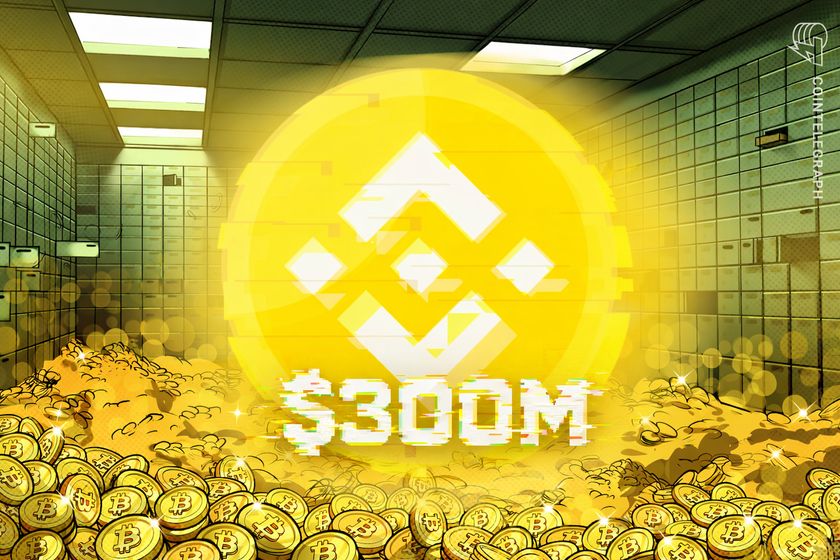 Binance bought $300 million in Bitcoin for its SAFU reserve, pushing the fund past $720 million as the exchange shifts its emergency buffer to BTC. Binance added another $300 million worth of Bitcoin to its emergency reserves on Monday, continuing its experiment with a Bitcoin-backed protection fund as markets remain under pressure. Binance bought another 4,225 Bitcoin (BTC) worth $300 million for its Secure Asset Fund for Users (SAFU) wallet, which holds its emergency reserves, according to blockchain data platform Arkham. The acquisition lifts the fund’s Bitcoin holdings to more than $720 million at current prices. Read more
 -
Cointelegraph.com - 12:24 Feb 09, 2026
 The Ethereum co-founder outlined alternative stablecoin models that he says better align with DeFi’s original promise of risk decentralization. Ethereum co-founder Vitalik Buterin drew a clear boundary around what he considers “real” decentralized finance (DeFi), pushing back against yield-driven stablecoin strategies that he says fail to meaningfully transform risk. In a discussion on X, Buterin said that DeFi derives its value from changing how risk is allocated and managed, not simply from generating yield on centralized assets. Buterin’s comments come amid renewed scrutiny over DeFi’s dominant use cases, particularly in lending markets built around fiat-backed stablecoins like USDC (USDC). Read more
 -
Cointelegraph.com - 12:21 Feb 09, 2026
 Whale and institutional demand for Bitcoin show signs of a comeback, but downside risks remain as analysts expect BTC price to retest $66,000 support. Bitcoin (BTC) rebounded 17% to trade near $70,000 on Monday, from its 15-month low below $60,000, as whales took advantage of discounted prices to accumulate. Key takeaways: Large investors have bought the dip to $60,000, adding at least 40,000 BTC. Read more
 -
Cointelegraph.com - 11:57 Feb 09, 2026
 SlowMist flagged 472 AI skills containing malicious code, as plugins and extensions increasingly become a target for hackers seeking access to the devices of cryptocurrency investors. A plugin hub associated with the open-source artificial intelligence agent project OpenClaw has become a target for supply chain poisoning attacks, according to a new report from cybersecurity firm SlowMist. In a report released on Monday, SlowMist said attackers have been uploading malicious “skills” to OpenClaw’s plugin hub, known as ClawHub, exploiting what it described as weak or nonexistent review mechanisms. The activity allows harmful code to spread to users who install the plugins, potentially without realizing the risk. SlowMist said its Web3-focused threat intelligence solution, MistEye, issued high-severity alerts related to 472 malicious skills on the platform. Read more
 -
Cointelegraph.com - 11:25 Feb 09, 2026
 Six people have been detained after a French magistrate and her mother were abducted in a crypto ransom plot, intensifying concerns over a surge in violent “wrench attacks” in France. French police have reportedly arrested six people, including a minor, over the kidnapping of a 35‑year‑old magistrate and her 67‑year‑old mother in a cryptocurrency‑linked ransom plot targeting the magistrate’s partner, a crypto entrepreneur. According to a France 24 report, citing the AFP, the magistrate’s partner received a photo of her and a threat to mutilate the hostages if a cryptocurrency payment was not made. The two women were held for around 30 hours in a garage in the Drôme region before managing to raise the alarm and escape without any ransom being paid. Read more
 -
Cointelegraph.com - 10:39 Feb 09, 2026
 The wallet linked to Infini’s $50 million exploit reactivated after months of silence to buy the Ether dip amid a broader market downturn. A wallet linked to the $50 million Infini exploit has become active again nearly a year after the breach, snapping up Ether during last week’s market downturn before routing the funds through a crypto mixing service. The Infini exploiter-labelled wallet address bought $13.3 million worth of Ether (ETH) as the price dropped to $2,109 before sending the funds to crypto mixing protocol Tornado Cash, according to blockchain data platform Arkham. “He seems very good at buying low and selling high,” blockchain tracking service Lookonchain said in a Monday X post. Read more
 -
Cointelegraph.com - 10:15 Feb 09, 2026
 TRM Labs says the $17.9 billion figure reflects gross onchain volume, including internal transfers, not confirmed illicit proceeds. A Chinese-language crypto guarantee marketplace known as Xinbi processed nearly $18 billion in onchain transaction volume despite platform bans and United States enforcement actions aimed at dismantling similar services, according to a new report from TRM Labs. The report said recent crackdowns — reshaped but failed to dismantle — a key layer in crypto-enabled laundering infrastructure. TRM’s analysis showed that Xinbi sustained on-chain activity after Telegram banned clusters of Chinese-language guarantee services in 2025. The report attributes Xinbi’s resilience to rapid migration to alternative messaging services and the launch of an affiliated wallet, XinbiPay. Onchain data showed wallet activity rebounded in January 2026 as users transitioned to the new setup. Read more
 -
Cointelegraph.com - 10:00 Feb 09, 2026
 TON Pay’s new SDK lets Telegram Mini Apps accept Toncoin and stablecoins in a single, low-fee checkout flow, seeking to make TON a payments rail for its 1.1 billion monthly active users. The Open Network Foundation has launched TON Pay, a new payments software development kit (SDK) designed to make cryptocurrencies usable for everyday consumer transactions within the Telegram ecosystem. In a Monday release shared with Cointelegraph, the product is positioned as a simple, wallet-agnostic payment layer that allows merchants and Mini App developers to accept crypto directly through Telegram, aiming to turn the app into a hub for seamless blockchain-based commerce. According to the TON Foundation, TON Pay provides developers with a single software kit that integrates with Telegram Mini Apps, removing much of the friction associated with managing wallet infrastructure, settlement, and checkout flows. Read more
 -
Cointelegraph.com - 09:42 Feb 09, 2026
 Crypto ETP outflows slowed to $187 million after weeks of losses, with a record $63 billion in trading volume, suggesting a “potential market nadir,” CoinShares said. Crypto investment products logged a third straight week of outflows, though the pace of selling eased markedly as digital asset prices steadied after a sharp downturn. Crypto exchange-traded products (ETPs) recorded $187 million in outflows during the week, a sharp drop from the $3.43 billion seen over the previous two weeks, CoinShares reported on Monday. The slowdown came as Bitcoin (BTC) fell to its lowest level since November 2024, with the price touching $60,000 on Coinbase last Thursday. Read more
 -
Cointelegraph.com - 08:19 Feb 09, 2026
 South Korea’s financial watchdog detailed planned investigations into high-risk trading tactics as it prepares the next phase of crypto regulation, Yonhap News Agency reported. South Korea’s Financial Supervisory Service (FSS) said it will step up scrutiny of suspected cryptocurrency price manipulation in 2026, outlining a slate of planned investigations that target high-risk trading tactics, including “whale” activity and schemes that exploit disruptions at local exchanges, local outlet Yonhap reported Monday. According to Yonhap News Agency, FSS Governor Lee Chang-jin said that the agency will target high-risk trading practices that undermine market order, including coordinated manipulation and schemes exploiting disruptions in exchange infrastructure. The FSS said the probes will focus on tactics that involve large-scale trading by whales, artificial price swings during exchange deposit or withdrawal suspensions and coordinated trading mechanisms using APIs or social media to spread false information. Re...
 -
Cointelegraph.com - 08:05 Feb 09, 2026
 Bitcoin price forecasts still favor lower macro lows as traders brace for US inflation data and renewed Japan-driven currency volatility. Bitcoin (BTC) starts the second week of February still on the defensive after last week’s sharp drawdown, with traders increasingly eyeing a deeper retracement toward $60,000 — and even $50,000 — before a durable macro bottom forms. Market forecasts agree that Bitcoin price action has not yet put in a reliable long-term bottom. CPI week comes as markets lose faith in Fed rate cuts in March. Read more
 -
Cointelegraph.com - 01:19 Feb 09, 2026
 Most quantum-vulnerable Bitcoin sits in wallets holding under 100 Bitcoin, with CoinShares claiming it could take a millennium to compromise each one. Digital asset manager CoinShares has brushed aside concerns that quantum computers could soon shake up the Bitcoin market, arguing that only a fraction of coins are held in wallets worth attacking. In a post on Friday, CoinShares Bitcoin research lead Christopher Bendiksen argued that just 10,230 Bitcoin (BTC) of 1.63 million Bitcoin sit in wallet addresses with publicly visible cryptographic keys that are vulnerable to a quantum computing attack. A little over 7,000 Bitcoin are held in wallets with between 100 and 1,000 BTC, while roughly 3,230 Bitcoin are held in wallets with 1,000 to 10,000 BTC, equating to $719.1 million at current market prices, which Bendiksen said could even resemble a routine trade. Read more
 -
Cointelegraph.com - 22:11 Feb 08, 2026
 Whether the Federal Reserve is engaging in quantitative easing is purely semantic, according to Alden, who says all roads lead to debasement. The US Federal Reserve is entering into a “gradual” era of money printing that will stimulate asset prices “mildly” but will not be as dramatic as the “big print” that many in the Bitcoin (BTC) community anticipated, according to economist and Bitcoin advocate Lyn Alden. “My base case is roughly in line with what the Fed expects: to grow its balance sheet approximately at the same proportional pace as total bank assets or nominal gross-domestic product (GDP),” Alden said in her Feb. 8 investment strategy newsletter, adding: The comments followed US President Donald Trump’s nomination of Kevin Warsh to be the next Federal Reserve Chairman, which caused a furor among market traders, who perceived Warsh as more hawkish on interest rates than other potential Fed picks. Interest rate policy can influence crypto prices. Expanding credit by increasing the money supply is typic...
 -
Cointelegraph.com - 21:46 Feb 08, 2026
 Chris Dixon, a managing partner at a16z crypto, said that non-financial use cases in crypto will flourish when regulations become clear. Prominent crypto venture capitalists are clashing online about whether non-financial use cases in crypto, Web3, and blockchain have failed due to a lack of investor demand and product-market fit or if the best days for non-financial applications still lay ahead. The debate started on Friday when Chris Dixon, a managing partner at venture capital firm a16z crypto, published an article arguing that years of “scams, extractive behavior and regulatory attacks” were the reason that non-financial use cases in crypto have not taken off. These use cases include decentralized social media, digital identity management, decentralized media streaming platforms, digital rights platforms, Web3 video games and more. Read more
 -
Cointelegraph.com - 18:42 Feb 08, 2026
 Investor sentiment in crypto is now at the same level it was during the 2022 Terra-LUNA crash that sent shockwaves through the crypto market. Google worldwide search volume for “crypto” is hovering near one-year lows, reflecting weak investor sentiment amid a broad market downturn that reduced the total market capitalization of crypto from an all-time high of more than $4.2 trillion to about $2.4 trillion. Worldwide search volume for “crypto” is 30 out of 100 at the time of this writing, with a reading of 100 indicating the highest level of search interest, which was last reached in August 2025 in parallel with the market capitalization high. The 12-month low is 24, according to Google Trends data. Search volume in the US featured a similar pattern, with volume peaking at 100 in July and dropping to below 37 in January. However, US search figures diverged from worldwide volume data by surging back up to 56 in the first week of February. Read more
 -
Cointelegraph.com - 15:38 Feb 08, 2026
Ethereum co-founder Vitalik Buterin made a significant move with his Ethereum holdings, Bitcoin mining difficulty plunges: Hodler’s Digest -
Cointelegraph.com - 15:38 Feb 08, 2026
Ethereum co-founder Vitalik Buterin made a significant move with his Ethereum holdings, Bitcoin mining difficulty plunges: Hodler’s Digest -
Cointelegraph.com - 15:38 Feb 08, 2026
Ethereum co-founder Vitalik Buterin made a significant move with his Ethereum holdings, Bitcoin mining difficulty plunges: Hodler’s Digest -
Cointelegraph.com - 14:51 Feb 08, 2026
 Bitcoin price analysis stayed bearish on the outlook for BTC, predicting new macro lows in a repeat of the 2022 bear market. Bitcoin (BTC) gained up to 3% Sunday, but some traders refused to believe that the BTC price crash was over. Key points: Bitcoin price comparisons warn that new macro lows are due if the 2022 bear market continues to repeat. Read more
11887 items