Cointelegraph.com
Source:
https://cointelegraph.com
Found 11869 news
-
Cointelegraph.com - 09:40 Aug 05, 2026
 Glassnode confirmed that its aggregate BTC price cycle tool was in its coldest phase since the collapse of FTX in late 2022. Bitcoin is seeing its longest capitulation since the end of the 2022 bear market, onchain analytics platform Glassnode reported on Monday. Key points: Glassnode’s Bitcoin Cycle Position Heatmap, a composite BTC price metric overview tool, has signaled capitulation throughout 2026. Read more
 -
Cointelegraph.com - 09:24 Aug 05, 2026
 JPMorgan’s Kinexys platform will tokenize select BlackRock money market fund shares denominated in pounds, euros and US dollars. BlackRock will offer tokenized versions of select European money market funds using JPMorgan’s blockchain infrastructure. According to a Tuesday Bloomberg report, the offering will include pound sterling, euro and US dollar share classes from BlackRock’s Institutional Cash Series, which collectively manage about $311 billion. The figure refers to the broader fund range, not the assets that will be tokenized. Each token will represent a share in an underlying money market fund and can be transferred around the clock between approved digital wallets. Read more
 -
Cointelegraph.com - 09:10 Aug 05, 2026
 The a16z-backed studio will open-source Pirate Nation assets, while an independent foundation continues supporting the PIRATE token. Blockchain game developer Proof of Play will cease operations after failing to build a sustainable business around its decentralized gaming thesis. The a16z-backed studio said Tuesday it could not develop a product that proved blockchain-based games could help usher in a decentralized internet at scale. It will open-source much of its code and artwork, including the Pirate Nation game, smart contracts and internal software-development tools. Proof of Play said the independent Pirate Nation Foundation will continue supporting the PIRATE token and keep its website operational. However, Proof of Play points will not be redeemable for anything. Read more
 -
Cointelegraph.com - 09:00 Aug 05, 2026
 Forgd’s ratings draw on data from more than 500 token projects and 35 market-making firms, but do not solely reflect trading performance. Crypto analytics platform DefiLlama has integrated Forgd’s market-maker leaderboard, giving users access to data on spreads, market depth, trading volume and uptime. In an announcement sent to Cointelegraph, Forgd said that the dashboard ranks crypto market makers using standardized measures of pricing, depth, reliability and execution quality. The data comes from more than 500 token projects and 35 market-making firms that use Forgd’s tools to monitor liquidity across active engagements, according to the company. The integration allows DefiLlama users to compare market makers across exchanges and assess the liquidity supporting individual tokens. Forgd first launched the leaderboard in May as a tool for token projects selecting and monitoring liquidity providers. Read more
 -
Cointelegraph.com - 08:47 Aug 05, 2026
 The completed tie-up combines Boerse Stuttgart Digital’s custody business with Tradias’ trading operations under a joint management team. Boerse Stuttgart Digital and institutional crypto trading firm Tradias have completed their merger after clearing the required ownership control procedure, creating a combined digital asset infrastructure unit with about 300 employees. The transaction was first announced in February, when the companies agreed to combine their regulated crypto businesses and expand their services for banks, brokers and other financial institutions across Europe. The merged business will operate under the Boerse Stuttgart Digital name, while Tradias will remain the brand for trading services, according to a Wednesday announcement. Read more
 -
Cointelegraph.com - 08:25 Aug 05, 2026
 ESMA’s latest MiCA update brings the number of authorized CASPs to 321 and adds three entities to its non-compliant register. The European Securities and Markets Authority (ESMA) added 12 companies to its Markets in Crypto-Assets (MiCA) register in its fourth update since the July 1 transitional deadline. Published on July 31, the update brings the total number of authorized crypto-asset service providers (CASPs) listed under MiCA to 321. The latest additions include three German cooperative banks: Volksbank Raiffeisenbank Oberbayern Südost, VR Bank Schleswig-Holstein Mitte and VR-Bank Landau-Mengkofen. The list also includes two companies in Spain — Basque Pay and Fintech Payments — and four in France — Finary, Woorton, Blockchain Process Security and Shares Financial Assets. Read more
 -
Cointelegraph.com - 08:21 Aug 05, 2026
 Taiwan’s regulator plans to apply the Travel Rule to domestic VASP transfers from October before extending it to overseas platforms by the end of 2027. Taiwan’s financial regulator plans to require crypto platforms to transmit customer information on all domestic platform-to-platform transfers starting in October. On Tuesday, the Financial Supervisory Commission said its proposed amendments would apply the Financial Action Task Force’s (FATF) Travel Rule regardless of value. Transfers exceeding 30,000 New Taiwan dollars (about $930) would trigger additional data requirements, including an individual sender’s date of birth and residential address, or a corporate sender’s official identification number and registered address. Receiving VASPs would also be required to compare beneficiary information supplied by the originating platform with their own records. Read more
 -
Cointelegraph.com - 07:34 Aug 05, 2026
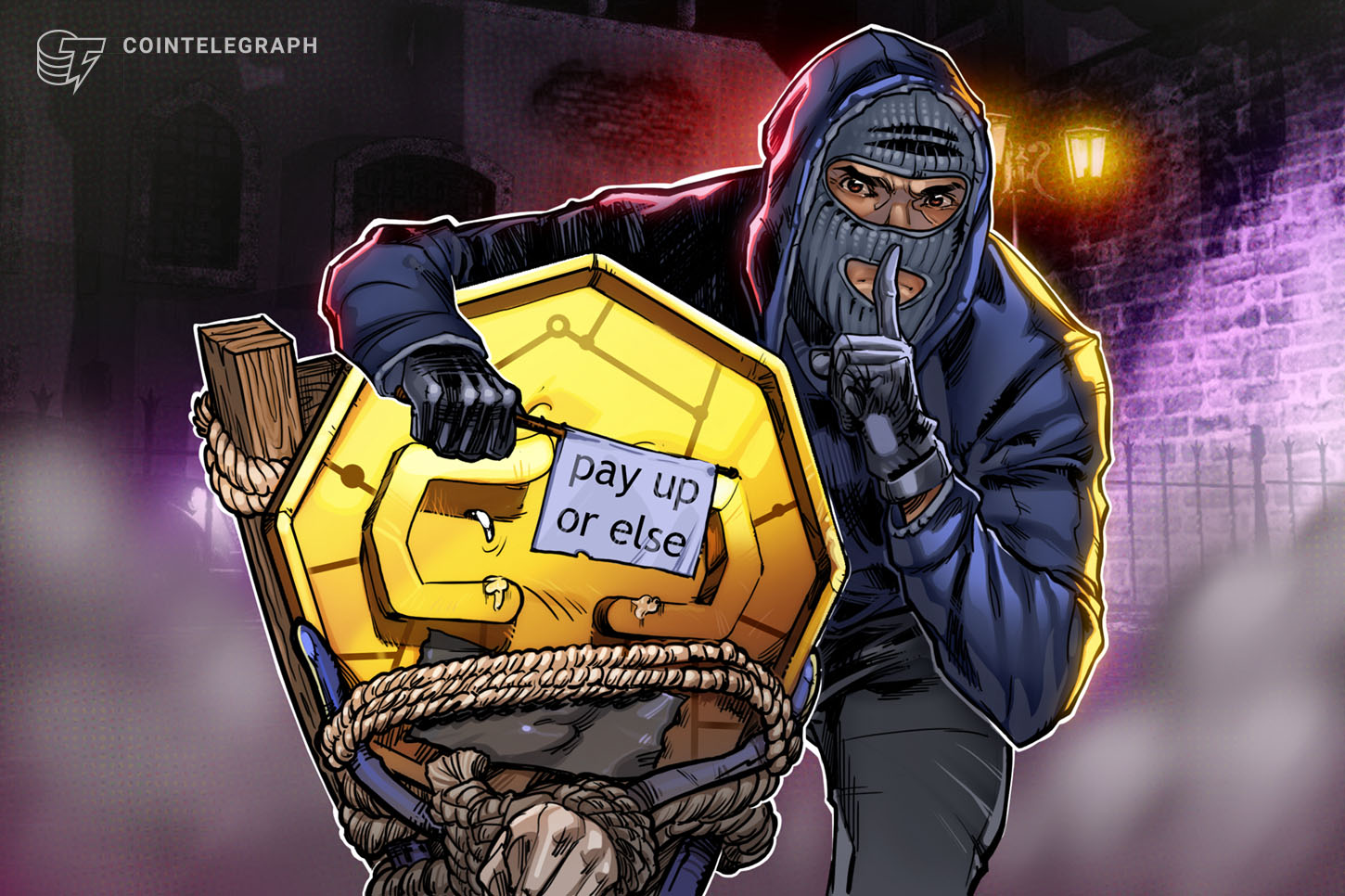 The defendants allegedly traveled from Missouri to Connecticut to kidnap a Bitcoin holder and force him to transfer cryptocurrency before abandoning the plan. Three Missouri men were charged over an alleged August 2024 plot to kidnap a Bitcoin holder and steal his holdings. Sedric Louis, John Davis and Martel Williams were allegedly hired to kidnap and force a Bitcoin holder to transfer cryptocurrency to accounts controlled by organizers, according to a Tuesday press release by the US Attorney’s Office. They traveled from St. Louis to Connecticut, where they rented vehicles and obtained air rifles to stake out the victim. After staking out the intended target for two days, they abandoned the plan for fear of being caught on home security cameras. Shortly afterward, another crew from Florida arrived to carry out the plan. Read more
 -
Cointelegraph.com - 07:20 Aug 05, 2026
 Cloudflare introduced programmable Wallets for AI agents and said payment features using stablecoins will launch in a future update. Cloudflare introduced Cloudflare Wallets on Tuesday, a programmable wallet for artificial intelligence (AI) agents designed to support stablecoin payments. The US cloud infrastructure company said in a blog post that the product aims to simplify how AI agents identify themselves and pay for application programming interfaces (API) and digital content through stablecoin micropayments, enabling what it calls “agentic commerce.” Cloudflare said users can claim a Cloudflare Wallet handle immediately, while payment features will roll out later. Read more
 -
Cointelegraph.com - 06:27 Aug 05, 2026
 Hayes likened the debt-fueled AI infrastructure boom to the 2008 credit bubble, but evidence suggests financial strain is uneven across Big Tech. BitMEX co-founder Arthur Hayes said the debt-fueled artificial intelligence infrastructure boom could end in a 2008-style credit crisis and predicted the resulting government liquidity response could drive Bitcoin (BTC) to $1 million or higher. In a Tuesday blog post, Hayes said investors have mistakenly treated spending on data centers and power infrastructure as high-growth technology investment rather than leveraged real estate. He said he expects lenders to finance excessive construction before a slowdown in AI capital expenditure exposes weaker borrowers. The thesis connects the trillion-dollar expansion of AI infrastructure to a potential new source of crypto-market liquidity. However, Hayes’ predicted crisis, government bailout and subsequent BTC rally remain speculative. Read more
 -
Cointelegraph.com - 05:47 Aug 05, 2026
 Matt Hougan argues that regulatory guidance from the SEC and CFTC would keep the industry moving even if Congress fails to pass landmark market structure legislation this year. A failure to pass the CLARITY Act this week will put the bill in a “walking dead” state, but won’t stop the crypto industry’s march forward, according to Bitwise chief investment officer Matt Hougan. In a blog post on Wednesday, Hougan said while many, including himself, have called it the “make or break” week for the CLARITY Act, the reality is that the crypto industry has made too much progress to “go back in the bottle.” “The reality is that Washington is always late to major technology shifts, and it has rarely mattered as much as people feared,” said Hougan. Read more
 -
Cointelegraph.com - 04:03 Aug 05, 2026
 Bybit’s Austrian payments subsidiary gained regulatory approval to develop card, merchant, open-banking and person-to-person payment services. Bybit’s European payments subsidiary has secured an electronic money institution license in Austria, providing the exchange with a regulatory basis to add payment and e-money services to its regional platform. On Tuesday, Bybit said Bybit Payments GmbH received the license from Austria’s Financial Market Authority. The authorization provides a legal basis for future payment capabilities, which may include person-to-person payments, merchant payment solutions, open banking features and card products. The payment services will be offered through Bybit.eu alongside services provided by Bybit EU GmbH, a separate Austrian entity authorized under the European Union’s Markets in Crypto-Assets Regulation since May 2025. Bybit.eu serves users across the European Economic Area (EEA), with Malta excluded. Read more
 -
Cointelegraph.com - 02:30 Aug 05, 2026
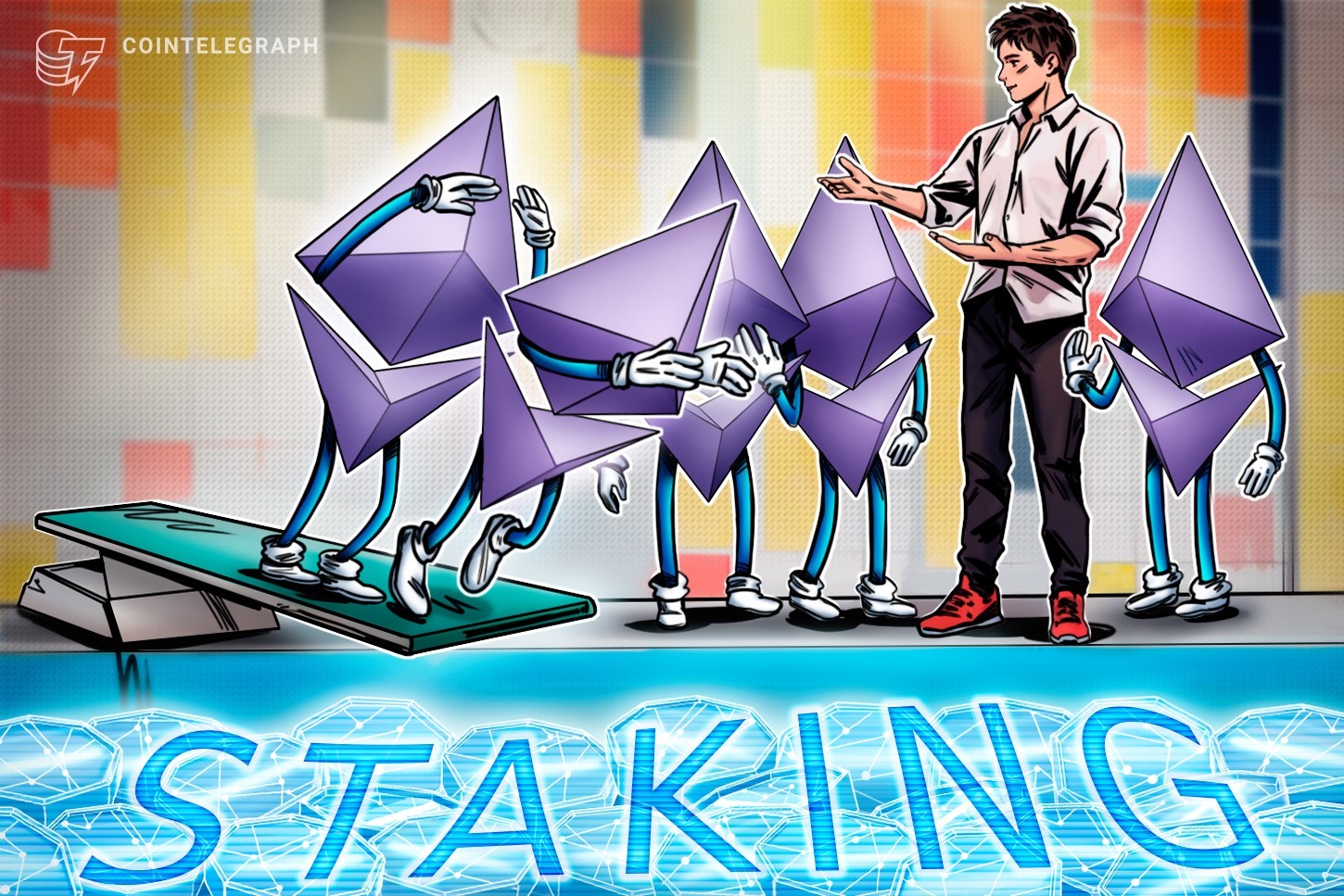 EIP-8363 is a newly published draft proposal that would cut net consensus-layer rewards as the Ethereum staking ratio heads toward 50%. A group of six Ethereum researchers and developers, including Ethereum Foundation’s Justin Drake, has proposed changing the network’s issuance policy to cut validator rewards more sharply as the proportion of staked ETH rises. The draft, called the Tapered Issuance Burn and currently being assigned the provisional number EIP-8363, would burn an increasing fraction of validators’ consensus rewards as the amount of staked ETH approaches a fixed threshold of 60.25 million ETH (around 50% of the current ETH supply), at which point the deduction hits 100%. The changes would phase in over 18 months. Read more
 -
Cointelegraph.com - 19:58 Aug 04, 2026
 In a July 8 meeting, US and UK regulators highlighted the implementation of the GENIUS Act, payment modernization and cross-border cooperation, reinforcing a shared framework for digital asset oversight. The United States and the United Kingdom reaffirmed their commitment to closer financial regulatory cooperation during a recent bilateral working group, signaling continued policy alignment on digital assets as US authorities move to implement landmark stablecoin legislation. During the 13th meeting of the UK-US Financial Regulatory Working Group (FRWG), held in London on July 8, officials discussed stablecoin regulation, digital asset market structure in the United States, tokenization and the UK’s Wholesale Financial Markets Digital Strategy. An Aug. 4 joint statement summarizing the meeting said US officials updated their UK counterparts on implementation of the GENIUS Act, the country’s landmark stablecoin law, as well as ongoing work on digital asset market structure. Participants also discussed payment ...
 -
Cointelegraph.com - 17:10 Aug 04, 2026
 The custody giant is expanding beyond safekeeping by adding staking services, allowing eligible institutional clients to earn yield on proof-of-stake assets. BNY and Galaxy have partnered to integrate institutional crypto staking into BNY’s digital asset custody platform, allowing eligible clients to earn staking rewards without moving assets out of custody. Under the arrangement, which was unveiled on Tuesday, institutional clients will be able to stake supported proof-of-stake assets while keeping them within BNY’s custody framework. Galaxy will provide the staking infrastructure and serve as a design partner for BNY’s broader digital asset platform. The companies did not specify which digital assets will be supported. The partnership also aims to combine custody, staking, reporting and tax services into a single offering for institutional clients, a move the companies said could simplify digital asset operations. Read more
 -
Cointelegraph.com - 16:38 Aug 04, 2026
 Bitcoin built on $64,000 as hopes of the Strait of Hormuz reopening to oil traffic sent the S&P 500 index to a record $70 trillion market cap. Bitcoin saw new August highs into Tuesday’s Wall Street open as markets bet on US-Iran tensions again easing. Key points: Data from TradingView showed BTC/USD climbing to $64,176 on Bitstamp, marking maximum daily gains of around 1%. Read more
 -
Cointelegraph.com - 15:50 Aug 04, 2026
 A 16-year agreement secures 121 megawatts of AI computing capacity in Norway, highlighting how crypto mining companies continue to pursue new revenue streams beyond Bitcoin. Bitcoin mining company Bitdeer has signed a 16-year lease agreement valued at as much as $4.7 billion to secure artificial intelligence and high-performance computing data center capacity, underscoring how crypto miners are increasingly expanding into AI infrastructure as demand for computing power grows. Under the agreement, Bitdeer will provide 121 megawatts of IT capacity at its Tydal, Norway, AI data center to a tenant that the company identified only as a subsidiary of Volta Infra. The facility will be configured to support Nvidia GPU-based AI workloads, though Bitdeer did not disclose the tenant’s identity or specify whether Volta is the end customer or an intermediary. Bloomberg News reported that the Nvidia-backed Volta’s $10 billion cloud contract is with Anthropic, citing people familiar with the matter. Read more
 -
Cointelegraph.com - 14:38 Aug 04, 2026
 Galaxy said that at least 15 different attackers have exploited the Coldcard vulnerability, which may have been avoided with just $2 worth of AI hardening, according to Dragonfly’s managing partner. At least 15 different attackers have exploited the Coldcard vulnerability, according to Galaxy Digital’s head of research, Alex Thorn, citing new victim reports received since the incident. Thorn said Tuesday that the victim reports helped the company label new attackers that would have gone undiscovered, as the nature of the exploit was different from a hack on a centralized exchange. “Due to one single victim’s report of less than 1 BTC stolen, we identified a new attack with 12 BTC siphoned from 126 addresses,” Thorn wrote in a Tuesday X post. Read more
 -
Cointelegraph.com - 13:30 Aug 04, 2026
 Transform Ventures founder Michael Terpin says Bitcoin could have another 30% downside from its current price before he is confident the market has reached a bottom. Bitcoin may have already erased half of its market cap, but veteran crypto investor Michael Terpin says the asset still has further to fall before hitting rock bottom. “We still have more pain to go,” Terpin tells Cointelegraph on the Trade Secrets show. Terpin believes that Bitcoin will ultimately fall “66%” from its October 2025 all-time high of $126,100. “I think that brings us down into the 40s, and I think that’s about where we’re gonna go,” Terpin says. To be precise, a 66% drop from the ATH would see Bitcoin changing hands for $43,500, a price the asset has not seen since early February 2024. The 68-year-old investor, often referred to as the “Godfather of Crypto,” has seen Bitcoin plunge enough times to know what a true bottom feels like. Read more
 -
Cointelegraph.com - 12:37 Aug 04, 2026
 Monday’s announcement that Texas Governor Greg Abbott set a moratorium on approval of ERCOT-linked data centers pending an audit won’t impact miners’ approved electricity contracts. Bitcoin miners with operations in Texas are not expected to be impacted by a moratorium on approval of data center projects connected to the state’s grid operator ordered by Governor Greg Abbott, Bernstein analysts said Tuesday. Abbott on Monday directed the Public Utility Commission of Texas and the Electric Reliability Council of Texas (ERCOT) to audit all data centers seeking to connect to the state’s power grid. The duration of the audit was not specified and comes amid increasing public backlash to the pace of data center build-out across the state, The Texas Tribune reported. Bernstein analysts told clients on Tuesday that as most of the Bitcoin (BTC) miners operating in Texas are under contract for approved electric capacity, those operations are unlikely to be impacted by the moratorium. Read more
11869 items