Cointelegraph.com
Source:
https://cointelegraph.com
Found 11869 news
-
Cointelegraph.com - 15:24 Aug 03, 2026
 The spot price Bitcoin exchange-traded fund, which was never able to attract more than $18 million in net assets, will pay out investors and sell its 225 BTC in the coming weeks. Hashdex said it will liquidate its eponymous spot-price Bitcoin exchange-traded fund this month, distributing the cash to all remaining shareholders and selling the fund’s roughly 225 BTC holdings. In a filing on Monday, the fund issuer said the decision was made after evaluating factors including trading liquidity, operating costs and investor interest. The 200,000 shares, which have traded on NYSE ARCA under the DEFI ticker since March 2024, have net assets of $14.25 million, according to the fund’s website. Late to the game, which saw the first of 10 other competing BTC ETFs debut months ahead of it, analysts saw opportunity at a time when BTC was trading for the then-all-time high of more than $73,000. Read more
 -
Cointelegraph.com - 14:11 Aug 03, 2026
 The US and Japan coordinate on the yen for the first time since 2011 as Bitcoin traders brace for a historically rough August. Bitcoin (BTC) starts the first full week of August circling $63,000 as traders weigh the impact of the ongoing Coldcard wallet hack. Read more
 -
Cointelegraph.com - 13:30 Aug 03, 2026
 Fake World Assets turns forgotten NFTs into an onchain lottery — but is crypto’s latest obsession built to last? Just when you thought crypto was getting boring, a new phenomenon is lighting up Crypto Twitter — Fake World Assets (FWAs). Yes, really. It’s the latest iteration of the onchain gacha craze, where users receive a random collectible, or collectibles, that are usually worth very little, but are sometimes worth quite a lot. Within four days of launch, FWAs guzzled so much Ethereum gas that they briefly became the chain’s largest gas consumer by fees over a 24-hour period. Read more
 -
Cointelegraph.com - 12:27 Aug 03, 2026
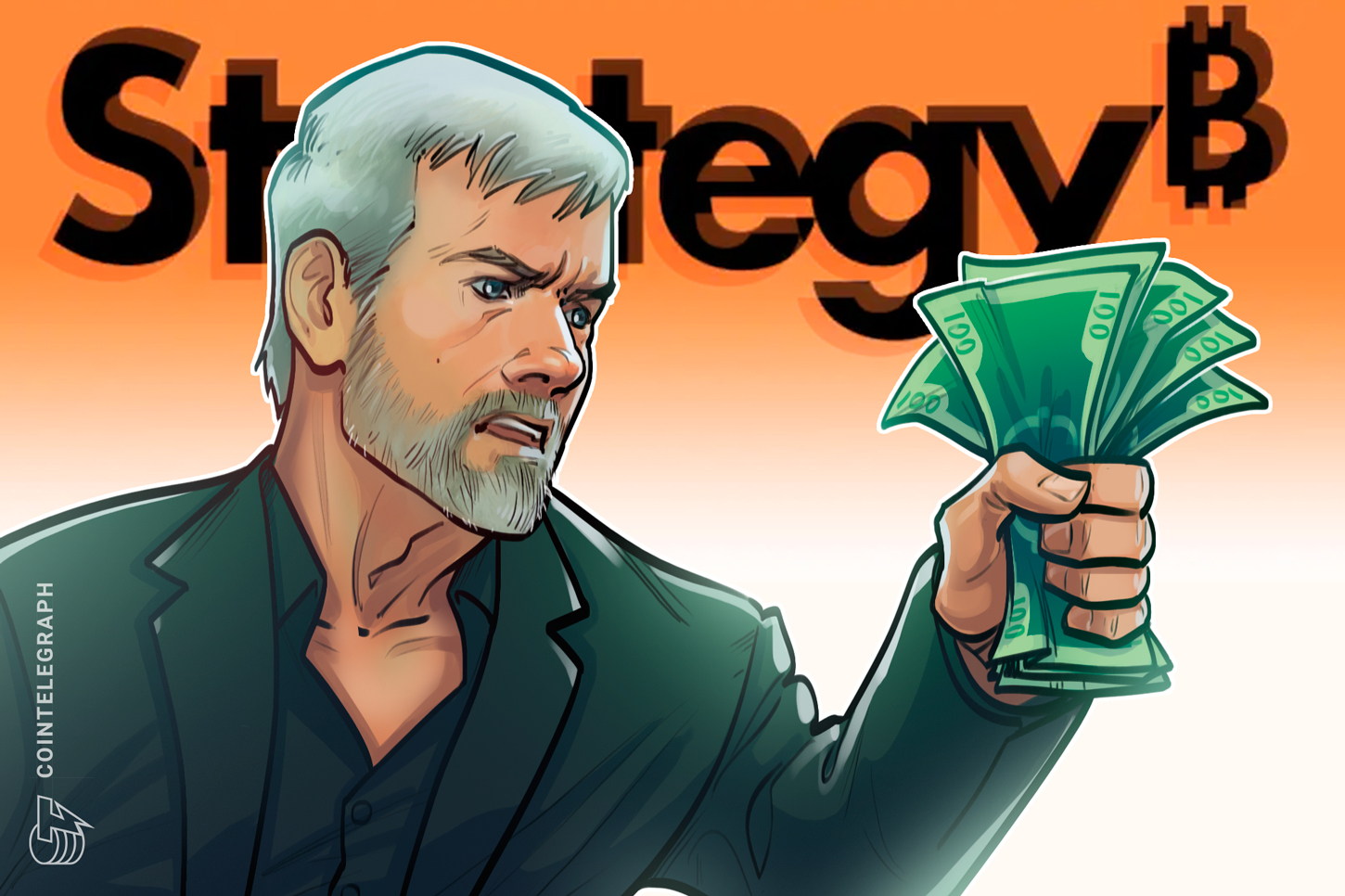 Michael Saylor’s Strategy sold 1,638 Bitcoin in its second-largest sale of the year to fund dividend payments and repurchase its preferred STRC stock. Strategy sold 1,638 Bitcoin from July 27 through Sunday, marking its second-largest BTC sale of the year. Strategy sold 1,638 Bitcoin at an average price of $63,957 for a total of $104.7 million, according to a Monday 8-K filing with the Securities and Exchange Commission. Of the proceeds, $52.4 million was used to fund dividend payments on Strategy’s STRC preferred stock, while another $52.3 million was used to repurchase STRC. The company now holds 842,138 Bitcoin bought at an aggregate cost of $63.5 billion. Read more
 -
Cointelegraph.com - 12:21 Aug 03, 2026
 The South Korean exchange plans to seek preliminary listing review in 2027 while overhauling controls after a February crediting error. South Korean cryptocurrency exchange Bithumb said Monday it plans to apply for a preliminary listing review in 2027 and complete an initial public offering in 2028. Bithumb said it has reorganized its business structure, including spinning off Bithumb Asset, to clarify responsibilities across its business units and reduce potential conflicts of interest ahead of the listing review. The exchange said its preparations will include upgrading internal controls and shifting from domestic accounting standards to K-IFRS, the international accounting framework used by listed companies in South Korea. Read more
 -
Cointelegraph.com - 12:07 Aug 03, 2026
 Bernstein said Congress’ failure to pass the CLARITY Act’s could trigger another leg down for crypto valuations and accelerate policy support from US regulators. The odds of the Digital Asset Market Clarity Act’s (CLARITY) passage are dwindling as the US Senate is scheduled to begin summer recess at the end of this week, threatening another leg down for cryptocurrency valuations, according to wealth manager Bernstein. Bernstein said that the Senate’s failure to pass the legislation could trigger an immediate negative “industry knee-jerk reaction,” which may result in another leg down for Bitcoin and the broader crypto market. “From a tactical standpoint, we expect the crypto market to bottom and start showing momentum towards late Q3 and early Q4 prior to the mid-terms,” Bernstein analysts wrote in a Monday report shared with Cointelegraph. Read more
 -
Cointelegraph.com - 11:40 Aug 03, 2026
 Trump-linked Bitcoin miner produced a record 932 BTC in the second quarter, lifting mining revenue 8% as its net loss narrowed from the previous quarter. American Bitcoin posted record Bitcoin production in the second quarter, as higher mining output lifted revenue while the Trump family-linked miner remained in the red. The Nasdaq-listed company, co-founded by Eric Trump and Donald Trump Jr., reported Q2 results on Monday, with record production of 932 Bitcoin helping lift mining revenue 8% to $67 million from $62.1 million. The company reported a net loss of $57.2 million, narrowing from a $81.8 million Q1 loss. Read more
 -
Cointelegraph.com - 10:58 Aug 03, 2026
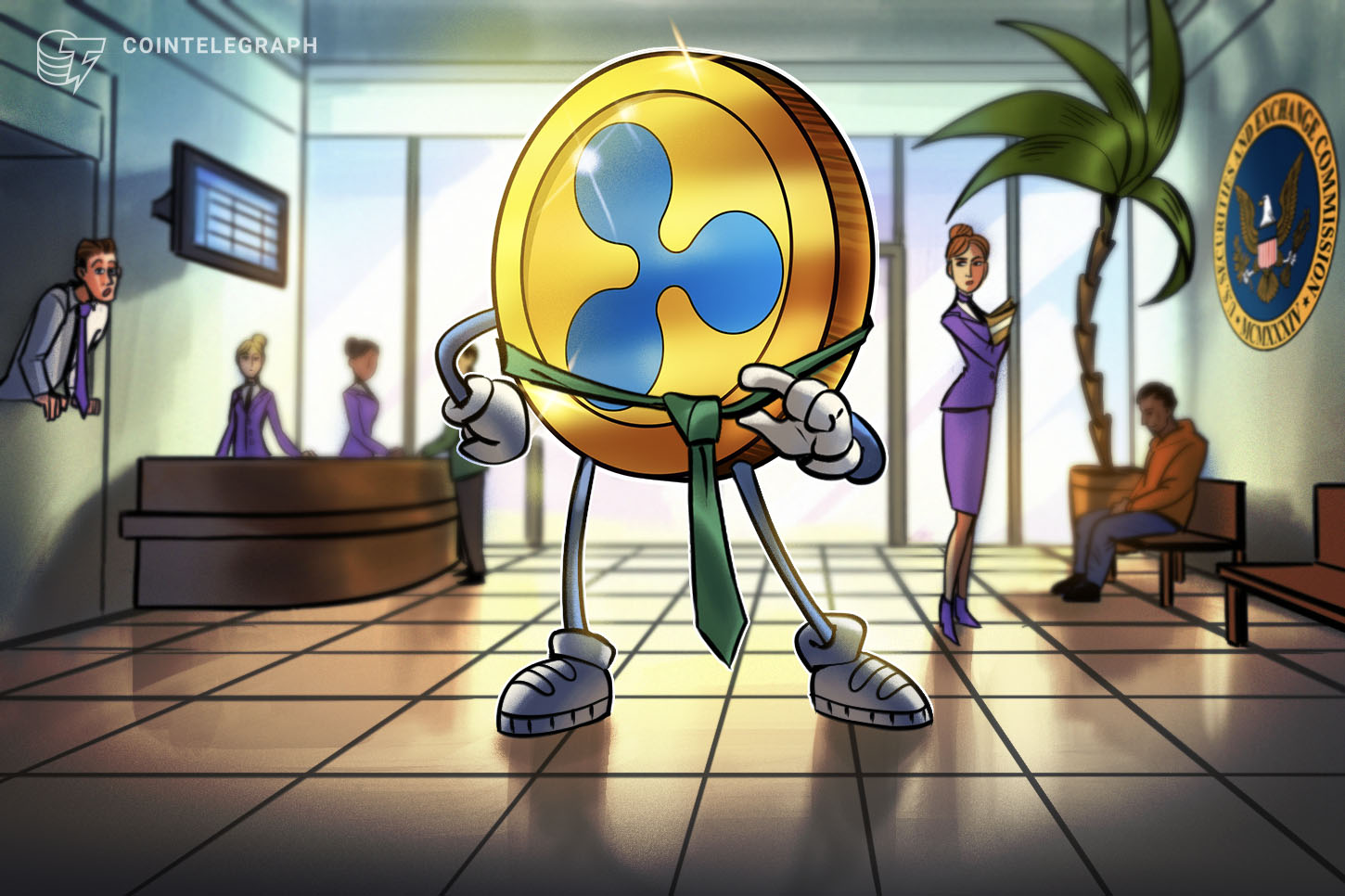 Ripple made a strategic investment in Zilo and Licuido as it looks to enable the use of tokenized funds as collateral from the point of issuance. Ripple announced two new strategic investments as the blockchain-focused fintech seeks to expand access to tokenized financial assets on its blockchain ledger. The company said it made strategic investments in Zilo, which provides global transfer agency asset solutions for wealth managers, and in Licuido, a tokenization solutions provider regulated by the UK Financial Conduct Authority, according to a Monday announcement. Financial details for the investments were not provided. UK-based Zilo has raised $58.7 million in total equity funding, according to data compiled by Traxcn. Licuido is also based in the UK. Read more
 -
Cointelegraph.com - 10:25 Aug 03, 2026
 Bitcoin could confirm an August bear-market bottom, though rising Treasury yields could force the Fed to raise rates in September, according to 10x Research. Bitcoin could confirm a bear-market bottom in August with a monthly close above $63,000, according to 10x Research. Markus Thielen, founder of 10x Research, said in a Monday report shared with Cointelegraph that Bitcoin closed July below the threshold needed to confirm a technical bottom. A monthly close near $63,000 would turn several of 10x Research’s cycle indicators bullish. Bitcoin was trading at $63,140 when the analysis was prepared, meaning a relatively small gain from July’s closing level could trigger the reversal signal. The company said it continued to favor long positions but would shift to a neutral stance if Bitcoin broke key support levels and moving averages. Read more
 -
Cointelegraph.com - 09:14 Aug 03, 2026
 HashKey Exchange said it received approval to open client money accounts with JPMorgan, weeks after it launched customer fund accounts with DBS Bank. Hong Kong-licensed cryptocurrency exchange HashKey Exchange received approval from JPMorgan Chase to open a client money account, its parent company said Monday. The account will support client fund segregation and settlement through JPMorgan’s banking infrastructure, HashKey Holdings said in a press release. A week earlier, HashKey Holdings combined the previously separate HashKey Exchange and HashKey Global applications into a single portal. Read more
 -
Cointelegraph.com - 08:21 Aug 03, 2026
 The crypto exchange stopped accepting new registrations from Japan residents and will begin progressively restricting existing accounts on Nov. 1. Crypto exchange Bitget said it will stop providing services to residents of Japan and phase in account restrictions. The exchange announced Monday that it had stopped accepting new registrations from residents of Japan, while account restrictions will begin Nov. 1. Any positions still open on Dec. 31 will be forcibly closed. Bitget said users who believe they have been incorrectly classified as residents of Japan must complete “Level 2” identification, which includes address verification, by Nov. 1. Failure to do so will result in their accounts being classified as belonging to residents of Japan. Read more
 -
Cointelegraph.com - 07:15 Aug 03, 2026
 The Nasdaq-listed company relies largely on staking rewards to fund operations, while its 0G holdings were valued 91% below their recorded costs. Nasdaq-listed crypto treasury company ZeroStack warned that substantial doubt exists about its ability to continue operating over the next year, reversing its assessment from three months earlier. In a Form 10-Q filed with the US Securities and Exchange Commission (SEC) on Friday, ZeroStack reported $2.6 million in cash, negative working capital of $600,000 and an accumulated deficit of $339.1 million as of June 30. The company also posted an $82.5 million fair value loss on digital assets and a net loss of $61.3 million for the first half of 2026. ZeroStack said its 75.1 million Zero Gravity (0G) tokens had an aggregate cost of $163.3 million and a fair value of $15.2 million as of June 30, leaving the holdings valued about 91% below their recorded costs. Read more
 -
Cointelegraph.com - 05:58 Aug 03, 2026
 The persistent discount suggests US spot buyers have remained less aggressive than overseas traders even as US Bitcoin ETF inflows turned positive in July. Bitcoin fell under $63,000 on Monday as the Coinbase Premium Index, a proxy for US institutional demand for Bitcoin, reached its 77th day in the red. Bitcoin has traded at a persistent discount on Coinbase relative to international exchanges since May 19, with the latest premium rate at -0.1369%, according to Coinglass. As of Monday, the premium has continued its longest negative streak in history. 10x Research head Markus Thielen said the negative premium indicates that US institutional investors are still liquidating Bitcoin. Read more
 -
Cointelegraph.com - 04:09 Aug 03, 2026
 The five-year bug escaped detection because auditors verified that the intended random number generator existed, but not that it was being called. Coldcard’s five-year seed-generation flaw has exposed a broader weakness in how hardware wallets are independently tested, according to Kraken chief security officer Nick Percoco. In an X post on Sunday, Percoco said the incident should be a “wake-up call” for hardware-wallet makers, calling for independent testing to verify that the approved source of randomness is the one actually used by production firmware. “Consumers are asked to trust a manufacturer’s implementation of the single most critical function in the system, with no independent verification that the approved entropy path is the one actually executing,” said Percoco. Read more
 -
Cointelegraph.com - 04:05 Aug 03, 2026
 Stablecoins have been flowing out of South Korean exchanges for 18 consecutive months as regulators weigh tighter oversight of cross-border crypto activity. South Korea saw 560.3 billion won ($367 million) in stablecoin outflows to overseas exchanges in June, extending the country’s streak of monthly net stablecoin outflows to 18 consecutive months. The figure comes from Financial Supervisory Service (FSS) data obtained by Yonhap News Agency through People Power Party lawmaker Lee Jong-wook. South Korea’s five major crypto exchanges — Upbit, Bithumb, Coinone, Korbit and Gopax — transferred 2.7 trillion won ($1.81 billion) in stablecoins offshore in June and received 2.2 trillion won ($1.44 billion) from foreign platforms. Market participants cited by Yonhap attributed the transfers to demand for products restricted or unavailable on domestic exchanges, such as overseas derivatives, tokenized real-world assets (RWAs), decentralized finance and staking products. Read more
 -
Cointelegraph.com - 01:57 Aug 03, 2026
 Galaxy research head Alex Thorn warned that unconfirmed transactions may give some Coldcard users a narrow opportunity to save their funds. Update (Aug. 3 at 4:19 am UTC): This article has been updated with the latest estimated number of affected addresses and Bitcoin from Galaxy’s Alex Thorn. Coldcard users are being warned of a new wave of coordinated thefts targeting their Bitcoin hardware wallets, coming just days after the first wave of attacks on Thursday. In an X post on Monday, Galaxy research head Alex Thorn flagged hundreds of transactions impacting 709 potential victim addresses, moving around 448.7 Bitcoin (BTC). Read more
 -
Cointelegraph.com - 23:44 Aug 02, 2026
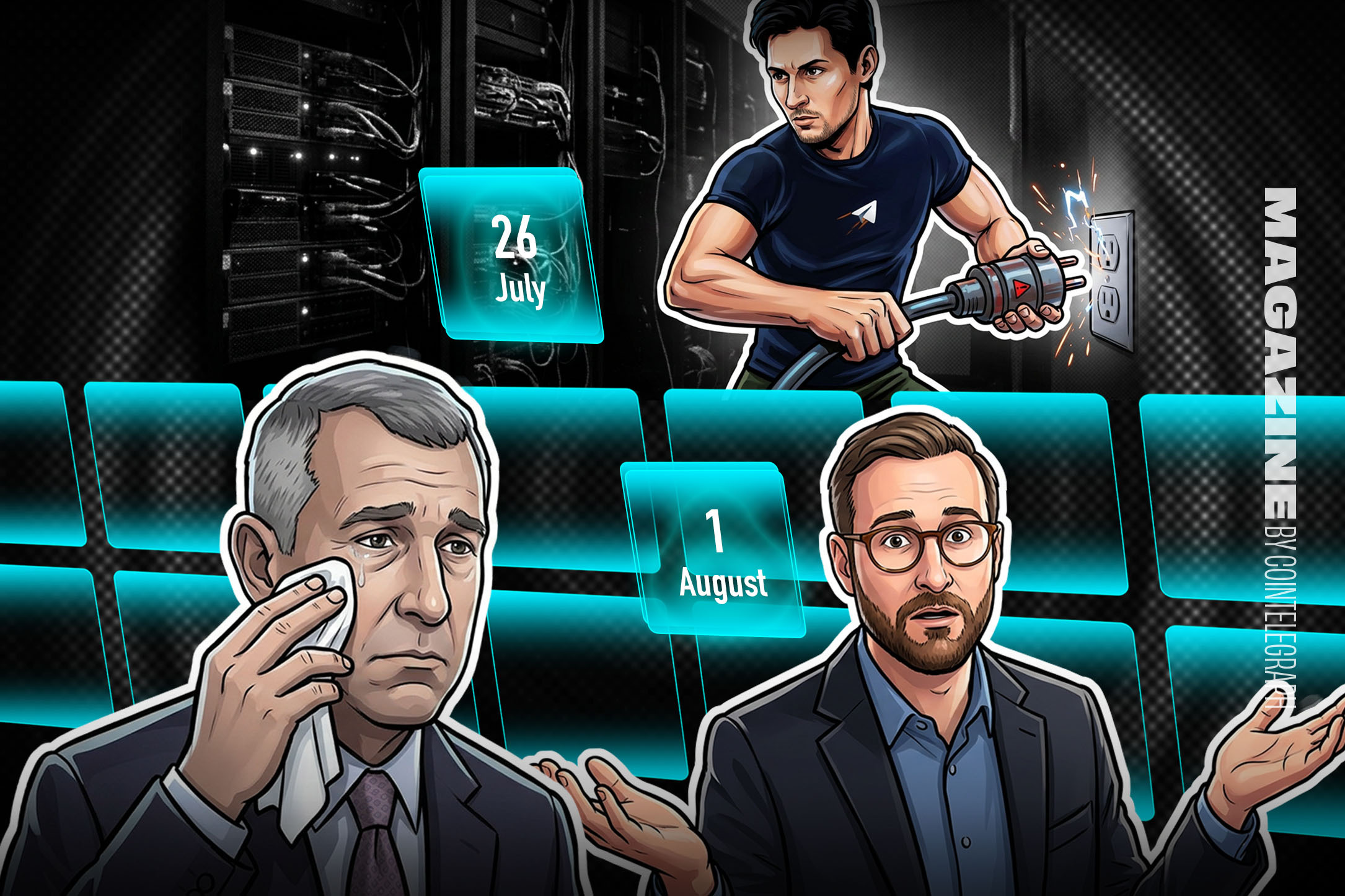 The “sickening” loss of $90 million of Bitcoin from cold storage weighs heavily on sentiment, as the Clarity Act stalls with just five days left to hold a Senate vote. After $90 million in Bitcoin was drained from Coldcard wallet users, small hodlers desperately sought refuge on centralized exchanges and via alternative custody methods. Bitcoin transfers below 1 BTC climbed to their highest daily level since 2022 on Friday, with 39,600 BTC moved, according to data shared by CryptoQuant head of research Julio Moreno on Saturday. The figure was just 300 BTC below the 39,900 BTC transferred on Nov. 16, 2022, days after FTX filed for bankruptcy. Galaxy Research, the research arm of crypto investment company Galaxy Digital, reported Saturday that the third wave of attacks on users of the hardware wallet on the weekend brought estimated losses to 1,367 BTC ($88.6 million) across 4,585 addresses. Read more
 -
Cointelegraph.com - 15:23 Aug 02, 2026
 Investors have previously benefited from a payout boost when the preferred STRC shares traded well below their $100 par value for a month. While Strategy’s preferred STRC shares ended July well below their $100 par value, investors were told that their August dividend will not increase, holding at 12%. Executive chairman Michael Saylor delivered the news in a tweet on Saturday, continuing to pitch STRC as a way to “stretch your income.” August will be the second month that the dividend will be paid semi-monthly after shareholders approved that change in June. STRC shares closed at $89.46 on Friday, clocking a 5.42% price increase for the month which began with a dividend hike — 50 basis points to 12% — after a poor stock performance in June. The volume on the Nasdaq-traded shares on Friday were about two-thirds of their daily average. Read more
 -
Cointelegraph.com - 11:20 Aug 02, 2026
 BNB Chain said a former employee allegedly used a company tutorial wallet to create a memecoin that the company says it did not authorize or endorse. BNB Chain, the blockchain ecosystem behind the BNB cryptocurrency, said it is pursuing legal action after a former employee allegedly used unauthorized access to a wallet to launch a memecoin. In an X post on Saturday, BNB Chain said the wallet was originally created for a video tutorial explaining how to launch tokens on BNB Chain. It said the former employee retained unauthorized access to the wallet’s seed phrase after leaving the company and later used the address to create a new token. Blockchain analytics platform Lookonchain subsequently alleged that the former employee deployed a meme token called Asteroid Shiba (ASTEROID) and used four newly created wallets to buy 796.7 million tokens, representing 79.67% of the total supply. Lookonchain further alleged that the wallets later sold 718.8 million tokens for 1,103 BNB, worth about $638,000 at the time of t...
 -
Cointelegraph.com - 09:29 Aug 02, 2026
 Trump Media transferred another 2,628 Bitcoin to Crypto.com, bringing its reported sales over seven months to 7,281 BTC and leaving the company with 4,261 BTC in holdings. Trump Media & Technology Group, the company behind Truth Social, has made another major move involving its Bitcoin holdings, extending a series of recent sales. The company sold 2,628 Bitcoin (BTC) worth about $165 million through transfers to Crypto.com, blockchain analytics platform Lookonchain said in a Sunday X post, citing data from Arkham. Lookonchain said Trump Media bought 11,542 BTC at an average price of $118,522 before beginning to sell portions of its holdings seven months ago. Read more
11869 items