Cointelegraph.com
Source:
https://cointelegraph.com
Found 11869 news
-
Cointelegraph.com - 11:24 Jul 23, 2026
 HYPE briefly fell 8% from its local highs as Multicoin Capital, Selini Capital and Galaxy Digital queued nearly $150 million of the token for withdrawals. Key points: Hyperliquid’s $HYPE slid to around $58 earlier on Wednesday in the face of large unstaking events initiated by crypto funds. Data obtained from hedge fund and analytics platform Block Liquidity shows Multicoin Capital holding a combined $138.78 million in staked HYPE, of which roughly 83% — about $116 million — sits in pending withdrawal. That’s as Selini Capital and Galaxy Digital have queued HYPE tokens worth $4.4 million and $29.4 million, respectively, for withdrawal. In addition, a Multicoin-linked wallet also deposited roughly 167,000 HYPE, worth $11.2 million, to Coinbase, possibly to be sold. As of publication, the price had recovered some of its decline, last trading hands at $59.19, according to CoinGecko data. Trading volume in the past 24 hours was more than $415.4 million. Read more
 -
Cointelegraph.com - 11:04 Jul 23, 2026
 Kazakhstan plans to require miners to meet strict infrastructure standards and transfer part of their mined crypto assets to a state-backed reserve under new rules. Kazakhstan, one of the world’s largest Bitcoin mining hubs, approved a new framework for large-scale crypto mining that links access to electricity with contributions to a state-backed digital asset reserve. The government approved rules for strategic digital mining on July 18, Kazakhstan-based news outlet Zakon.kz reported Wednesday, citing Government Resolution No. 638 published in the PRG.kz legal database. The rules define strategic digital mining as a framework that gives miners access to electricity quotas at regulated tariffs in exchange for transferring part of their mined crypto assets to Astana Hub, a government-backed technology cluster. Read more
 -
Cointelegraph.com - 10:49 Jul 23, 2026
 Bitwise predicted that Hyperliquid and Robinhood TradFi ventures should form the basis for a crypto bull-market comeback that would lift Bitcoin and Ether. Bitcoin (BTC) is “finally showing signs of a bottom,” but the next bull market will have a different source. Key points: In a blog post on Wednesday, Matt Hougan, chief investment officer at crypto asset manager Bitwise, revealed his picks for what will “lift” BTC price action going forward. Read more
 -
Cointelegraph.com - 09:42 Jul 23, 2026
 Coinbase plans to expand its Singapore office from 150 to about 200 employees by the end of 2026 as it expands its presence in the Lion City. Cryptocurrency exchange Coinbase reportedly plans to expand its presence in Singapore and grow its headcount from 150 to about 200 staff members by the end of 2026. The cryptocurrency exchange is mainly looking to hire more engineers, customer service, relationship management staff and institutional sales representatives for its Singapore office, which opened at One Raffles Quay on Wednesday, Hassan Ahmed, Coinbase’s country director for Singapore, told the Business Times in an interview. Ahmed said that Singapore is increasingly becoming a strategic hub for cryptocurrency innovation. Coinbase received a major payment institution license from the Monetary Authority of Singapore (MAS), the city-state’s central bank, in October 2023, enabling it to expand its services to Singaporean individuals and institutions. Read more
 -
Cointelegraph.com - 09:03 Jul 23, 2026
 Grayscale’s head of research said that Bitcoin may have bottomed, arguing that macro factors, such as interest rate decisions as increasingly driving the price action of this maturing asset class. Crypto-focused asset manager Grayscale said that Bitcoin’s price may have bottomed earlier than the traditional four-year cycle, which would imply a cycle low in September or October. Grayscale’s head of research, Zach Pandl, argued that Bitcoin (BTC) has “grown up” as an asset and is increasingly driven by macroeconomic factors. “If the Fed forgoes rate hikes and economic growth holds up well, Bitcoin’s price may already have bottomed,” Pandl wrote in a Wednesday report. Read more
 -
Cointelegraph.com - 08:29 Jul 23, 2026
 Crypto home invasions rose to 20 in H1 2026 from one a year earlier, while France accounted for 33 of 52 verified wrench attacks, according to CertiK. Home invasions became the most common form of crypto wrench attacks during the first half of 2026, rising to 20 publicly reported incidents from just one a year earlier, according to blockchain security firm CertiK. On Thursday, CertiK said it verified 52 wrench attacks worldwide in the first half of 2026, up 33.3% from 39 incidents during the same period in 2025. Kidnappings rose to 16 from 12, while robberies declined from five incidents to one. CertiK said the recorded financial exposure linked to the attacks reached about $124.1 million, up from $10.5 million a year earlier. The figure is not limited to confirmed thefts and may include ransom demands, victim transfers, frozen or recovered assets and failed ransom demands. Read more
 -
Cointelegraph.com - 08:14 Jul 23, 2026
 BitMEX announced it will shut down operations on Sept. 23, 2026, after owner HDR Global Trading Limited decided to close the crypto exchange. BitMEX, one of the pioneers of cryptocurrency derivatives trading, announced it will shut down operations after owner and operator HDR Global Trading Limited decided to close the company following a strategic review. BitMEX announced Thursday that it will stop exchange services on Sept. 23, 2026, at 04:00 UTC and urged users to close positions and withdraw funds before the deadline. “We want to reassure you that your assets remain fully safe and under your control during this transition period,” BitMEX said in a statement to users. Read more
 -
Cointelegraph.com - 07:53 Jul 23, 2026
 Mirae Asset Consulting has become Korbit’s largest shareholder after completing its acquisition, with the exchange saying trading and customer asset protections are unchanged. Mirae Asset Consulting, an affiliate of one of South Korea’s largest financial groups, has completed its acquisition of a controlling stake in South Korean crypto exchange Korbit, becoming the exchange’s largest shareholder after completing regulatory procedures. Korbit said in a Thursday announcement published on its website that its operating entity remains unchanged and that trading, deposits and withdrawals will continue without interruption. The exchange added that customer assets remain segregated under South Korea’s Virtual Asset User Protection Act. Read more
 -
Cointelegraph.com - 07:08 Jul 23, 2026
 US spot Bitcoin ETFs recorded $69 million in inflows on Wednesday, extending their inflow streak to seven sessions and bringing total inflows during the period to nearly $1 billion US-listed spot Bitcoin exchange-traded funds (ETFs) have totaled about $1 billion in net inflows over seven straight trading sessions. Spot Bitcoin ETFs recorded $68.99 million in net inflows on Wednesday, bringing cumulative inflows since July 14 to $999.38 million, according to data from SoSoValue. The current streak remains below April’s nine-session run, when spot Bitcoin ETFs attracted $2.1 billion in net inflows. Read more
 -
Cointelegraph.com - 06:46 Jul 23, 2026
 Kakao Group and Circle signed an MOU to explore won stablecoin payments, remittances, merchant settlement and tokenized financial services. Kakao Group has partnered with stablecoin issuer Circle to explore payment infrastructure for won-backed stablecoins as South Korea prepares a broader regulatory framework for crypto assets. On Thursday, the companies announced that Kakao, Kakao Pay and Kakao Bank had signed a strategic memorandum of understanding (MOU) with Circle Internet Group. Under the agreement, the companies will explore ways to connect Circle’s blockchain and global payment infrastructure with Kakao’s consumer platforms and financial services. The agreement highlights how major South Korean consumer and financial platforms are positioning themselves ahead of expected stablecoin legislation, even before the regulatory framework is finalized. Read more
 -
Cointelegraph.com - 06:00 Jul 23, 2026
 Swiss cantonal bank BancaStato integrated Sygnum’s crypto trading and custody services into its Avaloq-powered digital banking apps for Bitcoin and other assets. Swiss bank BancaStato has launched regulated cryptocurrency trading using digital asset bank Sygnum and banking software provider Avaloq. BancaStato, the cantonal bank serving Switzerland’s Italian-speaking Ticino region, joined Sygnum’s business-to-business (B2B) banking platform to offer crypto asset services, according to a Thursday announcement shared with Cointelegraph. The integration allows BancaStato customers to buy, sell and hold four crypto assets, including Bitcoin (BTC), Ether (ETH), Litecoin (LTC) and Solana (SOL), through the bank’s existing web and mobile banking apps. Read more
 -
Cointelegraph.com - 04:15 Jul 23, 2026
 US officials warn that Chinese firms conducting covert, industrial-scale AI distillation could face sanctions and export restrictions. A White House official accused Moonshot AI of distilling Anthropic’s Fable AI model to develop Kimi K3, which launched last week. In a post on X on Wednesday, White House Office of Science and Technology Policy Director Michael Kratsios alleged the Chinese AI firm developed an internal platform to distill US models at scale, using methods designed to evade detection. “Legitimate AI distillation used to create smaller, more efficient models plays a vital role in this open innovation ecosystem,” he said. “However, large-scale, covert industrial distillation aimed at stealing proprietary U.S. technology and undermining American research is unacceptable.” Read more
 -
Cointelegraph.com - 02:57 Jul 23, 2026
 The settlement follows a watchdog report last year that blamed “avoidable errors” for the loss of nearly a year’s worth of Gary Gensler’s text messages. The US Securities and Exchange Commission agreed to pay $150,000 in legal fees to settle a Coinbase lawsuit seeking internal records from the agency at the height of the Biden-era SEC crackdown on crypto. The agreement, filed on Wednesday, ends a two-year lawsuit between the SEC and Coinbase, in which the crypto exchange sought internal documents from the regulator to uncover evidence of “crypto by enforcement.” An internal report in 2025 revealed the SEC had deleted nearly a year of former SEC Chair Gary Gensler’s texts due to “avoidable” errors. “The agency tasked with policing corporate record-keeping somehow lost reams of its own text messages between Mr. Gensler and other officials during the most intense period of the anti-crypto campaign,” said Coinbase chief legal officer Paul Grewal in an op-ed published by the Wall Street Journal on Wednesday, add...
 -
Cointelegraph.com - 01:47 Jul 23, 2026
 AFX, a decentralized perpetual exchange operating on Arbitrum, reportedly lost $24.15 million on Wednesday, while the Verus Ethereum bridge was attacked hours later. Hackers stole more than $31.6 million across two unrelated crypto bridge exploits spaced just hours apart, targeting bridges operated by decentralized perpetual exchange AFX and Verus Protocol. According to Blockaid, AFX, a decentralized perpetual exchange operating on Arbitrum, reportedly lost $24.15 million on Wednesday through a hack targeting one of its crosschain bridges. Hours later, Blockaid said it detected an exploit targeting the Verus Ethereum Bridge that resulted in about $7.5 million in crypto being stolen. The back-to-back exploits highlight the continued security risks facing crosschain bridges, which hold large pools of assets and move funds between separate blockchains. Read more
 -
Cointelegraph.com - 21:09 Jul 22, 2026
 The benchmark tracks blockchain networks using protocol revenue, offering an alternative to traditional market capitalization-weighted crypto indexes. S&P Dow Jones Indices and Pantera Capital launched a digital asset index that tracks blockchain networks and protocols based on protocol revenue, marking a departure from crypto benchmarks built around market capitalization or token prices. The index draws from the S&P Cryptocurrency Broad Digital Asset Index but only includes assets that meet minimum thresholds for protocol revenue, market capitalization and liquidity. Eligible networks are then ranked by aggregate protocol revenue over the previous two quarters and weighted by adjusted market capitalization, with the largest holding capped at 35% and the remaining constituents generally capped at 20%. The index is rebalanced quarterly. According to an announcement from the companies, the benchmark is intended for institutional allocation and may serve as the basis for investment products or as a reference for...
 -
Cointelegraph.com - 20:38 Jul 22, 2026
 Donavan McKinney, running against Michigan incumbent Shri Thanedar, said that “the crypto lobby is paying my opponent back for helping Trump“ with the PAC-funded ads. An affiliate of the cryptocurrency-aligned political action committee (PAC) Fairshake is attempting to influence voters in a primary race for Michigan’s 13th congressional district, with about $1 million in media on the line. In filings with the US Federal Election Commission (FEC) as of Tuesday, the Protect Progress PAC had spent more than $986,000 on ads supportive of Democratic incumbent Shri Thanedar and opposing his challenger, Donavan McKinney. The reported expenditures came two weeks before the Democratic candidates were set to face off in an Aug. 4 primary to determine who will stand in the November general election. Source: FEC Read more
 -
Cointelegraph.com - 18:41 Jul 22, 2026
 According to Senator Cynthia Lummis, one of the bill’s advocates, the ethics language would apply to US presidents’ crypto ventures, including Donald Trump’s. Senate Republicans have released the proposed text for the Digital Asset Market Clarity (CLARITY) Act, including language on ethics that would bar all US federal officials — including President Donald Trump — from issuing or sponsoring any digital asset. In the 616-page text of the CLARITY Act made public on Wednesday, US lawmakers included language that the White House described as the “most comprehensive and wide-ranging ethics provision in history.“ The bill said all public officials, employees and their spouses would be barred from issuing or sponsoring digital assets and crypto platforms would similarly be blocked from listing assets issued or sponsored by federal officials. Text of CLARITY Act released on Wednesday. Source: Cynthia Lummis Read more
 -
Cointelegraph.com - 17:57 Jul 22, 2026
 Anthropic will provide Claude AI models to companies participating in the UK Financial Conduct Authority’s next Supercharged Sandbox cohort, as the regulator pushes to test AI applications in financial services. Anthropic will provide its Claude AI models to firms participating in the UK Financial Conduct Authority’s (FCA) second Supercharged Sandbox cohort, expanding the regulator’s effort to help financial companies test artificial intelligence applications in a controlled environment. Participants will receive access to Claude, including Claude Code and Claude Cowork, to develop applications ranging from agent-led payments and fraud detection to compliance automation and AI governance. The second cohort includes 21 organizations, among them Scottish Widows, Money Advice Trust and TrueLayer. Read more
 -
Cointelegraph.com - 17:39 Jul 22, 2026
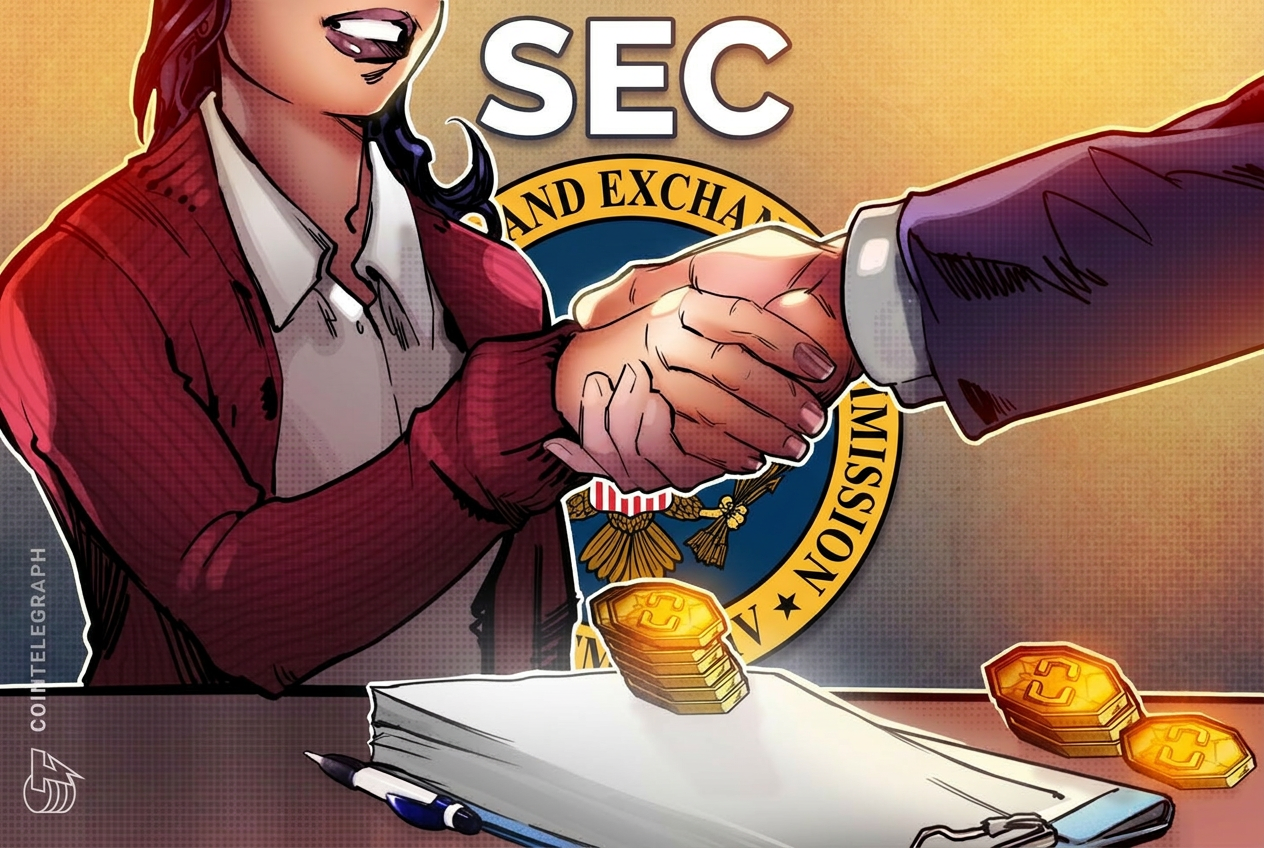 The SEC commissioner said crypto vaults, onchain lending products and other asset management tools may trigger US securities laws depending on how they are structured and operated. SEC Commissioner Hester Peirce said crypto vaults and onchain lending products may fall under US securities laws, urging developers to assess whether products that actively manage user assets require regulatory compliance. In a statement published Wednesday, Peirce said crypto vaults and lending strategies that involve discretionary decisions, including allocating assets, selecting yield-generating activities, setting lending terms and determining liquidation thresholds, may fall within the scope of federal securities laws depending on their structure and operation. She said some vaults could be treated as securities offerings or investment companies, while parties managing vault allocations or lending parameters could also trigger investment adviser requirements. Read more
 -
Cointelegraph.com - 16:28 Jul 22, 2026
 The group alleged that the tax signed into law in June “discriminates against people who transact in digital assets“ and should be blocked from implementation and enforcement. Cryptocurrency and blockchain advocacy organization The Digital Chamber is suing the State of Illinois over the state’s 0.2% tax on crypto transactions expected to go into effect in 2027. In a Tuesday filing in the circuit court of Sangamon County, Illinois, the Chamber alleged that the Illinois state tax for the 2027 fiscal year was “facially invalid.” The organization filed a civil suit against Illinois Attorney General Kwame Raoul and the Department of Revenue’s David Harris, claiming that the crypto tax was “slipped into the state’s budget” without a debate or feedback from people potentially affected. “The lawsuit argues that no one should be taxed differently because of how ownership is recorded or transferred,” said the chamber in a Tuesday blog post. “Put simply, this tax discriminates against people who transact in digital ass...
11869 items