Cointelegraph.com
Source:
https://cointelegraph.com
Found 11869 news
-
Cointelegraph.com - 01:16 Jul 21, 2026
 The move comes as traditional exchanges face growing competition from crypto markets and tokenized equity platforms that offer around-the-clock trading. The London Stock Exchange is planning to launch a night-time trading venue in the first half of 2027, joining a growing number of global exchanges offering or planning near-24-hour trading. According to a report from the Financial Times, the LSE’s new venue will operate separately from its main market and run from 5:00 pm to 7:50 am London time. It will initially offer access to exchange-traded products such as those tracking the UK or US stock market. Related: Backpack joins race for 24/7 stock markets with tokenized equities Read more
 -
Cointelegraph.com - 00:02 Jul 21, 2026
 The decision keeps the administration’s chief crypto policy negotiator in place during what could be a decisive few weeks for the CLARITY Act. The White House’s top crypto adviser Patrick Witt said he will no longer take a leave of absence at the end of the month for military training, allowing him to remain at the White House to help advance the CLARITY Act in the Senate. “Last week, it was reported that I was set to leave for mandatory training as part of my service in the Georgia Army National Guard, right before Clarity hits the Senate floor,” Witt said in an X post on Monday. “While I remain committed to fulfilling my service obligation, I am grateful to report that my training has been deferred, and that I will be able to see this effort through to the end,” he added. Read more
 -
Cointelegraph.com - 21:41 Jul 20, 2026
 Coinbase vice chair Ryan VanGrack said that Democratic lawmakers had added provisions on customer protection to a digital asset market structure bill under consideration in the US Senate. As lawmakers in the US Senate are likely to vote soon on the Digital Asset Market Clarity (CLARITY) Act, representatives from advocacy organizations and companies are providing details of closed-door negotiations over the bill, which is expected to be the most comprehensive piece of legislation affecting the crypto industry. In a Monday CNBC interview, Coinbase vice chair Ryan VanGrack said while the final negotiations over text of the CLARITY Act were taking place in the Senate, Democratic lawmakers had added additional protections for customers to give what he called “more teeth” to the legislation. He did not explicitly mention any progress on adding ethics provisions to the bill, which many Democrats said will be necessary for their votes. “[A]t the end of the day, this is about customer protections,” said VanGrack. “Th...
 -
Cointelegraph.com - 21:21 Jul 20, 2026
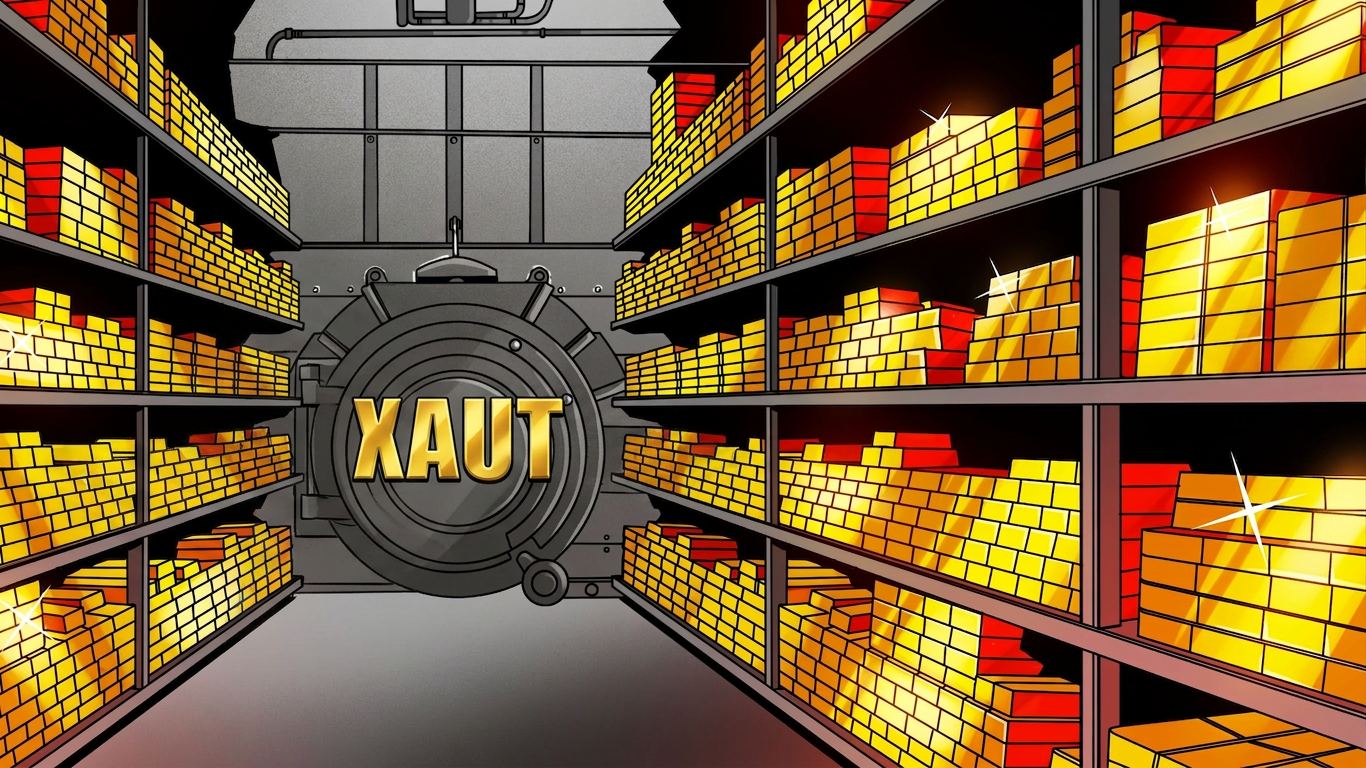 The recognition allows regulated firms in Abu Dhabi Global Market to offer services involving Tether Gold as tokenized commodities gain broader adoption. Tether Gold (XAUT) has been recognized as an Accepted Spot Commodity in Abu Dhabi Global Market (ADGM), allowing firms in the international financial center to offer services involving the tokenized gold asset if they hold the required regulatory permissions. The recognition follows ADGM’s earlier acceptance of Tether’s USDt (USDT) as an Accepted Fiat Referenced Token, extending the company’s regulated product lineup in one of the Middle East’s largest international financial centers. Tether CEO Paolo Ardoino said the designation gives regulated firms a clearer path to offer XAUT, while ADGM said it would support business growth by expanding the products and services available to companies operating in the financial center. Read more
 -
Cointelegraph.com - 21:20 Jul 20, 2026
 Despite muted derivatives sentiment, Bitcoin’s decoupling and Strategy’s cash raise set the stage for a potential rally to $70,000. Key takeaways: Bitcoin (BTC) showed relative strength over the past week, despite failing to break above $65,500. More importantly, the cryptocurrency has decoupled from traditional markets as investors took profits in memory-chip makers amid fears of excessive valuations in the artificial intelligence sector. Still, judging by Bitcoin’s derivative metrics, top traders are not particularly confident about a rally toward $70,000. Read more
 -
Cointelegraph.com - 20:27 Jul 20, 2026
 The SEC alleges Mining Automatic and its founder raised $22 million from investors by promising guaranteed crypto mining returns while spending only a fraction of the funds on mining operations. The US Securities and Exchange Commission (SEC) has sued crypto mining investment business Mining Automatic and its founder, Zan Shaikh, alleging they raised $22 million from investors while spending only about 13% of the funds on mining operations. Mining Automatic was operated by Massachusetts-based Bright Vision Distribution LLC, which the SEC said raised the money from more than 380 investors between June 2023 and May 2025. The company allegedly promised guaranteed monthly returns from crypto asset mining despite operating a business that could not generate the advertised payouts. The SEC said investor money was instead used for marketing, personal expenses and unrelated ventures. Read more
 -
Cointelegraph.com - 19:29 Jul 20, 2026
 The wallet company said it expected the layoffs to generate between $10 million and $13 million in savings as part of its strategy to build a full-stack card issuance and payments platform. Cryptocurrency wallet company Exodus will cut a quarter of its workforce in a restructuring move toward stablecoin payments infrastructure. In a Friday notice, Exodus said it would cut 25% of its staff to “better align its cost structure and organizational priorities with its strategy to build a full-stack card issuance and payments platform.” The announcement followed the wallet company’s acquisition of Monavate and Baanx, which it said at the time would lessen its dependence on third-party providers for services including stablecoin payments. “Exodus expects to recognize approximately $2.5 million to $3.5 million of pre-tax charges in connection with the action, consisting primarily of severance and related personnel costs,” said the notice. “The Company expects the action to generate approximately $10 million to $13 mil...
 -
Cointelegraph.com - 17:50 Jul 20, 2026
 The Ethereum treasury firm added 7,430 ETH over the past week, bringing its holdings to nearly 5% of the network’s circulating supply. Top Ethereum treasury company Bitmine said Monday its Ether holdings had reached 5.78 million tokens, representing about 4.8% of Ethereum’s circulating supply, as the company closed in on its stated goal of accumulating 5% of all ETH. According to Monday’s announcement, the company added 7,430 ETH (ETH) over the past week. About 4.9 million ETH, or roughly 85% of its treasury, is currently staked through its validator network and partners. Bitmine valued its crypto, cash and marketable securities at $11.5 billion, including 207 Bitcoin and $385 million in cash and securities. The company also repurchased 5.5 million shares during the week under its previously authorized $4 billion buyback program. Read more
 -
Cointelegraph.com - 17:27 Jul 20, 2026
 Bitcoin miners rallied as investors cheered multi-billion-dollar AI infrastructure contracts, underscoring the sector’s accelerating shift toward data centers and cloud computing. Shares of several Bitcoin mining companies surged Monday after Hut 8 and IREN announced major AI infrastructure deals, reinforcing investor optimism around miners expanding into artificial intelligence and high-performance computing. IREN, Cipher Digital, CleanSpark, Hut 8 and MARA Holdings each gained at least 11% in early Monday trading. The rally followed Hut 8’s announcement of a 15-year, $9.8 billion lease for its AI data center campus and IREN’s disclosure of $2.8 billion in cloud services contracts with AI developers. Both companies began as Bitcoin (BTC) miners before accelerating a pivot toward AI infrastructure and cloud computing as mining economics weakened. IREN now expects its AI cloud business to generate more than $4 billion in annual recurring revenue by the end of 2026. Read more
 -
Cointelegraph.com - 16:59 Jul 20, 2026
 The West African country’s executive order established a virtual asset council and addressed the fragmentation of crypto regulation for oversight and enforcement. President Bola Ahmed Tinubu of Nigeria has moved to address what his office called the fragmentation of digital asset regulation. The Nigerian president’s special adviser Bayo Onanuga said that an executive order signed on Friday would “harmonize the regulation of virtual assets, strengthen cooperation among the nation’s financial, revenue and capital markets agencies, protect citizens from fraud, and safeguard the integrity of the financial system while enabling responsible innovation.” It also established a virtual asset council headed by some of the nation’s top financial regulators to direct related policies, and Nigeria’s tax authority will update its policies on digital assets. Read more
 -
Cointelegraph.com - 16:53 Jul 20, 2026
 The brokerage’s blockchain strategy, including tokenized equities and its Arbitrum-based Robinhood Chain, could reduce its reliance on traditional crypto trading, analysts said. Analysts at Bernstein have raised their price target on Robinhood Markets, based on their investment thesis that the online brokerage’s next phase of growth will be driven by tokenized equities and prediction markets rather than traditional crypto trading. In a Monday research note, Bernstein raised its price target on Robinhood (HOOD) stock to $160 from $130 per share and maintained its Outperform rating. HOOD stock was last seen trading around $101. The analysts said prediction markets are poised to become Robinhood’s fastest-growing business, forecasting segment revenue to reach $1.7 billion by 2028, representing a 64% compound annual growth rate. Read more
 -
Cointelegraph.com - 15:47 Jul 20, 2026
 Bitcoin faced troublesome resistance at $65,000 while traders still saw a potential BTC price breakout into a “bullish market structure.” Traders balked on Bitcoin (BTC) at $65,000 on Monday as crypto and risk-assets remained under pressure. Key points: Data from TradingView showed BTC price volatility returning around Monday’s Wall Street open. Read more
 -
Cointelegraph.com - 15:20 Jul 20, 2026
 The Bitcoin miner raised its year-end AI cloud revenue target to more than $4 billion after signing $2.8 billion in new contracts with AI developers. Bitcoin miner IREN’s shares rose around 15.7% on Monday after the company raised its year-end AI cloud annualized run-rate revenue target to more than $4 billion following $2.8 billion in new multi-year cloud services contracts with AI developers. The company said about 85% of its revised annualized AI cloud revenue target is now under contract, with customers including Microsoft, Nvidia, Perplexity and Figure AI. Read more
 -
Cointelegraph.com - 13:30 Jul 20, 2026
 Renowned trading analyst Peter Brandt says investing in Bitcoin today, will pay off much better in two to three years than buying AI stocks at current prices. Veteran trader Peter Brandt says he has pinpointed the exact day in 2026 when he expects Bitcoin to hit the bottom of this market cycle. “I’ll go out on a limb and say we bottom on October 4th. So we’ll see,” Brandt tells Cointelegraph during an interview for Trade Secrets. Of course, picking the exact day of a market bottom is a tough ask, but the 51-year trading veteran has held firm on his October prediction for Bitcoin’s cycle low for quite some time. Read more
 -
Cointelegraph.com - 12:39 Jul 20, 2026
 Strategy boosted its cash reserve to $3.225 billion after selling MSTR shares, while investors weighed the value of its STRC preferred stock. Strategy, the world’s largest corporate holder of Bitcoin, is raising fresh capital through sales of its Class A common stock while maintaining its current Bitcoin holdings. Strategy raised $263.5 million through sales of its MSTR common stock under its at-the-market (ATM) program between July 13 and July 19, according to a Form 8-K filed with the US Securities and Exchange Commission on Monday. The company made no Bitcoin purchases or sales during the reporting period, leaving its holdings unchanged at 843,775 BTC, acquired for a total purchase price of $63.69 billion. The average acquisition cost of its holdings is $75,476, according to Strategy’s website. Bitcoin was last trading at roughly $64,657. Read more
 -
Cointelegraph.com - 12:20 Jul 20, 2026
 Hyperliquid plans to require developers to stake 500,000 HYPE, worth about $30.4 million, to deploy permissionless prediction markets under HIP-4. Hyperliquid plans to introduce permissionless prediction markets by requiring developers to stake 500,000 HYPE tokens (about $30.4 million) to launch them under HIP-4. The proposal introduces a capital threshold and slashing mechanism intended to discourage poorly defined or improperly settled markets In an announcement, Hyperliquid said permissionless deployment will become available on testnet before expanding to mainnet in a future network upgrade. Validators will vote on standard outcome templates that deployers can use to create markets, while each deployer will initially be limited to 100 outcomes. The allocation will be released for reuse when a market is settled. Read more
 -
Cointelegraph.com - 12:04 Jul 20, 2026
 The new rules establish penalties as much as $1,900 for crypto violations, including unlicensed trading and AML breaches, ahead of Vietnam’s regulated crypto market launch. Vietnam has decreed administrative penalties for use of unlicensed cryptocurrency platforms, adding an enforcement framework to the country’s upcoming regulated market. Decree No. 284/2026/NĐ-CP, issued last Thursday, imposes fines of up to 50 million Vietnamese dong ($1,900) on investors who trade through unlicensed platforms, with fines of up to 200 million dong ($7,700) for unauthorized crypto offerings and serious anti-money laundering (AML) violations. The rules also authorize authorities to suspend crypto-related activities, revoke licenses and confiscate assets. Read more
 -
Cointelegraph.com - 12:03 Jul 20, 2026
 Zilliqa said exchanges paused ZIL deposits and withdrawals after an exchange partner’s cold wallet was compromised, with the amount stolen still undisclosed. Zilliqa, a layer-1 blockchain network, said it is investigating a security incident involving an exchange partner after ZIL was stolen from a cold wallet. In an X post on Monday, Zilliqa said it had asked exchanges to temporarily pause ZIL deposits and withdrawals as a precaution while it investigates the incident. Zilliqa did not disclose the amount of ZIL stolen, identify the affected exchange partner or explain the possible cause of the incident. “We understand the community will have questions. We will share further updates as soon as we have verified information,” it said. Read more
 -
Cointelegraph.com - 11:00 Jul 20, 2026
 Institutional due diligence is shifting toward continuous monitoring, signer controls and incident readiness after operational failures accounted for most crypto losses. Institutional investors are looking beyond smart contract audits after traditional trust signals such as prior audits and operating history failed to predict which crypto projects would be exploited, according to Hacken. In its Q2 2026 Security & Compliance Report, Hacken said that only 9% of 1,427 tracked projects had third-party monitoring, while 4% combined monitoring with an active bug bounty and a security audit. The report highlighted that compromised keys, signers and infrastructure accounted for 88.3% of the roughly $764 million stolen during the quarter. Hacken said projects unable to provide ongoing evidence of operational security may face higher perceived risk, reduced investment and more difficult access to insurance or counterparties. Read more
 -
Cointelegraph.com - 10:54 Jul 20, 2026
 Europe’s second-biggest Bitcoin treasury company said the September reverse stock split should attract more institutional investors to the French company. Capital B, Europe’s second-largest Bitcoin treasury company, will consolidate its shares in a 10-for-1 reverse stock split aimed at broadening its institutional investor base. The reverse split will reduce the number of shares to about 30.1 million from 300.7 million. Each new share will replace 10 existing shares and carry a par value of 0.80 euros ($0.90), up from 0.08 euros, Capital B said in a Monday statement. The Euronext Growth Paris-listed company said the conversion will occur automatically on Sept. 8 without changing the aggregate value of investors’ holdings. Read more
11869 items