Cointelegraph.com
Source:
https://cointelegraph.com
Found 11869 news
-
Cointelegraph.com - 05:15 Jul 27, 2026
 The stablecoin payments company said client funds were unaffected and that the financial impact would be absorbed through its treasury reserves. Stablecoin payments firm Triple-A confirmed that unauthorized access to its treasury wallets resulted in the loss of company-owned digital assets. On Monday, the Singapore-based company said it detected the unauthorized access on Saturday and temporarily placed certain services into maintenance mode for about three hours while it secured the affected infrastructure. Triple-A said client funds were not affected because it does not custody digital assets on behalf of customers and keeps client funds separately in trust accounts with safeguarding institutions. Triple-A did not disclose the amount lost or explain how the wallets were compromised. Onchain investigator Specter previously estimated the losses at about $11.8 million. Read more
 -
Cointelegraph.com - 04:34 Jul 27, 2026
 Users reported withdrawal delays and freeze notices as wallets attributed to BitMart fell to about $69 million and its BMX token extended an 81.5% weekly decline. Withdrawals from crypto exchange BitMart appeared to slow after it announced plans to wind down its operations. On Monday, blockchain analytics account Lookonchain reported that only 58 wallets withdrew about $805,000 in over 24 hours. It added that the exchange had not processed any withdrawals during the latest eight-hour period it tracked. X users also continued to report withdrawal difficulties. One user said they received an email stating that a USDT withdrawal had been completed even though the transaction had not been processed and their account displayed an “on-chain withdrawal freeze.” Another user said a $30 test withdrawal remained pending for over 30 minutes. These are individual claims and could not be verified. Read more
 -
Cointelegraph.com - 01:58 Jul 27, 2026
 Garden Finance said no user funds or smart contracts were affected after an attacker compromised an independent solver’s off-chain database and inserted fraudulent swap records. [Updated July 27, 2026, 2:16 UTC: Revised to reflect clarifications from a Garden Finance spokesperson.] Garden Finance said an independent solver’s off-chain database was compromised in an incident that prompted the cross-chain bridge and atomic swap protocol to temporarily take its app offline. On Sunday, Blockaid said an attacker drained about $450,000 in USDT from Garden’s hash time-locked contracts (HTLC) on Ethereum, Base, Arbitrum and BNB Smart Chain. HTLCs are time-bound escrow contracts that Garden uses to facilitate atomic swaps between Bitcoin and assets on other networks. Blockaid described the exploit as ongoing and published addresses linked to the attacker and affected contracts. Read more
 -
Cointelegraph.com - 01:01 Jul 27, 2026
 The decentralized storage provider says its network will continue operating during Chapter 11 as it explores a court-approved ownership mechanism for STORJ holders. Decentralized cloud storage provider Storj Labs has filed for Chapter 11 bankruptcy protection. The company said it plans to keep its network running while restructuring legacy liabilities and exploring an ownership pathway for STORJ tokenholders. On Sunday, Storj said it filed the voluntary case in the US Bankruptcy Court for the Northern District of West Virginia. The company said ordinary operations and customer services would continue during the process, subject to court oversight, while its parent company, Inveniam, would continue to support the business. The restructuring could become an unusual test of whether utility-token holders can participate in the ownership of a company emerging from bankruptcy. Read more
 -
Cointelegraph.com - 00:03 Jul 27, 2026
 Despite support from Goldman Sachs, Fidelity and law enforcement bodies, the Clarity Act’s chances dim. BitMEX to close as crypto consolidates into five big players. Despite wealthy memecoin entrepreneur President Donald Trump agreeing to an ethics deal, the Clarity Act (CLARITY) is floundering as the August recess deadline looms. Senate Majority Leader John Thune said he doesn’t believe the act has the votes to pass just yet, but may bring it to a vote anyway to “get Clarity started. We’ll see where the votes are.” The ethics deal would prohibit all US officials from issuing or sponsoring digital assets, but contains some “get out of jail free” provisions for the President that the Democrats are unhappy with, including the fact the rules expire the day he is scheduled to leave office in 2029. Read more
 -
Cointelegraph.com - 22:53 Jul 26, 2026
 WEMIX suspended bridges, liquidity-pool trading and several services after an attacker compromised a WEMIX$-linked contract and moved 724,198 USDC.e. Layer-1 blockchain network WEMIX said an attacker moved about 724,000 in USDC.e tokens after compromising ownership of a contract linked to its WEMIX$ stablecoin and issuing tokens without authorization. The abnormal transactions occurred on Sunday at 9:17 UTC, according to a preliminary incident update from WEMIX. The attacker issued about 5.23 million WEMIX$, which was converted into 30,736 WEMIX and 724,198.27 USDC.e. The USDC.e was then bridged to Ethereum and BNB Smart Chain before being exchanged for assets including Ether and Tether’s USDT and distributed across multiple addresses. WEMIX said some of the funds were deposited into centralized exchanges. The company identified the attacker’s wallets and requested asset freezes and assistance from exchanges and stablecoin issuers, adding that some exchanges had already frozen addresses linked to the inciden...
 -
Cointelegraph.com - 17:45 Jul 26, 2026
 For the second time this year, the regulator told prediction markets to stop issuing overly broad, template-style certifications of events contracts. For the second time this year, the US Commodity Futures Trading Commission (CFTC) issued a warning to prediction markets operators to follow the rules when creating contract certifications that operators consider cover a broad swath of events contracts. The CFTC, which claims to be the primary regulator of prediction markets, on Friday issued an advisory clarifying that, notwithstanding ongoing policy discussions and proposed rulemaking concerning prediction markets, the markets retain the ability to certify event contracts as compliant with the Commodity Exchange Act and CFTC regulations without prior commission approval, subject to the statutory framework governing self-certification. The agency on Friday warned about the number of instances of events contracts that are “self-certified” by the platforms under the agency’s jurisdiction “without supplying the te...
 -
Cointelegraph.com - 16:07 Jul 26, 2026
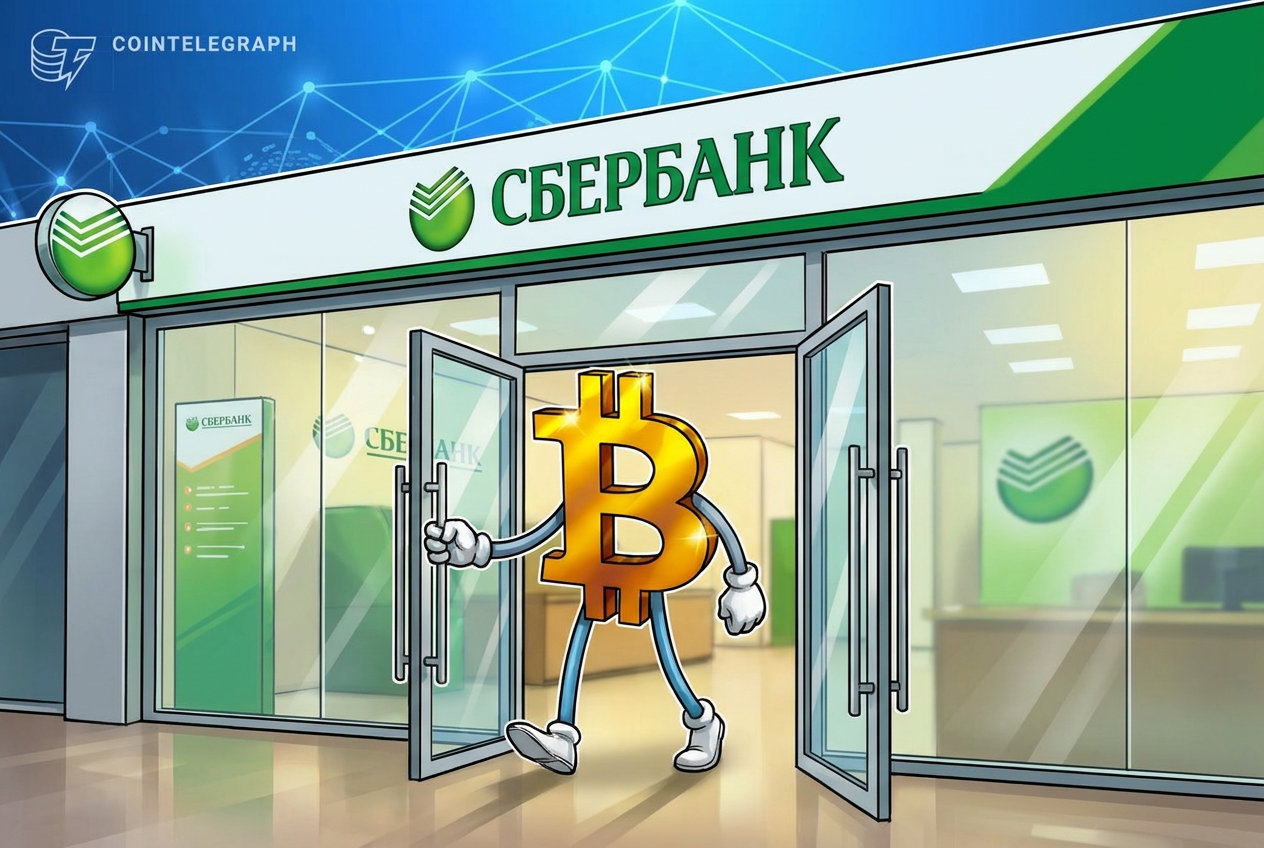 Russia’s biggest bank plans to create cryptocurrency trading infrastructure by Dec. 1 as the country is set to establish rules for market participants while allowing crypto assets to be used in foreign trade operations. Sberbank, Russia’s biggest bank, plans to build cryptocurrency trading infrastructure including a digital depository no later than Dec. 1 as the country brings crypto trading, custody and settlement into its regulated financial system. That digital depository, Interfax reported, will record ownership of cryptocurrency and process most transactions outside of the main blockchain. Sberbank will operate active wallets for client-initiated deposits, withdrawals and transfers. “One of the key elements of the new infrastructure will be a digital depository, which will maintain records of clients’ cryptocurrency rights and account for transactions outside the main blockchain,” said Alexander Vedyakhin, first deputy chairman of Sberbank’s management board, the state-affiliated press service said. “It ...
 -
Cointelegraph.com - 13:06 Jul 26, 2026
 Dormant BTC activity fell to its lowest level since Q3 2022, suggesting long-term holders have slowed distribution after heavy profit-taking. Dormant Bitcoin movement in the second quarter fell to its lowest level since the third quarter of 2022, according to data shared by Alex Thorn, Galaxy’s head of firmwide research. Coin days destroyed, a metric that gives greater weight to older coins, showed a similar decline. Thorn said the earlier spikes were driven by “OGs taking profit,” similar to the pattern seen during Bitcoin’s 2017 bull market, suggesting long-term holders have slowed selling after elevated distribution in 2024 and 2025. Read more
 -
Cointelegraph.com - 10:21 Jul 26, 2026
 South Korea’s largest lender will use JPMorgan’s blockchain platform to support US dollar cross-border payments for import and export businesses across 10 countries. South Korea’s KB Kookmin Bank will launch a blockchain-based cross-border payment service for import and export businesses in August using JPMorgan’s Kinexys network, according to multiple local media reports. Kinexys, formerly known as Onyx, is JPMorgan’s blockchain platform for institutional payments, tokenization and digital assets. The service will initially support US dollar transfers across 10 countries, including the US, Singapore, Saudi Arabia and the United Arab Emirates. Read more
 -
Cointelegraph.com - 07:11 Jul 26, 2026
 Crypto exchange BitMart said it will wind down operations after its BMX token plunged and users reported withdrawal delays, with platform operations set to end in January. [Update, 10:32 UTC, July 26: Adds former CEO Nenter Chow’s statement] BitMart will wind down its cryptocurrency exchange, ending all trading services on Aug. 26 before ceasing operations entirely on Jan. 31, 2027. “After a careful evaluation of the Company’s operating conditions, market environment, and future strategic direction, BitMart has made the difficult decision to commence an orderly wind-down of its trading platform operations,” it said in a Sunday notice. Read more
 -
Cointelegraph.com - 02:00 Jul 26, 2026
 Binance regularly tests its employees for security hygiene, with social engineering becoming a major source of industry breaches. Cryptocurrency exchange Binance runs simulated phishing attacks against its own employees and can fire staff who repeatedly fail the tests, according to Binance chief security officer Jimmy Su. The fake attacks are conducted by Binance’s red team, an internal ethical hacking unit whose job is to break into systems to identify vulnerabilities. “We do phishing attacks on our own employees on a monthly basis just so we understand if our security hygiene is improving,” Su told Cointelegraph. “The ones that have failed it, we will do remediation training.” Read more
 -
Cointelegraph.com - 21:01 Jul 25, 2026
 While prediction market companies in the US continue to face legal battles between state and federal authorities, Robinhood is reportedly considering expanding its services. The company behind the cryptocurrency and stock trading app, Robinhood, is reportedly discussing plans to expand its existing prediction markets offering with crypto exchange Crypto.com. According to a Friday Wall Street Journal report citing people familiar with the matter, Robinhood was in talks with Crypto.com to place yes-or-no event contracts supplied by the exchange. The trading company launched its prediction markets hub in March 2025, initially facilitated by Kalshi in order to comply with regulatory requirements from the US Commodity Futures Trading Commission (CFTC), and later using ForecastEx and Rotella. The reported move came just days after Bernstein analysts raised the firm’s price target on Robinhood (HOOD) stock to $160 from $130 per share, based on the company’s outlook for prediction markets and tokenized equities. The...
 -
Cointelegraph.com - 18:15 Jul 25, 2026
 The Bitcoin Policy Institute and three partner organizations will be able to send employees to work alongside State Department officials to address issues including digital freedom. The US Department State Department has launched a program to “advance diplomatic efforts on digital freedom and freedom of expression” using a Bitcoin (BTC) advocacy organization as a partner. In a Friday X post, the Bitcoin Policy Institute (BPI) said that it would be a founding partner in the US State Department’s Freedom Tech Excellence Program (FTEP), alongside Palantir Technologies, Anduril Industries and the Victims of Communism Memorial Foundation. According to the organization, the program will allow its employees “to work alongside state department experts and defend digital freedoms around the world.” “FTEP brings private sector talent to the Department for limited-term assignments to advance diplomatic efforts on key issues including online freedom of expression, privacy-enhancing technologies, countering digital survei...
 -
Cointelegraph.com - 16:05 Jul 25, 2026
 The OCC denied the UK company’s application this week citing AML/CFT risks, despite approving similar charters for digital asset companies in the last year. Update (July 25, 4:39 pm UTC): This article has been updated to include a response from Wise. Payments company Wise will to change its strategy for applying for a charter license with the US Office of the Comptroller of the Currency (OCC) to one “under a GENIUS Act framework,” the legislation to regulate stablecoins in the country. According to a Thursday notice from Wise, the company plans to submit a new application for a national trust bank charter under a GENIUS Act framework. Investment banking group William Blair said that Wise will likely not shift its position on payment stablecoins with the new OCC application, despite being denied a charter to establish a national trust bank on Tuesday. Read more
 -
Cointelegraph.com - 13:14 Jul 25, 2026
 Daily NK reported that North Korea arrested former state cyber operators accused of hacking two state banks and laundering funds through crypto. North Korean authorities have reportedly arrested a group of former state cyber operators and IT specialists accused of hacking two state banks and laundering stolen funds through cryptocurrency. South Korean outlet Daily NK reported Thursday, citing an anonymous source in Pyongyang, that the group allegedly hacked the internal networks of North Korea’s central bank and the Foreign Trade Bank, converting stolen state funds into cryptocurrency before laundering them through China-based brokers. Cointelegraph could not independently verify the report. Read more
 -
Cointelegraph.com - 11:30 Jul 25, 2026
 Fidelity called on the US Senate to pass the CLARITY Act, joining industry groups and crypto firms pushing for market structure legislation. Fidelity called on the US Senate to pass the CLARITY Act on Friday, saying clear digital asset regulations are needed to strengthen investor confidence, provide certainty for market participants and reinforce US leadership in global crypto markets. The company joins a growing coalition of financial firms and crypto organizations urging US lawmakers to advance digital asset market structure legislation. Earlier Friday, the Crypto Council for Innovation, the Digital Chamber and the Blockchain Association called on Senate leaders to bring the bill to the floor. Coinbase CEO Brian Armstrong also called for a full Senate floor vote on Wednesday. Read more
 -
Cointelegraph.com - 10:01 Jul 25, 2026
 Dango will close its network on Aug. 13, joining BitMEX, Odos and Satori Finance in a wave of recent crypto shutdowns. Layer-1 blockchain Dango will wind down operations by halting trading on its perpetual decentralized exchange (DEX) on Wednesday and shutting down its network on Aug. 13. “Despite our best effort, various reasons have led us to conclude there is no viable path to a lasting commercial success,” Dango said in a Friday X announcement. Dango founder Larry Liu added that the team faced cash shortages, legal challenges that slowed momentum, the loss of team members, and broader market conditions. Read more
 -
Cointelegraph.com - 07:40 Jul 25, 2026
 Ethereum ETFs snapped a five-day inflow streak and Bitcoin ETFs logged a second day of outflows, though both funds extended their weekly inflow streaks to three. US-listed spot Ethereum exchange-traded funds (ETFs) logged $70.62 million in net outflows on Friday, ending a five-day inflow streak. Ethereum funds saw $211.25 million in net inflows over the previous five sessions from July 17 to Thursday, according to SoSoValue data. They still posted $103.9 million in net inflows for the week ended Friday. Despite the outflows, Ethereum ETFs extended their weekly inflow streak to three straight and have attracted $337.74 million in net inflows so far in July. Read more
 -
Cointelegraph.com - 21:53 Jul 24, 2026
 The exchange, already sanctioned by the UK, is now on a list of 18 entities “providing crypto-assets services or payment services“ in defiance of the EU’s measures against Russia. The European Union has listed cryptocurrency exchange HTX, formerly Huobi Global, as part of a package of sanctions targeting Russia amid the country’s war on Ukraine. In a Thursday decision, the European Council amended its previous measures “in view of Russia’s actions destabilizing the situation in Ukraine” to include HTX in a list of 18 entities “providing crypto-assets services or payment services established outside of the Union that are significantly frustrating the purpose of the prohibitions” against Russia. The country continues to face sanctions globally over its war in Ukraine following a military invasion in 2022. “The Union has repeatedly taken measures to identify financial institutions, credit institutions or entities providing crypto-asset services or payment services that facilitate a continued financial lifeline ...
11869 items