Bank | Crypto
"Bank" in Crypto feed
-
CryptoSlate - 23:30 Sep 11, 2026
The live payment linked the bank's North American and European entities while testing minting, redemption and issuer controls. The post US Bank moves USBDC across borders on Stellar, but only inside its own walls appeared first on CryptoSlate. -
Cointelegraph.com - 16:37 Sep 09, 2026
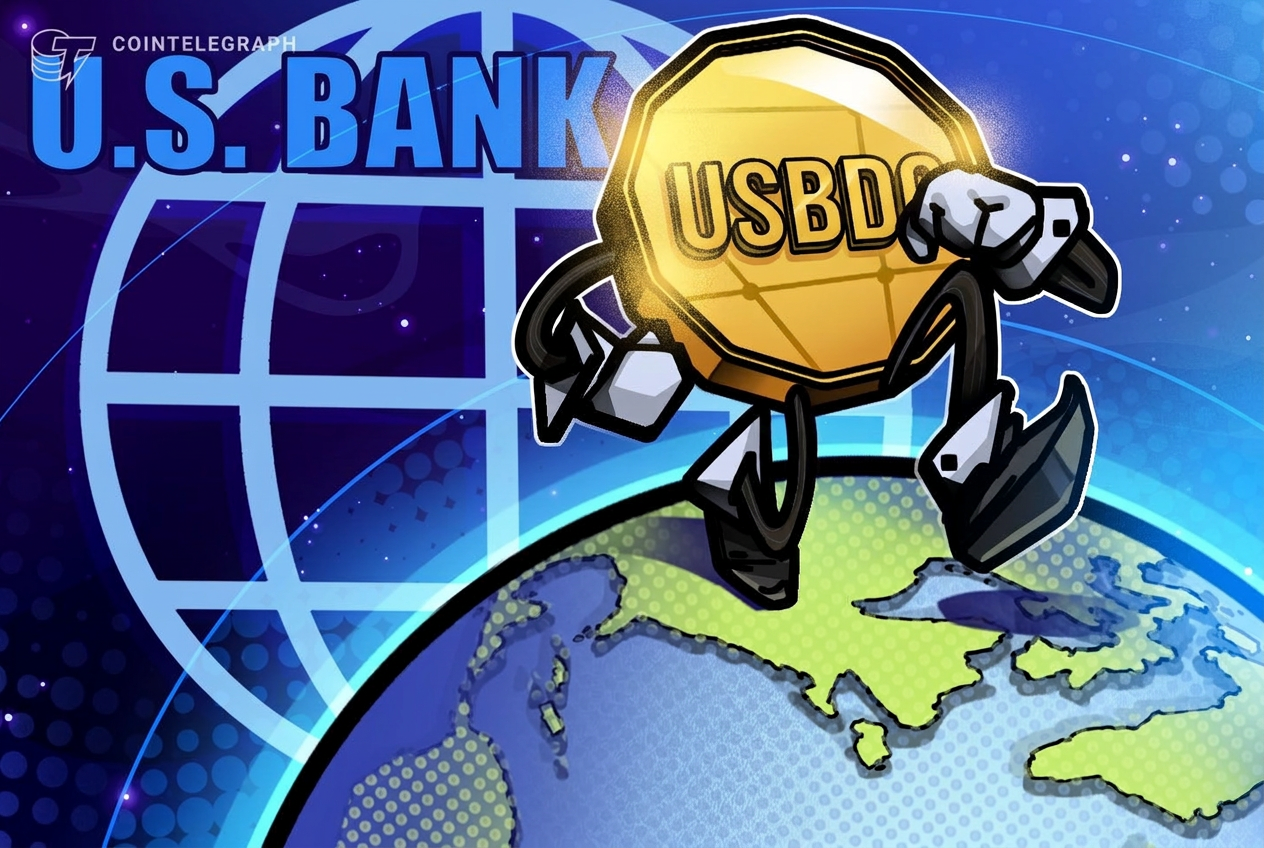 The pilot moved USBDC between the bank’s North American and European entities on the public Stellar blockchain. U.S. Bank, the fifth-largest commercial bank in the United States, has completed a live cross-border payment using its proprietary USBDC stablecoin on the Stellar blockchain. The pilot moved funds between U.S. Bank entities in North America and Europe, with USBDC issued and transferred on the public Stellar network. It also tested the stablecoin’s minting, redemption, freezing and clawback functions while integrating with the bank’s existing risk, compliance and operations systems. The transaction validated U.S. Bank’s internally developed Digital Asset Platform, which connects tokenized assets with its traditional banking infrastructure, the bank said Wednesday. The Minneapolis, Minnesota-based bank is exploring additional uses including cross-border treasury operations, liquidity management and moving collateral onchain. Read more
 -
Cointelegraph.com - 12:51 Aug 27, 2026
 The UK plans to expand the Bank of England’s remit to support digital payments innovation, including stablecoins, while keeping financial stability first. The UK is moving to put stablecoins at the center of a new Bank of England mandate aimed at supporting innovation in digital payments. The government plans to give the Bank of England, the UK’s central bank, a secondary objective to support innovation in payment systems and emerging forms of digital money, HM Treasury announced on Thursday. The mandate will cover payment systems that use digital settlement assets such as stablecoins, while financial stability will remain the BoE’s primary objective. Read more
 -
Cointelegraph.com - 16:50 Aug 12, 2026
 The Digital Pound Lab is testing a cross-border trade finance flow combining stablecoin payments with simulated digital pound settlement. The Bank of England’s Digital Pound Lab is testing whether stablecoins and a potential digital British pound can operate within the same cross-border payment flow as part of an experiment focused on trade finance. The experiment involves NOBO Finance, Dun & Bradstreet and Polygon Labs, with an exporter receiving an advance via a stablecoin rail while a UK importer completes settlement using simulated digital pounds, according to a Wednesday announcement from the three companies. The project also includes a separate workstream aimed at creating reusable credit profiles for small businesses by combining transaction data, open-finance information and Dun & Bradstreet’s commercial risk data, with Polygon providing the smart contract infrastructure. Read more
 -
Cointelegraph.com - 20:10 Jul 31, 2026
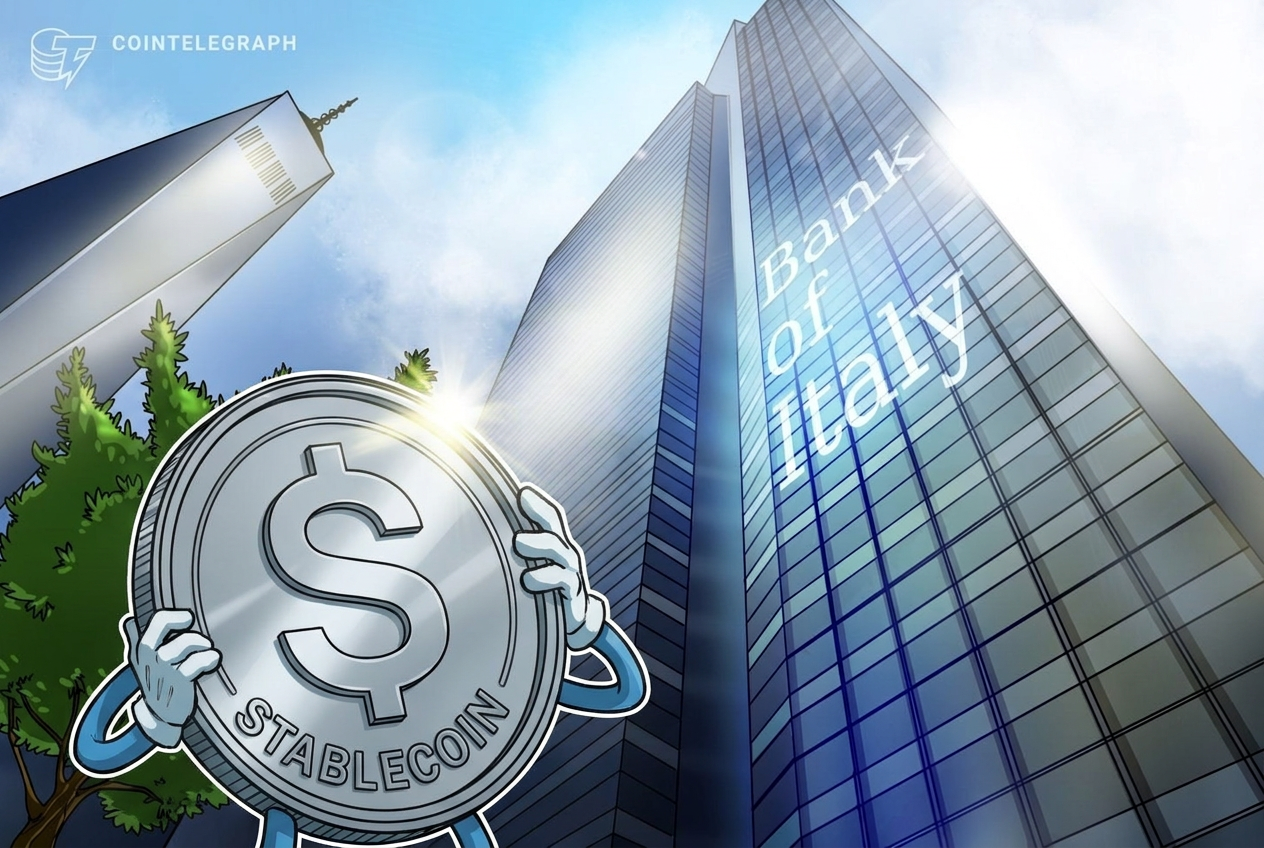 Researchers found that fiat conversion costs and payment infrastructure, rather than blockchain fees, accounted for most of the differences in stablecoin remittance costs and settlement times. A Bank of Italy study found that stablecoin-based remittances did not offer a systematic cost or speed advantage over traditional payment channels, as fiat on- and off-ramp frictions accounted for most costs and transfer delays. Researchers tested 200 USDC (USDC) remittances across 10 bidirectional payment corridors linking Italy with Brazil, Argentina, Japan, the United Arab Emirates and South Africa, comparing end-to-end costs and settlement times with traditional remittance services. They found that exchange fees and currency conversion made up most of the cost, while blockchain transaction fees represented only a small share. Geographic design of the remittance experiment. Source: Bank of Italy Read more
 -
Cointelegraph.com - 13:11 Jul 28, 2026
 Analysis warned of a repeat of the 2024 yen carry-trade unwind that pressured crypto markets ahead of the next Bank of Japan interest-rate meeting. Japan’s central bank is in focus this week as its next interest-rate meeting comes amid new 40-year yen lows against the US dollar. Key points: Data from TradingView showed USD/JPY approaching 164 on Tuesday, just a fraction below new 40-year highs seen last week. Read more
 -
Cointelegraph.com - 13:54 Jul 17, 2026
 The Bank of England approved HSBC Orion to go live in its Digital Securities Sandbox, with the first Digital Gilt Instrument transaction expected in the first quarter of 2027. HSBC, one of the world’s largest banks, has received approval to operate in the United Kingdom’s Digital Securities Sandbox (DSS), allowing its digital assets platform, HSBC Orion, to support the issuance, servicing and settlement of digital securities. The bank announced Tuesday that HSBC Orion will operate as a digital securities depository within the DSS, a regulatory environment designed to test new technology for securities markets. HSBC said it is the first company approved by the Bank of England to go live in the sandbox. HSBC’s platform will support digitally native bond issuance, including the UK’s planned digital sovereign bond — Digital Gilt Instrument (DIGIT) — and corporate bonds. HSBC said HSBC Orion has enabled more than $5 billion in digital bond issuances globally. Read more
 -
Cointelegraph.com - 04:43 Jul 13, 2026
 Thailand has been plagued by Chinese-affiliated scam centers, with illicit gains flowing through a “gray money” economy. Thailand’s central bank is stepping up stablecoin surveillance as part of a wider effort to crack down on money laundering, illicit finance and “gray money” in the country. The Bank of Thailand is working with the Kingdom’s Securities and Exchange Commission to audit high-volume stablecoin transactions, with a focus on USDt (USDT), cash transactions and currency exchanges, to identify and stop illicit financial flows. “The measures we are implementing are not short-term fixes; they require the continuous deployment of multiple parallel strategies,” Bank of Thailand Governor Vitai Ratanakorn said, according to local media outlet The Nation on Saturday. Read more
 -
Cointelegraph.com - 09:19 Jul 09, 2026
 The Bank of Korea reiterated its call for bank-led won stablecoin issuance while advancing deposit token pilots, as issuer rules remain a sticking point in South Korea’s digital asset bill. The Bank of Korea (BOK) has doubled down on its stance that won-denominated stablecoins should first be issued through bank-led consortiums. According to local reports from Digital Asset and EDaily, the central bank made the comments in materials submitted on Thursday to the National Assembly's finance committee. Local outlets reported that the BOK called for safeguards, including priority issuance by bank-led consortiums and a statutory policy body involving relevant agencies. The latest comments reinforce the BOK's months-long push to keep won stablecoin issuance under bank-led structures. The central bank's stance has divided policymakers and industry groups and contributed to delays in South Korea's digital asset bill. Read more
 -
Cointelegraph.com - 17:11 Jul 08, 2026
 Andrew Bailey reportedly said Bank of England policy remained independent after a meeting with Nigel Farage that included discussions on cryptocurrency. Bank of England Governor Andrew Bailey has reportedly denied that lobbying efforts by Nigel Farage influenced the central bank’s approach to a potential central bank digital currency (CBDC), saying policy decisions were made independently. According to a Wednesday report by The Guardian, which obtained a letter written by Bailey, the governor said the BoE is “able to spot” attempts to influence its policymaking. The letter followed a meeting with Farage, during which the two discussed several issues, including cryptocurrencies. “Following our meeting, Mr. Farage spoke with the press outlining that we had discussed a range of topics, including cryptocurrencies,” Bailey reportedly wrote in the letter. “I am happy to confirm that no policy changes have taken place as a result of interventions by Mr. Farage.” Read more
 -
Cointelegraph.com - 13:36 Jul 01, 2026
 The Bank of Korea’s governor praised tokenized government bonds for easing the issuance and management of government debt during a panel discussion at the ECB Forum. Hyun Song Shin, the governor of the Bank of Korea, praised tokenization for its ability to simplify the issuance and management of government bonds. Shin said during a Wednesday panel discussion at the European Central Bank (ECB) Forum on Central Banking in Sintra, Portugal, that tokenized bonds would make it easier to verify collateral, credit the asset provider's account and reverse transactions at the appropriate time. “The big prize is tokenizing government bonds,” Shin said, adding that it is “much easier, much less prone to mistakes if you have everything tokenized.” Read more
 -
CryptoSlate - 01:25 Jun 23, 2026
The new framework removes wallet caps, yet keeps systemic sterling stablecoins far below dollar-token scale at launch. The post British pound stablecoins capped to $53B ceiling as Bank of England sets out stablecoin rules appeared first on CryptoSlate. -
Cryptonews.com - 11:21 Jun 15, 2026
Bitcoin price is back above $65,000, although Washington helps, news from the other side of the world threatens the bullish prediction. The post Bitcoin Price Prediction: Bank of Japan Rate Hike and Piling Yen Shorts Threaten BTC appeared first on Cryptonews. -
Cryptonews.com - 13:46 Jun 06, 2026
Banks Pitch Tokenized Deposits as CBDC Alternative The post JPMorgan, Citi, and Bank of America Just Built a Tokenized Payment Network to Kill Stablecoins appeared first on Cryptonews. -
CryptoSlate - 12:27 Jun 03, 2026
A House of Lords committee has told the Bank of England to rethink stablecoin caps before the UK's regime is finalized. The Financial Services Regulation Committee published its report, Stablecoins: waiting for regulation, on June 3, turning a technical debate over reserve design into a test of whether the UK can build a pound-denominated stablecoin […] The post Bank of England stablecoin caps may choke the UK’s pound-token market before launch appeared first on CryptoSlate. -
CryptoSlate - 14:00 May 23, 2026
Bitcoin trades 24 hours a day, 365 days a year, and stablecoins can cross borders in seconds on a Sunday morning. And yet, if a major UK institution needed to move collateral, settle a high-value payment, or shift liquidity between clearing houses over the weekend, much of that activity had to queue up and wait. […] The post Bank of England’s 24/7 settlement plan shows where tokenized finance can enter core markets appeared first on CryptoSlate. -
Cointelegraph.com - 10:12 May 14, 2026
 BoE weighs easing UK stablecoin caps and reserve demands after industry backlash, in a move that could decide whether GBP tokens can compete with dollar‑pegged rivals. Update May 14, 2:45 pm UTC: This article has been updated to include comments from Katie Haries, head of policy for Europe at Coinbase. The Bank of England (BoE) is reconsidering parts of its proposed regime for pound sterling stablecoins after digital asset companies warned that holding caps and reserve requirements could stifle adoption and make UK-issued tokens uneconomic. The central bank is looking at alternatives to temporary caps on how many stablecoins individuals and businesses can hold, and is examining whether its requirement that at least 40% of backing assets be held as non-interest-bearing deposits at the BoE is overly conservative, Deputy Governor Sarah Breeden told the Financial Times. Read more
 -
Cointelegraph.com - 06:04 May 11, 2026
 Global regulators will have to confront US policy on dollar-backed stablecoins as they seek international standards for payment tokens, Andrew Bailey said. Bank of England Governor Andrew Bailey said international regulators will have to “wrestle” with the US over global rules for stablecoins, which are largely denominated in and backed by US dollars. “If we want stablecoins to be part of the architecture of payments globally [...] they're only going to work if we have international standards,” Bailey said at a conference on Friday, according to Reuters. “Frankly, that, I think, is going to be a coming wrestle with the [US] administration," he added. Read more
 -
CryptoSlate - 16:30 May 09, 2026
Bank of Canada stablecoin regulations could arrive in mid or late 2027, pushing the detailed rulebook later into the same year that Canada's government has already marked for its framework to take effect. That timing lands just as Visa Canada and Wealthsimple are piloting USDC settlement for certain card-network obligations in Canada. The result is […] The post Bank of Canada to bring stablecoin rules in 2027 with US Clarity Act on the brink of stalling appeared first on CryptoSlate. -
Cointelegraph.com - 14:55 May 06, 2026
 The crypto industry in the UK has come out against the Bank of England’s proposed policy that would ban custodial wallets for stablecoins. As the UK considers options to attract and develop the crypto industry at home, the Bank of England (BOE) has put forward several proposals for how it might regulate stablecoins to mitigate perceived financial risks. These have included a ban on custodial wallets for stablecoin holdings. The UK crypto industry, from stablecoin issuers to Bitcoin hardliners, has predictably taken issue with the ban. “This would be a serious misstep for the UK, risking long-term damage that is hard to unwind,” said Benoit Marzouk, CEO of stablecoin issuer tGBP told Cointelegraph. Read more