Crypto
-
Cointelegraph.com - 13:30 Aug 19, 2026
 Apate’s 200,000 fake AI ‘victims’ are so good at scam baiting, the company has a monthly KPI for how many F-bombs scammers drop at the infuriating bots. Australian tech firm Apate deploys a vast array of AI-bot characters worldwide that play the role of gullible scam victims to waste millions of hours of con artists’ time each month. Hilariously, one of the company’s monthly performance metrics is how many times frustrated scammers swear at the idiot ‘victims’ who are playing dumb and stringing them along. “I think we’re the only company in the world that is actually keeping as part of their KPIs the number of F-words that scammers are dropping at them,” Apate founder Dali Kaafar tells Magazine with a chuckle. Read more
 -
Cryptonews.com - 13:29 Aug 19, 2026
Strategy holds 840,447 BTC while building a $4.8B reserve, shifting capital toward preferred-stock obligations as its bitcoin buying pauses. The post Strategy Just Stopped Bitcoin News: Is the Market’s Biggest Corporate Bid Gone for Good? appeared first on Cryptonews. -
Cointelegraph.com - 13:27 Aug 19, 2026
 “Crypto mom” Hester Peirce praised the SEC’s proposed crypto regime, published days after the Senate failed to pass the CLARITY Act, the US’ first comprehensive industry framework. The Securities and Exchange Commission’s (SEC) new regulatory proposal marks a significant step forward from a set of “inapt” crypto rules to clearer and more enforceable digital asset regulations, according to Commissioner Hester M. Peirce. A “whole generation has struggled with the SEC’s insistence” and the application of “a set of inapt rules to crypto,” but the SEC’s new crypto guidelines mark an important step toward “putting clear, sensible, enforceable rules in place for crypto offerings,” said Peirce in a statement released on Tuesday. SEC Chairman Paul S. Atkins also praised the initiative and said that the agency’s prior enforcement-heavy approach has “driven investment offshore, limiting the type of protections that we can provide investors here,” according to a separate statement. Read more
 -
CryptoPotato - 13:17 Aug 19, 2026
[PRESS RELEASE – Dubai, United Arab Emirates, August 19th, 2026] Swapiz Telegram Swap Bot announces its public launch. Designed with Telegram users in mind, the Swapiz Telegram Swap Bot allows users to make crypto-to-crypto swaps directly within the Telegram messaging app, without opening an external browser or exchange interface. Swapiz currently supports more than 50 […] -
CryptoSlate - 13:00 Aug 19, 2026
The minutes become a hawkish shock only if tightening support stretched beyond the three officials who formally dissented. The post A hidden divide inside the Fed could trigger a hawkish shock for Bitcoin at 2 PM today appeared first on CryptoSlate. -
CoinDesk - 13:00 Aug 19, 2026
The American Bankers Association seeks to strengthen the Clarity Act, not kill it, argues Rob Nichols, president and CEO of the ABA. -
CoinDesk - 13:00 Aug 19, 2026
The warehouse facility gives Ethena another source of returns for the assets backing USDe while channeling onchain capital into overcollateralized institutional loans. -
CoinDesk - 12:45 Aug 19, 2026
Similar setups have historically produced below-average 90-day and 180-day bitcoin returns, said the asset manager. -
CryptoPotato - 12:11 Aug 19, 2026
VanEck is seeing Bitcoin nearing accumulation as eight capitulation signals flash. -
CoinDesk - 12:01 Aug 19, 2026
The exchange that lost $1.46 billion to North Korean hackers is the first large centralized firm to put numbers on a claim bitcoin developers have been making all month. -
CryptoSlate - 12:00 Aug 19, 2026
On Aug. 18, Ripple deepened its push into traditional finance, securing a South Korean banking deal as its prime brokerage raised $275 million. The crypto payment company revealed that South Korea's Jeonbuk Bank became the country's first regional lender to deploy Ripple Payments for cross-border business transfers, replacing SWIFT-based correspondent-bank transfers that can take days […] The post Ripple just scored two major institutional wins but XRP traders are bracing for a bigger move appeared first on CryptoSlate. -
Cointelegraph.com - 12:00 Aug 19, 2026
 Symbiotic’s Liquid Lane gives eligible holders immediate USDC liquidity across three Centrifuge funds managed by Janus Henderson and NYLIM. Centrifuge has added Symbiotic’s liquidity network across three tokenized funds that represent about $1.6 billion in assets under management, giving eligible holders another route to exchange their positions for USDC. The integration covers Janus Henderson’s JAAA, an AAA-rated collateralized loan obligation strategy, JTRSY, a short-duration US Treasury strategy and New York Life Investment Management’s HYB, a US high-yield corporate bond strategy. Symbiotic’s Liquid Lane uses an onchain request-for-quote (RFQ) marketplace where market makers can tap liquidity from vaults to fill redemption requests. Market makers can then redeem the acquired fund tokens through the issuer or sell them through another RFQ transaction. Read more
 -
Cointelegraph.com - 11:59 Aug 19, 2026
 Sweden’s H100 reported a $26 million loss for the first half of the year, as it completed its acquisitions to become Europe’s second-largest Bitcoin treasury by holdings. Sweden-listed health-tech and Bitcoin treasury company H100 Group reported a pre-tax loss of 98 million Swedish kronor ($10.3 million) for the second quarter and a loss of 253 million kronor for the first half of 2026. H100 also reported 3 million kronor in operating income, flat with Q2 2025, and 6.1 million kronor for H1 2026, up from 5.8 million kronor for H1 2025, according to its interim report published on Wednesday. Nearly all of the Q2 loss was a non-cash write-down attributed to Bitcoin’s (BTC) price decline during the period, the company said in a Wednesday X post. Read more
 -
CoinDesk - 11:55 Aug 19, 2026
The People’s Bank of China (PBOC) added 20 new operators this year across two rounds of expansions, including eight additions this week. -
Decrypt - 11:31 Aug 19, 2026
Edward Zimbardi allegedly lured thousands of investors into "The Crypto Program" with promises of 25% monthly returns before fleeing to Fiji. -
Cointelegraph.com - 11:18 Aug 19, 2026
 Ripple said the $275 million raised will support its expansion into traditional financial services such as prime brokerage and multi-asset clearing, citing strong demand from institutions. Ripple raised $275 million in a senior note offering that closed on Tuesday to support blockchain enterprise solutions provider’s ongoing US business expansion into financial services. The senior unsecured notes were issued in a private placement by the company’s non-bank prime brokerage, Ripple Prime, the company announced on Tuesday. Ripple said the note offering attracted a diverse base of institutional investors from financial markets. Ripple Prime President Noel Kimmel said that the support received during the note offering is a signal of “confidence in our long-term vision for the growing intersection of traditional and digital asset financial infrastructure.” Read more
 -
Cointelegraph.com - 11:06 Aug 19, 2026
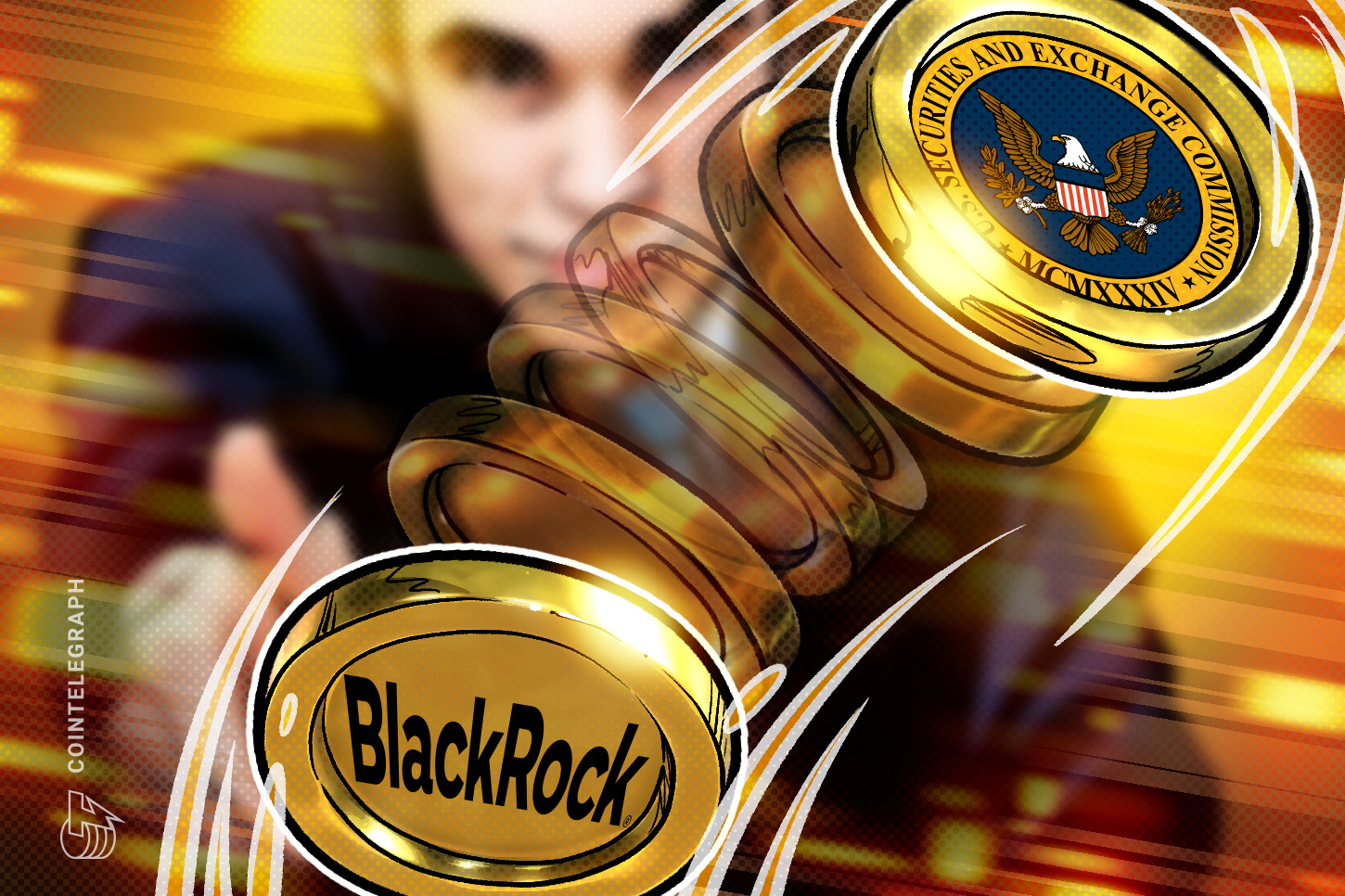 Bitcoin maintained its appeal as a diversification investment despite dropping more than 50% from all-time high, a BlackRock report stated. Bitcoin (BTC) falling more than 50% from its $126,200 all-time high was a “positioning correction,” BlackRock says. Read more
 -
CryptoSlate - 11:00 Aug 19, 2026
Bitcoin fell 14.2% in the second quarter, while institutional Bitcoin ETF holdings rose 7.5% over the same period, climbing from 498,389 to 535,723 BTC equivalent. Fewer institutions drove that increase, with the number reporting Bitcoin positions through 13F filings falling roughly 6.8%, from about 2,000 to around 1,900. Those figures are Bitcoin Strategy's second-quarter estimate, […] The post Bitcoin’s Q2 selloff split Wall Street as banks bought, hedge funds cut and sovereigns held appeared first on CryptoSlate. -
CoinDesk - 10:29 Aug 19, 2026
BTC volatility has dropped to multi-year lows as surging Treasury yields rattle equities and traders await the Fed's July meeting minutes for clues on the interest-rate path.