Crypto
-
Cointelegraph.com - 23:54 Aug 16, 2026
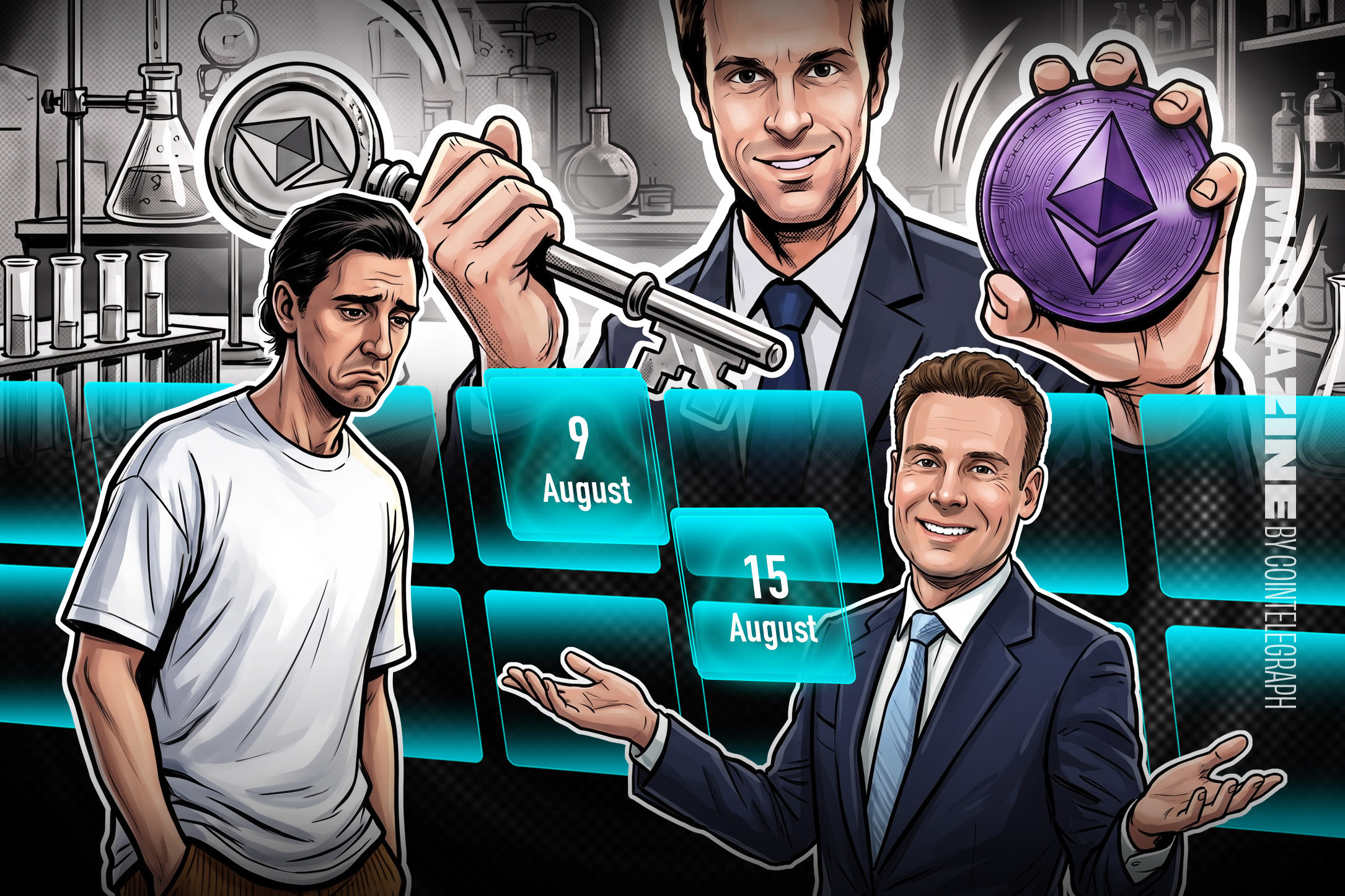 Owners of Trezor and SafePal crypto wallets at high risk of phishing attempts after separate data leaks, CLARITY odds at 10% despite White House meeting this week. Galaxy Digital has lowered its estimate of the CLARITY Act’s chances of passing in 2026 to just 10%. In May it had estimated the chance of passage at 75%. Multiple political issues remain unresolved and the Senate only has 14 days in session to pass the bill after it reconvenes on Sept. 14. Unless an initial motion to proceed vote occurs immediately upon lawmakers’ return to Washington, there would only be enough time for the CLARITY Act to pass if it “dominates basically the entire working session,” wrote Galaxy head of research, Alex Thorn. Read more
 -
CryptoSlate - 23:50 Aug 16, 2026
Its June 30 snapshot showed $19.1 million cash and about 662 unencumbered BTC against the upcoming principal. The post How a Bitcoin Treasury company sold 600 BTC to cut debt but still ended up with $60 million due in December appeared first on CryptoSlate. -
CryptoPotato - 22:35 Aug 16, 2026
South Korean prosecutors initially sought 20 years, but Delio CEO Jeong Sang-ho ultimately received 15 years for the crypto fraud case. -
CryptoSlate - 22:30 Aug 16, 2026
The rule is not operative, but Greenlane’s disclosed share count implies a steep price hurdle if the stay is lifted. The post How a public firm’s $70 million altcoin bet crashed 77% and left it facing Nasdaq delisting appeared first on CryptoSlate. -
CryptoSlate - 20:20 Aug 16, 2026
ARK's scenario now requires 78.6% annual growth, with institutional allocation and digital gold supplying 92.8% of modeled value. The post Slowing ETF demand and corporate treasury selling are breaking the math behind Wall Street’s $16 trillion Bitcoin target appeared first on CryptoSlate. -
CryptoPotato - 19:56 Aug 16, 2026
Testnet addresses can become dangerous when users assume the same address works identically on the mainnet. -
CryptoSlate - 19:10 Aug 16, 2026
Inside the Solana reinsurance sale where parent company Oxbridge supplied 95% of public token demand
Oxbridge supplied $744,623 to T20 and T42 while third parties provided $37,143, and filings do not disclose the purchaser mix for three HCI-linked placements. The post Inside the Solana reinsurance sale where parent company Oxbridge supplied 95% of public token demand appeared first on CryptoSlate. -
CoinDesk - 18:30 Aug 16, 2026
There were hopes that regulators could move if the Clarity Act didn't advance, but those, too, may be paused. -
CryptoSlate - 17:55 Aug 16, 2026
The 7,500-BTC holder’s filing separates a noncash crypto loss from equity sales that supported its operating runway. The post This Nasdaq-listed Bitcoin treasury diluted shareholders 18-fold to survive a $212 million crypto loss without selling its stash appeared first on CryptoSlate. -
CryptoPotato - 17:39 Aug 16, 2026
Binance remained the largest venue in the market, accounting for 76% of total equity perpetual futures volume in July. -
CryptoSlate - 16:50 Aug 16, 2026
The proposal remains pending, while ETHU's sponsor-reported -96.15% average annualized NAV figure through June 30 shows the stakes. The post Cboe pushes for 3x Bitcoin and Ethereum ETFs after 2x crypto funds suffer losses of up to 96% appeared first on CryptoSlate. -
Decrypt - 16:00 Aug 16, 2026
Three weeks after a Flash release that couldn't produce a working file, Google's budget tier zero-shots a playable game. It still can't reason, and a free 27B model still writes better. -
CoinDesk - 16:00 Aug 16, 2026
Investors are starting to judge crypto tokens on usage, economics and value capture rather than market-cap rank, industry executives said. -
CryptoPotato - 15:50 Aug 16, 2026
Bitcoin remains trapped in a low-momentum environment, with price action increasingly characterized by choppy consolidation rather than a decisive directional move. The lack of liquidity and volume continues to limit follow-through, while the current structure leaves room for another liquidity-driven move before a stronger trend develops. Bitcoin Price Analysis: The Daily Chart On the daily […] -
CryptoSlate - 15:30 Aug 16, 2026
Its provider feed showed 16 delegations after Aug. 15, while the cost of missing its Aug. 5 request remains unknown. The post Over 1.3 million staked tokens remain stranded onchain after a major validator missed its deadline to exit Aztec appeared first on CryptoSlate. -
CryptoPotato - 14:50 Aug 16, 2026
XRP remains under pressure, with the broader structure still favoring the bears as the asset trades near the $1.00 area. The market has lost momentum after the previous decline, and the latest price action suggests that a sustained recovery has yet to develop. Ripple Price Analysis: The Daily Chart On the daily timeframe, XRP remains […] -
CoinDesk - 14:02 Aug 16, 2026
While the data breach exposed the personal order details of thousands of customers, all private keys, seed phrases, and crypto assets remain completely safe. -
Decrypt - 14:01 Aug 16, 2026
A California bill is awaiting an Assembly vote to "place guardrails" around AI chatbots and prevent them from acting as therapists. -
CryptoSlate - 14:00 Aug 16, 2026
Small positive offshore funding exposes longs on a drop, while CME leveraged funds’ net short creates an upside squeeze channel. The post A $48 billion Bitcoin leverage trap is about to trigger a massive forced exit the moment price boundaries break appeared first on CryptoSlate. -
CoinDesk - 14:00 Aug 16, 2026
Fraudsters impersonating regulators and licensed crypto exchanges to steal funds from users forced to migrate their accounts after the EU's MiCA deadline are on the rise.