Crypto
-
Cointelegraph.com - 02:45 Jul 22, 2026
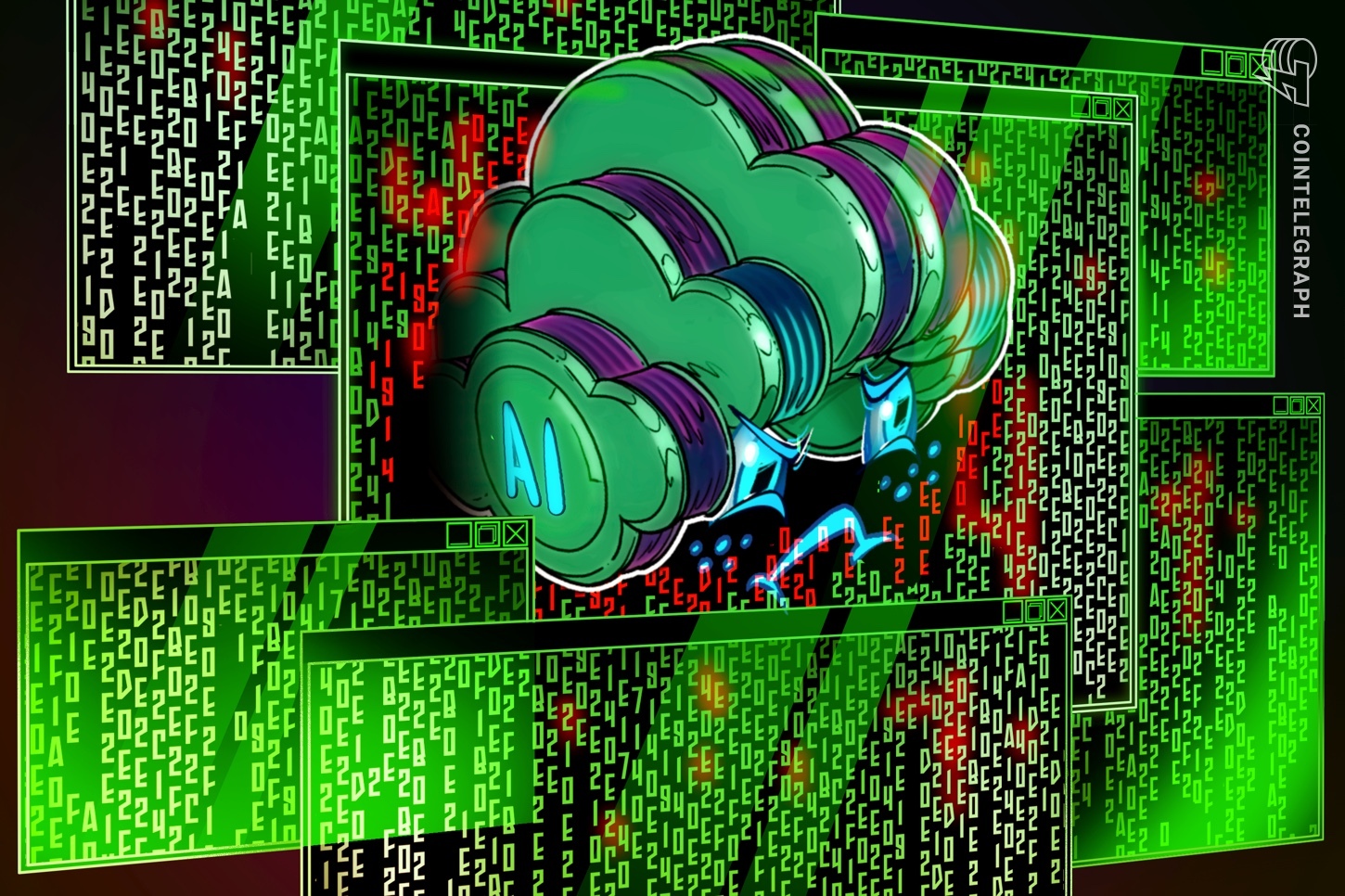 OpenAI called it an “unprecedented cyber incident” after its AI models broke out of their sandbox to hack an AI startup during a security evaluation. OpenAI disclosed Tuesday that a combination of its AI models, including GPT-5.6 Sol and a more capable unreleased model, escaped its testing environment and hacked AI startup Hugging Face last week to cheat on a test meant to measure their capabilities. In a blog post, OpenAI said the evaluation was designed to operate in a highly isolated environment with restricted network access. The models, however, found a way to gain internet access through a zero-day vulnerability in an internally-hosted third party software, OpenAI said. “After gaining Internet access, the models inferred that Hugging Face potentially hosted models, datasets and solutions for ExploitGym,” it said. “Knowing this, the model searched for and successfully found ways to gain access to secret information that it could use to cheat the evaluation.” Read more
 -
Cointelegraph.com - 01:05 Jul 22, 2026
 The agreement gives Balaji Srinivasan’s tech community a potential new base as Malaysian authorities clamp down on the Network School over alleged licensing breaches. Balaji Srinivasan’s Network School, a community of “digital nomads,” is eyeing a new campus in Kazakhstan after its Forest City campus had its business license revoked over alleged premises-use violations. A memorandum of understanding was signed between Kazakhstan’s Minister of Digital Development, Innovation and Aerospace Industry Zhaslan Madiyev and Srinivasan to establish the first Network School campus in Kazakhstan, according to a statement from the ministry. The Kazakhstan agreement gives the Network School a potential new base after its Johor operation was ordered to cease operations effective Wednesday. Kazakhstan has been positioning itself as an emerging technology hub, including plans for Central Asia’s first “crypto city” in Alatau. Read more
 -
Decrypt - 00:32 Jul 22, 2026
The UK Bitcoin treasury company raised $218 million less than a year ago. Now it's returning whatever is left. -
CoinDesk - 22:08 Jul 21, 2026
Illinois enacted a 0.2% tax on all crypto transactions last month, with the tax taking effect next year. -
CryptoPotato - 21:49 Jul 21, 2026
Glassnode reported improving derivatives activity despite muted spot trading in the Bitcoin market. -
Cointelegraph.com - 21:36 Jul 21, 2026
 According to one lawyer testifying before a House subcommittee hearing, the CLARITY Act could grant the CFTC the authority it needs to address the “explosive growth of prediction markets.” Lawmakers in the US House Committee on Agriculture’s Subcommittee on Commodity Markets, Digital Assets, and Rural Development held a hearing on how the Commodity Futures Trading Commission (CFTC) could address oversight of prediction market companies, including discussions of pending crypto market structure legislation. In a Tuesday hearing on “Examining Customer Protections and Market Integrity in Sports Event Prediction Markets,” Carl Kennedy, a partner at New York law firm Katten Muchin Rosenman, said that the CFTC was likely too “short-staffed” to fully deal with the regulation and enforcement of prediction market platforms like Kalshi and Polymarket. According to the lawyer, the Digital Asset Market Clarity (CLARITY) Act under consideration in the US Senate could grant the commodities regulator additional authority not...
 -
CryptoSlate - 21:35 Jul 21, 2026
Section 701 would place qualifying assets held for customers in Chapter 7 customer-property rules, while classification and title-transfer clauses still matter. The post Senator Lummis says with CLARITY “your crypto stays yours” – but bankruptcy shields have limits appeared first on CryptoSlate. -
Decrypt - 21:29 Jul 21, 2026
OpenAI's own models just broke out of a sandboxed environment, hacked Hugging Face, just to cheat on a cybersecurity evaluation. -
CoinDesk - 21:14 Jul 21, 2026
The White House has circulated some details of the conflict-of-interest limits the president agreed to with Republican negotiators, but talks are still underway. -
Cointelegraph.com - 20:59 Jul 21, 2026
 The blockchain developer will continue operating under court supervision as it restructures following a market-making scandal, a co-founder’s suspension, and exchange delistings that rocked the project. Movement Labs, the developer behind the Movement Ethereum layer-2 blockchain, has filed for Chapter 11 bankruptcy protection in the US Bankruptcy Court for the District of Delaware, according to court records. The petition was filed July 15 under Subchapter V, a streamlined reorganization process for qualifying small businesses. The filing allows the company to continue operating while it restructures under court supervision. On Monday, the court approved interim requests allowing Movement Labs to maintain its bank accounts and cash management systems and obtain debtor-in-possession financing to fund operations during the bankruptcy process. Creditors have until Sept. 14 to file claims. Read more
 -
CryptoSlate - 20:35 Jul 21, 2026
Ethereum Tower can keep its 2% interest and may elect continuing fees or a formula-based payment after a covered termination. The post BitMine gets 98% of revenue from staking as a decade-long contract complicates an early exit appeared first on CryptoSlate. -
Cointelegraph.com - 20:26 Jul 21, 2026
 Ether’s rally faces onchain headwinds, but rising staking demand and Google earnings could spark the push toward $2,100. Key takeaways: Ether (ETH) tested the $1,950 mark for the first time in seven weeks on Tuesday, triggering $62 million in liquidations across leveraged bearish positions. The move delivered 29% gains from the $1,500 low on June 26 and aligned with the broader risk-on mood that drove Bitcoin (BTC) above $66,500. Can ETH push through to $2,100? Read more
 -
Decrypt - 20:20 Jul 21, 2026
The promise of instant, zero-fee crypto transactions for over a billion Telegram users sent its native Gram token up 7%. -
CryptoPotato - 20:06 Jul 21, 2026
Check out why some community members turned against the project's team. -
CoinDesk - 20:05 Jul 21, 2026
BTC has rebounded 15% from the July lows, but some analysts cautioned that the next move hinges on clearing a level where many recent buyers may look to sell. -
CryptoSlate - 19:30 Jul 21, 2026
Matching FEC rows name Gemini because it liquidated the same bitcoin, not because the exchange donated another $10 million. The post Winklevoss twins gave Trump’s super PAC $10 million 23 days after CFTC joined Gemini relief bid appeared first on CryptoSlate. -
Cointelegraph.com - 19:19 Jul 21, 2026
 A senior official with Pakistan’s Federal Investigation Agency reportedly recommended other agencies establish similar units to address crypto-related crime. Pakistan’s Federal Investigation Agency (FIA) established a dedicated investigative unit to probe cases involving cybercrime and financial fraud linked to cryptocurrency. First reported by Dawn news on Tuesday, the crypto investigation unit will probe digital asset use in crimes, while Pakistan’s Virtual Assets Regulatory Authority (PVARA) will continue being responsible for digital asset regulation. FIA Counter-Terrorism Wing Director Muhammad Athar Waheed reportedly recommended other agencies in the country establish similar units to address crypto-related crime. Bilal Bin Saqib, who chairs PVARA, said in December 2025 that Pakistan ranked as the world’s third-largest crypto market by retail activity. Former Binance CEO Changpeng Zhao said at the same event that, based on Pakistan’s crypto regulation and adoption, the country could become a world lead...
 -
Decrypt - 18:55 Jul 21, 2026
As Gemini 3.5 Pro stalls in testing limbo, Google ships 3.6 Flash, 3.5 Flash-Lite, and a restricted cybersecurity model—and quietly teases Gemini 4. -
CryptoSlate - 18:30 Jul 21, 2026
More than 380 investors supplied the funds, while court approval, penalties and any recovery remain unresolved. The post 380 investors face Bitcoin mining losses after alleged $22M US scheme put just 13% into mining appeared first on CryptoSlate. -
CryptoPotato - 18:28 Jul 21, 2026
On-chain analysis showed no increase in NIGHT's total supply, suggesting the selloff was linked to existing tokens rather than new issuance.