Cointelegraph.com
Source:
https://cointelegraph.com
Found 11864 news
-
Cointelegraph.com - 09:54 Sep 08, 2026
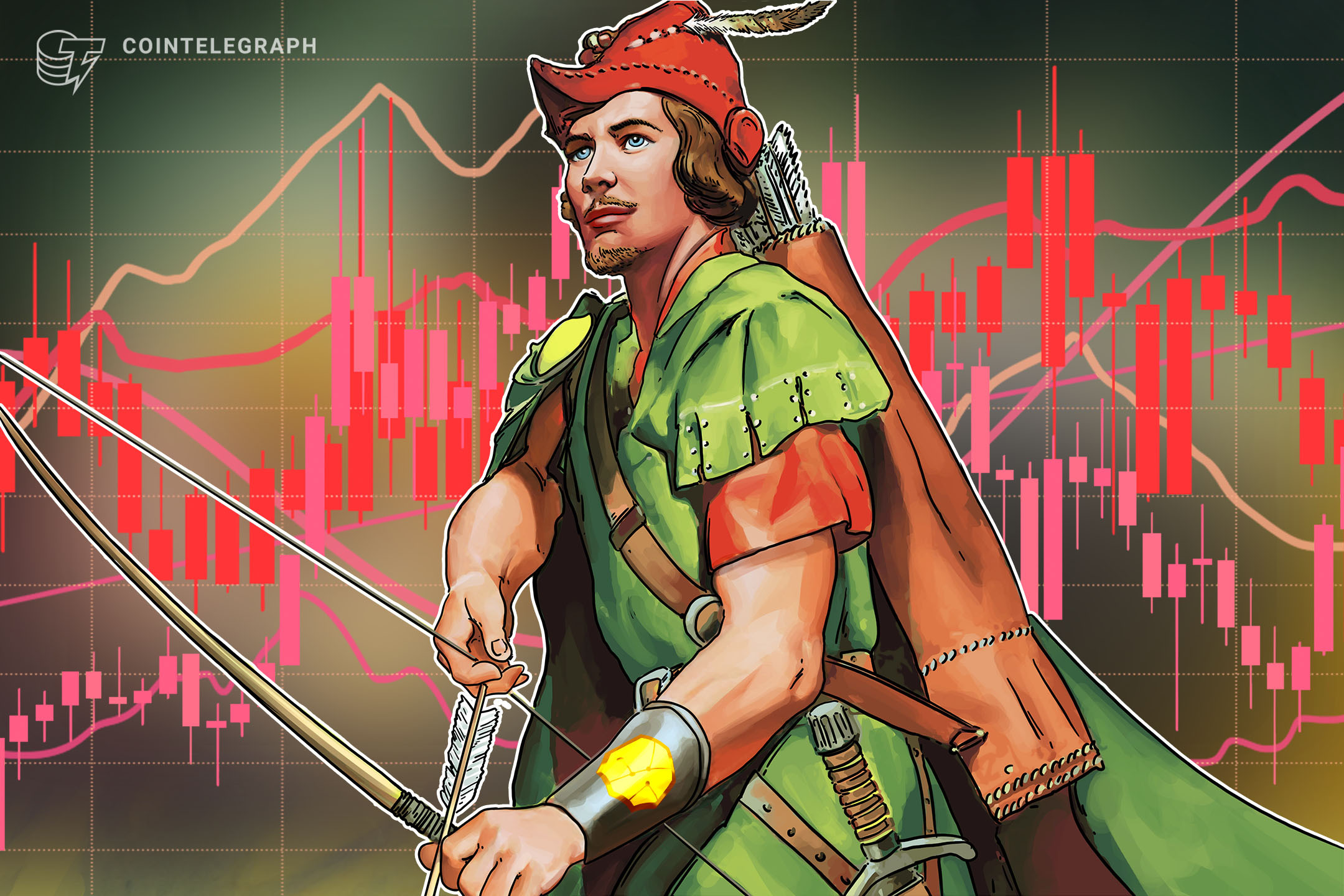 Growing demand for tokenized stock trading may drive the Robinhood chain’s annual fees to $160 million by 2028, predicted analysts from Bernstein. Trading platform Robinhood’s blockchain network is expected to generate as much as $160 million in annual fees by 2028, Bernstein analysts forecast in a Tuesday report shared with Cointelegraph. The analysts cited growing demand for tokenized stock trading on the network, which grew to account for about 27% of the chain’s total trading volume, while native memecoin pairs trading decreased to 36% of network activity, down from 100% at launch on July 1. Bernstein said the growing demand for tokenized stocks on the Robinhood chain is driven by automated market-making pools on Uniswap that pair memecoins with stock tokens and create “reflexive demand” for both sides. Read more
 -
Cointelegraph.com - 09:40 Sep 08, 2026
 Unrealized gains by whale speculators hit their highest levels on record last week, per data going back to 2016. Bitcoin (BTC) whales have more reason to sell than at any time in Bitcoin’s recent history as their unrealized profits hit records. Key points: Read more
 -
Cointelegraph.com - 08:10 Sep 08, 2026
 Cronos’s post-mortem put the Tectonic exploit’s affected borrowing at $120.4 million, with 7.6% transferred off-network before validators intervened. Layer-1 blockchain Cronos said $9.19 million left its blockchain before validators halted the network during the Tectonic exploit, providing an official accounting of funds that were not reversed by its rollback. In Tuesday’s post-mortem report, Cronos said manipulated collateral values generated about $120.4 million in borrowing activity. Restoring the network to its pre-exploit state reversed about $111.2 million, leaving 7.6% of the affected funds outside of the network. The disclosure confirms the scale of the incident after earlier estimates placed the amount affected at about $75 million. It also puts the amount transferred off Cronos at $9.19 million, above the $8.3 million previously traced to Ethereum by blockchain data provider Bitquery. Read more
 -
Cointelegraph.com - 07:18 Sep 08, 2026
 Financial market operator SIX and payment app TWINT have joined numerous banks in the sandbox seeking to develop a Swiss franc-based stablecoin. Nine Swiss companies have begun sandbox tests of CHFD, a Swiss franc stablecoin, for programmable payments and digital asset settlement. The pilot will examine whether programmable payments can reduce fraud on online marketplaces, support fair access to event tickets and make public payments more efficient, according to a Tuesday press release shared with Cointelegraph. Financial market operator SIX and payment app TWINT are new participants in the initiative, which launched in April. Read more
 -
Cointelegraph.com - 05:10 Sep 08, 2026
AUSTRAC said its yearlong sweep included canceled, suspended and unrenewed registrations, while its action against GetCoins helped disrupt organized investment scams. Australia’s financial intelligence regulator said it canceled, suspended or refused to renew 45 crypto and remittance registrations over the past year as it intensified scrutiny of high-risk payment businesses. On Monday, the Australian Transaction Reports and Analysis Centre (AUSTRAC) said the actions targeted providers that were inactive, insolvent or lacked the capacity to operate. It also cited failures to report material changes, incorrect registrations and cases presenting significant money laundering or terrorism financing risks. AUSTRAC CEO Brendan Thomas said businesses whose registrations were canceled can no longer operate. He added that individuals connected to some businesses had been referred to Australian and overseas law enforcement or regulatory partners. Read more
-
Cointelegraph.com - 03:46 Sep 08, 2026
 The actors returned 85% of the Bitcoin withdrawn from Liquid’s federation wallet following the security incident. Purported white-hat hackers returned 3,400 Bitcoin worth about $270 million to the Liquid Federation wallet after withdrawing roughly $320 million from the Bitcoin sidechain’s reserves. On Monday, JAN3 CEO and former Blockstream executive Samson Mow said the return followed confirmation from Blockstream that the affected bridge nodes had been patched. He said about 598 BTC remains outstanding and that Blockstream continues to engage with the actors. The return follows a Sunday security incident in which hackers withdrew about 4,000 BTC from the wallet’s roughly 4,200 BTC. Onchain records show that exactly 3,400 BTC was transferred back to the federation’s wallet address. Read more
 -
Cointelegraph.com - 20:40 Sep 07, 2026
 Companies offering binary options for retail investors have been barred from selling, marketing and distributing products in the UK since 2019 following a directive from the FCA. The UK’s Financial Conduct Authority (FCA) reportedly has reached out to prediction market companies as part of discussions over whether the regulator would loosen a ban for retail investors, in place since 2019. According to a Friday report from The Times, the FCA is weighing lifting a ban on prediction market platforms like Polymarket and Kalshi for UK-based retail investors. Because prediction markets offer binary options on event contracts, such as for sports, politics and the weather, they fall under an April 2019 ban imposed by the FCA, in which companies were “prohibited from selling, marketing or distributing binary options to retail consumers.” “Binary options are gambling products dressed up as financial instruments,” said the FCA’s executive director of strategy and competition, Christopher Woolard, at the time of the ban....
 -
Cointelegraph.com - 20:21 Sep 07, 2026
 Ethereum’s Hegotá upgrade will center on FOCIL and Frame Transactions as developers weigh dozens of other proposed changes for inclusion. The Ethereum Foundation has identified two “must ship” proposals for the Hegotá upgrade, prioritizing censorship resistance and more flexible account authentication as it narrows the fork’s scope. The ranking evaluated 62 proposed Ethereum Improvement Proposals (EIPs), drawing on input from roughly 60 researchers and engineers across the Foundation’s Protocol cluster. It marks the first time the Foundation’s Protocol cluster has published a unified view of proposed EIPs rather than separate opinions from individual teams. The two must-ship proposals are EIP-7805, known as FOCIL, and EIP-8141, or Frame Transactions, which the Foundation designated as the consensus and execution-layer headliners for Hegotá. Read more
 -
Cointelegraph.com - 18:53 Sep 07, 2026
 Hunter Biden will reportedly distribute 200 million of the LAPTOP token to his substack subscribers, members of a mailing list and investors in President Donald Trump’s memecoin. Hunter Biden, son of former US President Joe Biden, announced that he plans to launch a memecoin based on the reports of his infamous laptop, which has been subject to intense media scrutiny. In a Monday announcement on X, Hunter Biden posted the memecoin’s ticker symbol, $LAPTOP, signaling a Wednesday launch. The Wall Street Journal reported that Biden would send 20% of the one-billion token supply to substack subscribers, members of a mailing list and investors in President Donald Trump’s memecoin, Official Trump (TRUMP), whose value has dropped by about 97% since reaching an all-time high price in January 2025. Source: Hunter Biden Read more
 -
Cointelegraph.com - 17:58 Sep 07, 2026
 Polish prosecutors charged Romana Ż. with organized crime and misappropriation offenses involving $2.1 million in Zondacrypto user funds. Polish prosecutors investigating cryptocurrency exchange Zondacrypto, have formally charged an individual, identified as Romana Ż., with participating in an organized criminal group and allegedly misappropriating 7.8 million zlotys ($2.1 million) in user funds. Read more
 -
Cointelegraph.com - 17:29 Sep 07, 2026
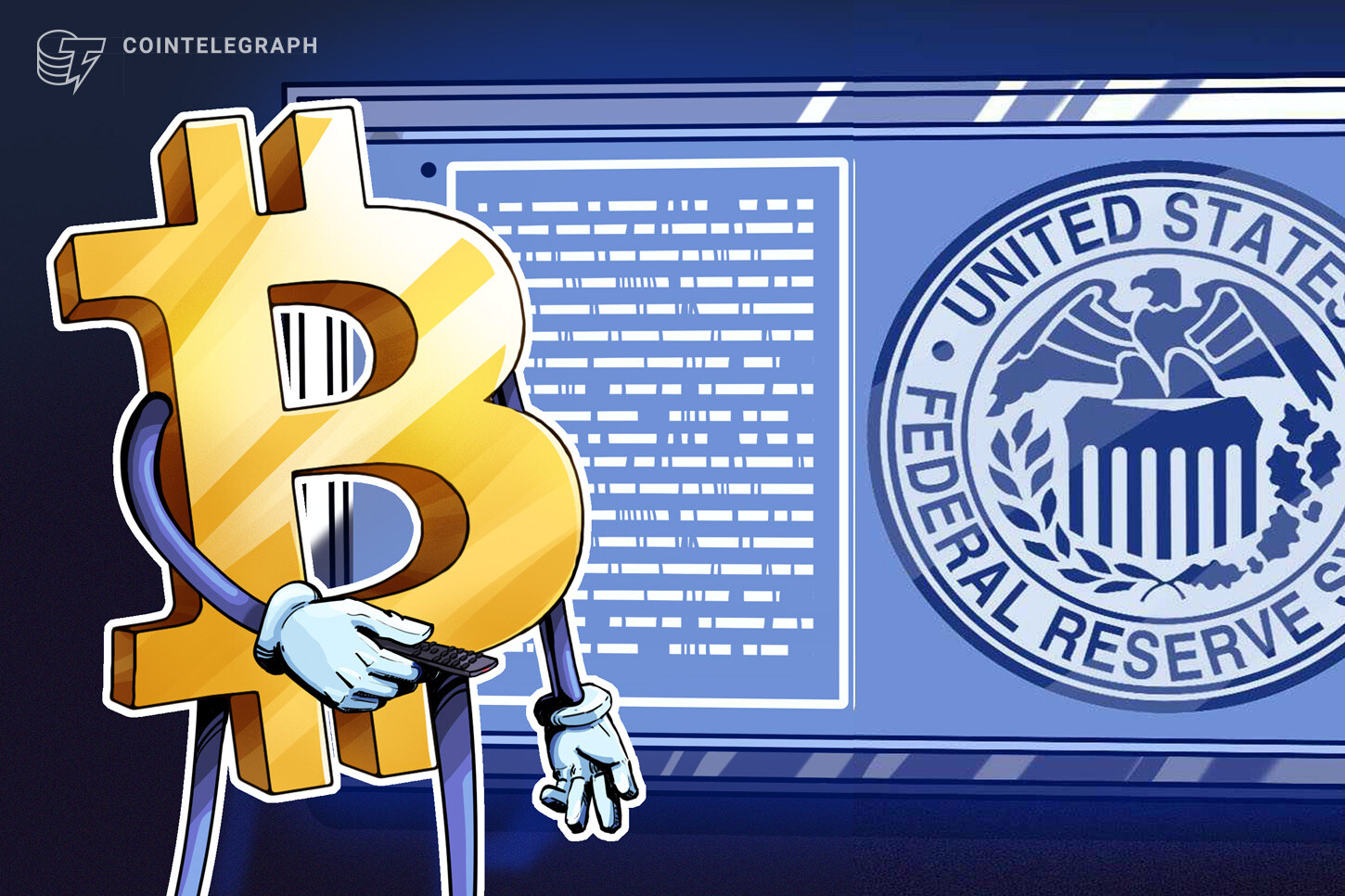 Bitcoin’s struggle to break $80,000 comes as markets price in a growing chance of a September rate hike, putting monetary conditions back in focus. Crypto fund flows are becoming increasingly sensitive to changes in the US interest-rate outlook, with CoinShares arguing that Federal Reserve policy remains a key barrier to Bitcoin (BTC) breaking above $80,000 despite continued investor demand for crypto. In his latest market update, CoinShares head of research James Butterfil argued that “Bitcoin is trading like gold again, but the Fed still sets the ceiling” at around $80,000. That sensitivity was evident after Fed Chair Kevin Warsh’s speech at Jackson Hole. Warsh said progress on inflation had been modest and that price pressures were not easing quickly enough to give the central bank’s policy makers the confidence inflation was returning to its 2% target. Roughly $100 million exited digital asset investment products immediately after the speech, as markets sharply increased the probability of a September rat...
 -
Cointelegraph.com - 16:42 Sep 07, 2026
 Capital B’s latest Bitcoin purchase was its largest in nearly a year, pushing the French company ahead of H100 Group among publicly traded BTC holders. French Bitcoin treasury company Capital B has acquired 376 Bitcoin (BTC) for 25.3 million euros ($29.5 million), bringing its total holdings to 3,521 BTC. The purchase was funded after Capital B completed roughly 30.1 million euros ($35 million) in capital raises, including a private placement backed by investors Adam Back and TOBAM, according to a Monday announcement. The company bought the Bitcoin at an average price of 67,182 euros apiece, with Swissquote Bank Europe executing the purchase and Taurus providing custody. Read more
 -
Cointelegraph.com - 15:57 Sep 07, 2026
 Bitcoin price fell 2% in low-liquidity conditions as the US Labor Day holiday saw $80,000 once again slip from bulls’ grasp. Bitcoin (BTC) drifted lower on Monday as a low-liquidity environment erased the weekend’s gains above $80,000. Key points: Read more
 -
Cointelegraph.com - 12:31 Sep 07, 2026
 ZEC gained 45% over the past week, extending its rally since Grayscale converted its Zcash Trust into an ETF that began trading Aug. 25. Zcash (ZEC) climbed to its highest price since 2016, extending a rally that has pushed the privacy-focused cryptocurrency’s market capitalization above $20 billion. ZEC reached $1,249.28 before retreating to about $1,195 on Monday, according to CoinGecko data. The token gained about 45% over the past week and 138% over 30 days. The rally leaves Zcash below its launch-era record. CoinGecko lists an all-time high of $3,191.93 on Oct. 28, 2016, when only a small supply of tokens was available. Read more
 -
Cointelegraph.com - 12:10 Sep 07, 2026
 This week’s CPI and PPI prints, along with the Fed’s Sept. 16 rate decision, could determine whether Bitcoin can secure $80,000 as a support level. Bitcoin (BTC) sees its first weekly close above $80,000 since early May as clouds gather over the US inflation outlook. Key points: Read more
 -
Cointelegraph.com - 10:34 Sep 07, 2026
 Citi and DBS completed their first tokenized cross-border transfer over the weekend, using Swift’s blockchain-based ledger to circumvent the constraints of traditional banking hours. Singapore-based financial services group DBS and American financial services giant Citi completed the first weekend tokenized cross-border payment between Singapore and the US on Saturday. The two companies executed the transaction using tokenized deposits via the Swift Digital Ledger to bypass the constraints of traditional banking hours, DBS announced on Monday. The deposit was finalized in minutes, which DBS called a “significant improvement” from the industry norm of as long as two business days for traditional cross-border transfers. Read more
 -
Cointelegraph.com - 09:51 Sep 07, 2026
 A central bank proposal would pause new payment operator registrations while requiring enhanced monitoring and transaction limits for arrangements involving virtual asset firms. The Philippines’ central bank has proposed freezing new payment-system operator registrations for 12 months while imposing tighter controls on payment arrangements involving virtual asset service providers (VASPs). Under a draft circular, the Bangko Sentral ng Pilipinas (BSP) said it would suspend acceptance and processing of applications for operators of payment systems (OPS) to conduct a “holistic review” of its taxonomy and licensing framework. Applications submitted before the suspension could continue to be evaluated, but the BSP would not approve or deny any until the pause ends. Entities would be barred from starting activities that require OPS registration unless the regulator authorizes them otherwise. Read more
 -
Cointelegraph.com - 09:36 Sep 07, 2026
 Galaxy said 82% of Bitcoin stolen across all Coldcard attacks remains in the original addresses, with 18% moved in apparent laundering. The exploiter behind the third wave of the Coldcard wallet hack has moved about 45% of their Bitcoin (BTC) haul, routing the funds through THORChain or into CoinJoin transactions, according to Galaxy Research. In a Monday update, Galaxy said the exploiter began moving funds to Ethereum through THORChain on Sept. 2. The latest movements sent Bitcoin into CoinJoin rounds, which combine multiple users’ payments into a single transaction to make funds harder to trace. Galaxy said the third-wave exploiter had created 293 two-of-two multisignature vaults to hold victims’ coins and was moving funds from the largest vaults in descending order of size. Funds from the 11 largest vaults have now been moved. Read more
 -
Cointelegraph.com - 07:45 Sep 07, 2026
 Fomo generated $1.76 million on Friday, beating Pump.fun’s $1.1 million, though the memecoin launchpad remains ahead over 30 days. Social trading platform Fomo generated more daily revenue than memecoin launchpad Pump.fun on Friday. Fomo generated $1.76 million in daily revenue on Friday, compared with Pump.fun’s $1.1 million, according to DefiLlama data. Pump.fun remains ahead over longer periods. It generated more than $57 million over the past 30 days, compared with $17.6 million for Fomo. Read more
 -
Cointelegraph.com - 05:40 Sep 07, 2026
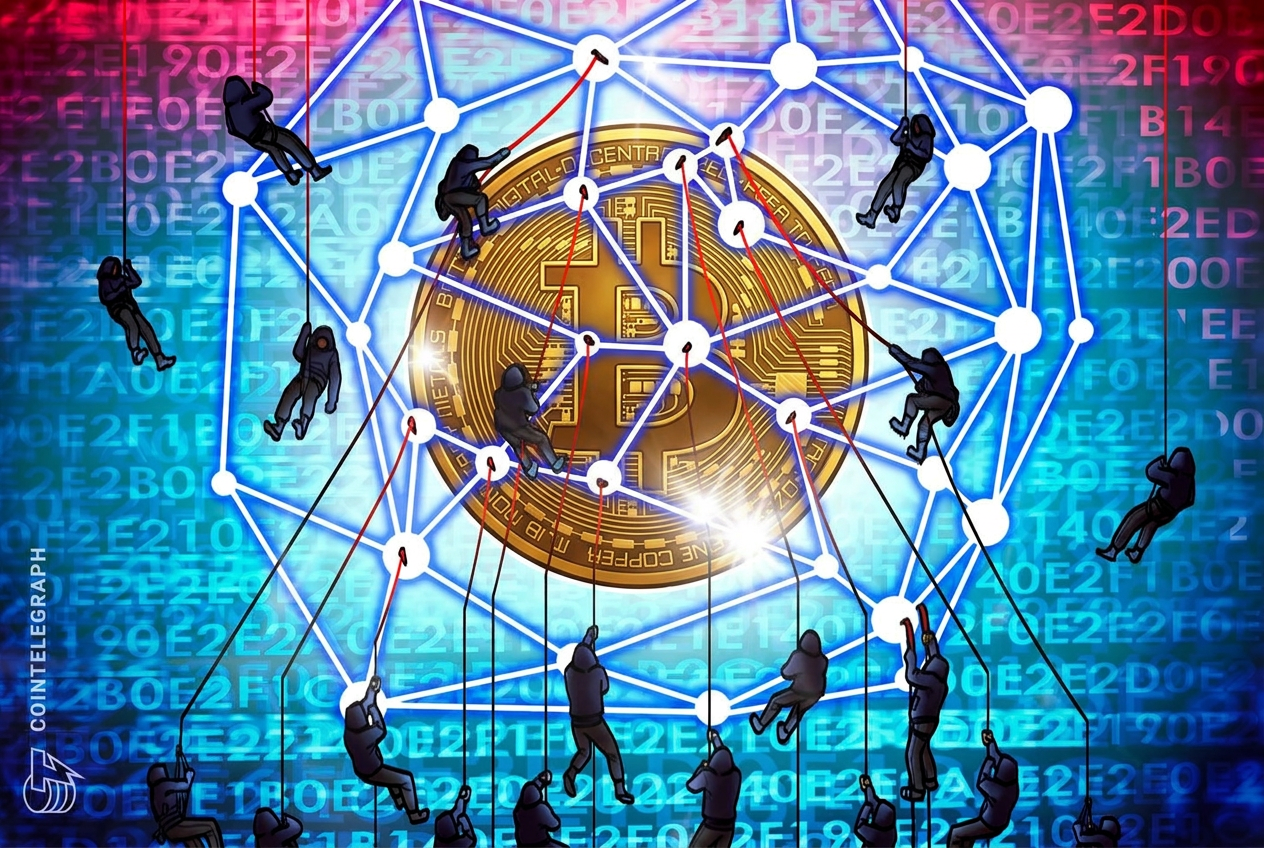 The actors told Blockstream they would return most of the 4,000 BTC after the Elements vulnerability is patched across the network. Bitcoin sidechain Liquid paused operations after actors claiming to be white-hat hackers withdrew about 4,000 Bitcoin worth $320 million from its federation wallet. On Sunday, Liquid said that bridge nodes were disabled, preventing new transactions, while exchanges had halted or were preparing to halt L-BTC deposits and withdrawals. Blockstream, Liquid’s technology provider, started contacting the actors through signed onchain messages. Subsequent messages show the actors told Blockstream to patch the vulnerability and ensure every node was updated before they would return most of the Bitcoin. Read more
11864 items