Cointelegraph.com
Source:
https://cointelegraph.com
Found 11864 news
-
Cointelegraph.com - 14:50 Aug 31, 2026
Russian crypto trading to bring $46B to regulated exchanges in first year after legalization: Report
 Regulated cryptocurrency exchanges may see more than $46 billion in crypto trading volume during the first year after legalization, according to estimates from the country’s largest bank. Cryptocurrency trading in Russia is expected to bring 4 trillion rubles ($46.4 billion) in trading volume for regulated domestic exchanges in the first year after legalization, according to estimates from Sber, the country’s largest bank. Domestic crypto trading volumes on regulated exchanges could grow to about 7.5 trillion rubles by 2029, Sber’s Deputy Chairman, Anatoly Popov, told Tass in a Saturday report. Popov attributed the conservative forecast to the fact that a large share of crypto transactions will continue to be conducted through cryptocurrency exchanges that are not regulated in Russia, bypassing trading on organized platforms. Read more
 -
Cointelegraph.com - 13:30 Aug 31, 2026
 The million dollar question is what prompted a Bitcoin OG to send 20 BTC to a custodian, retrieve it back, and then deliberately burn it? In March, someone moved $1 million worth of Bitcoin through a large crypto custodian. Three weeks later, almost exactly the same amount came back. Incredibly, less than two months after that, the Bitcoin was deliberately destroyed. The wallet had been dormant for almost 12 years before it suddenly sprang back to life. Bitcoin educator Bennet noted it sent 20.00010537 BTC to “a custodian of some kind” before receiving it back again (minus $3 or so). The mystery BTC transaction is part of a wider enigma surrounding 107 BTC burned in May, worth roughly $8.5 million at the time. Read more
 -
Cointelegraph.com - 13:20 Aug 31, 2026
 Japan’s FSA requested to exempt trust-type stablecoins from mandatory tax filings starting in fiscal year 2027, arguing that it would improve their use as transaction tools. Japan’s Financial Services Agency (FSA) submitted a request to exempt trust-type stablecoins from mandatory tax filings starting in fiscal year 2027. Japan’s FSA urged regulators to exempt trust-type stablecoins from submitting beneficiary-by-beneficiary trust reports and calculation statements that include the beneficiaries’ names and income, as part of its tax-reform request for the new fiscal year, issued on Saturday. The agency argued that trust-type stablecoins circulate among a broad number of users, are used for frequent and numerous transactions and that users can not earn income from holding these assets. Read more
 -
Cointelegraph.com - 13:19 Aug 31, 2026
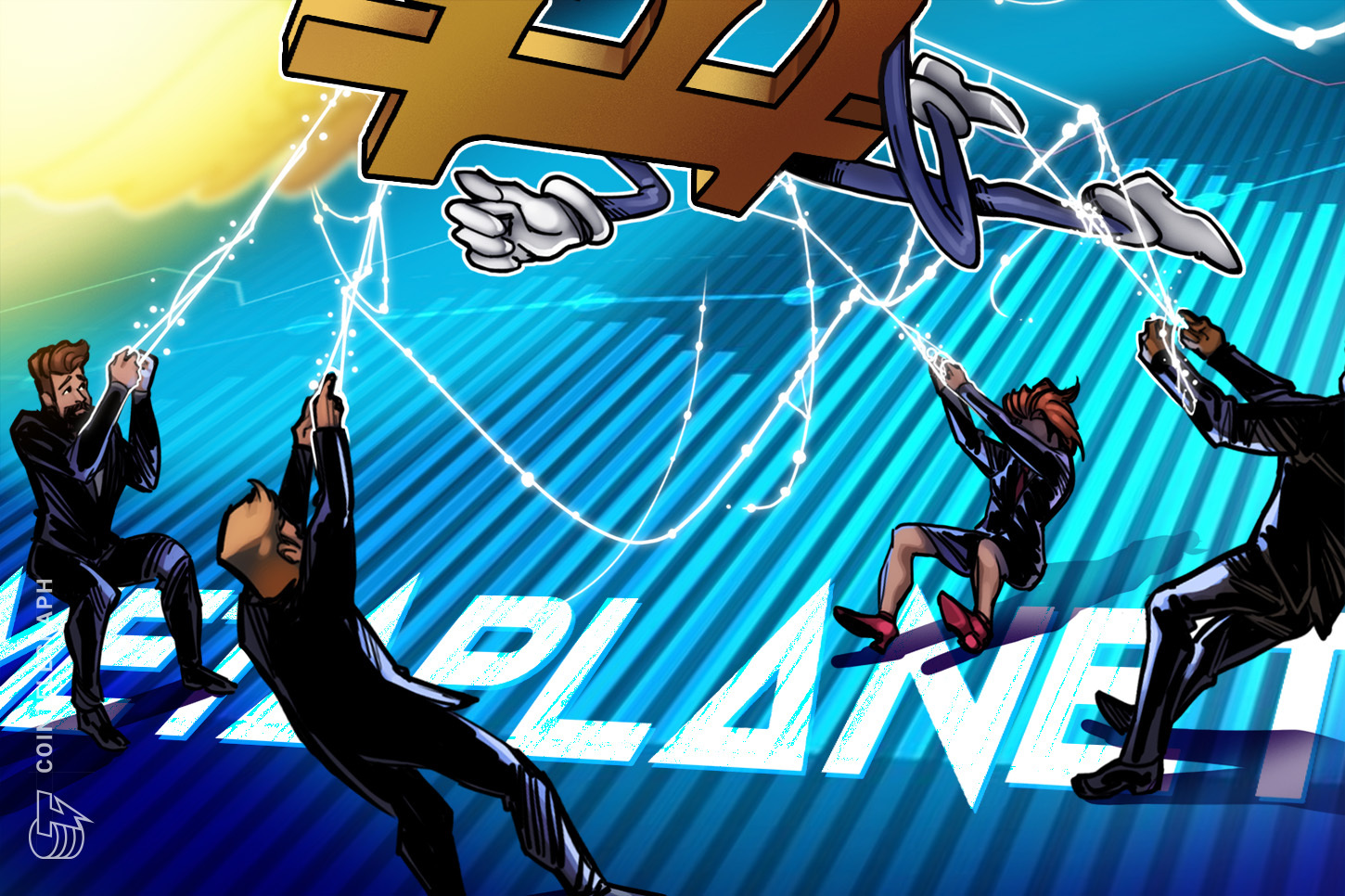 The Japanese Bitcoin treasury company has transferred 10,270 BTC to Coinbase Prime this week, an amount equal to more than 29% of its reported holdings. Metaplanet, the fourth-largest corporate Bitcoin treasury, moved 4,800 BTC worth nearly $377 million to Coinbase today, triggering speculation about the company selling its holdings. According to Arkham Intelligence data, Metaplanet transferred 4,800 BTC to Coinbase Prime today, following the company’s transfer of 2,000 BTC worth $155.5 million two days ago, another series of transfers three days ago totaling 3,331 BTC worth nearly $266 million and lastly a transfer from six days ago moving 139 BTC worth $11.1 million. In total, those deposits amounted to 10,270 BTC worth approximately $806.3 million this week alone. Blockchain data-specialized X profile Onchain Lens shared the data suggesting that Metaplanet moved the Bitcoin “likely to sell.” Another market observers claimed that the company may be using the exchange as a custodian instead. Cointelegraph fo...
 -
Cointelegraph.com - 12:45 Aug 31, 2026
 Strategy added to its BTC treasury for the first time in two months, while continuing to bolster its cash reserves and buy back its perpetual STRC preferred stock. Michael Saylor’s Strategy acquired 4,603 Bitcoin for $370 million, marking the first acquisition from the largest corporate Bitcoin holder in two months. Strategy acquired 4,603 Bitcoin (BTC) at an average purchase price of $80,318, pushing its holdings to 845,050 BTC, acquired for a total of $63.3 billion at an average price of $75,413, according to a Monday 8-k filing with the Securities and Exchange Commission. The Bitcoin purchase was funded by the net proceeds of a 602 million MSTR common stock sale. The company used $30 million of the net proceeds to increase its USD Cash reserve and $151.8 million to repurchase its preferred STRC stock. Read more
 -
Cointelegraph.com - 11:21 Aug 31, 2026
 Crypto projects spent a record $638 million on token buybacks so far in 2026, as more protocols are turning their revenue into buybacks to return more value to token holders. Decentralized exchange Hyperliquid and memecoin launchpad Pump.fun reportedly accounted for nearly 90% of the record $638 million in token buybacks carried out by cryptocurrency projects so far in 2026. Crypto projects spent a record $638 million to repurchase their own cryptocurrencies year-to-date, up from $545 million during the same period in 2025 and $366,000 in 2024, according to Allium Labs data cited by the Financial Times in a Monday report. Of the $638 million, Hyperliquid accounted for roughly $370 million and Pump.fun for nearly $200 million. Token buybacks are similar to share buybacks by publicly listed companies, which buy back their own stock to support their share prices and increase returns for existing shareholders. Read more
 -
Cointelegraph.com - 10:51 Aug 31, 2026
 Bitcoin approached the August monthly close below key resistance with markets once again pricing in a Federal Reserve interest-rate hike in September. Bitcoin (BTC) heads into September still battling key resistance as markets flip hawkish on Federal Reserve policy. Key points: Read more
 -
Cointelegraph.com - 08:57 Aug 31, 2026
 Blockaid said an attacker used an Ankr liquid staking token and E-mode to overborrow from More Markets and drain about $9.3 million in WFLOW from a lending reserve. Decentralized finance (DeFi) vault infrastructure protocol More Markets had a lending reserve drained of about $9.3 million in digital assets on Flow EVM, according to Web3 security platform Blockaid. The attacker drained about 15.5 million Wrapped Flow (WFLOW) tokens, valued by Blockaid at approximately $9.3 million, from the mFlowWFLOW lending reserve, according to blockchain data shared by Blockaid in a Monday X post. Blockaid said the attacker used Ankr Staked FLOW (ankrFLOW), a liquid staking token, alongside E-mode to overborrow from the reserve. Read more
 -
Cointelegraph.com - 03:25 Aug 31, 2026
 Crypto.com CEO Kris Marszalek said the company’s app and exchange were unaffected by the Tectonic breach and continued operating normally. Cronos halted its blockchain after an exploit targeting decentralized lending protocol Tectonic involved an estimated $75 million, most of which remains on the Cronos network at the time of writing. On Sunday, Cronos said it identified an exploit in Tectonic and halted the network, promising updates. Tectonic separately warned users not to interact with the protocol while it investigated. Neither project has confirmed the cause or loss, and no restart timeline had been announced at publication. Researcher Weilin Li said the attacker exploited TONIC’s 20% collateral factor and thin liquidity, pumping the governance token’s price 100-fold within 20 minutes before borrowing other assets. Li described it as a “Mango-market style” pump-and-borrow attack. Read more
 -
Cointelegraph.com - 23:36 Aug 30, 2026
 Bitcoin moves toward a post quantum future, Solana validators agree to curb rampant inflation and the bull case from Bernstein is for Bitcoin to peak at $500K this cycle. Despite considerable skepticism among Bitcoiners about how close the quantum threat to Bitcoin is, two stories this week highlighted the progress being made toward upgrading the blockchain and protecting outputs from attack. StarkWare researcher Avihu Levy tested an experimental quantum-resistant transaction on the Bitcoin mainnet that protects it during the brief period when public keys are exposed in the mempool. Onchain data shows that StarkWSare spent a 10,000-satoshi output protected by Levy’s Quantum Safe Bitcoin (QSB) scheme which combines hash-based one-time signatures with computational searches that bind an authorization to a specific transaction. It’s more of a last resort than a practical measure, as each transaction takes hours and costs $150 to $200. Read more
 -
Cointelegraph.com - 17:58 Aug 30, 2026
 Michael Saylor’s “We’re Back” post hints Strategy may resume Bitcoin buying after a two-month pause to strengthen its balance sheet. Strategy’s Michael Saylor said “We’re Back” in his latest signal on X (formerly Twitter) of the company’s likely return to Bitcoin buying. For market watchers, the post could be a strong psychological signal as Saylor has a track record of dropping cryptic weekend teasers that precede official Monday morning treasury purchase announcements. Should that record, and community interpretation, hold true, his post points to the resumption of corporate Bitcoin accumulation following a notable summer hiatus. Read more
 -
Cointelegraph.com - 09:45 Aug 30, 2026
 Russia’s largest bank, Sber, plans to accept USDT and Ether alongside Bitcoin as loan collateral as the country introduces regulated crypto trading under a new law. Russia’s largest bank, Sber, plans to expand its crypto-backed lending to accept Tether’s USDt stablecoin and Ether as collateral alongside Bitcoin, according to a senior executive. Sber will adapt its existing products and gradually expand its offerings as Russia’s new crypto law takes effect, Deputy Chairman Anatoly Popov said, according to a Friday TASS report. The bank plans to add the assets as collateral after the Bank of Russia permits them for public trading, he said. The plans come as Russia rolls out a regulated crypto market under a law signed by president Vladimir Putin on Aug. 4, with core provisions taking effect Sept. 1. Read more
 -
Cointelegraph.com - 08:04 Aug 30, 2026
 Trump-linked Real Trump Coins said it never authorized GOLD or any digital token as questions persisted over its X account, associated domains and the concentrated token supply. Real Trump Coins has denied launching, promoting or authorizing the Trump Digital GOLD token that briefly appeared across its online presence before collapsing, blaming the promotion on “third-party bad actors.” The denial came after the Real Trump Coins X account promoted the Solana-based token on Saturday and directed users to RealTrumpCoins.com, where GOLD was also advertised. The X posts were later deleted, while the account now links to a separate domain, TrumpCoins.com. “Trump Coins has not authorized and will not launch, promote, or authorize any digital token,” Real Trump Coins said in an X post on Saturday, adding that it was working with authorities to investigate the matter. Read more
 -
Cointelegraph.com - 20:28 Aug 29, 2026
 The vulnerabilities posed denial-of-service and validator resource risks but were patched before Polygon publicly disclosed them. Polygon has disclosed several previously private security vulnerabilities that could have disrupted its proof-of-stake network, after deploying fixes through two recent hard forks. The vulnerabilities affected Polygon’s Bor and Heimdall clients and included denial-of-service risks, validator resource exhaustion and flaws affecting checkpoint and milestone processing, according to a Thursday disclosure from Polygon Labs’ Validators Support Team. Polygon said the flaws were fixed through the Austin and Kyoto hard forks, which were deployed privately and tested before being activated on mainnet and publicly disclosed. Read more
 -
Cointelegraph.com - 19:12 Aug 29, 2026
 Stellar’s real-world asset market has expanded rapidly this year as institutional adoption and tokenization activity grow across the network. The value of tokenized real-world assets (RWA) on Stellar has climbed roughly 360% in 2026 to nearly $4 billion, up from $868.8 million at the end of last year, according to a Dune Analytics dashboard maintained by Stellar. The network’s RWA market cap stood at $3.996 billion as of Aug. 29, spread across US Treasurys, private and public credit, non-US government debt and other tokenized asset classes. The market is concentrated among a handful of issuers. Spiko accounted for $1.55 billion of Stellar’s RWA value as of Aug. 27, followed by Realiz at $559 million, Tradable at $548 million, Franklin Templeton at $546 million and Ondo at $535 million. Read more
 -
Cointelegraph.com - 16:27 Aug 29, 2026
 Tokenized equities saw a sharp rise in onchain activity as active addresses and holders more than doubled over the past month. Tokenized stock activity surged over the past 30 days, with monthly transfer volume climbing more than 415% to $29.5 billion, according to data from RWA.xyz. Monthly active addresses rose more than 209% to around 1.3 million, while the number of tokenized stock holders climbed 167% to 2.36 million over the same period. The total value of tokenized stocks distributed onchain also rose 1.45% over the past 30 days to $2.54 billion, up roughly 637% from $344 million a year ago. Tokenized stock activity accelerated in August. Source: RWA.xyz Read more
 -
Cointelegraph.com - 10:53 Aug 29, 2026
 Real Trump Coins promoted GOLD before deleting related X posts, while team-linked wallets sold 224.5 million tokens as its market value fell about 99%. A Solana-based token promoted by a Trump-linked coin brand collapsed within hours of its launch, raising questions over who was behind it and its unusual trading activity. Real Trump Coins, a brand US President Donald Trump publicly promoted in 2024, touted the “Trump Digital GOLD” token on X before deleting related posts on Saturday, according to blockchain analytics platform Lookonchain. The Real Trump Coins website continued promoting GOLD as of publication, advertising a 4% trading fee and pledging to use 99% of trading fees to buy back the token in an effort to make it a top-10 crypto asset by market capitalization. Read more
 -
Cointelegraph.com - 08:01 Aug 29, 2026
 BIS chief Pablo Hernández de Cos said stablecoins lack credibility for payments at scale, while a new FSI study highlights sharp differences in issuer rules. The Bank for International Settlements is renewing its criticism of stablecoins, questioning their credibility as everyday money as governments worldwide build regulatory frameworks around the tokens. BIS General Manager Pablo Hernández de Cos, a candidate to succeed European Central Bank President Christine Lagarde next year, argued that stablecoins do not credibly function as a means of payment at scale. He said tokenized bank deposits offer a stronger alternative, Reuters reported on Friday. “Tokenised deposits offer a more direct path to harness tokenisation while preserving the monetary system’s foundations,” de Cos said. Read more
 -
Cointelegraph.com - 06:47 Aug 29, 2026
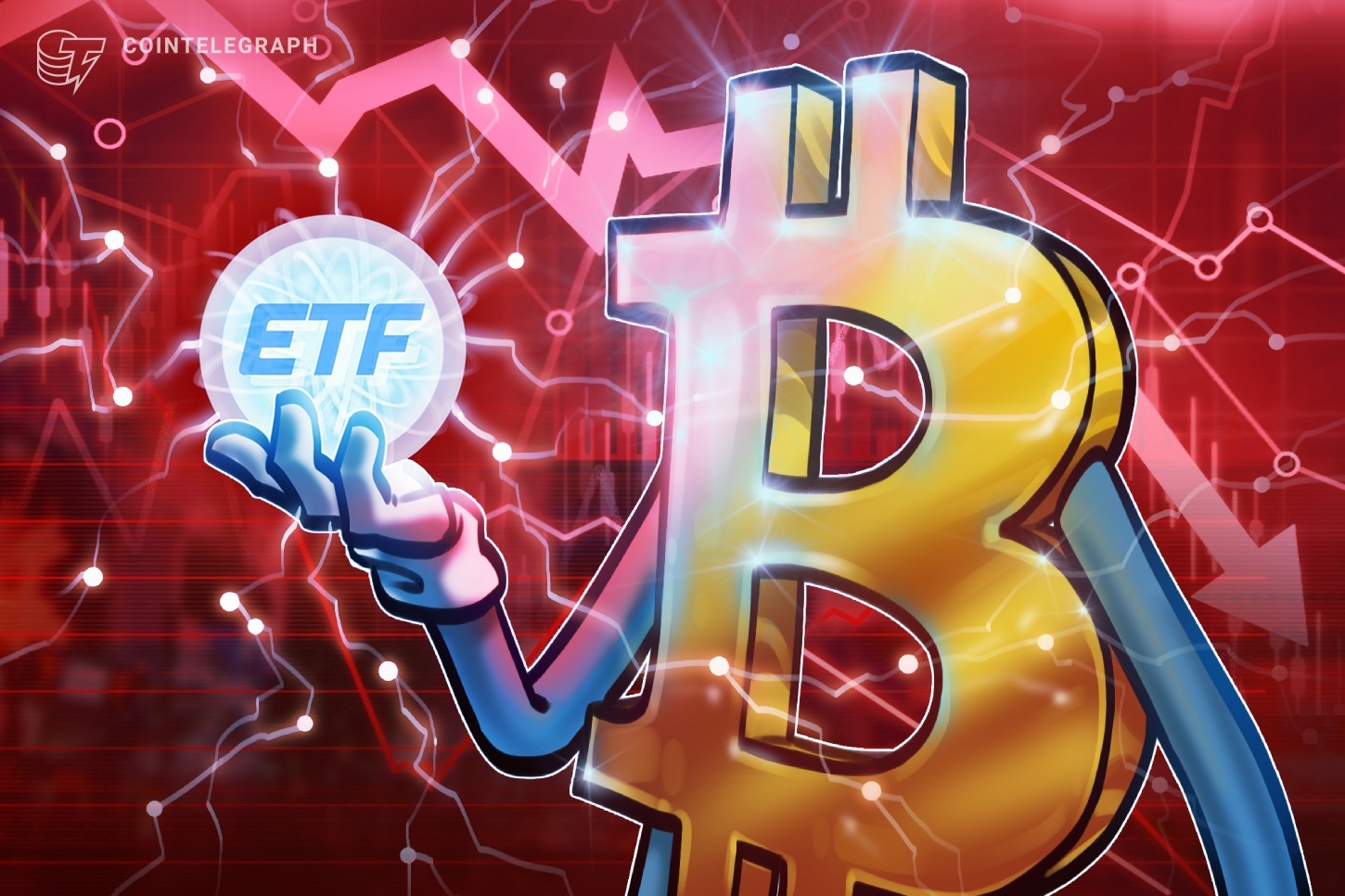 US spot Bitcoin ETFs posted $201.8 million in net outflows Friday, led by ARK 21Shares, as total fund assets slipped back below $100 billion. US-listed spot Bitcoin exchange-traded funds (ETFs) ended a nine-day inflow streak as Bitcoin fell below $78,000, while several altcoin ETF categories continued to see inflows. Bitcoin ETFs recorded $201.8 million in net outflows on Friday, ending nine consecutive trading sessions of inflows, according to SoSoValue data. The reversal followed more than $3 billion of net inflows during the nine-session run, while August flows remained positive at $3.3 billion with one US trading session left in the month. Total net assets fell to $97.6 billion after topping $100 billion on Thursday. Read more
 -
Cointelegraph.com - 19:53 Aug 28, 2026
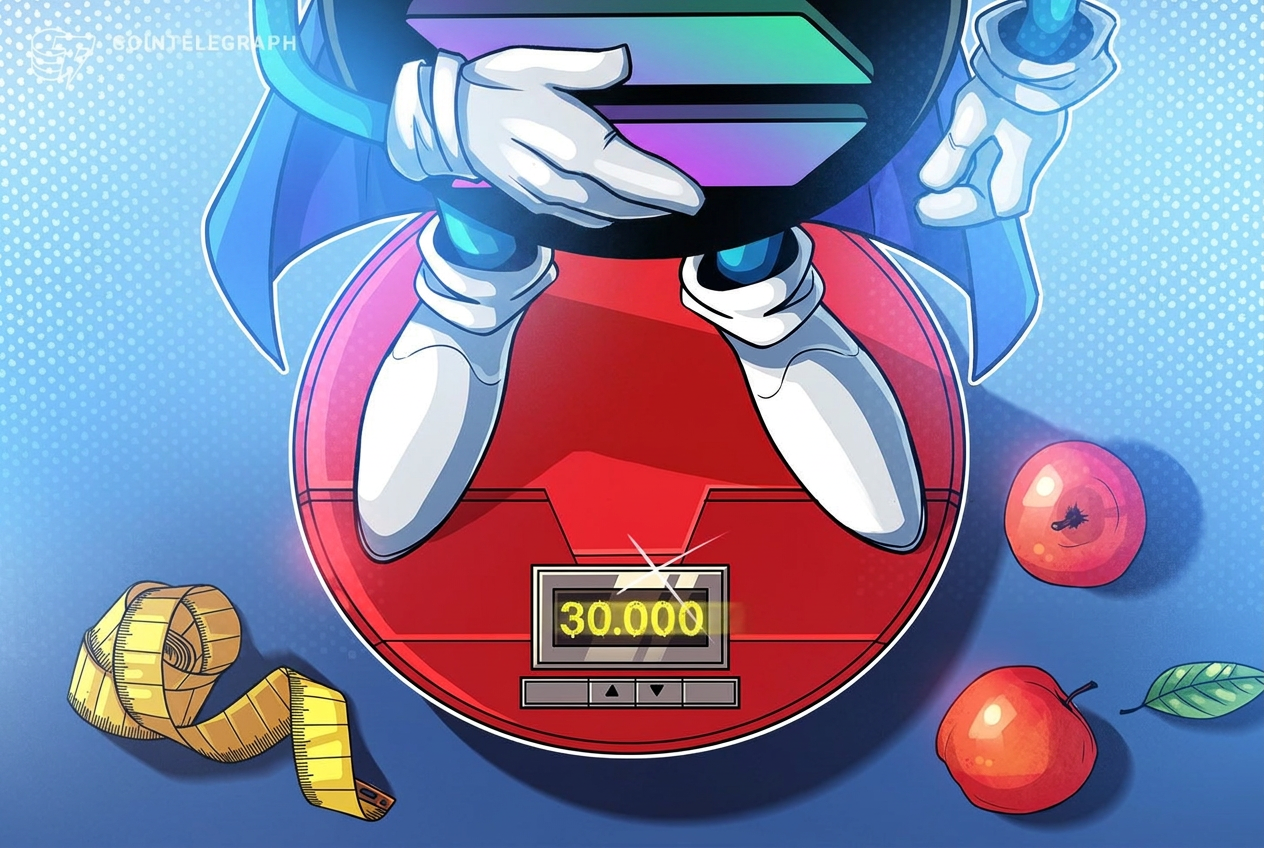 The approved proposal doubles Solana’s annual disinflation rate from 15% to 30%, reducing future SOL issuance while leaving its long-term inflation target unchanged. Solana validators have approved a proposal to double the network’s annual disinflation rate, reducing future SOL issuance. According to finalized voting results, the proposal received 67% support, with 25.16% voting against and 7.84% abstaining. Overall participation reached 60.7% of eligible stake. The proposal, known as SGP-0002 or Double Disinflation, increases Solana’s annual disinflation rate from 15% to 30%, while leaving the network’s long-term inflation target of 1.5% unchanged. Read more
11864 items