Cointelegraph.com
Source:
https://cointelegraph.com
Found 11869 news
-
Cointelegraph.com - 08:58 Jul 13, 2026
 Lawson will test yen stablecoin payments in Tokyo as Netstars launches a merchant service supporting USDC, USDT and JPYC. Japanese convenience-store operator Lawson plans to test yen-denominated stablecoin payments at a Tokyo location in August, examining whether stablecoin payments can work inside a standard convenience store checkout flow. On Monday, blockchain company HashPort said it had signed an agreement with Lawson and telecom group KDDI to conduct the trial at the Lawson Takanawa Gateway City store. Participants will use HashPort's non-custodial wallet, while the store will process payments through the company's point-of-sale system without needing to open or manage crypto wallets. The pilot aims to explore how stablecoin payments can be integrated into Japan’s existing retail infrastructure while shielding merchants from much of the operational complexity associated with accepting digital assets. Read more
 -
Cointelegraph.com - 05:24 Jul 13, 2026
 The AI-native cohort of the expanding gig economy could increasingly use stablecoins to avoid slow and expensive traditional payment rails, Australian crypto exchange Swyftx said. AI-enabled microbusinesses could provide a major boost for stablecoin transaction volumes as the global gig and freelance payment market grows, according to Australian crypto exchange Swyftx. In a second-quarter industry report, Swyftx estimated the global gig and freelance payments market could reach $2.1 trillion by 2033, with AI-native workers accounting for $775 billion. Swyftx’s base-case model projected that $262 billion of the AI-native cohort’s payment volume could be settled in stablecoins, based on an assumed adoption rate of roughly 33%. “We see the vibe-coding and AI economy as a significant potential tailwind for stablecoin use,” Pav Hundal, lead market analyst at Swyftx, told Cointelegraph. Read more
 -
Cointelegraph.com - 04:43 Jul 13, 2026
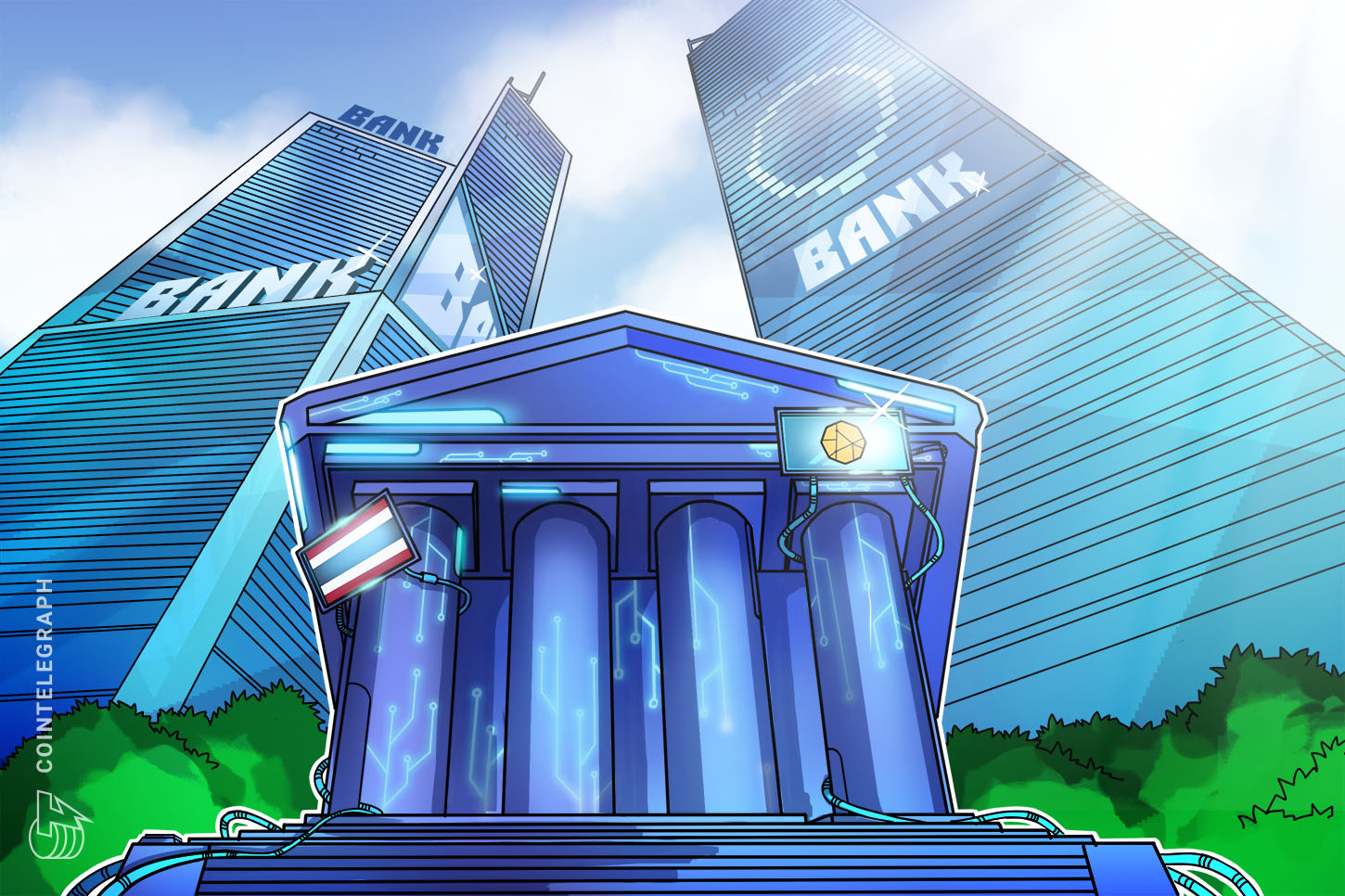 Thailand has been plagued by Chinese-affiliated scam centers, with illicit gains flowing through a “gray money” economy. Thailand’s central bank is stepping up stablecoin surveillance as part of a wider effort to crack down on money laundering, illicit finance and “gray money” in the country. The Bank of Thailand is working with the Kingdom’s Securities and Exchange Commission to audit high-volume stablecoin transactions, with a focus on USDt (USDT), cash transactions and currency exchanges, to identify and stop illicit financial flows. “The measures we are implementing are not short-term fixes; they require the continuous deployment of multiple parallel strategies,” Bank of Thailand Governor Vitai Ratanakorn said, according to local media outlet The Nation on Saturday. Read more
 -
Cointelegraph.com - 01:49 Jul 13, 2026
 Analysts are not yet ready to call it a recovery in institutional demand for Bitcoin. US-listed spot Bitcoin exchange-traded funds recorded a net inflow of $197.4 million in the week ended Friday, snapping an eight-week streak of weekly outflows dating back to May. Data from Farside Investors shows that most of the week’s gains came from the BlackRock iShares Bitcoin Trust ETF, which recorded $291.9 million in inflows. This was offset by outflows from the Grayscale Bitcoin Trust ETF, the Fidelity Wise Origin Bitcoin Fund and the ARK 21 Shares Bitcoin ETF. The end of the outflow streak could suggest institutional demand for Bitcoin is recovering after two months of sustained selling pressure. However, analysts say it’s too early to tell. Read more
 -
Cointelegraph.com - 23:24 Jul 12, 2026
 Even Ethereum's critics believe Robinhood Chain is bullish for ETH. Nigel Farage and Donald Trump become embroiled in crypto related scandals, and more. The successful launch of the layer-2 network Robinhood Chain has boosted investor sentiment around Ethereum. The newly launched blockchain uses ETH as its native gas token and around $141 million in ETH has already been bridged to the chain. More than half a million wallets holding ETH are now on the network, which surged past the Ethereum L1 and rival L2 Base over the past 24 hours, with DEX volumes of $877.56 million. The L2 is an offshoot of TradFi trading platform Robinhood, which offers tokenized stocks to customers in 120 countries, further strengthening the EVM-compatible ecosystem. L2s have been seen by many pundits as bearish for Ethereum as they take activity away from the L1 without returning much in the way of transaction fees. However even some former ETH bears are now reassessing that thesis. Influencer Ansem wrote: Mike Dudas from 6th Man Ventu...
 -
Cointelegraph.com - 18:16 Jul 12, 2026
 Standard Chartered sees communication challenges facing the biggest digital asset treasury company as "muddying the waters" for Bitcoin in the near term. Strategy founder and chairman Michael Saylor again took to social media on Sunday to offer his latest signal to investors as one analyst sees Saylor’s messaging as needing more clarity to help Bitcoin regain its momentum. “Orange dots tell only part of the story,” was Saylor’s message on Sunday in a post that accompanied a chart from Saylortracker.com, similar to previous social media messages that have preceded news of Strategy's Bitcoin (BTC) purchases, typically announced the day after his posts. In recent weeks, the largest digital asset treasury company and a major BTC holder, has moved away from its long-time “never sell Bitcoin” approach to a willingness to sell the biggest crypto as needed to fund dividends for holders of its STRC preferred stock and to replenish its cash reserves. Earlier this month, Strategy sold $216 million worth of Bitcoin, redu...
 -
Cointelegraph.com - 12:26 Jul 12, 2026
 Pakistan’s virtual-assets regulator called for continued dialogue on the treatment of digital assets after meeting an Islamic scholar who backed a ruling against purchases made with crypto. Pakistan Virtual Assets Regulatory Authority (PVARA) chairman Bilal bin Saqib has called for continued dialogue on the treatment of digital assets under Islamic law after meeting prominent scholar Mufti Taqi Usmani, who backed a ruling against purchases made with crypto. In a Saturday post, Saqib said the discussion covered blockchain technology, digital assets, stablecoins and tokenized real-world assets (RWAs), as well as the need to protect Pakistanis from fraud, exploitation and financial harm. Saqib said the different categories of digital assets merit “careful technical assessment alongside rigorous Shariah examination, rather than being viewed through a single lens.” Read more
 -
Cointelegraph.com - 09:18 Jul 12, 2026
 Cambridge estimated that Ethereum consumes 7.87 GWh annually and has the second-lowest market-value-adjusted energy intensity among the PoS networks studied. A new Cambridge study placed Ethereum near the lower end of energy intensity among major proof-of-stake (PoS) blockchains, although the network still used more electricity overall than most of the PoS networks studied. The Cambridge Centre for Alternative Finance estimated that Ethereum consumes about 7.87 gigawatt-hours (GWh) of electricity annually. When adjusted for market value, the network used roughly 33 kilowatt-hours (kWh) per $1 million, the second-lowest figure among the proof-of-stake networks assessed, behind BNB Chain. Solana used the most electricity among the PoS networks studied, at about 13.48 GWh per year. Its energy intensity was roughly 283 kWh per $1 million of market value, around 8.5 times Ethereum’s, while the networks in the comparison consumed about 38 GWh combined. Read more
 -
Cointelegraph.com - 04:24 Jul 12, 2026
 The ongoing debate comes despite a broad downturn in Ordinals transaction activity over the last two years. Strategy executive chairman Michael Saylor and Blockstream CEO Adam Back have doubled down on their opposition to BIP-110, a proposed temporary fork to limit non-monetary transactions on the Bitcoin network. Bitcoin Improvement Proposal-110 was introduced in December 2025 to stop nonfungible token-like Ordinals inscriptions and other arbitrary data from “spamming” the network and to preserve Bitcoin’s main use as a peer-to-peer cash system. While critical of Ordinals activity, Saylor and Back fear a fork could do more harm than good to the network’s credibility. “There are 110 things more dangerous to Bitcoin than spam,” Saylor said in a post to X on Saturday, adding that BIP-110 could invalidate ordinary transactions on the network. Read more
 -
Cointelegraph.com - 01:00 Jul 12, 2026
 The sales come months after a major Empery shareholder demanded the firm ditch its Bitcoin treasury strategy and force the resignation of its CEO and board. Shares in Bitcoin treasury company Empery Digital rose on Friday after the firm disclosed it had sold nearly half its Bitcoin holdings to fund an AI data center project and pay down debt. Empery Digital (EMPD) shares popped 4.2% to $3.95 within the first 35 minutes of trading on Friday after the company revealed that it sold 1,400 Bitcoin (BTC) at an average of $62,200 a coin for roughly $87.1 million over the past two months. Empery, which previously operated as an electric powersports vehicle manufacturer, said some of the proceeds funded its 25% stake in a Hunt Properties-affiliated venture, which is acquiring an industrial site to be converted into an AI data center. Another $10 million was also used to pay off outstanding debt. Read more
 -
Cointelegraph.com - 13:30 Jul 11, 2026
 Real Vision chief crypto analyst Jamie Coutts said it's far too early to call $1 million by 2030, but he's confident Bitcoin could climb up to $250,000 over the next couple of years. Bitcoin could be entering the latter stages of the bear market, with downside momentum beginning to slow down, according to Real Vision chief crypto analyst Jamie Coutts. “I think we're getting through most of the bear market action. It's still not over, clearly. But you know, I think we're approaching at least the second half,” Coutts said during an interview on Cointelegraph’s Trade Secrets. Coutts described Bitcoin’s current price action as a “typical garden-variety bear market,” with BTC trading around the $63,000 mark, roughly 50% below its October 2025 all-time high of $126,100. Read more
 -
Cointelegraph.com - 12:55 Jul 11, 2026
 Despite strong tokenization gains and institutional accumulation, weak onchain and derivatives data leaves ETH vulnerable to a $1,700 retest. Ether (ETH) price gained 3% between Thursday and Friday, outperforming the broader crypto market. The move ties to growing tokenization, Robinhood Chain’s success, and ongoing corporate treasury purchases. However, ETH failed to break above $1,800 amid weak onchain and derivatives metrics. Is Ether price bound to retest $1,700? Key takeaways: The successful launch of the layer-2 network Robinhood Chain has boosted Ether investors’ sentiment. The newly launched blockchain uses ETH as its native gas token and has netted $106 million in bridge deposits. The TradFi trading platform Robinhood offers tokenized stocks to customers in 120 countries, further strengthening the EVM-compatible ecosystem. Read more
 -
Cointelegraph.com - 11:56 Jul 11, 2026
 An attacker inflated the value of SAUCE collateral and borrowed $9 million from Bonzo Lend through a flaw in Supra’s onchain oracle verifier. Hedera-based lending protocol Bonzo Lend lost about $9 million after an attacker manipulated the price of SAUCE used as collateral, allowing the account to borrow assets far beyond the value deposited. In a preliminary incident report published Saturday, Bonzo said the attacker deposited 250 SAUCE, worth only a few dollars, before submitting a price update that inflated the token’s value by roughly 12 orders of magnitude. The wallet then borrowed 6.63 million USDC and 34.5 million wrapped HBAR from the lending pool. The case illustrates how oracle failures can turn low-value collateral into a tool for draining large amounts of liquidity from lending protocols, even when the application and underlying network continue operating as designed. Read more
 -
Cointelegraph.com - 11:21 Jul 11, 2026
 Bitcoin price gains approached 10% for the first two weeks of the month, but analysis warned of the bear market returning from August onward. Bitcoin (BTC) is seeing its best month of July since 2022, but analysis warns that the result could be firmly bearish. Key points: Read more
 -
Cointelegraph.com - 09:14 Jul 11, 2026
 An IMF working paper says dollar stablecoins can improve access to foreign currency but may also help coordinate exits from local currencies during periods of severe exchange-rate stress. Dollar stablecoins could improve access to foreign currency in economies with fixed or heavily managed exchange rates, but may also amplify currency runs when pressure on the domestic currency becomes severe, according to a new paper published by the International Monetary Fund (IMF). The findings come from a working paper by economist Brandon Joel Tan. Titled “Stablecoins and Fragility in Fixed Exchange Rate Regimes,” the paper modeled how stablecoins affect parallel foreign-exchange (FX) markets when official dollar access is rationed. The findings highlight that stablecoins can help people get access to dollars when banks or official exchange channels cannot meet demand. However, during a currency crisis, the same widely watched stablecoin price could prompt many people to abandon the local currency simultaneously, sugg...
 -
Cointelegraph.com - 04:12 Jul 11, 2026
 More than 70,000 agentic accounts have already been created by Robinhood equities and options traders since late May, when Robinhood launched a beta version of the product. Robinhood said eligible US-based customers will soon be able to connect third-party AI agents to make crypto trades on their behalf, marking the latest expansion in autonomous trading after the company rolled out a similar product to equities and options traders in May. “You can work with an agent to create a strategy with specific guardrails and not need to be constantly monitoring your account,” a Robinhood executive said during a presentation on Friday. Robinhood didn’t set a date for when it would roll out the product to eligible US crypto traders but noted that its UK customers would be next in line to access the offering. Read more
 -
Cointelegraph.com - 01:30 Jul 11, 2026
 Matthew Goettsche was set to face trial in October for conspiracy to commit wire fraud and selling unregistered securities. The US Department of Justice is reportedly moving to drop charges against the founder of BitClub Network, a purported crypto mining platform that allegedly defrauded investors of $722 million between 2014 and 2019. A court filing shows Matthew Goettsche’s attorneys wrote to New Jersey district court Judge Claire Cecchi on Wednesday, stating that the parties “reached an agreement in principle” to resolve the pending charges “but need time to finalize the terms.” Goettsche’s attorneys' letter to New Jersey district court Judge Claire Cecchi. Source: Bloomberg Law Read more
 -
Cointelegraph.com - 21:07 Jul 10, 2026
 The redesigned app will use AI to recommend trades and tailor investing tools around users' financial goals as Kraken expands into broader financial services. Crypto exchange Kraken is adding AI-powered financial tools to its mobile app as exchanges increasingly compete to offer personalized investing tools beyond basic trading features. According to a company announcement, users will begin by setting financial goals and preferences, allowing the app to tailor its interface and recommendations around those objectives rather than requiring customers to navigate complex trading tools. The company said the redesigned platform will help users pursue goals such as buying a home, saving for retirement or building an emergency fund. Kraken said its "financial intelligence" continuously monitors markets, identifies investment opportunities and recommends trades, but does not execute transactions autonomously. Every recommendation requires the user's approval before a trade is placed, with the company positioning the ...
 -
Cointelegraph.com - 21:03 Jul 10, 2026
 Five senators called for committee hearings to investigate US President Donald Trump’s policies potentially being influenced by crypto funding from United Arab Emirates-linked and other entities. Five Democratic senators have called for committee hearings “to investigate the national security implications of President Trump’s cryptocurrency holdings” as the chamber considers digital asset market structure legislation. In a Friday notice, the Democratic ranking members of five US Senate committees and subcommittees asked lawmakers to address President Donald Trump’s 2025 financial disclosure, in which he reported earning about $1.4 billion connected to crypto ventures like his memecoin and family’s World Liberty Financial platform. The lawmakers said that the reports “heighten concerns about the President pushing Congress to pass crypto legislation in favor of the very industry he’s cashing in on,” referring to the Digital Asset Market Clarity (CLARITY) Act, on which the Senate is expected to vote this month. ...
 -
Cointelegraph.com - 19:33 Jul 10, 2026
 Donald Trump confirmed on social media that he would not sign the 21st Century ROAD to Housing Act, which includes a ban on a US CBDC until the end of 2030, setting the stage for the bill to become law on Saturday. A bipartisan housing bill containing a ban on a central bank digital currency (CBDC) in the United States is set to become law as the deadline approaches for President Donald Trump to sign it. Just after midnight on Friday, the 21st Century ROAD to Housing Act will have been in Trump’s hands for 10 days, excluding Sundays, the maximum amount of time a bill can be on the president’s desk without a veto or a signature. Under the US Constitution, the legislation will automatically become law without action from Trump, who canceled the signing ceremony for the bill on Jun 24. In a Friday social media post, Trump confirmed that he would not sign the housing bill, calling Republicans in Congress who voted on the legislation “dumb” and urging the Senate to instead prioritize a controversial voting bill, t...
11869 items