Cointelegraph.com
Source:
https://cointelegraph.com
Found 11876 news
-
Cointelegraph.com - 10:02 Jul 09, 2026
 Perpetual futures and Hyperliquid’s blockchain infrastructure are expanding into traditional asset classes with around-the-clock trading, according to Pantera Capital. Perpetual futures are on track to become one of the dominant trading instruments in global finance, with decentralized exchange Hyperliquid demonstrating how blockchain-based infrastructure could challenge traditional markets, according to Pantera Capital. The blockchain-focused asset manager said in a Wednesday X post that perpetual futures offer structural advantages over traditional derivatives, including 24/7 trading, no contract expiries, simpler position management and continuous price discovery, making them increasingly attractive beyond crypto markets. Pantera, an investor in the Hyperliquid ecosystem, said Hyperliquid has become the leading example of that shift by expanding perpetual futures beyond cryptocurrencies into equities, commodities and stock indices as part of founder Jeff Yan's vision of “housing all of finance.” Read more
 -
Cointelegraph.com - 09:58 Jul 09, 2026
 Bitcoin spot ETFs posted a fresh net outflow on Wednesday as analysis said that their "most overwhelming" outflow streak had ended without a clear demand recovery. Bitcoin (BTC) institutional demand is “not yet strong” despite positive inflows to the US spot Bitcoin exchange-traded funds (ETFs). Key points: Read more
 -
Cointelegraph.com - 09:19 Jul 09, 2026
 The Bank of Korea reiterated its call for bank-led won stablecoin issuance while advancing deposit token pilots, as issuer rules remain a sticking point in South Korea’s digital asset bill. The Bank of Korea (BOK) has doubled down on its stance that won-denominated stablecoins should first be issued through bank-led consortiums. According to local reports from Digital Asset and EDaily, the central bank made the comments in materials submitted on Thursday to the National Assembly's finance committee. Local outlets reported that the BOK called for safeguards, including priority issuance by bank-led consortiums and a statutory policy body involving relevant agencies. The latest comments reinforce the BOK's months-long push to keep won stablecoin issuance under bank-led structures. The central bank's stance has divided policymakers and industry groups and contributed to delays in South Korea's digital asset bill. Read more
 -
Cointelegraph.com - 08:51 Jul 09, 2026
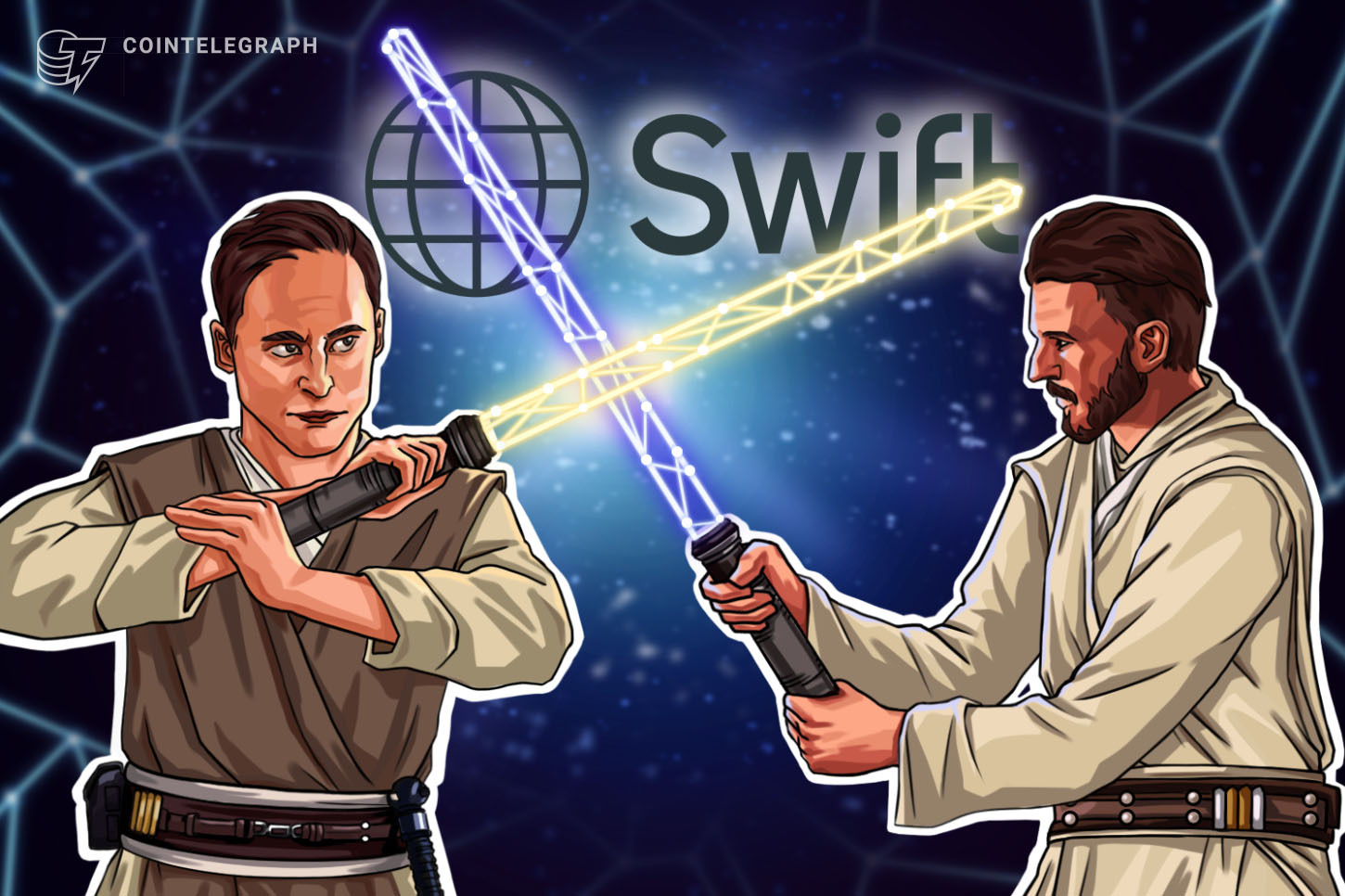 SWIFT launched its new blockchain ledger that will host a tokenized bank deposit pilot for 17 major banks seeking faster cross-border payments. The world's largest financial messaging network, SWIFT, said its blockchain-based ledger is ready for initial use after nine months of development. Seventeen major banks, including HSBC, Citi, BNP Paribas, UBS, ANZ, DBS and Standard Chartered, are preparing to pilot cross-border payments using tokenized bank deposits on the new ledger, SWIFT announced on Thursday. The ledger will enable participating banks to support 24/7 cross-border payments, including overnight and weekend transactions, while maintaining existing compliance, credit, risk and control standards embedded in current payment processing. Read more
 -
Cointelegraph.com - 08:26 Jul 09, 2026
 Binance is exploring new licensing paths into Europe while continuing to expand its regulatory footprint in Asia, says co-CEO Richard Teng. Binance is in talks with regulators that have invited the exchange to apply for crypto licenses following its withdrawal from the Markets in Crypto-Assets Regulation (MiCA) application in Greece, according to co-CEO Richard Teng. Teng said at the Reuters NEXT Asia conference in Singapore on Thursday that the discussions are still “premature” and declined to identify the jurisdictions. MiCA created a single licensing framework for crypto firms across the European Union. After the bloc's transition period expired on July 1, the European Securities and Markets Authority said crypto firms must serve EU clients through a MiCA-authorized entity, with limited exceptions for unsolicited cross-border business. Read more
 -
Cointelegraph.com - 08:22 Jul 09, 2026
 Alfa-Bank is testing cryptocurrency trading for qualified investors as Russia moves toward regulating digital assets and banks prepare new crypto services. Russia’s largest private bank, Alfa-Bank, is reportedly preparing to offer cryptocurrency services as the country continues developing a legal framework for the digital asset market. Dmitry Vitman, chief operating officer of Alfa-Bank’s corporate and investment banking division, said the bank plans to roll out a suite of crypto services once the relevant digital asset legislation takes effect, Russian publication RBC reported on Wednesday. The announcement comes as Russia’s largest banks prepare for a regulated crypto market, with Sber, VTB and T-Bank also outlining crypto plans amid progress on the country's digital asset legislation. Read more
 -
Cointelegraph.com - 06:03 Jul 09, 2026
 Senator Ron Wyden has called on Senate leaders to ensure the Blockchain Regulatory Certainty Act remains in the CLARITY Act when it is brought to the floor. US Democratic Senator Ron Wyden has urged Senate leaders to ensure that crypto developer protections stay in the crypto market structure legislation that lawmakers are looking to pass ahead of the midterms. Wyden told Senate Minority Leader John Thune and Senate Majority Leader Charles Schumer to preserve a section of the CLARITY Act known as the Blockchain Regulatory Certainty Act (BRCA), according to a letter shared by Crypto in America podcast co-founder Eleanor Terrett on Wednesday. “Developers who make and release software that allows people to manage their own digital assets — and, critically, where the developer does not control user assets — should not be treated as money transmitters solely because they create or publish software,” Wyden wrote. Read more
 -
Cointelegraph.com - 05:57 Jul 09, 2026
 Onchain scammers netted more than $14 billion last year, and approval phishing remains a primary attack vector. A crypto user lost nearly $1 million on Wednesday after signing a phishing token approval on Ethereum, according to onchain data. It comes as the industry recorded $366 million in phishing losses in the first half of the year. A Scam Sniffer alert on Thursday revealed a victim lost 999,999 USDt (USDT) to an Ethereum phishing token approval scam. Scammers first tried draining a rounded $1 million via multicalls but failed due to insufficient funds, then succeeded seconds later by pulling the exact remaining balance in follow-up transfers. “The script recalculated and pulled the exact remaining balance,” Scam Sniffer said. Read more
 -
Cointelegraph.com - 05:47 Jul 09, 2026
 Hackers have also been exploiting the codebases of defunct decentralized finance protocols, draining millions of dollars in customer funds. Blockchain security experts are urging crypto protocols to reaudit their smart contracts as AI tooling is making it easier for hackers to identify vulnerabilities more quickly than ever before. “Our data argues for continuous review rather than a one-time audit,” TRM Labs head of policy Ari Redbord told Cointelegraph, adding that “attack techniques are moving faster than a single audit from launch day can account for.” CertiK reported Monday that hackers stole another $1.32 billion in the first half of 2026 and have adopted increasingly sophisticated strategies in response to strengthened security measures across the industry. Read more
 -
Cointelegraph.com - 04:12 Jul 09, 2026
 Ongoing strong demand for AI infrastructure “would likely sustain upward pressure on prices for technology products and electricity,” Federal Reserve policymakers said. Federal Reserve officials were split last month on whether to increase interest rates or keep them steady, with many seeing accelerating demand for artificial intelligence as a driver of inflation, according to meeting minutes released on Wednesday. The minutes covered the first monetary policy meeting under Fed Chair Kevin Warsh. Many Federal Open Market Committee members said that “ongoing strong demand for AI infrastructure would likely sustain upward pressure on prices for technology products and electricity,” according to the minutes. AI-related inflationary pressure, colloquially known as “chipflation,” stems from the rising cost of semiconductors used by data centers. This surge in demand, along with data center competition for energy, has pushed up consumer prices for a wide range of electronic goods, devices and power, and may conti...
 -
Cointelegraph.com - 02:33 Jul 09, 2026
 Crypto venture firm Paradigm is widening its investment gaze toward AI and other frontier industries with its latest fund. Paradigm has raised $1.2 billion for its fourth fund, which will expand the crypto venture capital firm’s investments into artificial intelligence and related technologies. The company said on Wednesday that its latest fund will invest “first in crypto, and now across AI, robotics and other frontiers.” “We continue investing in crypto and the reinvention of markets and the financial system,” Paradigm added, highlighting its investments in the crypto perpetuals exchange Hyperliquid and the prediction markets platform Kalshi. Read more
 -
Cointelegraph.com - 02:32 Jul 09, 2026
 Zapper provided crypto market data to over 2 million monthly active users and oversaw more than $13 billion in processed transactions during its peak. Decentralized finance (DeFi) analytics platform Zapper announced it will shut down next month, becoming the latest crypto platform to fold amid a market downturn. In a post to X on Wednesday, Zapper CEO Seb Audet said Zapper’s website, mobile app and API services would shut down on Aug. 3, marking the end of a seven-year run after receiving backing from the likes of billionaire investor Mark Cuban in 2021. “We evaluated a number of different options, pursued some to the fullest extent possible, and came to the realization that an orderly wind down is the best course of action,” Audet said. Read more
 -
Cointelegraph.com - 01:32 Jul 09, 2026
 The size and scope of the US stock market “gives policymakers a strong incentive to backstop major drawdowns,” said Bitget Wallet COO, Alvin Kan. Crypto markets could benefit from increased liquidity if the US central bank steps in to support the $75 trillion equity market in a bear market, as it is "too big and too important to fail,” according to analysts. The US equity market has grown by 68% over the past five years and has added roughly $6 trillion in market value so far this year. However, analysts and experts, such as goldbug Peter Schiff, have warned that years of rapid growth could be setting up the market for a major correction. Such a correction could see the Fed "break decades of precedent" and buy equity ETFs to support the stock market, Bloomberg's ETF expert Eric Balchunas said on Tuesday, while other analysts said the resulting move to increase liquidity could set up an environment for cryptocurrencies to benefit. Read more
 -
Cointelegraph.com - 21:55 Jul 08, 2026
 Bitcoin faces renewed sell pressure amid an oil price surge, Japan economic contagion risks and a fresh round of selling from Strategy. Key takeaways: Bitcoin traded down 3.5% on Wednesday as new developments in the US-Iran war pushed oil prices higher and Japan’s bond markets faced renewed stress. That combination triggered broader de-risking across markets. At the same time, concerns over potential Bitcoin sales from Strategy intensified, with traders now bracing for a possible correction below $60,000. Read more
 -
Cointelegraph.com - 20:29 Jul 08, 2026
 Industry data shows trading activity and market value accelerating as crypto companies and traditional financial institutions expand tokenized equity initiatives. Tokenized stock transfers more than doubled over the past month to $8.41 billion, according to RWA.xyz data, as activity in onchain equity markets continued to accelerate. The sector's distributed value also climbed 43% over the same period to $2.16 billion, while the number of holders increased 17% to more than 409,000, according to the data platform. Growth was led by several of the market's largest tokenization platforms. Figure's distributed value surged 935% over the past 30 days, while Securitize's rose 332% and xStocks' increased around 62%. Read more
 -
Cointelegraph.com - 19:14 Jul 08, 2026
 EU officials reportedly plan to consider changes to the Markets in Crypto-Assets framework, dubbed by some as “MiCA 2.0,” in response to a US stablecoin law and rules on tokenized payments and deposits. European Union officials are reportedly planning to revise the Markets in Crypto-Assets (MiCA) framework amid the implementation of a US law on stablecoins. According to a Wednesday report from Euronews, EU officials planned to revisit proposed changes to MiCA to broaden the framework's scope, specifically regarding non-EU companies issuing stablecoins. The revised rules, which authorities will reportedly consider in 2027, were in response to the US government’s Guiding and Establishing National Innovation for US Stablecoins, or GENIUS, Act, putting pressure on EU officials to clarify how US stablecoin issuers could be regulated in member states. Officials will also reportedly consider expanding MiCA to include rules on tokenized payments and deposits. Read more
 -
Cointelegraph.com - 18:41 Jul 08, 2026
 Bitcoin hovered around the $62,000 mark following a spike in oil prices, escalating hot war in Iran and traders’ move to cut risk ahead of a Federal Reserve policy statement. Bitcoin (BTC) trades slightly above $62,000 and is down nearly 2% over the past 24 hours amid a risk-off mood across global markets. The pressure is not coming from crypto exclusively and is more so attributed to a sharp selloff in semiconductor and AI stocks. Renewed profit-taking from Samsung sent Asian markets reeling overnight, and military escalation between the US and Iran sent oil up around 5%. As a result, US stocks opened lower, and on Wednesday the Federal Reserve released the minutes from its June meeting, a report traders typically watch closely for clues on the timing of any rate cut. Currently, markets price roughly a 73% chance the Fed holds rates steady at its next meeting on July 29, but the major takeaway for investors will be how the tone of the minutes frames the Fed’s view on inflation and interest rates. Read mo...
 -
Cointelegraph.com - 17:31 Jul 08, 2026
 The Bitcoin Standard Treasury Company and Cantor Equity Partners I announced that they were looking into amending the terms of a 2025 merger deal that “better reflected market conditions.” The Bitcoin Standard Treasury Company (BSTR), founded by Blockstream CEO Adam Back, wants to change the terms of its merger agreement with Cantor Equity Partners for a public offering. According to a Wednesday announcement, BSTR and Cantor Equity Partners I, the special purpose acquisition company (SPAC) created by financial services giant Cantor Fitzgerald, scrapped the original terms of a 2025 merger agreement and will negotiate a new deal. Although the details were not included in the announcement, both companies said that they intended to negotiate terms that “better reflected market conditions.” Source: BSTR Read more
 -
Cointelegraph.com - 17:23 Jul 08, 2026
 A new Binance Research report said stablecoins are fast becoming a preferred settlement layer for tokenized TradFi markets while gaining traction in payments and savings. Stablecoin-settled perpetual contracts tied to traditional financial assets topped $1.1 trillion in trading volume during the first half of 2026, according to Binance Research, underscoring the growing role of stablecoins in tokenized financial markets. According to Binance Research, stablecoins are increasingly being used to settle TradFi-linked perpetual contracts, a market that's grown to roughly 11% of all crypto perpetual trading volume in the first five months of 2026. Read more
 -
Cointelegraph.com - 17:11 Jul 08, 2026
 Andrew Bailey reportedly said Bank of England policy remained independent after a meeting with Nigel Farage that included discussions on cryptocurrency. Bank of England Governor Andrew Bailey has reportedly denied that lobbying efforts by Nigel Farage influenced the central bank’s approach to a potential central bank digital currency (CBDC), saying policy decisions were made independently. According to a Wednesday report by The Guardian, which obtained a letter written by Bailey, the governor said the BoE is “able to spot” attempts to influence its policymaking. The letter followed a meeting with Farage, during which the two discussed several issues, including cryptocurrencies. “Following our meeting, Mr. Farage spoke with the press outlining that we had discussed a range of topics, including cryptocurrencies,” Bailey reportedly wrote in the letter. “I am happy to confirm that no policy changes have taken place as a result of interventions by Mr. Farage.” Read more
11876 items