BIP-110 | Crypto
"BIP-110" in Crypto feed
-
CryptoSlate - 14:30 Aug 10, 2026
Bitcoin’s BIP-110 push failed to gain meaningful mining support over the weekend, leaving the proposal stranded on a minority chain that produced only two blocks before stalling at height 961,633. The soft fork was designed to temporarily restrict several forms of arbitrary data on Bitcoin and required 55% miner signaling during its deployment window. Instead, […] The post Bitcoin’s BIP-110 fork is back, but its backers want to replace the miners and change PoW appeared first on CryptoSlate. -
CoinDesk - 06:25 Aug 10, 2026
Ocean, a bitcoin mining pool, had been backing BIP-110 by default. Simple Mining, a company that runs mining machines through Ocean, used software from the pool that lets individual miners choose for themselves and went the other way. -
Cointelegraph.com - 00:32 Aug 10, 2026
BIP-110 forks itself into oblivion with a “2-block chain” and CLARITY will finally get a Senate vote in September. The odds say that vote will be a No. Supporters of the BIP-110 soft fork hoped to eradicate spam from the blockchain, but after a lengthy and heated debate the proposal has been pronounced DOA or Dead On Arrival. After securing just 2.5% support ahead of entering mandatory signaling on Saturday, it split off into a minority chain that mined just two blocks in eight hours before stalling. This is probably no surprise given it’s just as difficult and expensive to mine on the new chain as it is on Bitcoin — but without any hope of being able to sell the block reward to recoup the costs. The difficulty would have adjusted downward if they’d managed to mine through another 2,014 blocks. BIP-110 aimed to rid Bitcoin of non financial transactions, such as Ordinals, but opponents saw it as imposing censorship on the chain and it faced opposition from prominent Bitcoin advocates. Strategy executive chairm...
-
CryptoSlate - 11:00 Aug 09, 2026
None of the first 59 dominant-chain blocks signaled for the proposal, while its enforcing branch mined one successor before stalling. The post Bitcoin split into two chains overnight, but a silent miner boycott just halted the enforcing BIP-110 chain appeared first on CryptoSlate. -
Cointelegraph.com - 21:17 Aug 08, 2026
 The deployment milestone tests whether enforcing nodes can sustain the change amid limited miner signaling and discussion of a hard-fork fallback. Bitcoin Improvement Proposal 110 entered its mandatory-signaling phase at block 961,632 on Saturday, with miners signaling support in just 51 of the preceding 2,016 blocks, or 2.53%, well below the 55% threshold required for early activation, according to the BIP-110 monitor. Starting at block 961,632, nodes enforcing BIP-110 began rejecting blocks that did not set version bit 4, while ordinary Bitcoin nodes continued accepting both signaling and non-signaling blocks. A minority BIP-110 branch subsequently emerged, but quickly fell behind the dominant chain. The low signaling rate makes a sustained rival chain unlikely without substantially greater miner participation. With relatively little mining support, a BIP-110 branch could advance slowly or stop producing blocks altogether. Read more
 -
CryptoSlate - 19:40 Aug 07, 2026
At height 961,632, enforcing nodes reject non-signaling blocks, but Bitcoin does not automatically adopt the proposal. The post Bitcoin has 185 blocks left before BIP-110 rules begin rejecting blocks appeared first on CryptoSlate. -
CoinDesk - 11:45 Aug 07, 2026
BIP-110 has attracted only a sliver of miner support, yet its user-activated design means the proposal continues toward its activation date and (most likely) beyond. -
Cointelegraph.com - 10:29 Jul 22, 2026
 Foundry USA asked its mining customers to signal their support for BIP-110, an actively debated proposal seeking to shrink the amount of data that can be stored in a Bitcoin transaction. Foundry USA began asking mining customers to vote on how the pool should signal on Bitcoin Improvement Proposal (BIP-110), a soft fork proposing to shrink how much data can be stored in Bitcoin transactions to limit non-monetary transactions, such as Ordinals, on the Bitcoin network. The world’s largest mining pool by hashrate also released educational resources on the proposal and said that the voting window will close at Bitcoin block 961,632, or sometime in early August. Foundry’s mining clients can cast their votes by accessing a link received via email. Read more
 -
CryptoSlate - 11:50 Jul 20, 2026
The current period cannot reach the 55% threshold, leaving one full ordinary window before enforcing nodes require bit 4. The post Saylor joins Bitcoin’s BIP-110 fight as miners get one last chance to avoid forced signaling appeared first on CryptoSlate. -
Cointelegraph.com - 16:37 Jul 19, 2026
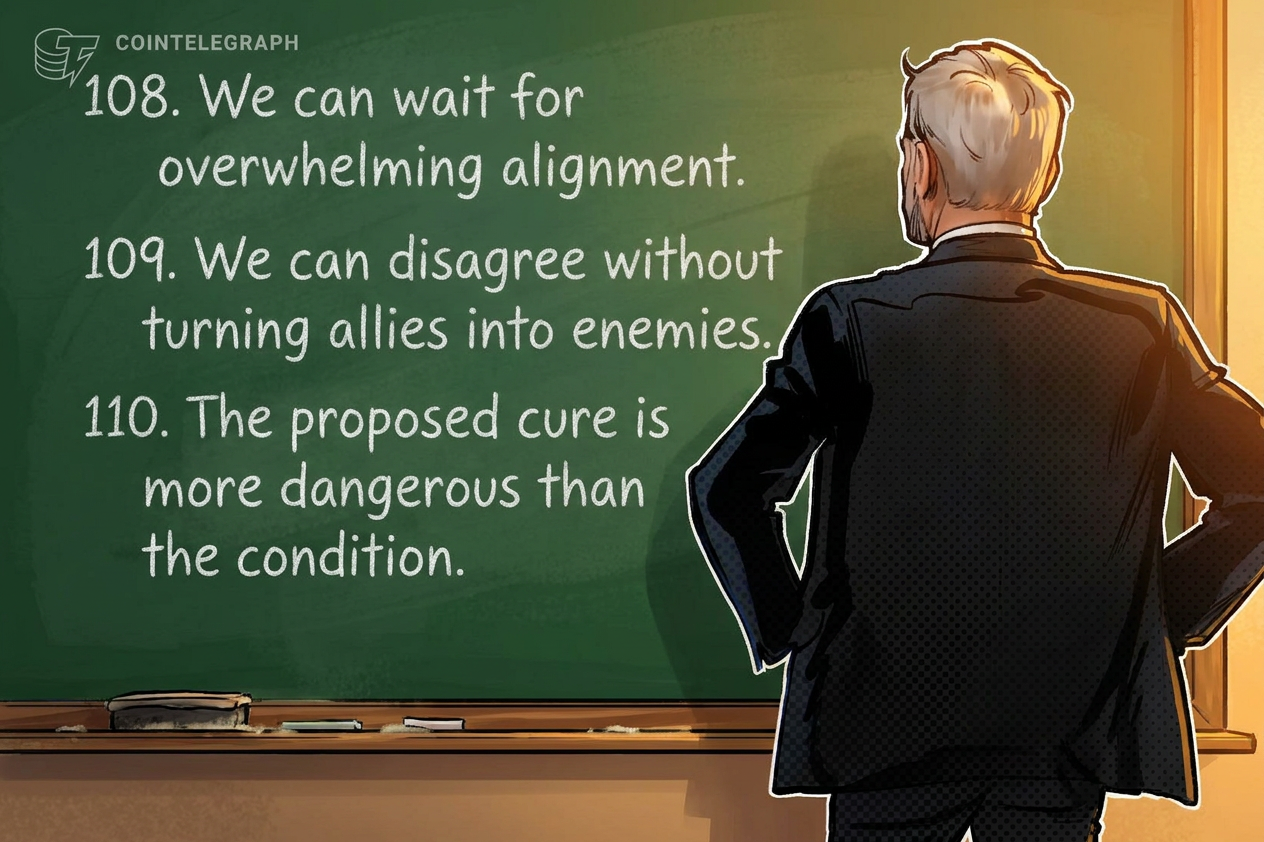 The man in control of the biggest Bitcoin corporate treasury said he shares the objectives but disagrees about the remedy detailed in the proposed temporary fork. Strategy executive chairman Michael Saylor took to social media on Sunday to detail his “110 reasons” why a proposed temporary fork to limit non-monetary transactions on the Bitcoin network, or BIP-110, is a bad idea. Bitcoin Improvement Proposal-110 was introduced in December 2025 to stop nonfungible token-like Ordinals inscriptions and other arbitrary data from spamming the network and to preserve BTC’s main use as a peer-to-peer cash system. In a roughly 3,700 word post on X.com, the man in control of the largest Bitcoin (BTC) corporate treasury made a case for what he said are “neutral rules, hard consensus, open markets, and permissionless innovation.” Read more
 -
CoinDesk - 11:01 Jul 14, 2026
BIP-110 sought to limit non-financial data on Bitcoin's blockchain but instead reignited debates over censorship and decentralization. -
CryptoSlate - 10:00 Jul 04, 2026
BGeometrics shows support at 0.42% since May 1, while Farside's alerts make the August lock-in window harder for exchanges, wallets, pools, and node operators to ignore. The post Bitcoin’s BIP-110 fork fight gives exchanges an August deadline before miners signal support appeared first on CryptoSlate. -
Cointelegraph.com - 18:00 Jan 24, 2026
 The Bitcoin proposal caps arbitrary data in an attempt to combat spam from non-monetary transactions on the Bitcoin network. The number of Bitcoin (BTC) nodes signaling support for Bitcoin Improvement Proposal 110 (BIP-110), a temporary soft fork limiting the amount of data included in each transaction at the consensus level, rose to 2.38%. 583 out of 24,481 nodes are running BIP-110, and the primary node software implementation for running the soft fork proposal is Bitcoin Knots, according to The Bitcoin Portal. BIP-110 limits the size of transaction outputs to 34 bytes and caps the OP_RETURN data limit to 83 bytes. The temporary soft fork will be deployed for 1 year, with possible extension or alteration after the 1-year term, according to the proposal’s GitHub page. Read more