Saylor | Crypto
"Saylor" in Crypto feed
-
Decrypt - 12:11 Oct 14, 2026
With Strategy's preferred stock STRC closing in on $100 par, Saylor might not be the number two buyer for long... -
Cointelegraph.com - 17:03 Oct 11, 2026
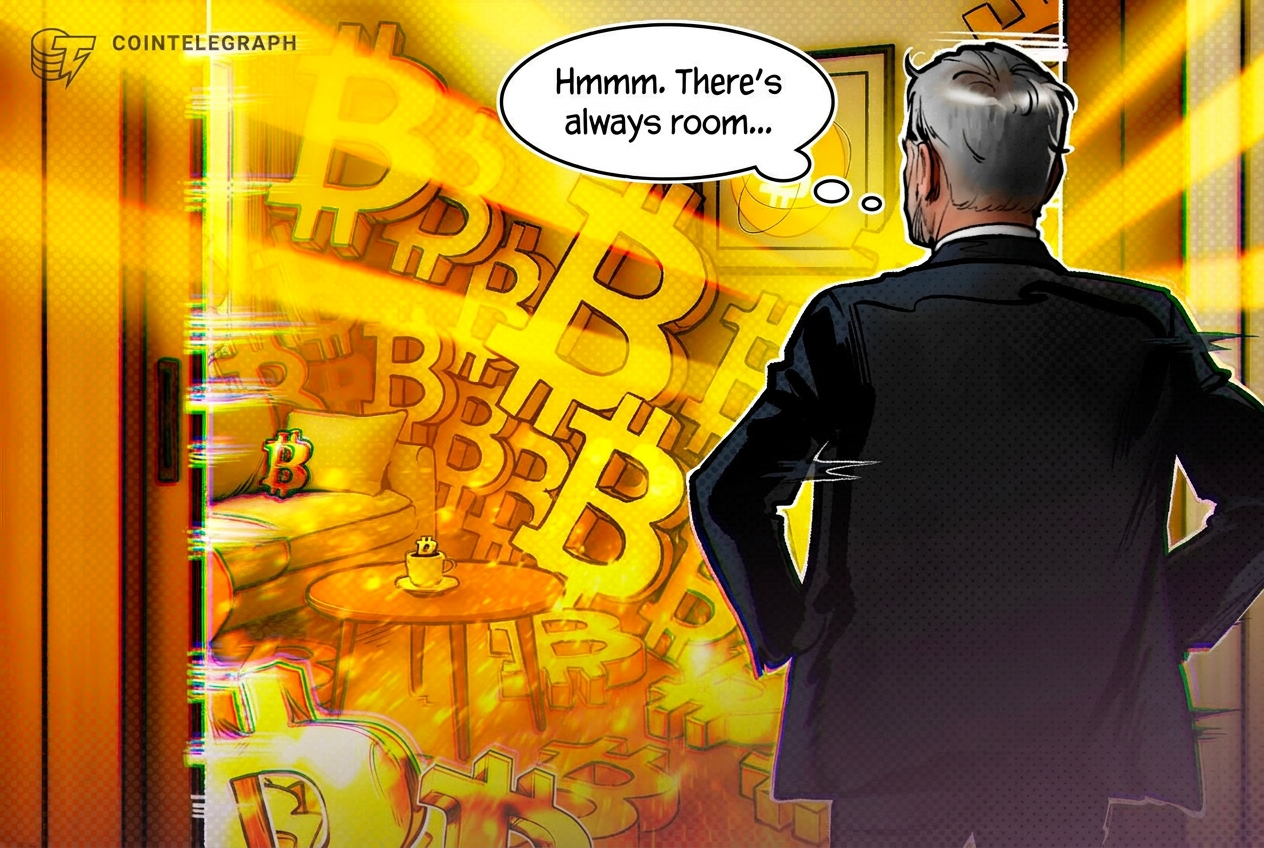 Investors will have to wait an extra day to find out if and how much Strategy added to its Bitcoin treasury in the first week of October. Strategy chair Michael Saylor teased investors watching Sunday for a signal of the company’s recent Bitcoin purchases with the message “There’s always room for more orange,” in a post on X. However, any official notification via a filing with the US Securities and Exchange Commission won’t likely come before Tuesday, as federal offices will be closed on Monday for the Columbus Day holiday. Strategy ended September by spending more than six times its weekly Bitcoin (BTC) buying budget on its repurchases of one of its preferred stocks. Strategy bought 334 Bitcoin (BTC) for $28.7 million between Sept. 28 and Oct. 4, bringing its holdings to exactly 848,000 BTC, according to an Oct. 5 8-K form SEC. Read more
 -
Cointelegraph.com - 07:18 Sep 27, 2026
 Our ambition should be to “enable 10 million new companies to raise capital,” Strategy’s executive chairman Michael Saylor wrote in an essay. Michael Saylor, co-founder of Strategy, said that an age of digital assets and intelligence needs a “bill of digital rights,” rather than restrictions. An age of AI can increase production, but it needs better money and capital markets to realize its potential, according to an essay that Saylor, executive chairman of world’s largest corporate Bitcoin holder, posted on X Saturday. A useful framework for digital assets should establish five fundamental rights, or freedoms, Saylor wrote. Read more
 -
CryptoSlate - 21:30 Sep 08, 2026
The store advertises cards, Apple Pay and Google Pay, while all nine listed shoe sizes are unavailable. The post Strategy’s $250 Bitcoin Jordans sold out as Saylor turns 4% of BTC supply into a consumer brand appeared first on CryptoSlate. -
CryptoSlate - 13:45 Sep 02, 2026
Michael Saylor has roughly one week to orchestrate STRC’s return to its $100 par value by his informal Sept. 8 target, but the financial machinery required to close the final gap is running hot. Despite deploying $635.2 million on aggressive buybacks, Strategy’s preferred security continues to hover around $97. The company has simultaneously restarted its […] The post Strategy keeps STRC at 12% as Saylor has seven days to salvage the $10 billion Bitcoin yield product as costs spiral appeared first on CryptoSlate. -
Cointelegraph.com - 17:58 Aug 30, 2026
 Michael Saylor’s “We’re Back” post hints Strategy may resume Bitcoin buying after a two-month pause to strengthen its balance sheet. Strategy’s Michael Saylor said “We’re Back” in his latest signal on X (formerly Twitter) of the company’s likely return to Bitcoin buying. For market watchers, the post could be a strong psychological signal as Saylor has a track record of dropping cryptic weekend teasers that precede official Monday morning treasury purchase announcements. Should that record, and community interpretation, hold true, his post points to the resumption of corporate Bitcoin accumulation following a notable summer hiatus. Read more
 -
CryptoSlate - 17:00 Aug 24, 2026
Bitcoin and Ethereum surged last week as falling Treasury yields, renewed US crypto optimism, and a wave of short liquidations sent digital assets sharply higher. Bitcoin climbed more than 20% and approached $80,000, while Ethereum gained about 30% in its strongest weekly advance since May 2025. The rally drew fresh $2.6 billion in ETF inflows, […] The post Saylor sat out Bitcoin’s 20% rally while Tom Lee bought Ethereum after a 30% surge appeared first on CryptoSlate. -
CryptoPotato - 15:39 Jul 29, 2026
Saylor said that protocol changes on the Bitcoin network must be rare, conservative, and driven by necessity, not ambition. -
CryptoSlate - 11:50 Jul 20, 2026
The current period cannot reach the 55% threshold, leaving one full ordinary window before enforcing nodes require bit 4. The post Saylor joins Bitcoin’s BIP-110 fight as miners get one last chance to avoid forced signaling appeared first on CryptoSlate. -
Cointelegraph.com - 16:37 Jul 19, 2026
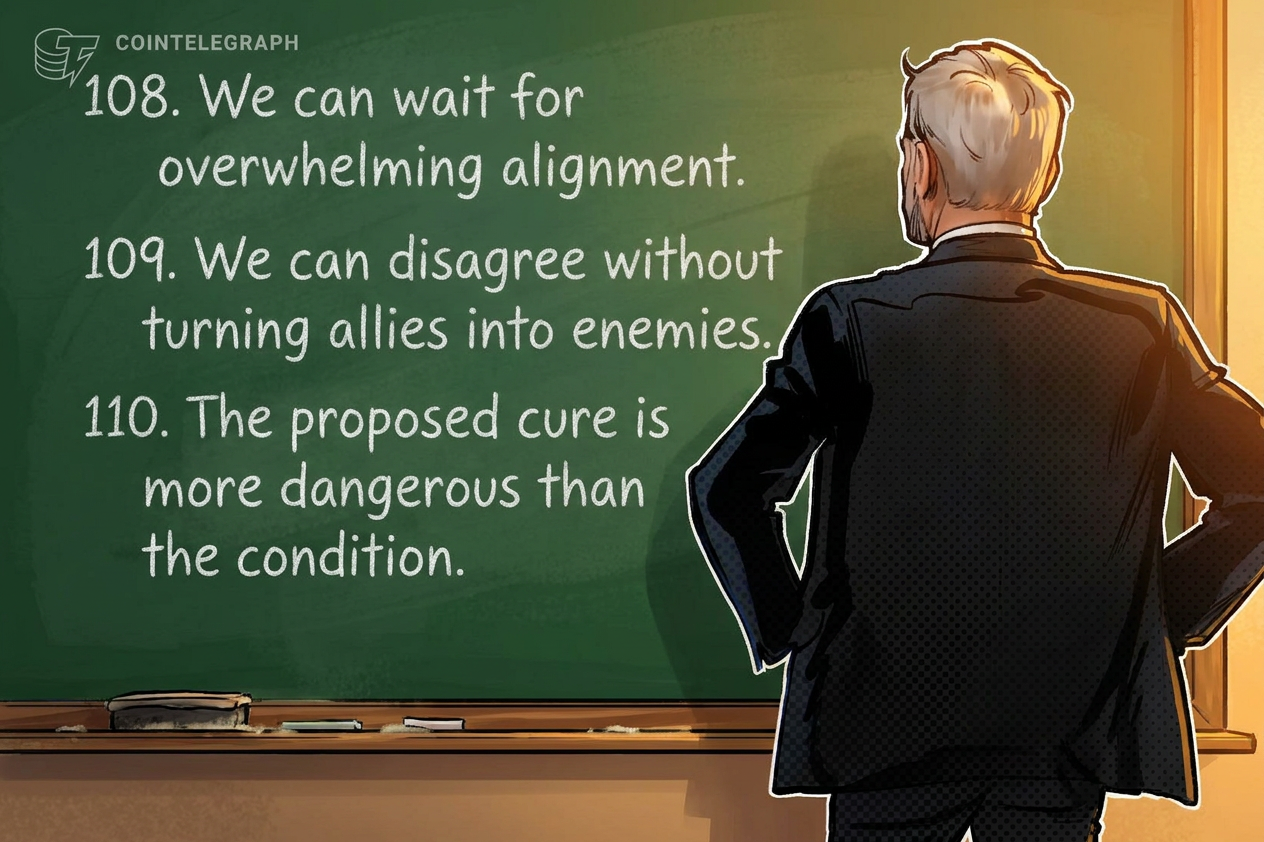 The man in control of the biggest Bitcoin corporate treasury said he shares the objectives but disagrees about the remedy detailed in the proposed temporary fork. Strategy executive chairman Michael Saylor took to social media on Sunday to detail his “110 reasons” why a proposed temporary fork to limit non-monetary transactions on the Bitcoin network, or BIP-110, is a bad idea. Bitcoin Improvement Proposal-110 was introduced in December 2025 to stop nonfungible token-like Ordinals inscriptions and other arbitrary data from spamming the network and to preserve BTC’s main use as a peer-to-peer cash system. In a roughly 3,700 word post on X.com, the man in control of the largest Bitcoin (BTC) corporate treasury made a case for what he said are “neutral rules, hard consensus, open markets, and permissionless innovation.” Read more
 -
Cointelegraph.com - 23:24 Jul 12, 2026
 Even Ethereum's critics believe Robinhood Chain is bullish for ETH. Nigel Farage and Donald Trump become embroiled in crypto related scandals, and more. The successful launch of the layer-2 network Robinhood Chain has boosted investor sentiment around Ethereum. The newly launched blockchain uses ETH as its native gas token and around $141 million in ETH has already been bridged to the chain. More than half a million wallets holding ETH are now on the network, which surged past the Ethereum L1 and rival L2 Base over the past 24 hours, with DEX volumes of $877.56 million. The L2 is an offshoot of TradFi trading platform Robinhood, which offers tokenized stocks to customers in 120 countries, further strengthening the EVM-compatible ecosystem. L2s have been seen by many pundits as bearish for Ethereum as they take activity away from the L1 without returning much in the way of transaction fees. However even some former ETH bears are now reassessing that thesis. Influencer Ansem wrote: Mike Dudas from 6th Man Ventu...
 -
Cointelegraph.com - 18:16 Jul 12, 2026
 Standard Chartered sees communication challenges facing the biggest digital asset treasury company as "muddying the waters" for Bitcoin in the near term. Strategy founder and chairman Michael Saylor again took to social media on Sunday to offer his latest signal to investors as one analyst sees Saylor’s messaging as needing more clarity to help Bitcoin regain its momentum. “Orange dots tell only part of the story,” was Saylor’s message on Sunday in a post that accompanied a chart from Saylortracker.com, similar to previous social media messages that have preceded news of Strategy's Bitcoin (BTC) purchases, typically announced the day after his posts. In recent weeks, the largest digital asset treasury company and a major BTC holder, has moved away from its long-time “never sell Bitcoin” approach to a willingness to sell the biggest crypto as needed to fund dividends for holders of its STRC preferred stock and to replenish its cash reserves. Earlier this month, Strategy sold $216 million worth of Bitcoin, redu...
 -
CryptoSlate - 10:10 Jul 07, 2026
Strategy’s largest Bitcoin sale in years has put new pressure on the corporate treasury model that made Michael Saylor one of the most closely watched figures in digital assets. On July 6, the company, formerly known as MicroStrategy, revealed that it sold 3,588 Bitcoin for about $216 million between June 29 and July 5. Per […] The post Strategy faces $8.3 billion Bitcoin Q2 loss as Saylor sells over $200M in BTC appeared first on CryptoSlate. -
CryptoPotato - 12:05 Jul 06, 2026
Saylor hinted at another BTC move yesterday on X. However, it wasn't what many anticipated. -
Cryptonews.com - 09:14 Jul 05, 2026
JPMorgan warns Strategy's leveraged Bitcoin accumulation could flip Saylor's firm from buyer to seller. Here's what that means for BTC price targets at $60K, $170K, and beyond. The post Bitcoin Price Prediction: Saylor’s Strategy is a Risk to Bitcoin, According to JP Morgan appeared first on Cryptonews. -
CryptoSlate - 18:55 Jul 03, 2026
Michael Saylor’s Strategy has calmed the immediate panic around its preferred-stock complex, but the company’s latest overhaul points to a more complicated phase for one of Bitcoin’s most visible corporate buyers. Strategy, formerly known as MicroStrategy, announced a new capital-management framework this week after STRC, its flagship preferred stock, fell to a low of $71.25 […] The post Strategy bought time but Bitcoin’s next cycle may need buyers beyond Saylor appeared first on CryptoSlate. -
CryptoSlate - 19:15 Jun 24, 2026
Strategy (formerly known as MicroStrategy) is discovering that strengthening one part of its increasingly complex balance sheet can expose weaknesses elsewhere. The Bitcoin treasury company spent $1.5 billion in May repurchasing convertible notes, reducing its debt but also draining cash that investors viewed as a backstop for its preferred-stock dividends. Weeks later, its Variable Rate […] The post Saylor’s STRC Bitcoin machine is turning shareholders into its cash backstop – causing a dilution trade-off appeared first on CryptoSlate. -
Cryptonews.com - 09:46 Jun 24, 2026
Grayscale's Zach Pandl warns Strategy's $15.5B preferred stack and $1.5B annual dividend load could compel repeated Bitcoin sales, undermining Saylor's accumulation thesis. The post Is Saylor’s Strategy Sat on $1.5Bb Cashflow Problem? Grayscale Think So appeared first on Cryptonews. -
CryptoSlate - 16:15 Jun 19, 2026
STRC, Strategy's perpetual preferred stock, traded as low as $82.61 on June 18 before recovering to $88.59, putting the security nearly 17% below its $100 stated amount at the intraday low. MSTR fell 3.4% to $112.53 during the same session, while Bitcoin traded near $62,730, down about 2.5%. Strategy designed STRC to hover around $100 […] The post STRC’s plunge puts Saylor’s Bitcoin dividend machine under pressure appeared first on CryptoSlate. -
Cointelegraph.com - 13:52 Jun 15, 2026
 Strategy acquired 1,587 Bitcoin for $100 million last week, lifting holdings to 846,842 BTC after raising $209 million through MSTR stock sales. Michael Saylor’s Strategy, the world’s largest public Bitcoin holder, added to its cryptocurrency reserves last week as BTC continued to trade below the company’s average cost basis of about $75,700. Strategy acquired 1,587 Bitcoin (BTC) for $100 million between June 8 and Sunday, according to Monday's 8-K filing with the US Securities and Exchange Commission. Read more