Bitcoin | Crypto
"Bitcoin" in Crypto feed
-
Cointelegraph.com - 13:30 Jul 09, 2026
 Dealing with large post quantum signatures slowing down Bitcoin can be solved with bigger blocks, or aggregating signatures using STARK proofs. ZK STARKs are the best way to deal with the issues created with making Bitcoin quantum-safe — and to reach mass adoption at the same time — says StarkWare co-founder Eli Ben-Sasson. What’s more, he claims Blockstream founder Adam Back agrees. Ben-Sasson has been in the news this week for his controversial suggestion on X to increase Bitcoin inflation to 4% annually. Grok’s analysis of the replies found “zero clear support for the proposal.” But as the co-inventor of STARKs — quantum-secure, hash-based zero-knowledge proofs — he’s on much firmer ground, with some leading Bitcoin researchers supporting the concept. Ben-Sasson’s own project Starknet last week announced its own three phase project to become quantum secure. Adding zero-knowledge proofs to Bitcoin does not make the blockchain quantum secure by itself. ZK proofs are a way to deal with the problems caused by ...
 -
CryptoSlate - 11:45 Jul 09, 2026
Bitcoin price held above $62,000 after renewed fighting between the United States and Iran slowed traffic through the Strait of Hormuz and sent oil prices higher, reviving inflation concerns across global markets. Data from CryptoSlate shows that the largest digital asset traded near $63,000 on Thursday, holding above the $60,000 level that traders have watched […] The post Bitcoin price shows resilience above $60,000 amid renewed US-Iran hostilities appeared first on CryptoSlate. -
CryptoSlate - 10:51 Jul 09, 2026
Bitcoin's climb from $58,300 to $64,400, then back to $62,700, over the past week is a bounce that still leaves the price below two important levels tracked by Glassnode: the True Market Mean near $76,600 and the short-term holder cost basis near $72,200. The firm places Bitcoin in the later stages of a bottoming process, […] The post Bitcoin’s bottom needs long-term holders to stop losing $280M a day appeared first on CryptoSlate. -
Cryptonews.com - 08:47 Jul 09, 2026
Fresh Iran news sent us scrambling last night, but the panic did not last. Bitcoin and Ethereum price reversed within hours. Why? The post Crypto News, July 9: Iran Market Fears Fade as Bitcoin and Ethereum Price Shrug Off Another Panic appeared first on Cryptonews. -
CryptoPotato - 07:30 Jul 09, 2026
Bitcoin traders face a crucial test as $63,000 remains the barrier bulls must overcome before further upside. -
Cointelegraph.com - 21:55 Jul 08, 2026
 Bitcoin faces renewed sell pressure amid an oil price surge, Japan economic contagion risks and a fresh round of selling from Strategy. Key takeaways: Bitcoin traded down 3.5% on Wednesday as new developments in the US-Iran war pushed oil prices higher and Japan’s bond markets faced renewed stress. That combination triggered broader de-risking across markets. At the same time, concerns over potential Bitcoin sales from Strategy intensified, with traders now bracing for a possible correction below $60,000. Read more
 -
Cointelegraph.com - 18:41 Jul 08, 2026
 Bitcoin hovered around the $62,000 mark following a spike in oil prices, escalating hot war in Iran and traders’ move to cut risk ahead of a Federal Reserve policy statement. Bitcoin (BTC) trades slightly above $62,000 and is down nearly 2% over the past 24 hours amid a risk-off mood across global markets. The pressure is not coming from crypto exclusively and is more so attributed to a sharp selloff in semiconductor and AI stocks. Renewed profit-taking from Samsung sent Asian markets reeling overnight, and military escalation between the US and Iran sent oil up around 5%. As a result, US stocks opened lower, and on Wednesday the Federal Reserve released the minutes from its June meeting, a report traders typically watch closely for clues on the timing of any rate cut. Currently, markets price roughly a 73% chance the Fed holds rates steady at its next meeting on July 29, but the major takeaway for investors will be how the tone of the minutes frames the Fed’s view on inflation and interest rates. Read mo...
 -
Cointelegraph.com - 17:31 Jul 08, 2026
 The Bitcoin Standard Treasury Company and Cantor Equity Partners I announced that they were looking into amending the terms of a 2025 merger deal that “better reflected market conditions.” The Bitcoin Standard Treasury Company (BSTR), founded by Blockstream CEO Adam Back, wants to change the terms of its merger agreement with Cantor Equity Partners for a public offering. According to a Wednesday announcement, BSTR and Cantor Equity Partners I, the special purpose acquisition company (SPAC) created by financial services giant Cantor Fitzgerald, scrapped the original terms of a 2025 merger agreement and will negotiate a new deal. Although the details were not included in the announcement, both companies said that they intended to negotiate terms that “better reflected market conditions.” Source: BSTR Read more
 -
CryptoSlate - 17:05 Jul 08, 2026
The US Senate returns to Washington next week with 20 working days to decide whether the CLARITY Act, which is the most advanced crypto market-structure bill in Congress, becomes law this summer or slips into another round of delay. Data from CryptoSlate shows that Bitcoin has climbed about 10% this month after a bruising June, […] The post Bitcoin’s rally has 4 weeks to get its Washington CLARITY catalyst before the clock runs out appeared first on CryptoSlate. -
CryptoSlate - 16:00 Jul 08, 2026
Futures volume is running far ahead of spot demand, making absorption the next test for BTC's recovery. The post Bitcoin’s ETF comeback is relying on a $79B futures market betting the rebound holds appeared first on CryptoSlate. -
Cointelegraph.com - 15:35 Jul 08, 2026
 Bitcoin price pressure took BTC toward the "crucial" $61,000 mark as oil prices soared on the collapse of the US-Iran ceasefire. Bitcoin (BTC) stayed below $62,000 after Wednesday’s Wall Street open as US president Donald Trump closing a key world oil route. Key points: Read more
 -
Cryptonews.com - 15:15 Jul 08, 2026
StarkWare's Eli Ben-Sasson says Bitcoin's 21 million supply cap is flawed and wants a 4% inflation rate ceiling instead — but the community isn't having it. The post Bitcoin 21M Cap Under Fire From Zcash Founder appeared first on Cryptonews. -
CryptoSlate - 15:10 Jul 08, 2026
Its June update shows why headline Bitcoin holdings can be harder to read when coins are collateral, receivables, restricted balances, or already tied to treasury trades. The post Bitcoin miners are using up to 12% of treasury BTC as collateral rather than selling coins appeared first on CryptoSlate. -
Cointelegraph.com - 12:59 Jul 08, 2026
 Analysis flagged a Bitcoin moving average derivative that last triggered at the end of the 2022 bear market as BTC price action returned to its reversal zone. Bitcoin (BTC) is seeing a “textbook” bear-market bottom as speculators take profits on the trip toward $65,000. Key points: Read more
 -
Cointelegraph.com - 12:01 Jul 08, 2026
 Bitcoin-focused macroeconomist Lyn Alden said BTC must stand on its own as Strategy sold 3,588 BTC, while warning about leverage risks tied to STRC. Bitcoin is facing its weakest sentiment cycle yet, according to Lyn Alden, a Bitcoin-focused macroeconomist who said the asset must stand on its own as Strategy disclosed a $216 million Bitcoin sale earlier this week. “I don’t think there’s anything coming to save Bitcoin,” Alden said in a Tuesday interview with journalist and Bitcoin educator Natalie Brunell, saying the asset's long-term success must come from its own fundamentals rather than external catalysts. “The asset just has to survive on its own merits,” Alden said, pointing to Bitcoin’s underlying properties as a liquid, permissionless way to store and send value, instead of relying on a new source of demand. Read more
 -
CryptoSlate - 11:35 Jul 08, 2026
The US Treasury's Office of Foreign Assets Control revoked General License X on July 7, cutting off the authorization that had allowed Iranian crude oil, petrochemical, and petroleum-product transactions through Aug. 21. Its replacement, General License X1, permits only wind-down transactions through 12:01 a.m. ET on July 17. Brent crude settled at $74.16 and WTI […] The post Bitcoin looks calm but a July 17 oil deadline looms as Iran shock sends crude up 5% appeared first on CryptoSlate. -
CryptoSlate - 10:40 Jul 08, 2026
Bitcoin miners are facing a real-world test of their ability to improve the electricity grid. The US Energy Information Administration projects electricity consumption will climb from 4,195 billion kilowatt-hours in 2025 to 4,269 billion in 2026 and 4,399 billion in 2027. The agency ties the increase to AI data centers, cryptocurrency operations, and broader electrification, […] The post Bitcoin miners have until 2027 to prove they deserve power on America’s overloaded grid appeared first on CryptoSlate. -
Cointelegraph.com - 05:48 Jul 08, 2026
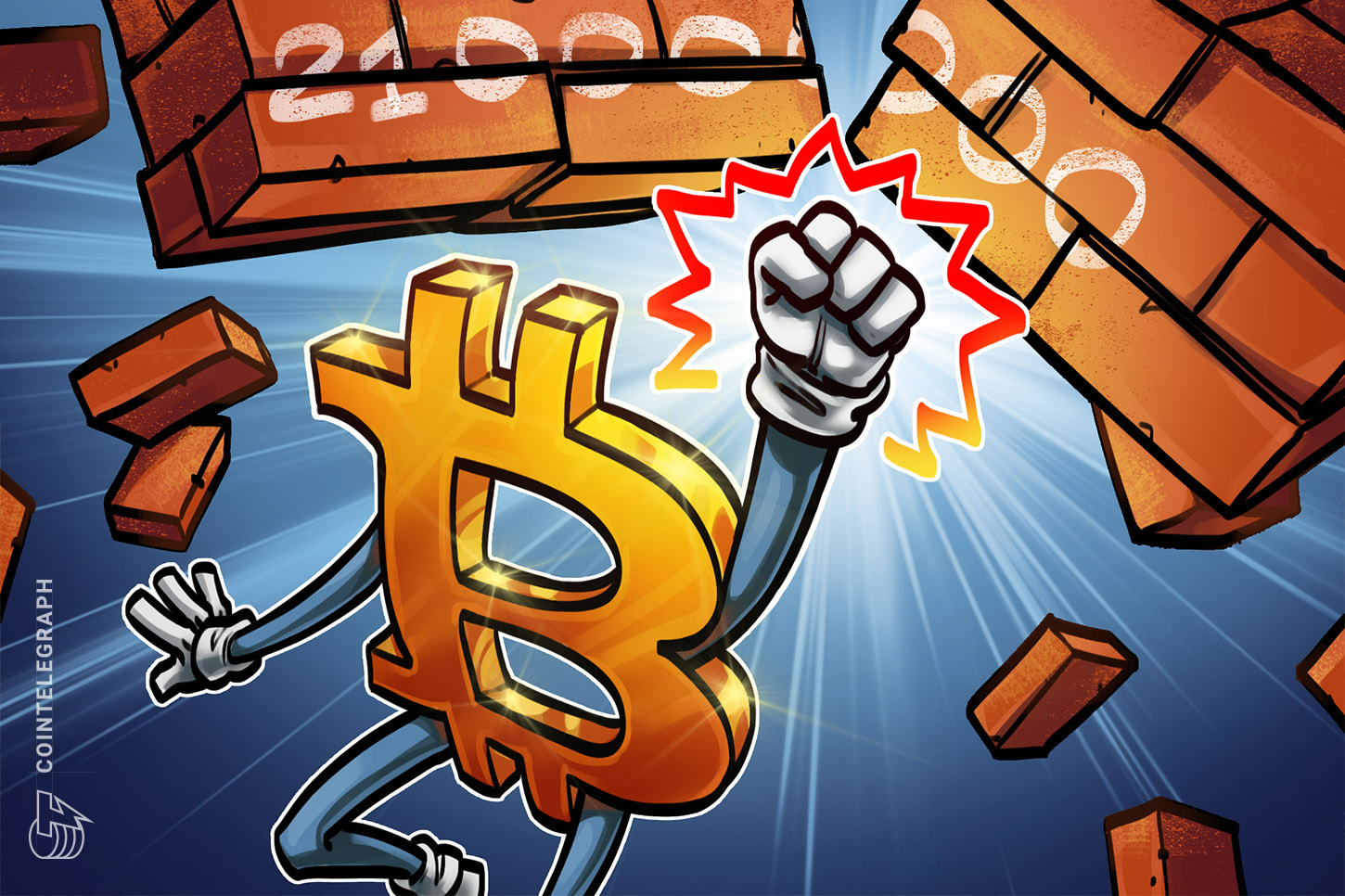 StarkWare CEO Eli Ben-Sasson argued that Bitcoin private keys get lost over time, meaning the amount of usable Bitcoin diminishes over time. Many disagree. The debate over whether Bitcoin's fixed supply cap should be lifted has resurfaced after StarkWare CEO Eli Ben-Sasson suggested Tuesday that it should replaced with a 4% annual issuance rate. In a post to X on Tuesday, Ben-Sasson said the current 21 million cap “doesn't make sense” because private keys are lost over time and “as time goes to infinity, all keys will be lost.” Crypto wallet hardware provider Ledger estimated in November that up to 4 million Bitcoin had been burned or permanently lost. Ben-Sasson said he still supports a hard upper bound on Bitcoin's supply, and that a 4% annual inflation rate roughly tracks the growth of the human population. Read more
 -
Cointelegraph.com - 02:40 Jul 08, 2026
 The cost of eliminating margin calls and forced liquidations is an interest rate as high as 14.2% and an obligation to pay on time, Strike CEO Jack Mallers said. Bitcoin financial services platform Strike has launched a “volatility-proof” Bitcoin-backed loan that eliminates margin calls and forced liquidations amid the depths of a bear market, but only for those who can pay on time and handle a 14% interest rate. In an announcement on Tuesday, Strike CEO Jack Mallers said the offering came in response to broad customer feedback on Strike’s first Bitcoin loan product, which launched in May 2025 and triggered many liquidations during a timeframe in which Bitcoin (BTC) dropped 54% from peak to trough. “No margin calls. No price liquidations. No matter how far bitcoin falls, your bitcoin doesn't move,” Strike CEO Jack Mallers said of the new Bitcoin loan product. The trade-off is an expensive interest rate, a shorter six-month loan term, and an obligation to pay on time to avoid liquidation, Mallers said. Read mo...
 -
Cointelegraph.com - 20:45 Jul 07, 2026
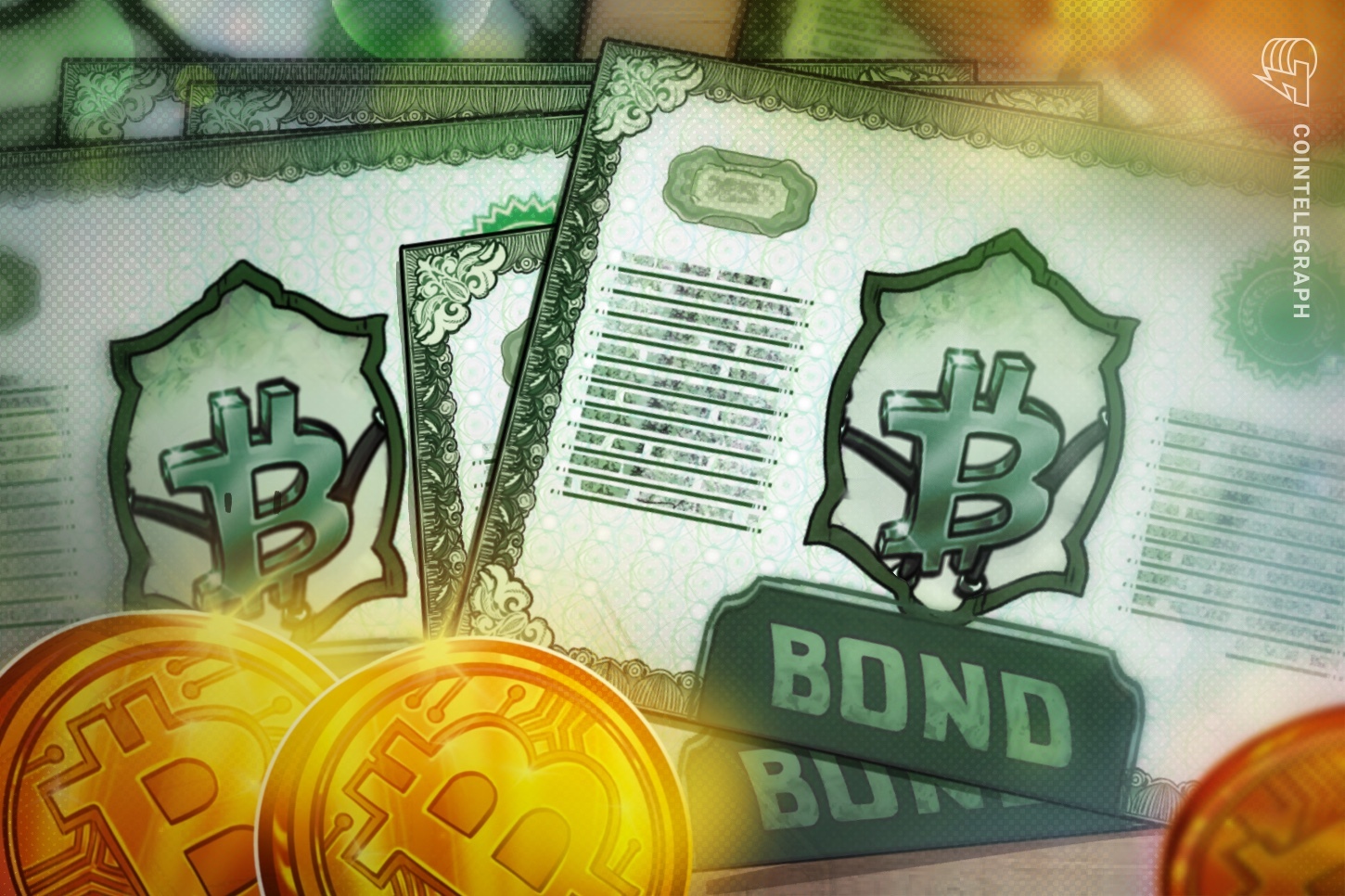 The proposed bonds to be backed by cryptocurrency still need approval from New Hampshire Governor Kelly Ayotte and the state’s five-member executive council. The New Hampshire Secretary of State’s office announced that lawmakers would discuss issuing $100 million in bonds backed by Bitcoin (BTC) at a public hearing. In an update to the New Hampshire governor and executive council agenda, the state’s Business Finance Authority (BFA) has scheduled a meeting for Wednesday regarding the proposed issuance of $100 million in BTC-backed bonds. The BFA approved the bond in November 2025, saying that it planned to issue the vehicles upon approval from Governor Kelly Ayotte and the state’s five-member executive council. “This is an innovative way to bring more investment opportunities to our state and position us as a leader in digital finance without risking state funds or taxpayer dollars,” said Ayotte on the bonds, following the BFA approval. Read more