Crypto
-
CoinDesk - 06:17 Jan 19, 2026
A trader exploited thin weekend liquidity and automated market-making bots on Polymarket to lock in a $233,000 profit, sparking debate over whether the strategy crossed the line into market manipulation. -
Cointelegraph.com - 06:10 Jan 19, 2026
 Bitcoin futures open interest has begun to recover in January after a sharp Q4 deleveraging, though analysts say the rebound remains modest. Bitcoin futures open interest (OI) — a measure of derivative market participation — has gained almost 13% from the start of the year, which analysts say could reflect more risk appetite for crypto. The increase follows a sharp deleveraging phase from October through December, when Bitcoin derivatives exposure fell alongside a broad market correction. Bitcoin futures OI has fallen 17.5% from 381,000 BTC to 314,000 BTC over the past three months, following a roughly 36% price correction from early October, “reflecting a phase of risk reduction and the unwinding of leveraged positions,” said CryptoQuant analyst “Darkfost” on Monday. Read more
 -
CoinDesk - 05:50 Jan 19, 2026
The record jump comes as Ethereum’s validator exit queue has dropped to zero while entry queues remain long. -
Decrypt - 05:34 Jan 19, 2026
From ethics violations to billion-dollar family profits, Trump's crypto ventures have triggered legislative warfare and industry backlash. -
CoinDesk - 04:50 Jan 19, 2026
Strategy has bought nearly 15,000 BTC so far this year, pushing its stash to about 687,000 BTC as Saylor signals more purchases may be coming. -
CoinDesk - 04:36 Jan 19, 2026
Traders are watching $0.127 as near-term support, with $0.137 now the key level DOGE must reclaim to stabilize. -
CoinDesk - 04:28 Jan 19, 2026
Traders are watching $1.93 as near-term support and $2.05 as the critical resistance that must be reclaimed. -
CoinDesk - 04:16 Jan 19, 2026
Roughly $600 million in long crypto positions were liquidated as traders cut leverage and reassessed exposure. -
Decrypt - 04:01 Jan 19, 2026
Ethereum is seeing record transaction activity and lower fees as staking remains steady, showing the network’s durability and stability. -
Decrypt - 03:33 Jan 19, 2026
Analysts say the resurgence in U.S.-EU trade war tensions has driven Bitcoin’s drop as U.S. markets remain closed for a public holiday. -
CoinDesk - 01:12 Jan 19, 2026
Glassnode says the push toward $96,000 was driven by leverage, while CryptoQuant warns demand remains too weak to confirm a trend reversal. -
Decrypt - 23:24 Jan 18, 2026
Binance Australia has reopened direct dollar deposits and withdrawals after more than two years of disrupted banking access. -
CryptoPotato - 22:22 Jan 18, 2026
Cyvers found that pig butchering schemes were the most organized and persistent threat, while access control attacks caused the most security incidents. -
Cointelegraph.com - 22:02 Jan 18, 2026
 Overregulation of the crypto industry would negatively impact markets and gut decentralized finance (DeFi), according to Michaël van de Poppe. The failure of the CLARITY crypto market structure bill to advance in the United States Congress is positive for crypto markets and the industry, according to market analyst Michaël van de Poppe. Van De Poppe cited crypto exchange Coinbase withdrawing support for the bill on Wednesday and Coinbase CEO Brian Armstrong’s X post listing several concerns with the most recent version of the bill. The issues included a “de facto ban” on tokenized stocks, government access to user records on decentralized finance (DeFi) platforms and prohibiting yield-bearing stablecoins, Armstrong said. Van De Poppe said: Read more
 -
CryptoSlate - 20:55 Jan 18, 2026
Vitalik Buterin framed 2026 as the year Ethereum reverses a decade of convenience-first compromises. His thesis: the protocol stayed trustless, but the defaults drifted. Wallets outsourced verification to centralized RPCs. Decentralized applications became server-dependent behemoths that leak user data to dozens of endpoints. Block building is concentrated in the hands of a few sophisticated actors. […] The post Ethereum may finally kill “trust me” wallets in 2026, and Vitalik says the fix is already shipping appeared first on CryptoSlate. -
Cointelegraph.com - 20:53 Jan 18, 2026
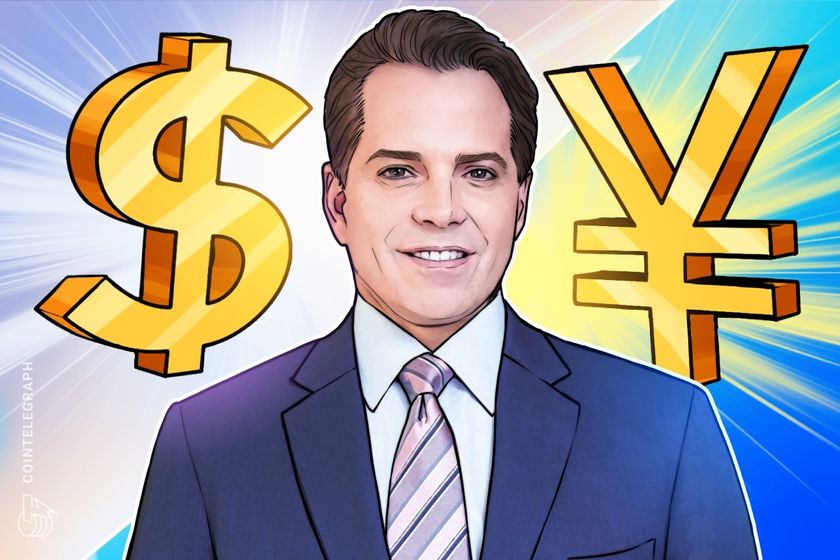 The expanded prohibition on stablecoin yield in the CLARITY Act makes the US dollar less competitive than the Digital Yuan, Scaramucci said. The prohibition on yield-bearing stablecoins in the CLARITY Act puts the US dollar at a competitive disadvantage to China’s Digital Yuan, a yield-bearing central bank digital currency, according to Anthony Scaramucci, founder of asset manager SkyBridge Capital. “The whole system is broken,” Scaramucci said in response to the prohibition on crypto exchanges and service providers offering customers yield on stablecoins in the CLARITY Act, a crypto market structure framework for the US. He asked: The People’s Bank of China, the country’s central bank, began allowing commercial banks to pay interest on digital yuan deposits in January. Read more
 -
CryptoPotato - 19:54 Jan 18, 2026
Crypto card payments jumped from $100M to $1.5B in 2025, surpassing P2P stablecoin transfers as the main on-chain activity driver. -
CoinDesk - 19:00 Jan 18, 2026
With the political hype fading, Siu argues crypto’s next phase will be shaped less by personalities and more by infrastructure, regulation and who actually uses the technology. -
CryptoSlate - 18:45 Jan 18, 2026
Gold and copper have moved higher even as the Federal Reserve continues to signal patience on rate cuts, a divergence that shows how markets tend to price liquidity conditions ahead of formal policy shifts rather than wait for confirmation from central banks. These metals are responding to changes in real yields, funding conditions, and forward […] The post Bitcoin is lagging while metals soar, but this rare divergence preceded every major crypto breakout since 2019 appeared first on CryptoSlate. -
CryptoPotato - 18:01 Jan 18, 2026
Bybit’s Risk-Appetite Index recorded an uptick, suggesting that some traders have opened perpetual positions to capture any further rallies in spot prices.