“Plenty will be ponzis. Plenty will get exploited. Plenty will insta die. There will be ridiculous gains, and people will get absolutely f***ing rinsed,” says Illuvium co-founder Kieran Warwick. AI could unleash a flood of short-lived crypto “meme games,” attracting the same speculative traders who helped push memecoins to record highs in late 2024, according to Illuvium co-founder Kieran Warwick. Speculative crypto games such as Wolf Game and Fishing Frenzy, where players compete for financial rewards, once took months to develop. But Warwick says AI tools have reduced the time and cost of creating similar games to just days and around $1,000. He predicts as many as 100,000 such games could launch within a year, with many designed to survive for only a few days — long enough for their c…
Government websites and online services were disrupted after concerns about a PHP bug that could allow attackers to take control of vulnerable servers. The PHP Foundation has acknowledged that indecision and a shortage of resources delayed a fix for a critical security flaw first identified in 2024, calling the stalled response a “structural failure.” Government agencies and other organizations worldwide took websites offline Wednesday as a precaution while PHP released emergency patches for two related critical vulnerabilities. The flaws could allow unauthenticated attackers to execute code on affected servers without logging in. PHP is a programming language widely used to power websites and web applications, including content management systems.
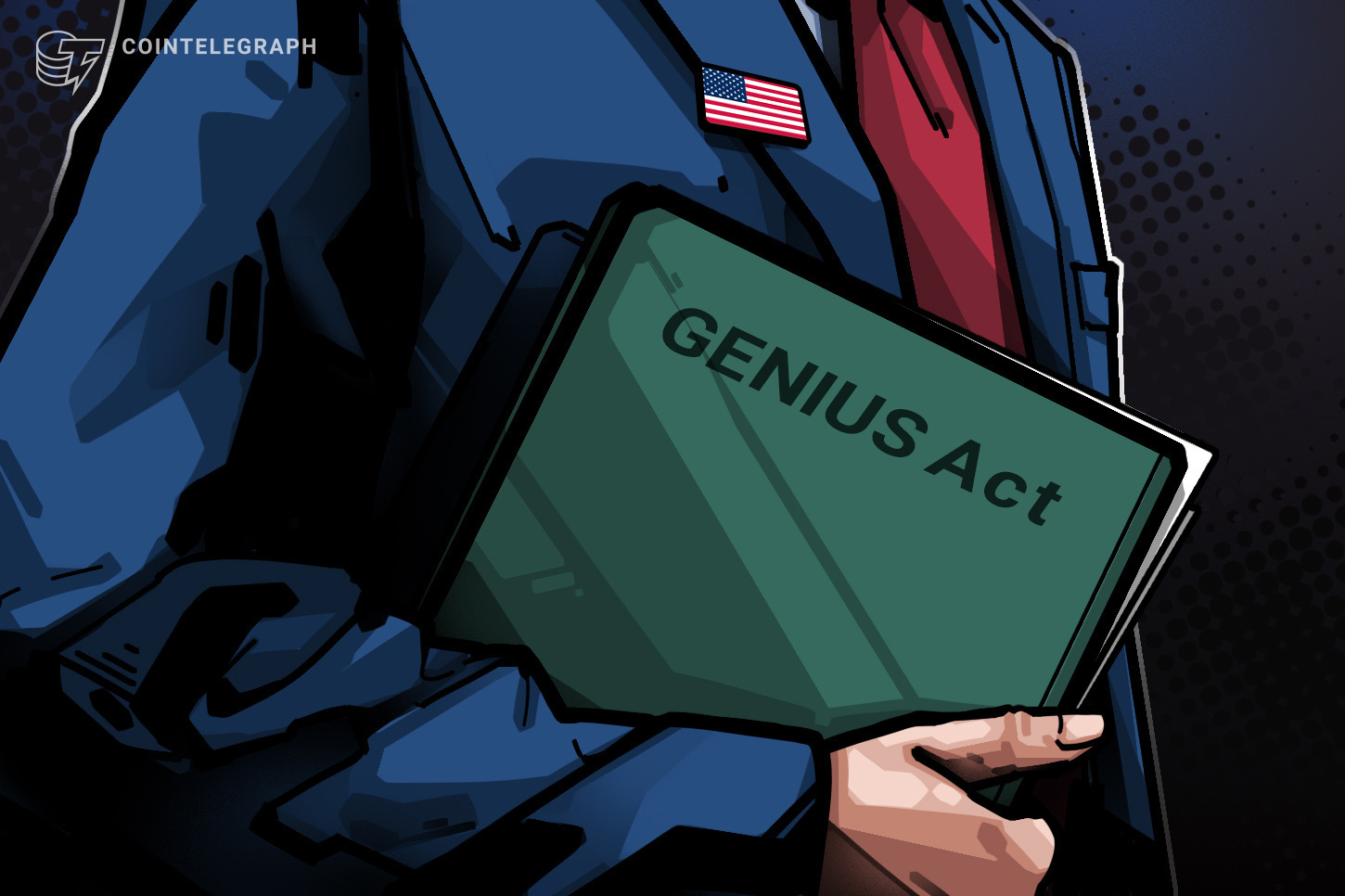
Banking advocacy organizations are pushing back against the OCC’s finalized rules on a stablecoin law, arguing against changes to provisions on yield. A lobbying group for US banks has weighed in on the Office of the Comptroller of the Currency’s (OCC’s) recently finalized rules on payment stablecoin issuance and custody, arguing that the regulator’s interpretation went against Congress’ intent. In a Wednesday notice, the American Bankers Association (ABA) said that while the OCC’s final rules implementing the GENIUS Act included “several positive steps,” the banking group remained critical of provisions related to stablecoin yield. The regulator dropped a provision that would have established a presumption that certain third-party arrangements violated the law’s ban on yield payments. “Th…
The investment will support Peso’s expansion across four Latin American markets, where it connects stablecoin payments to merchant services and local banking networks. Tether has led a pre-seed funding round in Bolivian fintech Peso, which offers USDT payments through food delivery apps and local banking networks, to support the company’s expansion across Latin America. In a Wednesday announcement, Tether said the investment will help Peso expand its stablecoin payment infrastructure across Bolivia, Brazil, Colombia and Argentina, including services that connect USDT with local currencies through banking and merchant payment systems. Peso has integrated USDT payments into Yango’s food delivery service in Bolivia, allowing customers to pay for orders using the stablecoin. The fintech offers…
The US President detailed many schemes defrauding Americans, but referred only to “cybercurrency“ related to scams. US President Donald Trump hosted a roundtable at the White House on cybercrime, even as he and members of his administration face scrutiny from lawmakers and voters over accusations that they used their positions to enrich themselves with digital assets. Speaking at the roundtable event on Wednesday, Trump said “countless” Americans lost more than $20 billion from cybercrime in 2025 through impersonation schemes, ransomware attacks, scam centers and other methods. The president added that federal officials had frozen $1 billion in “cybercurrency tied to foreign scammers” and prevented $1.6 billion in losses in 2025 from going to criminals engaging in cybercrime following a M…
The foundation called for regulation based on financial risks rather than technology, warning that overlapping rules could create uncertainty for crypto businesses across the EU. The Cardano Foundation has urged the European Union not to introduce new, standalone regulations for decentralized finance and staking, arguing that existing financial laws should govern such activities based on their functions and risks rather than the technologies they use. In a Wednesday blog post outlining its 19-page Sept. 30 submission to the European Commission, the foundation called for a distinction between direct participation in decentralized networks and financial services provided by intermediaries, particularly those involving custody or control of users’ assets. “Regulation should follow the substan…
The UK Financial Conduct Authority consultations came just weeks after the agency opened applications for companies under its new crypto regulatory regime. The UK’s Financial Conduct Authority (FCA) announced two consultation periods for how companies using decentralized finance can comply with its guidance, and exclusions for certain crypto assets following “recent legislative changes.” In a Wednesday notice, the FCA opened consultation periods for helping DeFi companies comply with the financial watchdog’s rules on money laundering and financial crime. The agency also announced a consultation for “exclusions from cryptoasset regulation,” citing recent legislation in the country. Regarding DeFi, the FCA said that the proposed guidance “seeks to clarify existing rules rather than establish…
The OCC has finalized rules for stablecoin reserves and redemptions, with Bessent calling the GENIUS Act a “watershed moment for American finance.” US Treasury Secretary Scott Bessent has compared the Trump administration’s landmark stablecoin legislation to banking reforms enacted under President Abraham Lincoln, drawing parallels between two efforts to establish a national framework for American currency more than 160 years apart. In a Wednesday post on X, Bessent hailed the Office of the Comptroller of the Currency’s (OCC) final rule implementing the GENIUS Act, calling the legislation a “watershed moment in American finance.” Bessent drew a comparison to the National Currency Act of 1863, which established a federal framework for nationally chartered banks to issue currency. He argued…
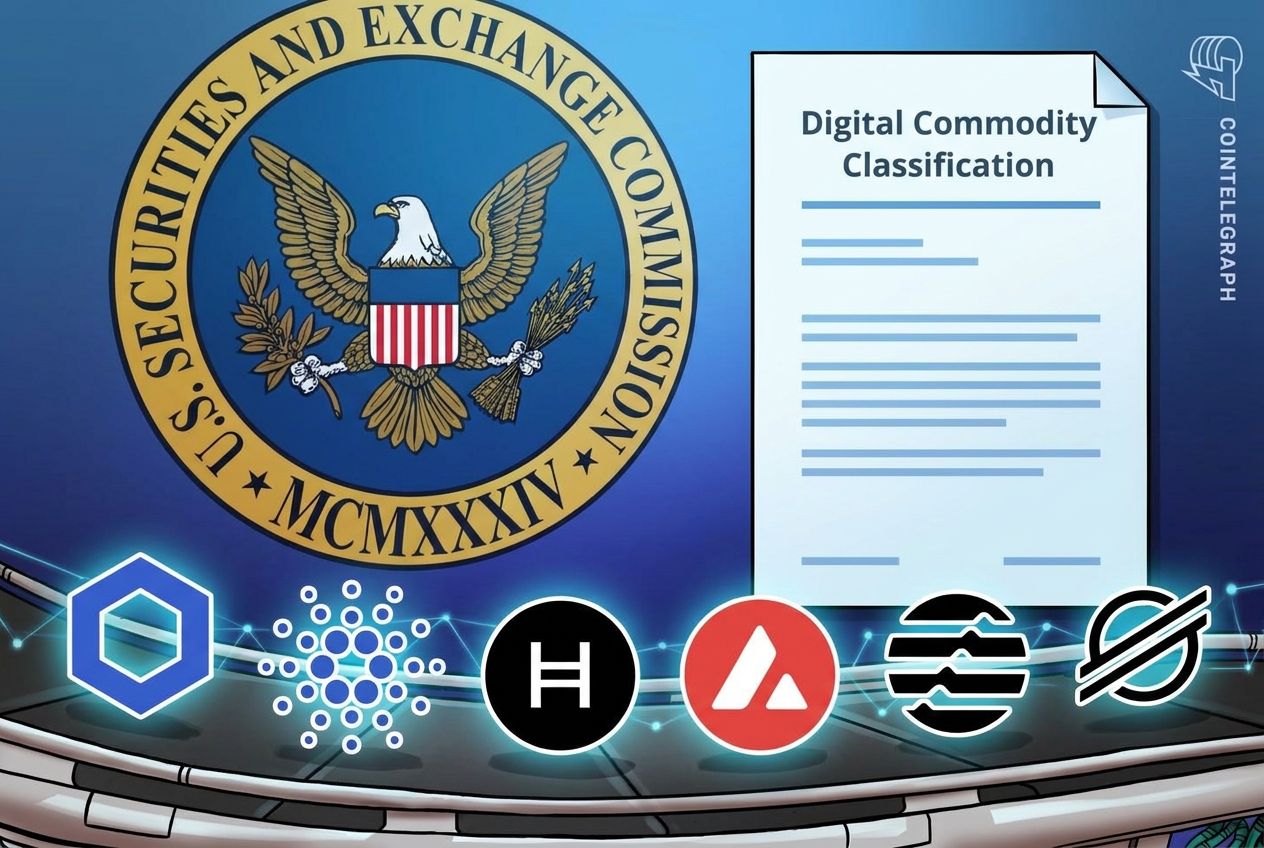
Six major blockchain organizations urged the SEC to formally recognize digital commodities as non-securities in its proposed regulatory framework. Six major blockchain organizations, including Chainlink Labs and the Cardano Foundation, have urged the US Securities and Exchange Commission (SEC) to formally classify digital commodities as non-securities, as the agency’s public consultation on proposed crypto regulations came to a close Tuesday. In a joint letter dated Oct. 20, Chainlink Labs, the Cardano Foundation, Hedera, Aptos Labs, Ava Labs and the Stellar Development Foundation called on the SEC to incorporate its digital commodity classification directly into the proposed Regulation Crypto Assets framework, arguing that interpretive guidance alone leaves market participants facing lega…
Bitcoin extended gains to approach $85,000 after US stock markets reacted to higher-than-expected SpaceX earnings. Bitcoin (BTC) passed $84,000 after Wednesday’s Wall Street open as US stocks added to gains on more strong corporate earnings reports.
Solana’s first major consensus upgrade is targeting 99% finality reduction, seeking to offer users near-immediate transaction settlement and more responsive applications. Solana’s first major consensus upgrade, Alpenglow, went live on mainnet around 1:54 pm UTC on Wednesday, according to the Solana Foundation’s Alpenglow dashboard. Alpenglow seeks to reduce transaction finality by 99%, to roughly 150 milliseconds from about 12.8 seconds, according to the Solana Foundation’s July announcement. The upgrade’s first phase, Votor, replaces the existing voting and finalization mechanism with direct validator voting and a certificate-based system designed to cut transaction finality to roughly 150 milliseconds. A later phase will introduce Rotor, a new block data-distribution protocol intended to…
CertiK says crypto trading bots and exchange applications may remain exposed to the eMudhra certificate flaw because browser fixes may not protect all software. Cryptocurrency trading bots and exchange applications may remain exposed to the eMudhra certificate security flaw despite emergency fixes from major technology companies, according to blockchain security company CertiK. By Tuesday, tech giants including Google, Apple and Microsoft had blocked eight vulnerable certificates issued by India’s eMudhra, but the fixes may not protect crypto applications using separate security systems, CertiK’s senior director of digital assets security, Peiyu Wang, told Cointelegraph. “Major browser blocks substantially reduce the risk for clients that receive and enforce them,” Wang said. “Some applica…
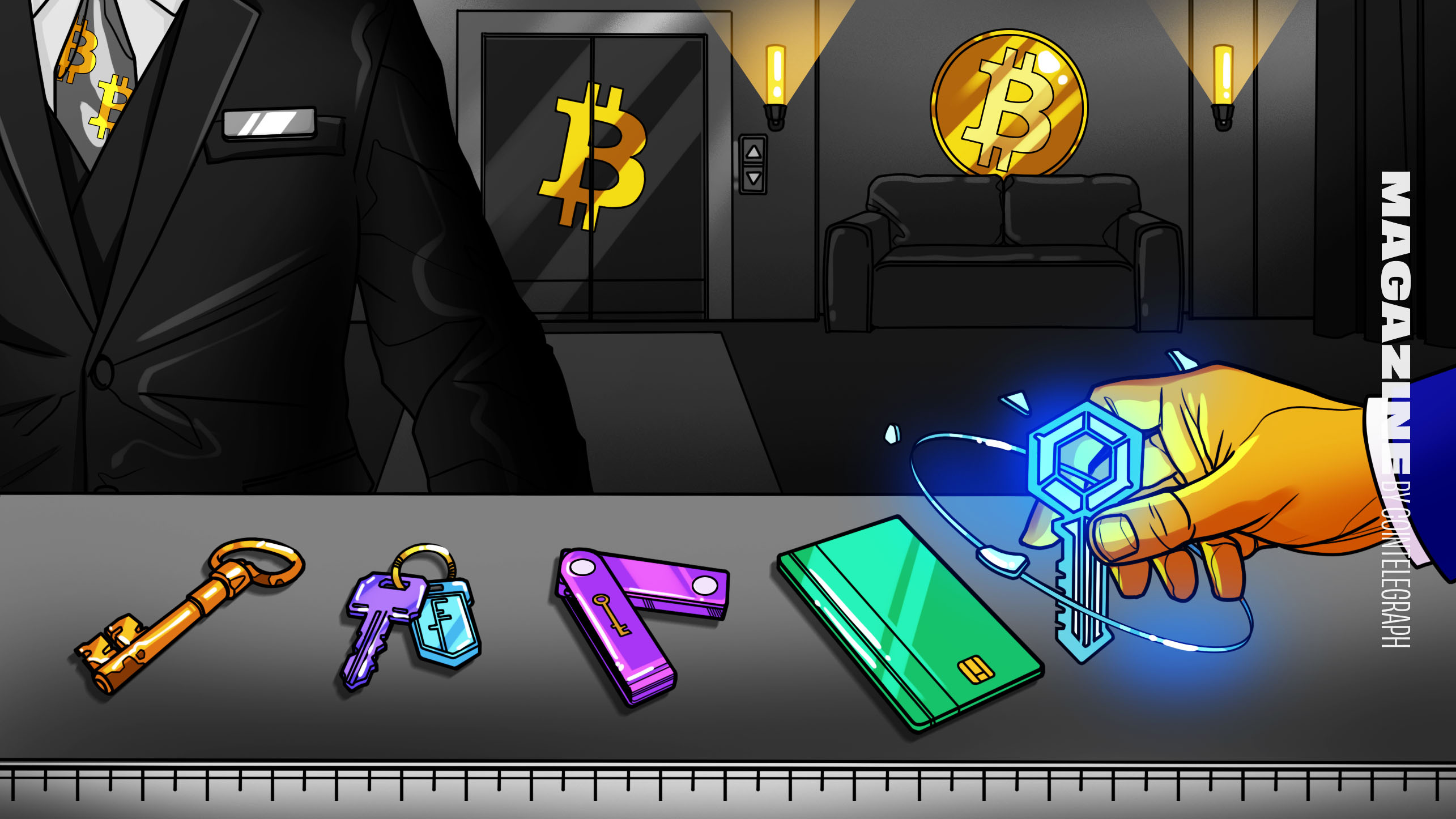
Hardware wallets aren’t the only way to protect your crypto, but from ETFs and passkeys to multisig accounts, each alternative has its own risks and trade-offs. After more than $200 million dollars worth of crypto was stolen in recent months from tampered Ledgers, and Coldcards where the seed generated wasn’t truly random, faith in hardware wallets has been shaken to the core. These Bitcoin and crypto holders did everything right. They bought the products from official sources, correctly stored their seed phrases and they trusted in the phrase “not your keys, not your coins”, but they lost out any way. The thefts suggest that even the most diligent crypto holder using a hardware wallet faces risks beyond their control. With the number of physical attacks on crypto holders rising — there’s…
The Office of the Comptroller of the Currency’s final rule covers payment stablecoin issuance and some custody activities, with the GENIUS Act framework taking effect in mid-January. The US Office of the Comptroller of the Currency finalized rules Wednesday for payment stablecoin reserves, redemptions and related custody activities, implementing the GENIUS Act for entities under its jurisdiction. The final rule states issuers must maintain reserves worth at least as much as their outstanding stablecoins and generally process redemption requests within two business days. The rule applies to national banks, federal savings associations and federal branches and their subsidiaries, as well as nonbank firms that seek or receive federal qualified issuer status, according to the agency’s announce…
The signing follows shareholders’ acceptance of Standard Chartered’s non-binding offer in May, with regulatory approvals still pending. Standard Chartered signed definitive agreements to acquire Zodia Custody’s regulated operating entities, subject to regulatory approvals and closing conditions. The signing advances a transaction announced in May, when Zodia’s shareholders accepted the bank’s non-binding offer. As part of the deal, Standard Chartered would acquire 100% of Zodia Custody UK Limited, the parent company of Zodia’s regulated operating entities in Singapore, Hong Kong, Australia, Luxembourg and the United Arab Emirates, the bank said in a Wednesday announcement.
PancakeSwap’s proposed fee-sharing overhaul would give liquidity providers 88% of swap fees and cut CAKE emissions by 69%, as BNB Chain’s DeFi activity expands. Decentralized exchange PancakeSwap’s total value locked (TVL) grew nearly 19% over the past week, adding about $380 million as the protocol moves toward a major overhaul of how it distributes trading fees to liquidity providers. According to DefiLlama, PancakeSwap’s TVL climbed to $2.4 billion on Wednesday, up from about $2.02 billion on Oct. 14. The increase was concentrated in its V3 liquidity pools, where TVL more than doubled to about $739 million from $336 million over the same period. The growth coincided with PancakeSwap opening a governance vote on a proposal called “The Flip,” which would increase liquidity providers’ sha…
French authorities want crypto exchanges to conduct checks on DeFi protocols and face liability for certain customer losses under proposed changes to EU crypto rules. France wants cryptocurrency platforms to face liability for certain decentralized finance (DeFi) incidents if they fail to vet protocols or ignore known security risks. French authorities published proposals Wednesday to revise the European Union’s Markets in Crypto-Assets Regulation (MiCA). The joint response to a European Commission consultation came from France’s Treasury, the Financial Markets Authority (AMF), the central bank and the Prudential Supervision and Resolution Authority (ACPR). “CASPs [crypto-asset service providers] should be liable for certain incidents affecting clients where they actively facilitated acces…
Bitcoin price current resistance near $87,000 was reinforced by investors who bought BTC in late 2025, per new research. Bitcoin (BTC) investors sitting on unrealized losses are capping price gains at $87,700, while ETF inflows strengthen support at $80,000, analysis reveals. Key points:
The companies will assess safeguards for travelers and whether stablecoins can speed up trade settlement between South Korea and Japan. South Korea’s Shinhan Card announced Wednesday that it signed an agreement with Japan’s SBI VC Trade and SBI XDC Network APAC to test yen stablecoin payments for travelers and cross-border trade settlement. Under the pact signed Tuesday, the companies will test stablecoin card payments, wallet-to-wallet payments and cross-border trade settlement. They will also assess anti-money-laundering and fraud-detection controls. Shinhan Card is one of South Korea’s biggest credit card companies. SBI is a Japanese financial heavyweight that runs banks, brokerages, insurers and crypto exchanges.
Zcash extended triple-digit year-to-date gains as developers agreed on the NU7 mainnet activation height, targeting Nov. 5, with node synchronization work still pending. Zcash (ZEC) surged about 12% over the past 24 hours, as developers agreed on a mainnet activation block for the network’s NU7 upgrade, expected in early November. The token traded around $1,270 at last look on Wednesday, according to CoinGecko. The rally coincided with a Tuesday GitHub proposal by Zcash developer Sean Bowe setting the activation at block 3,543,405, expected around Nov. 5. The value of the privacy-focused cryptocurrency that uses advanced trustless zero-knowledge proofs is up more than 148% year to date.