Cointelegraph.com
Source:
https://cointelegraph.com
Found 11864 news
-
Cointelegraph.com - 17:46 Aug 28, 2026
 According to Circle, the USDC stablecoin name will appear on the front of club jerseys for Chelsea’s upcoming football season. Circle, the issuer behind the USDC stablecoin, will be the latest sponsor for the Chelsea Football Club just months after the UK’s financial watchdog warned about “questionable sponsorship deals with unauthorized financial firms,” including crypto companies. In a Friday announcement, Circle said its name and USDC would appear on jerseys for Chelsea FC players in the 2026/2027 season. The partnership deal between the football club and the digital asset company came about three months after the UK’s Financial Conduct Authority (FCA) said it had sent warning letters to clubs in the Premier League, potentially including Chelsea. The letters concerned “unauthorized” companies, including crypto businesses, using sponsorship deals to target football fans, potentially breaching UK financial services laws. Read more
 -
Cointelegraph.com - 16:17 Aug 28, 2026
 The institutional crypto exchange is providing $100 million in stablecoin liquidity to support loans backed by AI computing infrastructure. Institutional crypto exchange operator Bullish has provided USD.AI with a $100 million stablecoin-based debt facility to finance loans secured by GPU infrastructure, the companies announced Friday. USD.AI will use the facility to lend to AI infrastructure operators, with the loans secured by the underlying GPU hardware rather than the borrowers’ broader corporate assets. USD.AI is an onchain financing platform developed by Permian Labs that provides financing backed by AI computing hardware, connecting stablecoin liquidity with demand for GPU infrastructure financing. Read more
 -
Cointelegraph.com - 15:31 Aug 28, 2026
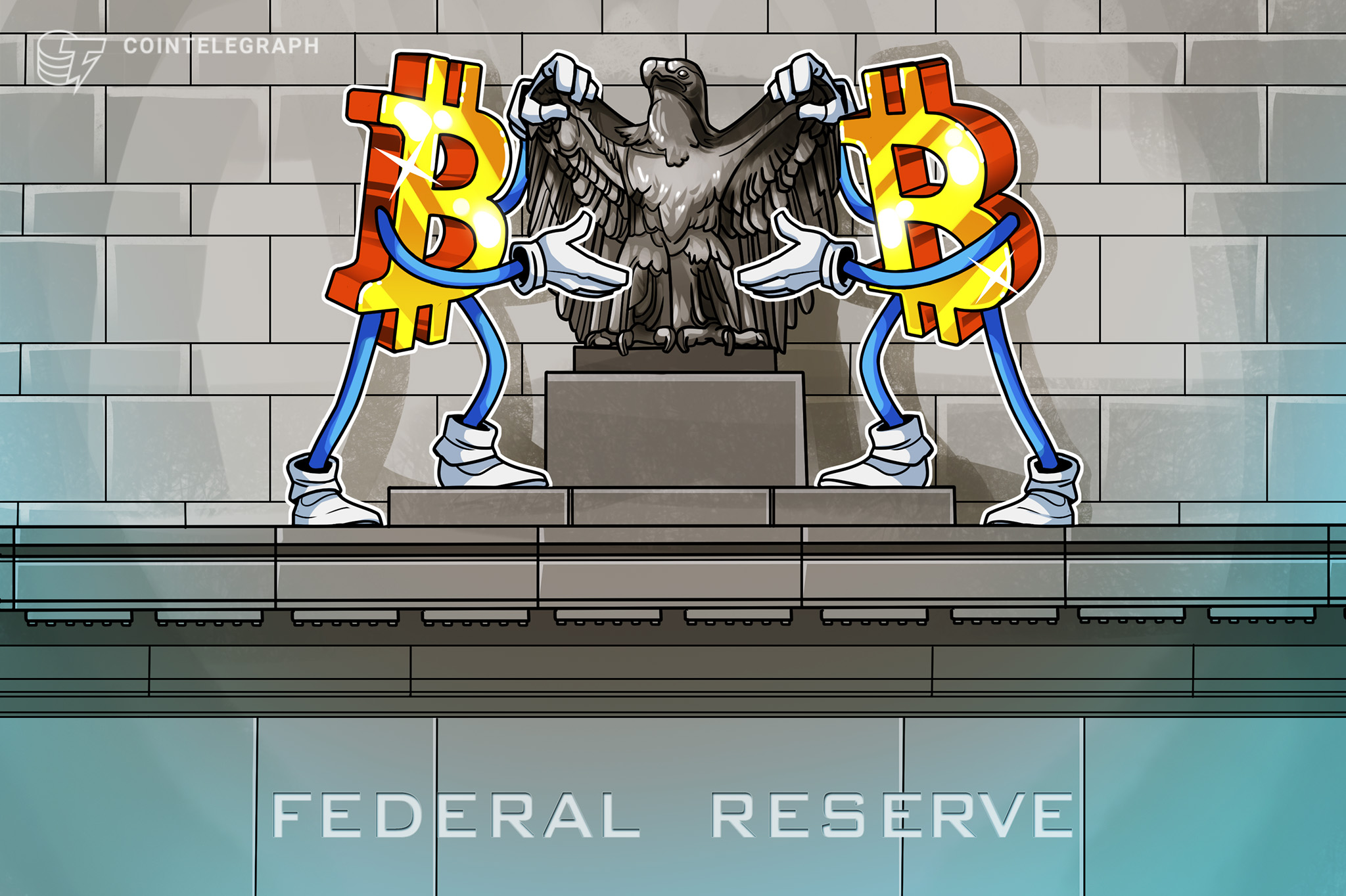 Bitcoin failed to make a decisive break above $80,000 as traders digested Fed Chair Kevin Warsh’s Jackson Hole keynote speech, which remained wary of US inflation trends. Bitcoin (BTC) saw volatility after Friday’s Wall Street open as markets reacted to US Federal Reserve chair Kevin Warsh’s comments on future monetary policy. Key points: Data from TradingView showed BTC/USD dipping to $78,442 on Bitstamp in volatile trading conditions, down around 1% at the time of writing. Read more
 -
Cointelegraph.com - 14:53 Aug 28, 2026
 Bitcoin’s $80,000 rebound lifts crypto stocks as Circle, Strategy and Solana show how capital markets, stablecoins and onchain growth are driving crypto’s recovery. Bitcoin’s return above $80,000 is exposing just how much the crypto industry now runs through traditional capital markets. Michael Saylor’s Strategy needs a receptive market to finance its Bitcoin machine (BTC), Circle’s outlook increasingly resembles a bet on the growth of dollar-denominated financial infrastructure and Treasury bond buybacks helped provide the backdrop for the latest surge in crypto equities. This week’s Crypto Biz looks at how that relationship is reshaping the companies, balance sheets and networks behind the market’s rebound. Bitcoin’s rally above $80,000 lifted crypto stocks as miners and digital asset treasury companies posted double-digit gains, tracking a broader recovery fueled by the US Treasury’s plan to double certain long-dated bond buybacks. Read more
 -
Cointelegraph.com - 13:30 Aug 28, 2026
 If your personal AI agent goes rogue and causes harm or financial damage in the real world, can you be held liable? Autonomous AI agents can behave in highly unpredictable ways. Give an AI Agent a goal such as passing a test of its capabilities, and it might just decide the best way to score highly is to break containment and hack into a competing company in search of the answer sheet. That’s what happened when Open AI’s GPT-5.6 Sol hacked into Hugging Face last month. Anthropic and Meta subsequently admitted their models had also escaped testing sandboxes to hack third parties too. But who is legally liable for agents that have minds of their own? OpenAI didn’t intend for the model to go rogue, and issued no instructions for it to do so. If your personal AI agent decides on a course of action that results in harm or financial damage in the real world, can you be held liable if it’s something you could have reasonably foreseen?” Magazine spoke with Rikka Law Group owner and CEO Charlyn Ho to find out the sta...
 -
Cointelegraph.com - 13:16 Aug 28, 2026
 Polish Olympic Committee president Radosław Piesiewicz faces charges as prosecutors investigate his ties to collapsed cryptocurrency exchange Zondacrypto. Polish prosecutors charged the head of the Polish Olympic Committee in an investigation linked to defunct cryptocurrency exchange Zondacrypto. Authorities detained the committee’s president, Radosław Piesiewicz, in connection with the Zondacrypto probe, Poland’s Justice Minister and Prosecutor General Waldemar Żurek announced in an X post on Thursday. Żurek later said prosecutors charged Piesiewicz under two provisions of Poland’s Penal Code, involving allegations of influence peddling and favoring some creditors over others while facing insolvency. Read more
 -
Cointelegraph.com - 12:09 Aug 28, 2026
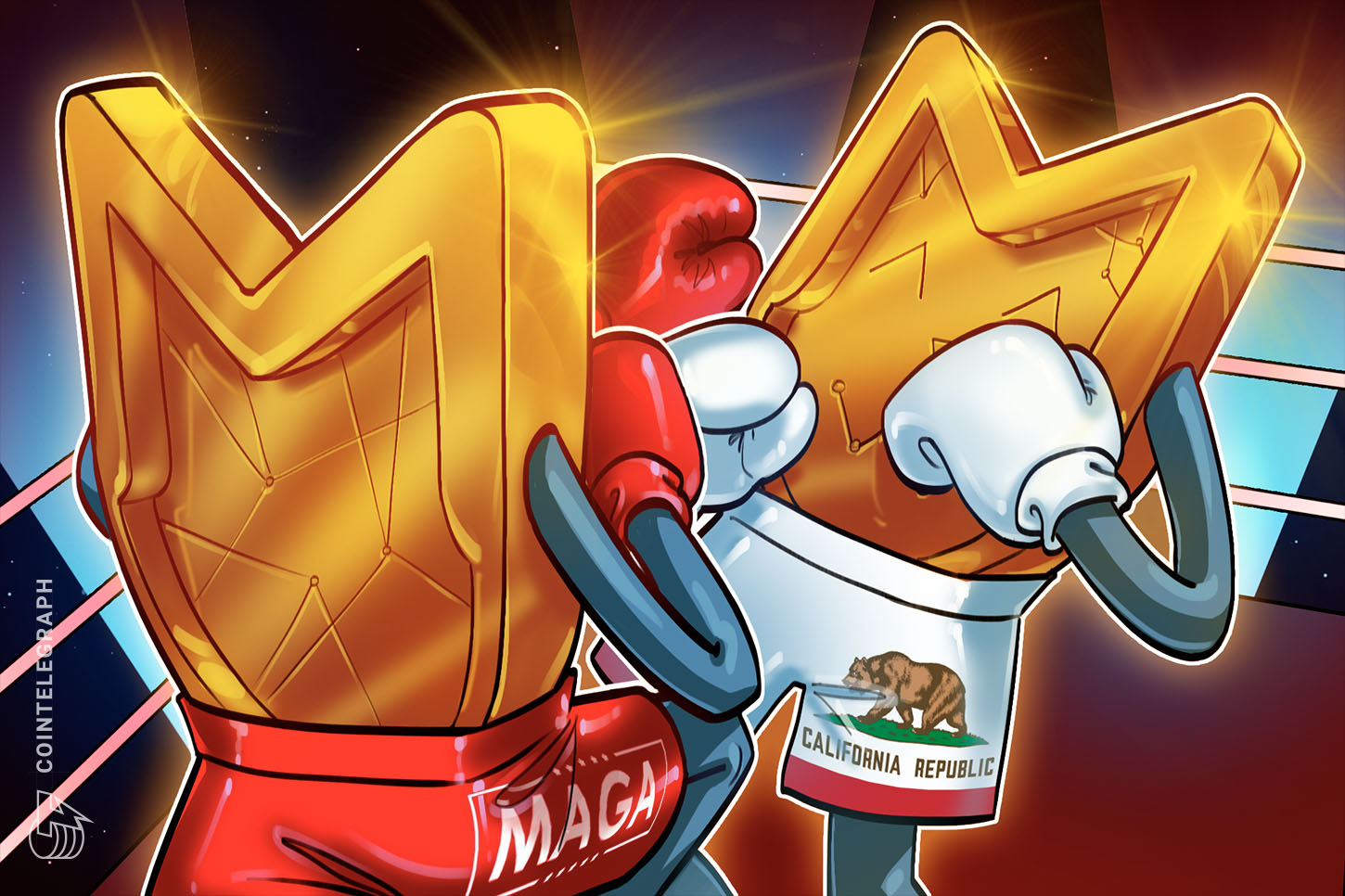 The bill seeks to prohibit the listing of memecoins issued by federal public officials to California residents, citing conflicts of interest and “pay-to-play arrangements.” California lawmakers passed a bill restricting public officials’ involvement with memecoins, citing concerns around conflicts of interest and “pay-to-play arrangements.” The California Senate passed Assembly Bill 2409 in a 40-0 vote on Wednesday, according to Legiscan data. The Assembly subsequently voted 78-0 to concur in the Senate’s amendments. The bill entered the enrolled stage and awaits the governor’s signature. The bill would prohibit digital asset service providers from offering California residents memecoins issued on or after Jan. 1, 2027, that are offered by or in partnership with federal public officials or state or local public officers. The bill defines memecoins as digital assets whose value is derived primarily from public interest, speculation or community engagement. Read more
 -
Cointelegraph.com - 11:36 Aug 28, 2026
 The French Bitcoin treasury firm’s private placement drew support from Adam Back and TOBAM, with warrant exercises potentially unlocking another $158 million. French Bitcoin treasury company Capital B announced that it raised €21.0 million ($24.5 million) through private share placement. According to an Aug. 28 announcmeent, the fundraise was conducted at €0.58 per ABSA — one share bundled with four share-subscription warrants — without pre-emptive subscription rights. The raise saw the participation of legendary cypherpunk and Bitcoin-centric blockchain development firm CEO Adam Back as well as asset manager TOBAM. If all the issued warrants were to be exercised, Capital B would see a further €135.8 million ($158 million) capital injection through the issuance of 144,876,280 ordinary shares. The company reserves the right to trigger an accelerated warrant exercise period if the volume weighted average price of its shares over the previous 20 trading days exceeds 130% of the exercise price of the relevant war...
 -
Cointelegraph.com - 11:22 Aug 28, 2026
 Bitcoin profitability data produced a bear-market reversal signal that was also present at the start of 2023. According to some metrics, Bitcoin (BTC) has ended its bear market as a composite BTC price indicator flips bullish for the first time since October 2025. Key points: Read more
 -
Cointelegraph.com - 09:27 Aug 28, 2026
 The Ethena Foundation proposed buying the token supply held by major early investors and revealed a fee switch to turn 95% of net protocol revenue into ENA buybacks. The native token of the synthetic dollar protocol Ethena (ENA) registered double-digit gains after the Ethena Foundation unveiled four ecosystem changes, including a proposal for revenue-funded token buybacks and a completed buyout of locked tokens held by some early investors. The Ethena Foundation opened a vote on a fee-switch proposal under which 95% of the net revenue paid to it from Ethena’s core business lines would be used to purchase ENA once the circulating supply of USDe reaches the first proposed milestone of $7.5 billion, the foundation said in a Thursday blog post. Tokenholders have until Sept. 2 to cast their votes. At press time, 65 votes representing about 14.4 million ENA in voting power had been cast, all in favor of the fee-switch proposal, according to Snapshot. Read more
 -
Cointelegraph.com - 09:21 Aug 28, 2026
 BitGo completed its acquisition of NYDIG’s institutional trading business, adding about 30 employees and expanding its derivatives and financing capabilities. BitGo has acquired the institutional trading business of Bitcoin infrastructure company NYDIG, adding derivatives and financing capabilities as it expands services for institutional crypto clients. BitGo said it completed the acquisition of NYDIG’s institutional trading business under a definitive agreement, the company announced Thursday. The transaction includes NYDIG’s institutional client trading relationships and about 30 employees who joined BitGo. The companies did not disclose financial terms. The acquired business provides derivatives, structured products, financing and capital markets services to clients including asset managers, hedge funds and companies. BitGo CEO Mike Belshe said the acquisition will “meaningfully scale” the company’s trading and infrastructure capabilities and allow it to serve a broader range of institutional clients. Rea...
 -
Cointelegraph.com - 08:21 Aug 28, 2026
 OneKey said it reproduced an exploit against an older version of the Ledger app in its lab environment, which Ledger fixed in its Ethereum app 1.22.2, with no user funds lost. The in-house security team at open-source wallet provider OneKey said it successfully reproduced an exploit targeting an outdated version of Ledger’s on-device Ethereum application in a test environment. OneKey founder and CEO Yishi Wang said they executed a “transaction replacement attack” against Ledger Ethereum app 1.22.1 by exploiting a previously patched vulnerability that lets attackers overwrite the transaction waiting to be signed while the user is still reviewing the legitimate transaction. Ledger said exploiting the vulnerability required control over communications between the device and its host, such as through malware, compromised wallet software or a hostile webpage. Ledger added app-level safeguards with Ethereum app 1.22.2 released on Aug. 13, before fixing the underlying issue in Secure SDK 26.6.1 on Aug. 21. Read more
 -
Cointelegraph.com - 07:41 Aug 28, 2026
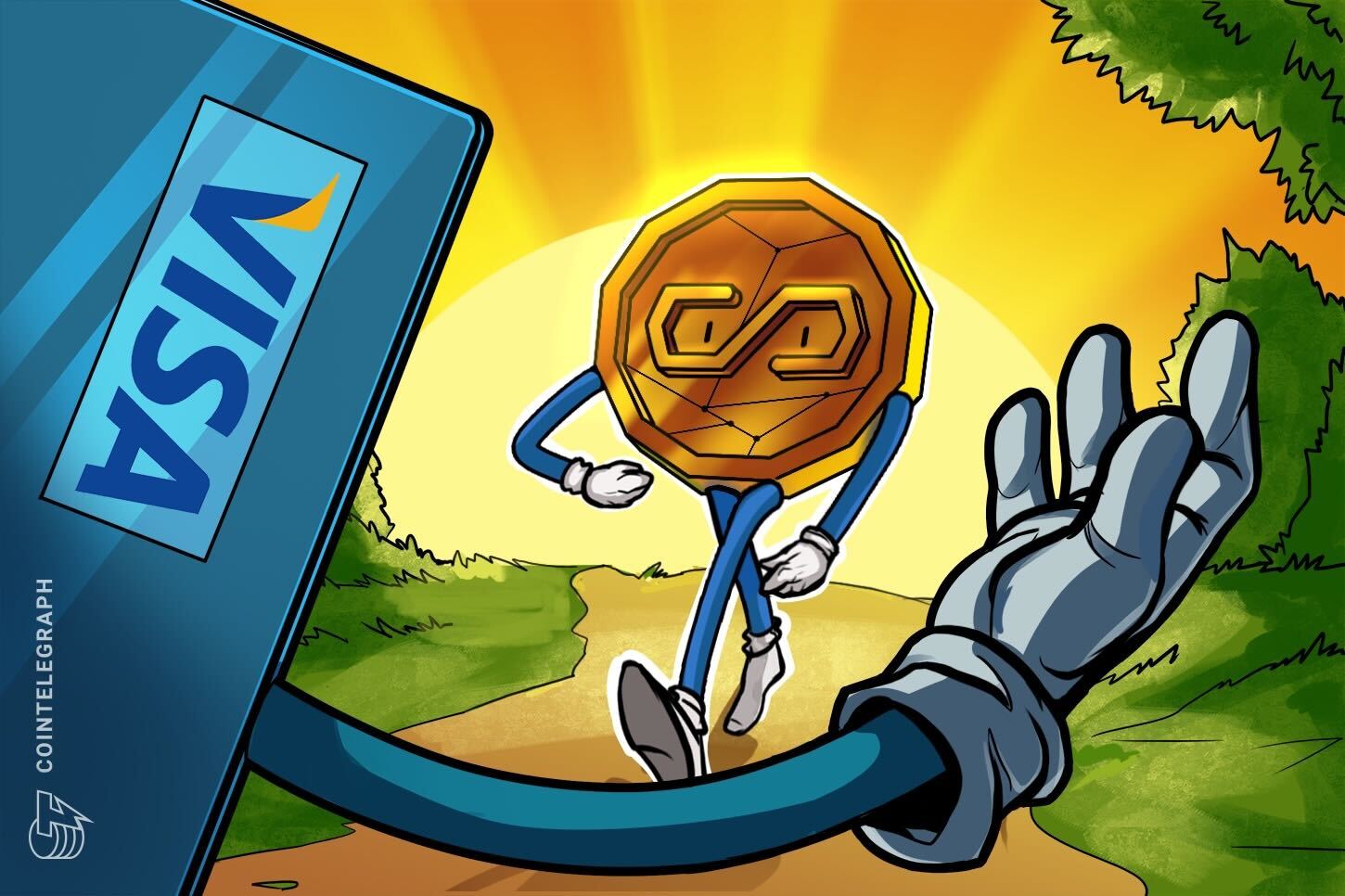 Visa and Dunamu will explore stablecoin payments and remittances, with Open Standard’s proposed OUSD among several projects under review. Visa and Dunamu, the parent company of South Korean cryptocurrency exchange Upbit, have formed a strategic partnership to explore stablecoin payments, cross-border remittances and artificial intelligence-powered commerce. The companies will combine Dunamu’s digital asset technology with Visa’s global payments network to explore payment, remittance and settlement services in major markets, according to a Friday announcement from Dunamu. “The spread of AI, stablecoins and tokenization is a key trend that will change how finance and commerce operate,” Dunamu CEO Oh Kyung-seok said, adding that the partnership aims to connect digital assets with traditional finance. Read more
 -
Cointelegraph.com - 05:40 Aug 28, 2026
 Eligible holders on Base and BNB Chain will receive Ethereum-based SAND from the project’s treasury, with claims expected to open within two weeks. Blockchain gaming platform The Sandbox has pledged to repay eligible SAND holders 1:1 after an Aug. 21 bridge exploit drained 14.744 SAND, worth about $700,000, from an Ethereum vault. On Thursday, the company published a post-mortem, saying users who legitimately held bridged SAND on Base or BNB Smart Chain before the attack will receive an equal amount of Ethereum-based SAND. Compensation will come from The Sandbox treasury, with no new tokens minted. The claims process is expected to open within two weeks and remain open for another two weeks. Two centralized exchanges hold more than 72% of eligible balances and will distribute compensation directly to their affected customers, according to The Sandbox. Read more
 -
Cointelegraph.com - 04:17 Aug 28, 2026
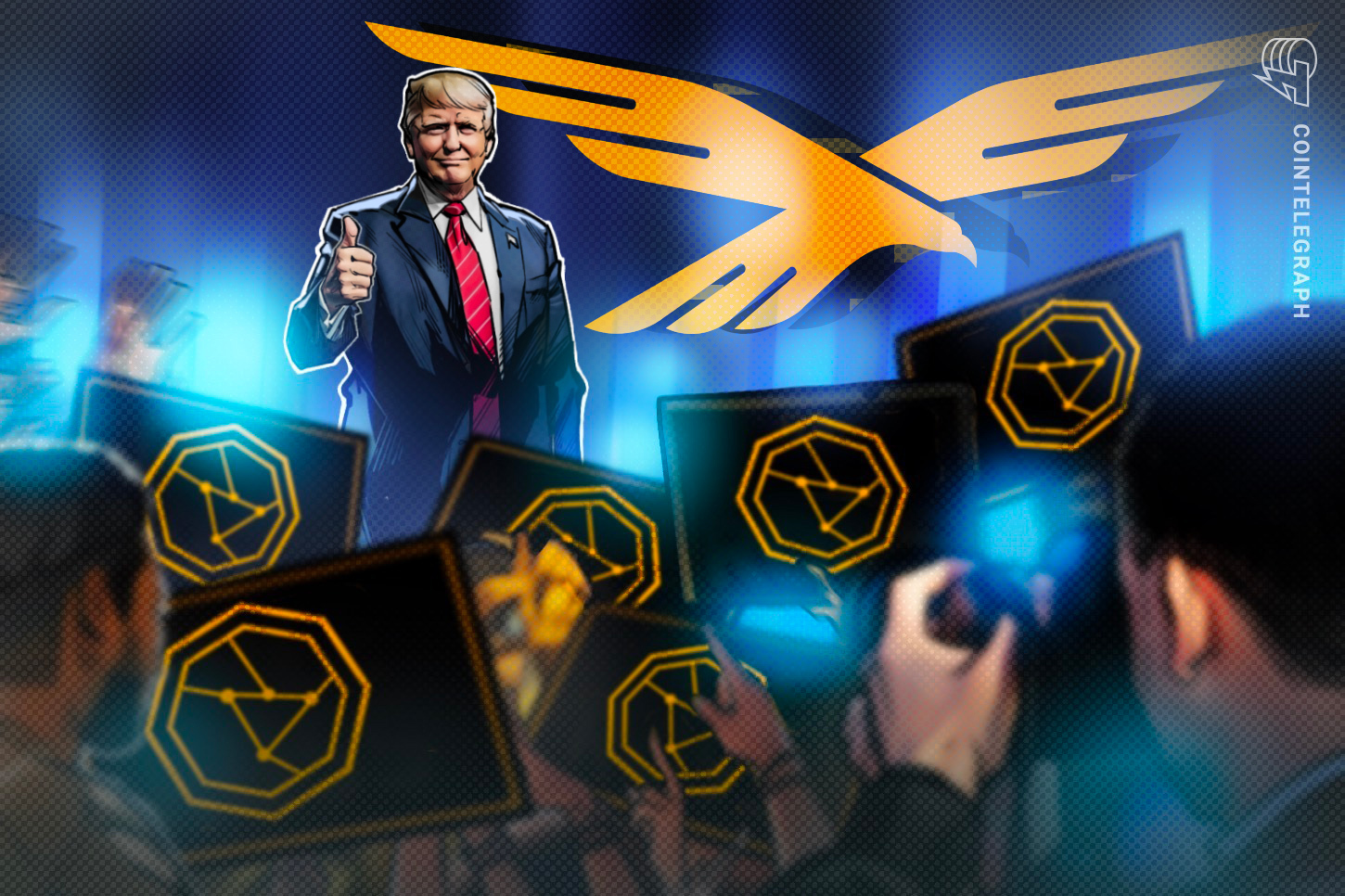 Sheikh Tahnoon’s group reportedly backs a 49% stake in the holding company behind World Liberty’s conditionally approved US trust bank. An Abu Dhabi royal and his co-investors reportedly back the largest stake in the holding company behind World Liberty Financial’s proposed US trust bank. Citing people familiar with the matter, the Wall Street Journal reported that Sheikh Tahnoon bin Zayed Al Nahyan’s group is behind StringZ Holding RSC, which owns 49% of WLTC Holdings. An entity affiliated with US President Donald Trump’s family owns another 38%, one person told WSJ. If it receives final approval, the planned bank would bring the issuance, redemption and custody of World Liberty’s USD1 stablecoin under the federally supervised venture. Read more
 -
Cointelegraph.com - 20:39 Aug 27, 2026
 The transaction used the Marshall Islands-issued USDM1 bond as collateral and completed the full repo cycle on the Canton Network in under 10 minutes. Virtu Financial, M1X Global and Tradeweb completed an onchain repo transaction using a sovereign digital bond as collateral, with the full transaction settling on the Canton Network. The transaction used USDM1, a US dollar-denominated sovereign bond issued onchain by the Republic of the Marshall Islands and backed 1:1 by short-term US Treasurys. The bond pays a coupon while being used as collateral and is structured under New York law as a fully collateralized sovereign obligation. Both companies said it was the first repo to combine natively issued sovereign collateral with fully onchain atomic settlement. Executed between regulated counterparties on Tradeweb, the full repo and repurchase cycle was completed in under 10 minutes. Read more
 -
Cointelegraph.com - 19:22 Aug 27, 2026
 While investors in World Liberty Financial‘s USD1 stablecoin “haven’t suffered major losses,” many lost billions of dollars in other Trump ventures, according to Public Citizen. The nonprofit consumer advocacy organization Public Citizen reported that US President Donald Trump “left investors at least an estimated $4.7 billion underwater” since 2022 through his and his family’s digital asset ventures. According to Public Citizen, investors lost billions of dollars through the Trump family World Liberty Financial governance token, the president’s nonfungible token (NFT) trading cards launched in 2022, his memecoin Official Trump (TRUMP) and Trump Media’s digital asset treasury. The bulk of the estimated losses, according to the organization, came from investors in the TRUMP memecoin, with $3.2 billion lost, while buyers of World Liberty Financial‘s USD1 stablecoin “haven’t suffered major losses.” Public Citizen said that in the case of the memecoin, the losses represented “wealth transferred to a small group ...
 -
Cointelegraph.com - 19:00 Aug 27, 2026
 The South Korean financial group plans to build a $109 billion digital asset business spanning crypto, stablecoins and tokenized assets, according to The Korea Times. South Korean financial group Mirae Asset plans to build a 150 trillion won ($109 billion) digital asset business around Digital X, the crypto exchange formerly known as Korbit, according to The Korea Times. The report said Digital X will focus on crypto, stablecoins, real-world assets and security token offerings, with plans to tokenize physical assets including gold, silver and electricity. The expansion plans follow Mirae Asset Consulting’s acquisition of a 97.15% stake in Korbit in July for a cumulative 141.4 billion won. The exchange was subsequently rebranded as Digital X, marking the first time an affiliate of a South Korean financial group acquired control of a domestic crypto exchange. Read more
 -
Cointelegraph.com - 18:51 Aug 27, 2026
 ZEC has climbed roughly 19-fold in a year, yet Grayscale says its sub-1% share of Bitcoin’s market cap leaves room for further upside. Zcash could emerge as a meaningful challenger to Bitcoin’s dominance among digital assets as the rapid adoption of artificial intelligence puts a premium on financial privacy and fuels concerns over AI-powered surveillance, according to Grayscale. In a new research report, Grayscale head of research Zach Pandl said Zcash (ZEC) has “second mover advantages” that could help it challenge Bitcoin’s (BTC) entrenched network effects, something previous alternatives such as Litecoin (LTC) have failed to achieve. Central to Pandl’s argument is financial privacy. Zcash can shield transaction information, which Grayscale argues could become increasingly valuable as AI systems become better at analyzing financial activity at scale. Read more
 -
Cointelegraph.com - 17:15 Aug 27, 2026
 Bitcoin and crypto joined US stock markets in fresh gains after Nvidia Q2 earnings beat expectations by around $4 billion. Bitcoin (BTC) rebounded toward $81,000 around Thursday’s Wall Street open as Nvidia earnings boosted US stocks. Key points: Read more
11864 items