Bitcoin | Crypto
"Bitcoin" in Crypto feed
-
CryptoSlate - 10:50 Aug 30, 2026
The US Treasury expects to borrow $739 billion from July through September while paying investors to hand back some of its older bonds. The pairing looks self-defeating because both transactions involve the same issuer. However, they are on separate ledgers and solve separate problems: auctions finance the government and create liquid benchmarks, while buybacks retire […] The post How $739B in new US debt could absorb crypto’s liquidity before buybacks even reach Bitcoin appeared first on CryptoSlate. -
CryptoSlate - 06:05 Aug 30, 2026
Price moves will not trigger margin calls, but 60 days of delinquency can put the pledged Bitcoin at risk of sale. The post Borrowers can now use $250k in Bitcoin for a house down payment without margin calls, but one trap remains appeared first on CryptoSlate. -
CryptoSlate - 22:10 Aug 29, 2026
The company’s $4 billion contracted AI run-rate target was four times the $1 billion operating level measured Aug. 26, with recognition still gated by delivery and customer acceptance. The post Bitcoin miner IREN still gets 82% of revenue from BTC after clearing room for Microsoft AI cloud appeared first on CryptoSlate. -
CryptoSlate - 18:50 Aug 29, 2026
Luke Dashjr's conditional rehearsal still lacks settled activation settings, disclosed day-one hash, named service policies and universal replay protection. The post Bitcoin Knots is trying to fork Bitcoin again after its last chain died in two blocks appeared first on CryptoSlate. -
CryptoSlate - 17:40 Aug 29, 2026
The $201.9 million reversal left Bitcoin's week positive and supplied only one session of evidence for a cross-asset shift. The post Bitcoin ETF inflows snap after $3 billion streak as ETH, XRP and Solana keep buying appeared first on CryptoSlate. -
CryptoSlate - 16:30 Aug 29, 2026
ETF inflows and larger Treasury buybacks can cushion volatility, but neither substitutes for disinflation. The post Bitcoin faces a new macro test as Fed Chair Kevin Warsh highlights sticky inflation metrics appeared first on CryptoSlate. -
CryptoSlate - 13:30 Aug 29, 2026
Bitcoin gained 21.5% from the Aug. 17 close through Aug. 21, yet six of seven large US-listed miners finished the same trading stretch much lower. MARA Holdings rose 16.1% and came closest to BTC, while Cipher Digital fell 14.8%, TeraWulf lost 11.2%, Hut 8 dropped 8.1%, and IREN declined 6.8%. The stocks still sold as […] The post Bitcoin miners are no longer pure crypto proxies and are morphing into high-performance computing hubs appeared first on CryptoSlate. -
CryptoSlate - 12:40 Aug 29, 2026
Bitcoin trades near $78,000 heading into the weekend, sitting almost between $77,000 support and $80,000 resistance after a sharp rejection from above $81,000 hit on Aug. 28. A confirmed break below $77,000 opens the mid-$75,000s, while a reclaim of $80,000 puts the roughly $81,300 high from Aug. 28 and the $82,000 to $83,000 zone back […] The post Bitcoin’s failed $81,000 breakout just put $75,000 back on the table appeared first on CryptoSlate. -
CryptoSlate - 23:20 Aug 28, 2026
The planned 270 BTC nearly offsets the placement, while full warrant exercise would cut the displayed ratio about 24%. The post Capital B’s €21 million Bitcoin raise comes with heavy warrant dilution risk appeared first on CryptoSlate. -
CryptoSlate - 21:30 Aug 28, 2026
Ethena is targeting the $120 trillion Wall Street stock market to hunt yields 5x higher than Bitcoin
Ethena is expanding USDe into equity perpetual-basis trades, targeting funding yields more than five times higher than Bitcoin’s as the synthetic dollar looks to recover from its 2026 contraction. On Aug. 28, Ethena revealed plans to extend the basis strategy behind USDe into equity perpetual futures, where open interest has surged to about $6.2 billion […] The post Ethena is targeting the $120 trillion Wall Street stock market to hunt yields 5x higher than Bitcoin appeared first on CryptoSlate. -
CryptoSlate - 19:05 Aug 28, 2026
The proposed preferred raise covers 1.51% of the target before AI allocations and an 18-month dividend reserve. The post After selling all its Bitcoin to pay off debt, AI firm tries to rebuild $827 million treasury from scratch appeared first on CryptoSlate. -
CryptoSlate - 16:55 Aug 28, 2026
A new Tier 2 framework lowered qualifying gates to $25 billion in AUM and 5 million monthly options sides, bringing IBIT back during Q3. The post BlackRock’s Bitcoin ETF regains key weekly options expiries after rule overhaul appeared first on CryptoSlate. -
Cointelegraph.com - 15:31 Aug 28, 2026
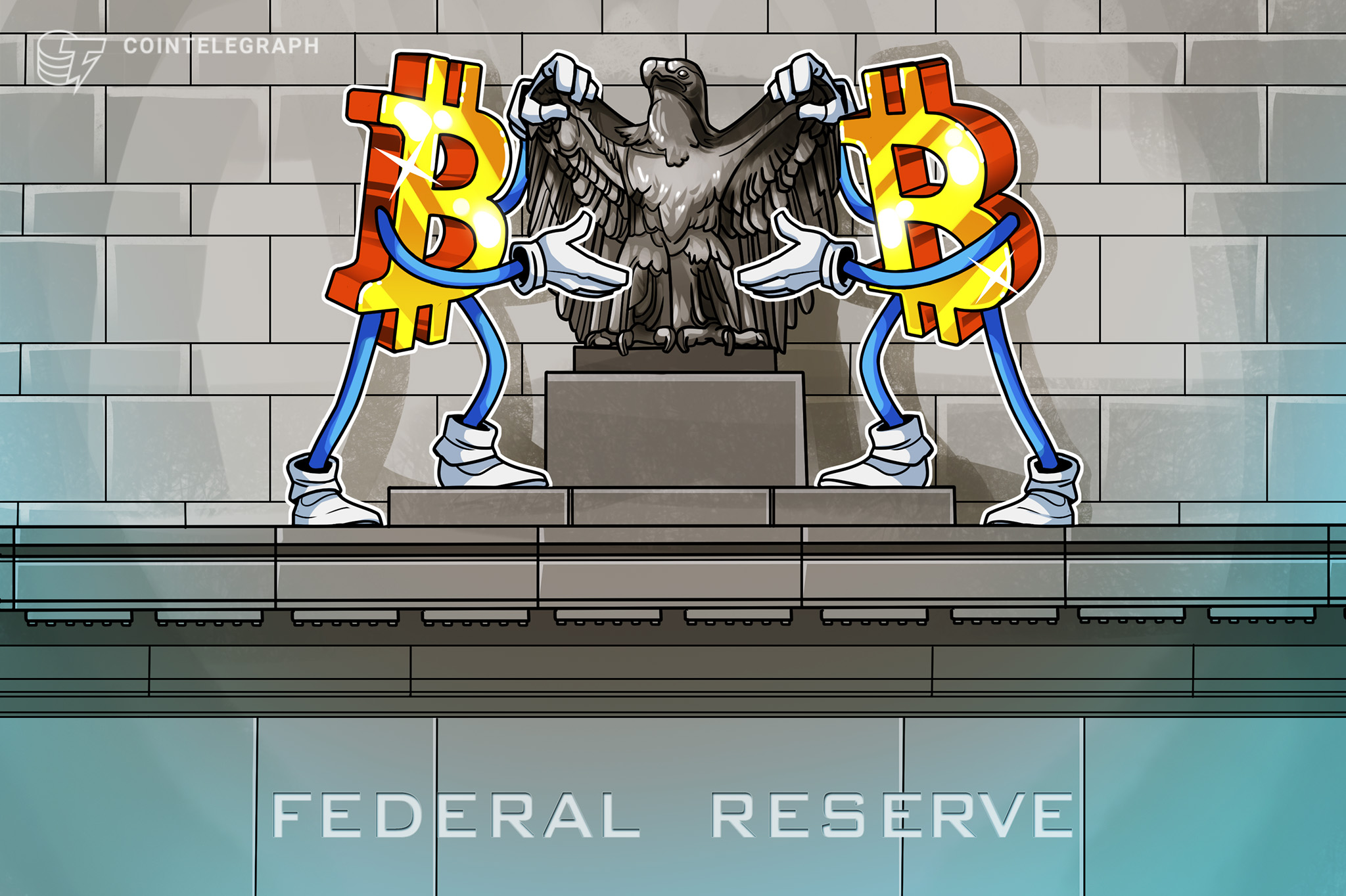 Bitcoin failed to make a decisive break above $80,000 as traders digested Fed Chair Kevin Warsh’s Jackson Hole keynote speech, which remained wary of US inflation trends. Bitcoin (BTC) saw volatility after Friday’s Wall Street open as markets reacted to US Federal Reserve chair Kevin Warsh’s comments on future monetary policy. Key points: Data from TradingView showed BTC/USD dipping to $78,442 on Bitstamp in volatile trading conditions, down around 1% at the time of writing. Read more
 -
CryptoSlate - 14:55 Aug 28, 2026
IBIT exceeded the market’s $242.3 million net gain as five smaller positive funds failed to keep non-IBIT flows above zero. The post BlackRock just pulled in 115% of all Bitcoin ETF inflows in a single day as rival funds bleed cash appeared first on CryptoSlate. -
Cointelegraph.com - 14:53 Aug 28, 2026
 Bitcoin’s $80,000 rebound lifts crypto stocks as Circle, Strategy and Solana show how capital markets, stablecoins and onchain growth are driving crypto’s recovery. Bitcoin’s return above $80,000 is exposing just how much the crypto industry now runs through traditional capital markets. Michael Saylor’s Strategy needs a receptive market to finance its Bitcoin machine (BTC), Circle’s outlook increasingly resembles a bet on the growth of dollar-denominated financial infrastructure and Treasury bond buybacks helped provide the backdrop for the latest surge in crypto equities. This week’s Crypto Biz looks at how that relationship is reshaping the companies, balance sheets and networks behind the market’s rebound. Bitcoin’s rally above $80,000 lifted crypto stocks as miners and digital asset treasury companies posted double-digit gains, tracking a broader recovery fueled by the US Treasury’s plan to double certain long-dated bond buybacks. Read more
 -
Cointelegraph.com - 11:36 Aug 28, 2026
 The French Bitcoin treasury firm’s private placement drew support from Adam Back and TOBAM, with warrant exercises potentially unlocking another $158 million. French Bitcoin treasury company Capital B announced that it raised €21.0 million ($24.5 million) through private share placement. According to an Aug. 28 announcmeent, the fundraise was conducted at €0.58 per ABSA — one share bundled with four share-subscription warrants — without pre-emptive subscription rights. The raise saw the participation of legendary cypherpunk and Bitcoin-centric blockchain development firm CEO Adam Back as well as asset manager TOBAM. If all the issued warrants were to be exercised, Capital B would see a further €135.8 million ($158 million) capital injection through the issuance of 144,876,280 ordinary shares. The company reserves the right to trigger an accelerated warrant exercise period if the volume weighted average price of its shares over the previous 20 trading days exceeds 130% of the exercise price of the relevant war...
 -
Cointelegraph.com - 11:22 Aug 28, 2026
 Bitcoin profitability data produced a bear-market reversal signal that was also present at the start of 2023. According to some metrics, Bitcoin (BTC) has ended its bear market as a composite BTC price indicator flips bullish for the first time since October 2025. Key points: Read more
 -
CryptoPotato - 08:55 Aug 28, 2026
A steady move above $80,000 could return significant Bitcoin capital to profit, but resistance near $84,569 remains a major hurdle. -
CryptoSlate - 01:10 Aug 28, 2026
The Genesis Bond avoids BTC lending and custody transfers while adding a 5% STX lock, managed parameters and variable payouts. The post HashKey Cloud backs Stacks’ Genesis Bond to prove institutional appetite for native Bitcoin yield appeared first on CryptoSlate. -
CryptoSlate - 22:30 Aug 27, 2026
A mainnet QSB transaction passed consensus, yet nonstandard relay, high computation costs and exposed keys limit the escape route. The post Bitcoin now has a quantum computing escape route, but 7 million BTC may still be exposed appeared first on CryptoSlate.